
The Rising Demand for Board-Level Repair
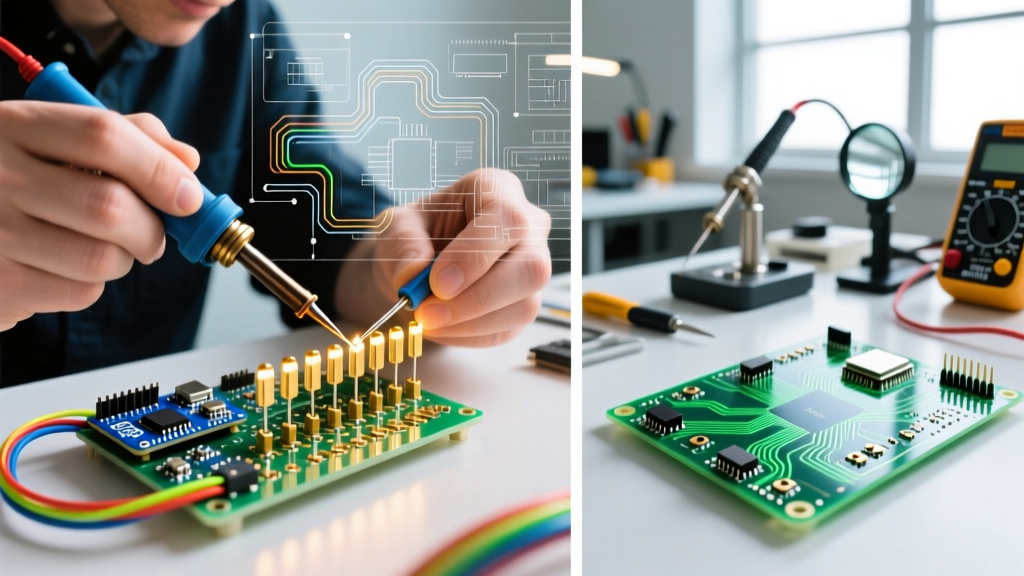
As the Repair Association continues to secure Right to Repair legislation across multiple states, the electronics repair industry is shifting away from simple modular part swaps toward advanced logic board restoration. Modern smartphones, laptops, and medical devices are densely packed with 01005 (0.4mm x 0.2mm) surface-mount components and fine-pitch Ball Grid Arrays (BGAs). Fixing these devices requires more than a steady hand; it demands a deep understanding of thermal profiling, flux chemistry, and microscopic precision. This is where professional micro soldering classes become an essential investment for technicians looking to scale their businesses in 2026.
Why Invest in Formal Micro Soldering Classes?
Many technicians attempt to learn board-level repair through free YouTube tutorials. While these videos are excellent for theoretical knowledge, they cannot correct your physical technique in real-time. A single second of excessive heat from a hot air rework station can cause pad cratering, delaminate internal PCB layers, or destroy a $150 donor power management IC (PMIC).
Formal micro soldering classes provide structured, hands-on environments where instructors can immediately correct your hand positioning, airflow angles, and temperature settings. Furthermore, reputable academies align their curriculum with industry benchmarks, such as the IPC-7711/21 standards for rework, modification, and repair of electronic assemblies. Mastering these standards not only improves your success rate but also allows you to secure lucrative B2B contracts with corporations that require IPC-certified repair vendors.
Expert Insight: The most common failure mode for beginners is flux carbonization. Leaving no-clean flux residues under a BGA chip and applying excessive heat turns the flux into a conductive carbon mass, causing parasitic leakage currents that result in intermittent boot loops. Professional classes teach the exact solvent and ultrasonic cleaning protocols to prevent this.
Top In-Person Micro Soldering Academies (2026 Cohorts)
In-person training remains the gold standard for building muscle memory. Here are the most highly regarded physical academies operating in 2026:
1. iPad Rehab (Jessa Jones)
Located in Honeoye Falls, New York, iPad Rehab is widely considered the pioneer of modern smartphone logic board repair training. Their 5-day intensive micro soldering classes focus heavily on Apple ecosystem schematics, ZXW board views, and data recovery scenarios.
- Cost: ~$2,500 (excluding travel and lodging)
- Curriculum Focus: FPC connector replacements, U2/Tristar IC diagnostics, NAND programming, and advanced jumper wire installation.
- Best For: Technicians wanting to specialize in high-margin Apple data recovery and logic board repairs.
2. REWA Academy
With roots in Shenzhen and training facilities globally, REWA Academy focuses on high-volume, commercial-grade repair workflows. Their classes are optimized for shops that need to process dozens of devices a day with high yield rates.
- Cost: $1,200 - $1,800 depending on the module
- Curriculum Focus: Android and iOS screen IC replacements, Face ID flex cable micro-jumpering, and rapid BGA reballing techniques using direct-heat stencils.
- Best For: High-volume repair shop owners and franchise operators.
3. Northridge Fix
Run by Alex Bandoni in California, Northridge Fix offers advanced courses that bridge the gap between mobile devices and laptop/motherboard level repair. Alex is renowned for his aggressive but highly effective thermal techniques on heavily grounded planes.
- Cost: ~$2,000 for the masterclass
- Curriculum Focus: Heavy thermal mass desoldering, HDMI/USB-C port replacements on laptops, and advanced BGA donor swaps.
- Best For: Technicians expanding from mobile phones into laptop and console repair.
Best Online Micro Soldering Courses
If traveling to an in-person academy is financially or logistically impossible, online micro soldering classes have evolved significantly. Platforms like Learn Repair and specialized Udemy instructors now offer 4K macro-video demonstrations paired with private Discord mentorship channels.
When choosing an online course, ensure the instructor provides a comprehensive 'BOM' (Bill of Materials) so you can purchase the exact flux, solder wire, and stencils they use on screen. A highly recommended online pathway is purchasing a structured course from a verified repair advocate and supplementing it with live teardown streams on YouTube to observe real-time troubleshooting.
Comparison Matrix: In-Person vs. Online Classes
| Feature | In-Person Academies | Online Courses |
|---|---|---|
| Average Cost | $1,500 - $3,000+ | $99 - $499 |
| Real-Time Feedback | Immediate physical correction | Delayed (via video submission) |
| Equipment Provided | Yes (JBC/Quick stations, microscopes) | No (Must supply your own) |
| Networking | High (Meet shop owners, parts vendors) | Low (Limited to forum/Discord chats) |
| Pacing | Intensive (40+ hours in one week) | Self-paced (Lifetime access) |
Essential Gear Checklist Before Your First Class
Whether you are taking an online course or preparing to practice after an in-person seminar, you must have the right equipment. Do not bring cheap, uncalibrated tools to a micro soldering class; you will spend your time fighting your gear rather than learning techniques. According to JBC Tools, active tip technology is non-negotiable for micro-work.
- Soldering Station: JBC CD-2BQE with C245-945 (knife) and C245-108 (micro-pencil) tips. (~$525)
- Hot Air Rework Station: Quick 861DW with 2mm and 4mm nozzles for precise BGA removal. (~$340)
- Microscope: AmScope 7x-45x 144-LED Trinocular Stereo Microscope with a 0.5x barlow lens for working distance. (~$450)
- Consumables: Amtech NC-559-V2-TF tack flux, Chip Quik SMD291AX 0.015" leaded solder wire, and 0.01mm polyurethane enameled copper jumper wire.
- Pre-heater: A PTC silicone pre-heater or an infrared station (like the Quick 853A) to bring multi-layer boards up to 100°C before applying localized hot air, preventing thermal shock.
Core Curriculum: What You Must Master
A high-quality micro soldering syllabus will force you to repeat the following core competencies until they become second nature:
- BGA Reballing: Applying 0.35mm or 0.4mm SAC305 solder spheres to a BGA IC using a direct-heat stencil and a low-temperature profiling curve to prevent the chip substrate from warping.
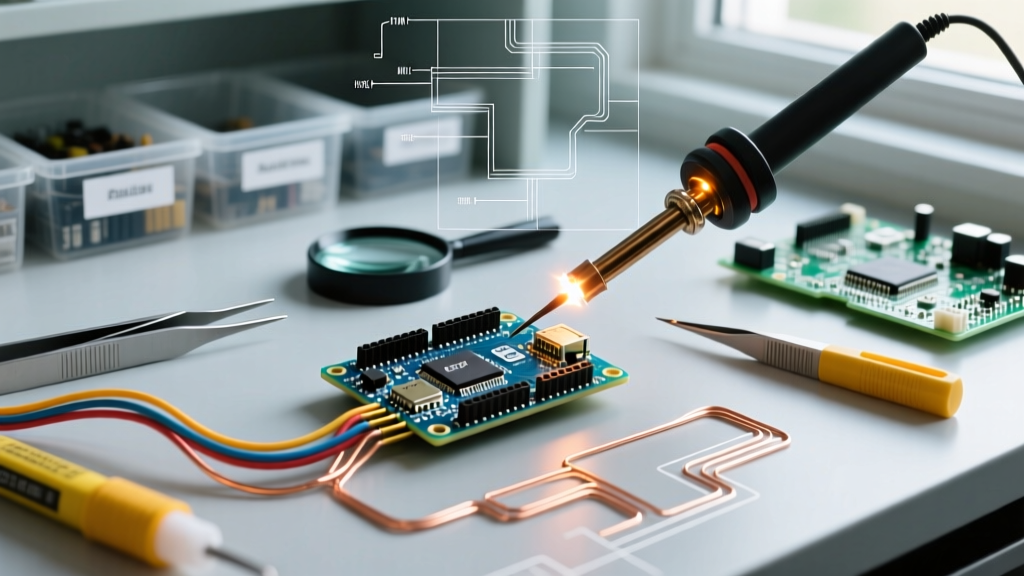
- Pad Jumpering: Scraping away the solder mask to expose a broken copper trace, tinning the exposed via, and soldering a 0.01mm enameled wire using the surface tension of the flux rather than physical pressure.
- Thermal Shielding: Using high-temperature polyimide (Kapton) tape and aluminum heat-sink putty to protect adjacent plastic FPC connectors and underfilled chips from 350°C hot air airflow.
Frequently Asked Questions (FAQ)
Do I need IPC certification to run a repair shop?
No, IPC certification is not legally required to operate a consumer electronics repair shop. However, holding an IPC-7711/21 certification allows you to bid on enterprise, medical, and aerospace repair contracts that mandate standardized rework procedures.
Should I learn leaded or lead-free soldering first?
Micro soldering classes typically teach leaded (Sn63/Pb37) soldering for jumper wires and FPC connectors because its lower melting point (183°C) provides a wider thermal working window, reducing the risk of pad lifting. However, you must learn lead-free (SAC305) profiles for BGA reballing to match factory specifications and ensure long-term joint reliability under thermal cycling.
How long does it take to become profitable after taking a class?
Most technicians take 3 to 6 months of daily practice on scrap 'donor' boards to build the muscle memory required to confidently charge customers for logic board repairs. Once proficient, a single successful BGA replacement on a modern laptop or flagship smartphone can yield $150 to $400 in pure labor profit, rapidly paying off the cost of the training.