
What Is the Difference Between Soldering and Welding at the Molecular Level?
When engineers and manufacturing specialists ask, what is the difference between soldering and welding, the answer extends far beyond the tools used on the shop floor. The fundamental distinction lies in the metallurgical mechanics of the joint formation. In industrial welding, the base metals themselves are melted and fused together, often with a filler material, creating a continuous grain structure across the joint upon cooling. In contrast, industrial soldering relies entirely on capillary action and the melting of a filler metal (the solder) at temperatures below 450°C (842°F). The base metals remain entirely solid.
This thermal threshold dictates everything from the equipment required to the failure modes of the final assembly. According to The Welding Institute (TWI), the heat-affected zone (HAZ) in welding can alter the crystalline structure of the base metal, sometimes inducing brittleness in high-carbon steels. Soldering, operating at significantly lower temperatures, avoids base metal phase transformations but relies on the formation of a microscopic Intermetallic Compound (IMC) layer—such as Cu6Sn5 in copper-tin systems—to create a metallurgical bond.
Thermal Profiles and Industrial Equipment Specifications
The capital expenditure and operational parameters for these two processes vary drastically. In 2026, automated industrial setups for both processes represent significant investments, but their thermal management systems are engineered for entirely different physical phenomena.
| Parameter | Industrial Soldering (Electronics/Micro-Joining) | Industrial Welding (Structural/Heavy Fabrication) |
|---|---|---|
| Operating Temperature | 180°C to 260°C (SAC305 Reflow Peak) | 1,500°C to 3,000°C+ (Arc Plasma Core) |
| Primary Heat Source | Convection (Reflow Oven), Conduction (Iron/Wave) | Electric Arc, Laser Beam, Friction |
| Standard Manual Equipment | Weller WX2021 (200W, Dual-Channel) ~$1,350 | Miller Dynasty 280 (AC/DC TIG) ~$4,800 |
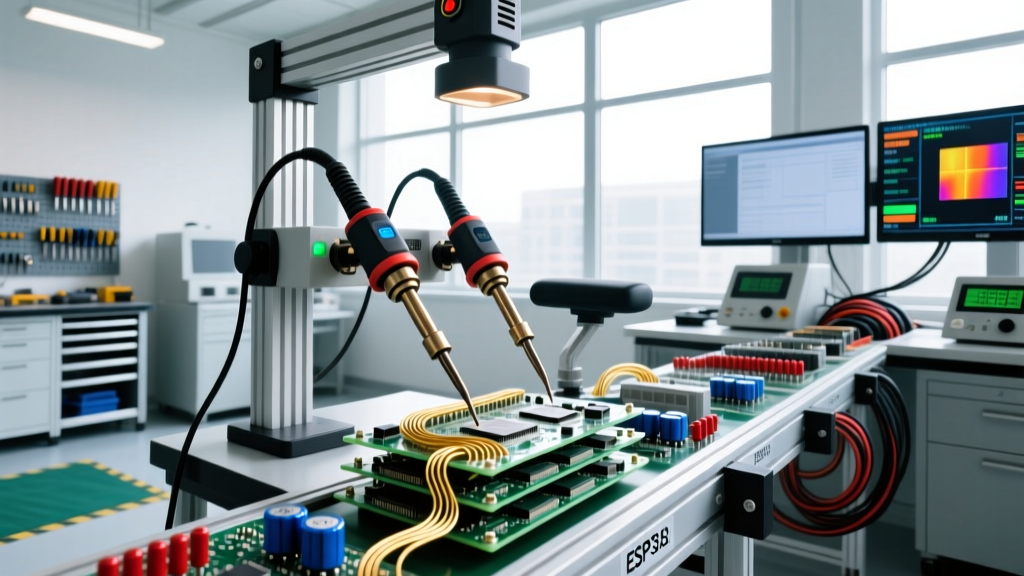
| Automated Cell Cost (Est.) | Ersa VERSAFLOW Selective Soldering ~$160,000 | FANUC ARC Mate Robotic Cell ~$220,000 |
| Shielding Medium | Nitrogen (N2) atmosphere to prevent oxidation | Argon/CO2 mixtures, Flux cores |
Industry Applications: Where Each Process Dominates
1. Aerospace Avionics and Consumer Electronics (Soldering)
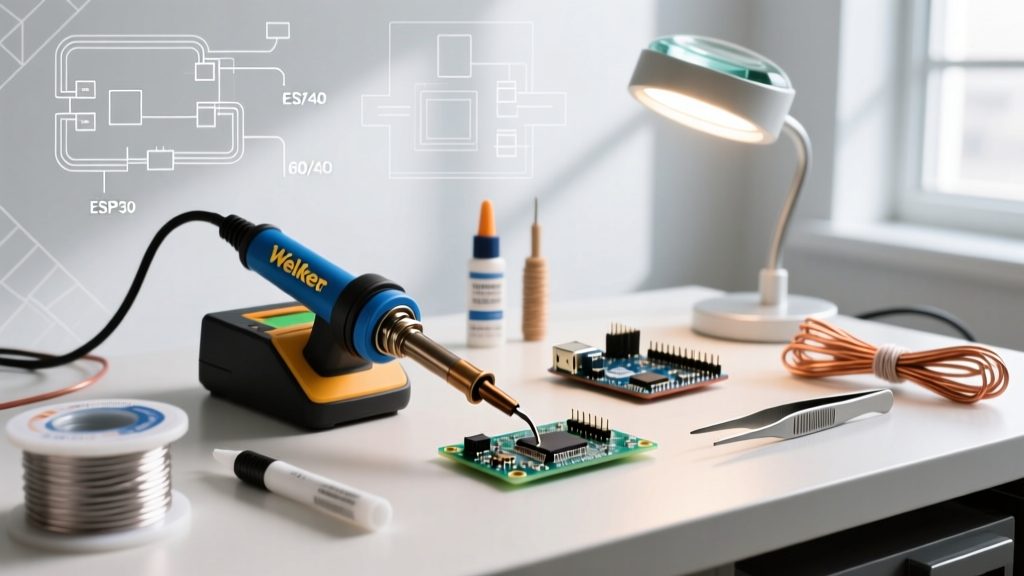
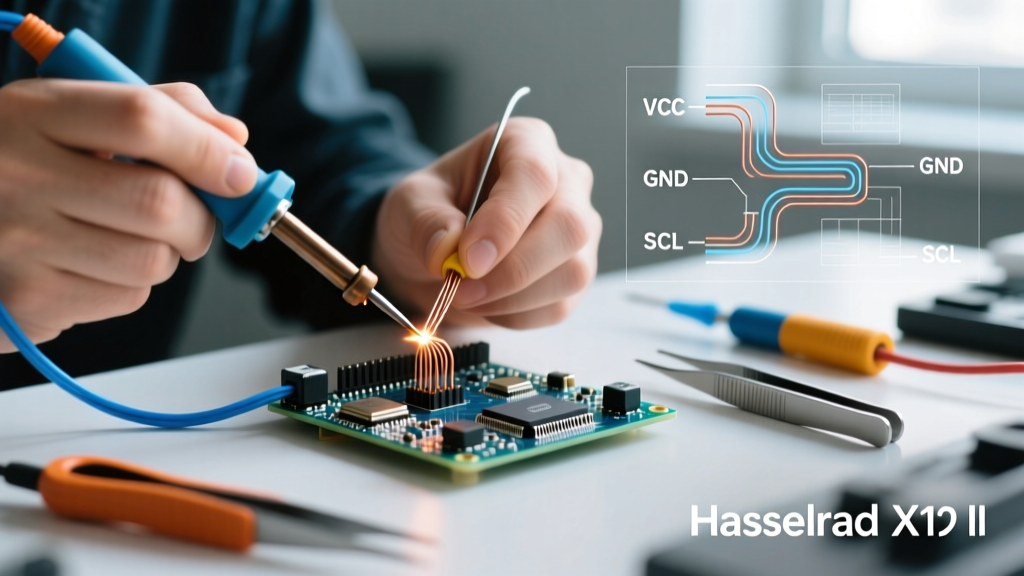
In the electronics manufacturing sector, soldering is the undisputed king of interconnects. The governing standard, IPC-A-610 (Acceptability of Electronic Assemblies), strictly defines the criteria for Class 3 (High-Reliability) solder joints used in aerospace and medical devices. Modern surface-mount technology (SMT) relies on lead-free SAC305 (Sn96.5Ag3.0Cu0.5) solder paste. The reflow profile requires precise thermal staging: a preheat zone to activate flux, a soak zone to equalize board temperatures, and a peak reflow zone reaching 235°C to 245°C for exactly 30 to 60 seconds above the 217°C liquidus point. Overheating causes excessive IMC growth, making the joint brittle, while underheating results in cold, high-resistance connections.
2. Structural Fabrication and Heavy Machinery (Welding)
When joining structural steel, titanium aerospace airframes, or heavy machinery chassis, welding is mandatory. The American Welding Society (AWS) dictates the structural codes, such as AWS D1.1 for steel. Processes like Gas Tungsten Arc Welding (GTAW/TIG) and Gas Metal Arc Welding (GMAW/MIG) generate the intense heat required to melt thick base materials. In automotive and heavy equipment manufacturing, robotic MIG welding cells utilize laser seam tracking to maintain arc voltage and travel speed within fractions of a millimeter, ensuring consistent penetration and avoiding lack-of-fusion defects that could lead to catastrophic structural failure under dynamic loads.
3. HVAC and Refrigeration: The Overlap and The Brazing Bridge
HVAC manufacturing frequently blurs the lines for laymen, but industry professionals recognize a strict triad: soldering, brazing, and welding. Soft soldering (using 95/5 tin-antimony) is used for low-pressure copper water lines. However, for high-pressure refrigerant lines (like R-410A or R-32 systems operating at 400+ PSI), technicians use brazing with silver-bearing alloys (e.g., Sil-Fos) at temperatures between 600°C and 800°C. Brazing is technically a subset of soldering (as the base metal doesn't melt) but operates at much higher thermal thresholds, providing the shear strength required for compressor vibration resistance without the warping that fusion welding would cause to thin-walled copper tubing.
Joint Mechanics and Real-World Failure Modes
Understanding what is the difference between soldering and welding requires analyzing how these joints fail in the field. The physics governing their degradation are entirely distinct.
- Solder Joint Failures: Solder alloys are highly susceptible to thermal fatigue and creep. Because solder operates at a high homologous temperature (room temperature is roughly 60% of its absolute melting point), the crystalline structure is constantly active. In automotive ECU modules, repeated thermal cycling causes the solder fillet to crack due to the Coefficient of Thermal Expansion (CTE) mismatch between the silicon chip, the FR-4 PCB, and the copper traces. Failure analysis via Scanning Electron Microscopy (SEM) typically reveals intergranular cracking through the IMC layer.
- Weld Joint Failures: Welds fail primarily through fatigue cracking initiated at the weld toe, porosity (trapped shielding gas), or hydrogen-induced cold cracking in the HAZ. In high-stress applications like crane booms or pressure vessels, cyclic loading propagates micro-fissures in the fusion zone. Non-Destructive Testing (NDT) methods, such as Phased Array Ultrasonic Testing (PAUT), are required to detect these subsurface defects before they result in catastrophic tensile failure.
Engineering Insight: Never substitute a soldered joint for a mechanical load-bearing application, and never apply fusion welding to thin-gauge electrical busbars unless specifically engineered for it. The thermal distortion and localized annealing caused by welding will destroy the precise temper and electrical conductivity of precision electronic components.
Decision Matrix: Specifying the Correct Process
When designing a new product or specifying a repair protocol in 2026, use this decision framework to determine the appropriate joining method:
- Evaluate the Base Material Thickness: If the materials are under 0.5mm (such as PCB copper foils or micro-sensor housings), soldering or micro-laser welding is required. Standard arc welding will instantly vaporize the material.
- Calculate the Operating Temperature: If the assembly will operate in an environment exceeding 150°C (e.g., downhole drilling sensors, jet engine proximity components), standard soft soldering will undergo rapid creep failure. You must specify high-temperature welding, brazing, or specialized high-lead/high-temperature solder alloys (like Au80Sn20, which melts at 278°C).
- Assess Electrical vs. Mechanical Requirements: If the primary function is electron flow with minimal mechanical stress (e.g., battery pack interconnects, PCB routing), specify soldering. If the joint must withstand shear forces exceeding 10,000 PSI or dynamic torsional loads, fusion welding is mandatory.
- Consider Post-Process Machining: Welded joints often require secondary CNC machining or grinding to achieve flatness tolerances. Soldered joints, particularly those reflowed in a nitrogen atmosphere, emerge with net-shape geometry requiring zero secondary finishing.
Conclusion
Ultimately, what is the difference between soldering and welding boils down to the intended physics of the joint. Soldering is a surface-level metallurgical adhesion optimized for electrical conductivity, thermal preservation of sensitive components, and micro-precision. Welding is a bulk-material fusion process engineered for macro-structural integrity, tensile strength, and load-bearing durability. By aligning your manufacturing process with the specific IPC or AWS standards governing your industry, you ensure that the molecular mechanics of your joints match the real-world demands of your application.