
The Metallurgy of Solderability: Beyond Melting Point
Soldering is fundamentally a metallurgical bonding process, not merely a mechanical adhesive one. When we discuss solderable metals, we are evaluating a base material's ability to be 'wetted' by a molten solder alloy. Wetting occurs when the liquid solder displaces surface oxides and forms an Intermetallic Compound (IMC) layer with the base metal. The degree of wetting is measured by the contact angle; a highly solderable metal will exhibit a contact angle of less than 30 degrees, allowing the solder to flow and spread seamlessly.
However, not all metals accept solder equally. Environmental oxidation, thermal mass, and the chemical composition of the base alloy dictate whether a joint will be robust or brittle. According to standards set by the IPC (Association Connecting Electronics Industries), proper flux selection and surface preparation are just as critical as the solder alloy itself. This comprehensive guide breaks down the spectrum of solderable metals, detailing the specific alloys, flux chemistries, and failure modes you must understand for reliable DIY and professional assemblies in 2026.
The Solderability Spectrum: Metal Classification Matrix
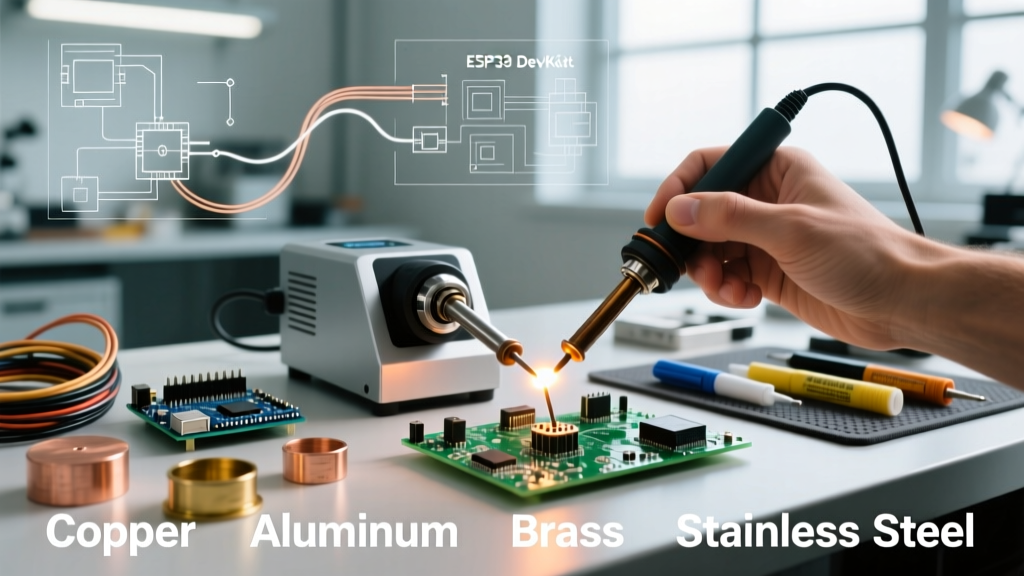
The table below categorizes common metals and alloys based on their inherent solderability, the required flux activation level (per IPC J-STD-004B), and the recommended solder alloys.
| Base Metal / Alloy | Solderability | Recommended Flux Type | Optimal Solder Alloy | Metallurgical Notes & Challenges |
|---|---|---|---|---|
| Copper (C11000 / C12200) | Excellent | ROL0 / ROL1 (Rosin Mildly Activated) | Sn63Pb37 or SAC305 | Rapid oxidation when heated; requires continuous flux presence. |
| Brass (C26000) | Good | ORM1 / RMA | Sn60Pb40 / Sn96.5Ag3Cu0.5 | Zinc content can cause fuming and localized dewetting. |
| Silver (Pure / Sterling) | Excellent | ROL0 (No-Clean / Pure Rosin) | Sn62Pb36Ag2 (Ag-doped) | Silver leaches into standard Sn-Pb; requires silver-bearing solder. |
| Nickel (Electrolytic) | Good | ORM1 / RMA | High-Ag Lead-Free Alloys | Acts as a barrier layer in ENIG; slow wetting kinetics. |
| Stainless Steel (304 / 316) | Fair / Poor | Inorganic Acid (IA) / Phosphoric | Sn62Pb36Ag2 / High-Temp | Chromium oxide layer resists standard rosin fluxes. |
| Aluminum (6061 / 7075) | Poor | Specialized Al-Flux / Ultrasonic | Sn-Zn / Sn-Ag-Ti | Al2O3 layer melts at 2072°C; requires mechanical disruption. |
| Titanium / Tungsten | Non-Solderable | N/A | N/A | Requires vacuum metallization or high-temperature brazing. |
Tier 1: Excellent and Good Solderable Metals
Copper and Its Alloys
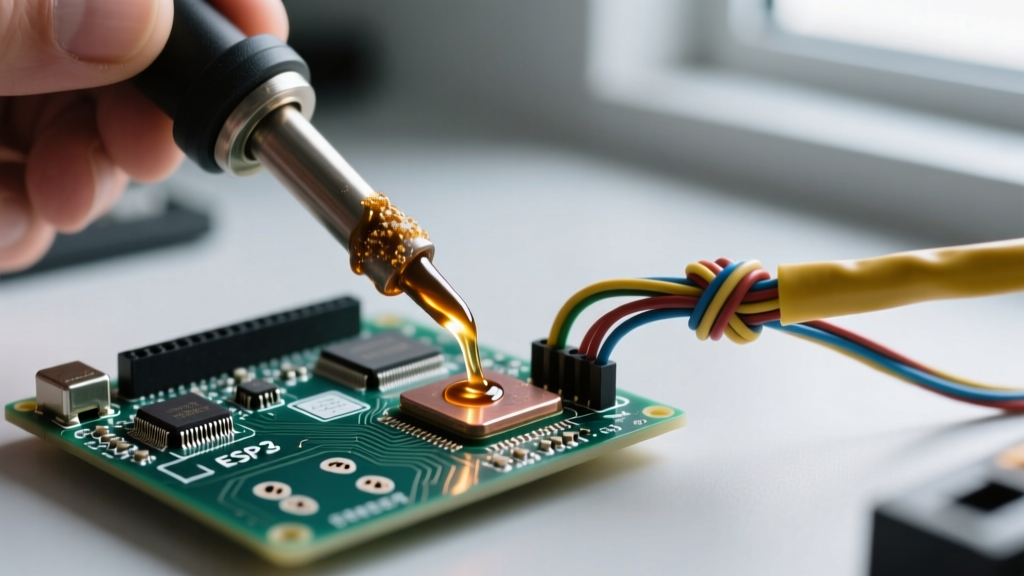
Copper is the gold standard for solderability, forming a reliable Cu6Sn5 intermetallic layer almost instantly upon contact with molten tin. However, bare copper oxidizes rapidly when exposed to the heat of a soldering iron (typically 350°C to 400°C). For standard PCB work and wire tinning, a ROL0 (No-Clean) or ROL1 (Mildly Activated Rosin) flux like Kester 186 is sufficient. If you are soldering heavy-gauge copper wire (e.g., 8 AWG or larger for high-current EV battery packs), the thermal mass will draw heat away from the joint. You must pre-tin the wire and use a high-wattage iron (100W+) or a localized hot-air profile to ensure the solder flows into the interstitial spaces of the stranded wire via capillary action.
Brass and Bronze
Brass (copper-zinc) and bronze (copper-tin) solder beautifully but present a specific hazard: zinc vaporization. When heated above 400°C, the zinc in brass can begin to fume, creating a porous joint and releasing toxic zinc oxide fumes (metal fume fever). Always use a fume extractor and keep iron dwell times under 4 seconds per joint. An ORM1 (Organic Moderately Activated) flux helps cut through the tougher zinc oxides that form on the surface.
Gold and Silver Plating
While pure gold and silver are highly solderable, they suffer from a phenomenon called leaching or dissolution. When standard Tin-Lead (Sn63Pb37) or pure Tin solder contacts a gold surface, the gold rapidly dissolves into the molten solder pool, leaving behind a brittle, non-wettable underlayer (often nickel in ENIG PCB finishes). To prevent this, use a solder alloy doped with the target metal. For silver joints, use Sn62Pb36Ag2 (the 2% silver content slows the leaching rate). For gold, specialized indium-based or high-tin alloys with trace gold are used in aerospace applications, as detailed by the metallurgical resources at Indium Corporation.
Tier 2: The 'Problem' Metals and How to Solder Them
The metals in this tier possess tenacious oxide layers that standard electronics fluxes cannot penetrate. Soldering them requires aggressive chemical or mechanical intervention.
Stainless Steel (300 and 400 Series)
Stainless steel owes its corrosion resistance to a microscopic, self-healing layer of chromium oxide. Standard rosin and organic acid fluxes are entirely ineffective against this layer. To solder stainless steel, you must use an Inorganic Acid (IA) flux, typically based on zinc chloride or phosphoric acid.
WARNING: Inorganic Acid fluxes are highly corrosive and electrically conductive. If you solder stainless steel sensors or structural electronics using IA flux, a rigorous post-solder cleaning protocol (using boiling distilled water and ultrasonic agitation) is mandatory to prevent catastrophic dendritic growth and galvanic corrosion.
For DIYers who want to avoid harsh acids, specialized organic fluxes like Rubyfluid or Kester #140 (which contains highly active organic halides) can achieve wetting on 304 SS, provided the surface is heavily abraded with 220-grit silicon carbide paper immediately before flux application.
Aluminum and Its Alloys
Aluminum is notoriously difficult to solder. The moment bare aluminum is exposed to air, it forms aluminum oxide (Al2O3). While the base aluminum melts at roughly 660°C, the aluminum oxide layer melts at a staggering 2072°C. If you apply a standard soldering iron, the oxide shell remains solid, trapping the molten solder on the surface.
Solution 1: Chemical Fluxing. You must use specialized aluminum soldering fluxes containing fluoboric or fluorosilicic acids, paired with Zinc-Tin (Sn-Zn) or Tin-Silver-Titanium (Sn-Ag-Ti) solder alloys. The flux dissolves the oxide, while the zinc/titanium acts to bond with the aluminum substrate.
Solution 2: Ultrasonic Soldering. A modern, fluxless approach involves using an ultrasonic soldering iron. These irons vibrate the soldering tip at high frequencies (typically 20-40 kHz). When the tip is submerged in the molten solder pool on the aluminum surface, acoustic cavitation creates microscopic shockwaves that shatter the aluminum oxide layer, allowing the pure solder to wet the virgin aluminum instantly.
Understanding Failure Modes: Dewetting vs. Non-Wetting
When working with various solderable metals, recognizing the visual cues of a failing joint is critical for troubleshooting.
- Non-Wetting: The solder balls up and maintains a contact angle greater than 90 degrees. The base metal is completely untouched by the solder. Cause: Heavy oxidation, wrong flux chemistry, or insufficient thermal energy to activate the flux.
- Dewetting: The solder initially flows and wets the surface, but then retracts and pulls back into isolated islands as it cools, leaving a thin, dull film of intermetallic compound behind. Cause: Soluble base metals (like gold or silver) leaching into the solder, or the presence of silicone/sulfur contaminants on the metal surface.
- Cold Joints (IMC Starvation): The solder looks dull and grainy. The iron was removed before the Intermetallic Compound (Cu6Sn5) could fully propagate across the boundary. These joints are mechanically weak and prone to micro-cracking under thermal cycling.
The 4-Step Surface Preparation Protocol
For challenging metals (Stainless, Brass, Nickel), relying on flux alone is a recipe for failure. Adopt this strict preparation protocol derived from American Welding Society (AWS) brazing and soldering guidelines:
- Mechanical Abrasion: Use a Scotch-Brite 7447 pad or 400-grit wet/dry sandpaper to physically remove the bulk oxide layer. Do not use steel wool on copper or brass, as embedded iron particles will cause localized galvanic corrosion.
- Solvent Degreasing: Wipe the abraded surface with 99% Isopropyl Alcohol (IPA) or a specialized electronic contact cleaner to remove machining oils and fingerprint salts.
- Immediate Fluxing: Apply your chosen flux within 60 seconds of cleaning. The flux acts as a temporary barrier, preventing ambient oxygen from reforming the oxide layer before the soldering iron applies heat.
- Thermal Profiling: Apply heat to the base metal, not the solder wire. Touch the solder to the opposite side of the joint. When the base metal reaches the liquidus temperature of the alloy, capillary action will draw the solder through the joint, signaling a perfect metallurgical bond.
Final Thoughts on Alloy Selection
Understanding which metals are solderable is only half the battle; matching the thermal expansion coefficient of your solder alloy to your base metal is what ensures long-term reliability. While SAC305 (Lead-Free) remains the industry standard for copper and nickel in 2026 due to RoHS compliance, high-reliability DIY projects involving extreme thermal cycling (like automotive or aerospace sensors) often benefit from high-tin, silver-doped alloys or specialized bismuth-tin formulations to reduce joint stress. Always consult the technical data sheets for your specific solder alloy to verify its compatibility with your target base metal.