
The Short Answer: What Metal Is Used for Soldering?
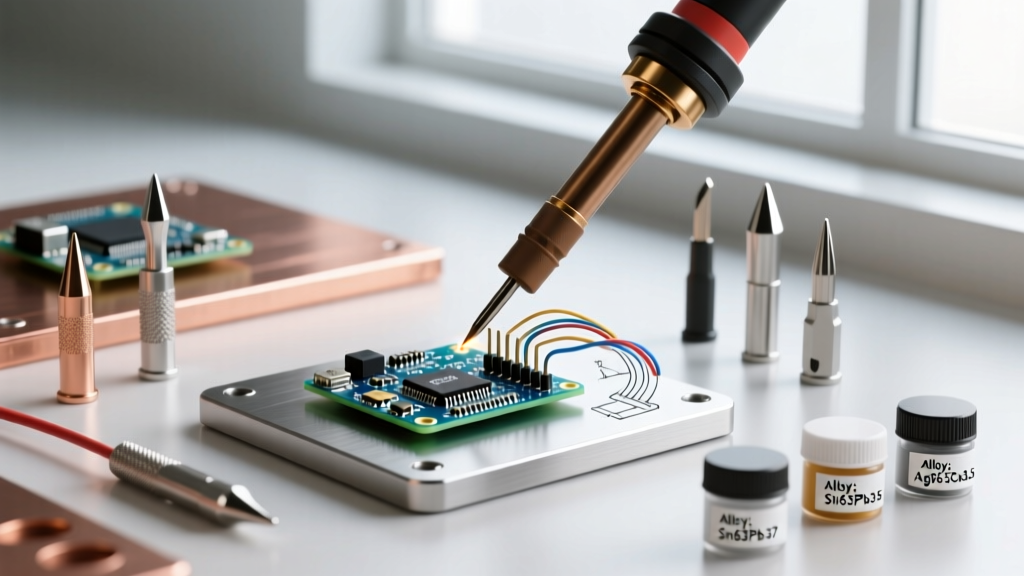
When beginners ask, "what metal is used for soldering?" they often assume it is a single pure element like copper or iron. In reality, electronic solder is a carefully engineered alloy—a mixture of two or more metals designed to achieve a specific melting point, wetting ability, and mechanical strength.
The foundational metal in almost all modern electronic solder is Tin (Sn). However, pure tin is rarely used on its own due to its high melting point (232°C) and susceptibility to "tin whiskers." Instead, tin is alloyed with metals like Lead (Pb), Silver (Ag), Copper (Cu), or Bismuth (Bi) to optimize performance for specific applications, from delicate surface-mount device (SMD) rework to heavy-duty through-hole wiring.
Primary Base Metals and Alloying Elements
To troubleshoot soldering issues effectively, you must understand the metallurgy of your consumables. Here is a breakdown of the specific metals used in soldering alloys:
- Tin (Sn): The backbone of solder. It provides the actual wetting action, bonding metallurgically with the copper pads and component leads to form an intermetallic compound (IMC).
- Lead (Pb): Historically the most common alloying element. Adding 37% lead to 63% tin creates a eutectic alloy that melts and freezes at a single, low temperature (183°C), eliminating the "plastic" (semi-solid) phase that causes disturbed joints.
- Silver (Ag) & Copper (Cu): The driving forces behind modern lead-free (RoHS compliant) solders. Silver improves mechanical strength and fatigue resistance, while copper slows down the dissolution of the PCB's copper traces into the molten solder.
- Bismuth (Bi): Used to drastically lower the melting point of tin-based alloys. It is highly favored for low-temperature rework on heat-sensitive components and multi-layer boards to prevent pad lift.
Solder Alloy Comparison Matrix
| Alloy Designation | Composition (by weight) | Melting Point | Primary Use Case | Visual Finish |
|---|---|---|---|---|
| Sn63/Pb37 | 63% Tin, 37% Lead | 183°C (361°F) | General DIY, aerospace, prototyping, rework. | Shiny / Glossy |
| SAC305 | 96.5% Sn, 3.0% Ag, 0.5% Cu | 217°C - 220°C | Commercial lead-free manufacturing (RoHS). | Matte / Grainy |
| Sn99.3/Cu0.7 | 99.3% Tin, 0.7% Copper | 227°C (440°F) | Wave soldering, heavy through-hole joints. | Dull / Matte |
| Sn42/Bi58 | 42% Tin, 58% Bismuth | 138°C (280°F) | Heat-sensitive SMD rework, LED strip repair. | Bright / Shiny |
Troubleshooting Solder Joint Failures by Metal Type
Choosing the wrong metal alloy—or misunderstanding how a specific alloy behaves—is the root cause of 90% of soldering defects. Below are advanced troubleshooting scenarios based on metallurgical properties.
1. The "Cold Joint" Illusion with Lead-Free Alloys
The Symptom: You are using SAC305 (lead-free) solder, and the joint cools with a dull, grainy, or matte finish. You assume it is a cold joint and reheat it, but it remains dull.
The Metallurgical Reality: Unlike Sn63/Pb37, which naturally forms a smooth, shiny crystalline structure, SAC alloys inherently cool with a matte, slightly textured appearance due to the silver and copper content. According to the NASA Electronic Parts and Packaging (NEPP) Program and IPC-A-610 standards, a dull finish on lead-free solder is perfectly acceptable as long as the solder has properly wetted the pad and formed a smooth fillet at the edges.
The Fix: Stop reheating. Overheating SAC305 degrades the flux, oxidizes the iron tip, and risks delaminating the PCB pad. Ensure your iron is set between 350°C and 380°C to properly activate the no-clean flux core.
2. Catastrophic Joint Failure During Bismuth Rework
The Symptom: You use low-temperature Sn42/Bi58 solder to rework a component on an older board that was originally manufactured with leaded (Sn/Pb) solder. Weeks later, the component falls off the board at room temperature.
The Metallurgical Reality: Bismuth and Lead are metallurgically incompatible. When molten Bismuth mixes with residual Lead, it forms a ternary Sn-Pb-Bi eutectic alloy that melts at a terrifyingly low 96°C (204°F). The joint will literally melt if the device is left in a warm car or near a power supply heat sink.
The Fix: Never mix Bismuth alloys with Lead. If reworking a legacy Sn/Pb board with low-temp solder, you must first use a solder wick and flux to remove 100% of the original leaded solder from the pads before applying the Bismuth alloy.
3. Pad Leaching and Trace Dissolution
The Symptom: When soldering fine-pitch SMD components or thin copper traces, the pad seems to "disappear" or dissolve into the solder blob.
The Metallurgical Reality: High-tin alloys (especially Sn99.3/Cu0.7) are highly aggressive and dissolve copper rapidly at high temperatures. If your soldering iron is set too high (above 400°C) or your dwell time exceeds 3-4 seconds, the tin will eat through the copper trace.
The Fix: Use SAC305 instead of Sn/Cu for fine-pitch work, as the silver content slows copper dissolution. Keep dwell times under 3 seconds and use a high-quality flux (like Amtech NC-559) to lower the required thermal transfer.
FAQ: Common Questions About Soldering Metals
Can I use pure tin for electronic soldering?
No. Pure tin (Sn100) has a melting point of 232°C, which is too high for most standard PCB laminates (FR-4 begins to degrade and delaminate at sustained temperatures above 260°C). Furthermore, pure tin is highly susceptible to tin whiskers—microscopic, conductive crystalline structures that grow over time and cause short circuits. This is why the aerospace and medical industries strictly mandate the addition of at least 3% Lead to suppress whisker growth.
Is "Silver Solder" the same as electronic solder?
This is a massive point of confusion for beginners. In the plumbing, HVAC, and jewelry trades, "silver solder" refers to silver brazing, which contains 15% to 45% silver and requires a blowtorch reaching temperatures of 600°C to 800°C. In electronics, SAC305 contains only 3% to 4% silver and melts at 217°C. Never use hardware store silver solder on a PCB; you will instantly destroy the board and the components.
Why does my solder refuse to stick to the wire?
If the metal alloy is correct but the solder balls up and rolls off, you are dealing with an oxidation or flux issue, not a metal issue. Solder will not bond to oxidized copper. You must use a chemically activated flux. For electronics, always use Rosin (R) or Rosin Mildly Activated (RMA) core solder. Never use acid-core plumber's solder, as the aggressive zinc chloride flux will corrode the copper wire and cause an open circuit over time.
Health, Safety, and Environmental Compliance
When selecting what metal to use for soldering, you must also consider the health implications of the alloy. Lead (Pb) is a cumulative neurotoxin. While Sn63/Pb37 remains the gold standard for hobbyists, aerospace, and military applications due to its superior reliability, commercial manufacturing is strictly governed by the Restriction of Hazardous Substances (RoHS) directive, which mandates lead-free alloys like SAC305.
If you choose to use leaded solder in your home lab or repair shop, strict hygiene protocols are non-negotiable. Always wash your hands with cold water and soap after handling leaded solder (hot water opens the pores, increasing absorption). Ensure your workspace is well-ventilated to extract flux fumes, which contain colophony—a known respiratory sensitizer. For comprehensive safety protocols, always consult OSHA's guidelines on lead exposure and review the EPA's lead regulations regarding disposal and environmental impact.
Expert Tip: The metal alloy is only half the equation. A $50 roll of premium Sn63/Pb37 solder with a 2% no-clean flux core will outperform a $15 roll of generic, poorly fluxed solder every single time. Always buy solder from reputable manufacturers like Kester, Alpha Metals, or Indium Corporation to guarantee the metallurgical purity of the wire.