
The Short Answer: Yes, But With Major Caveats
If you are asking, 'can aluminum be soldered?' the short answer is yes. However, you cannot use standard electronics soldering techniques. Soldering aluminum requires abandoning traditional rosin-core solders and standard copper-focused fluxes. Aluminum is a highly reactive metal that presents unique metallurgical barriers, meaning successful joints depend entirely on specialized chemical fluxes, specific alloy compositions, and mechanical disruption techniques. In this comprehensive 2026 guide, we break down the exact science, materials, and step-by-step procedures required to create reliable, low-resistance solder joints on aluminum substrates.
The Metallurgical Barrier: Why Standard Soldering Fails
To understand why standard 63/37 Sn/Pb or SAC305 (Tin-Silver-Copper) solders ball up and fail on aluminum, you must understand the aluminum oxide layer (Al2O3). When raw aluminum is exposed to atmospheric oxygen, it instantly forms a microscopic, non-conductive oxide shell.
The Thermal Mismatch Problem: Pure aluminum base metal melts at approximately 660°C (1220°F). However, the aluminum oxide layer (Al2O3) melts at a staggering 2,072°C (3,762°F). Standard soldering irons operate between 250°C and 400°C. Therefore, the solder will melt, but the oxide shell remains completely solid, preventing the liquid solder from wetting the base metal.
Standard rosin (R, RMA, RA) and mild organic acid fluxes are chemically incapable of dissolving this tough oxide layer at soldering temperatures. To succeed, you must use aggressive chemistry and mechanical action simultaneously.
Essential Materials: Flux and Alloys for Aluminum
According to joining standards outlined by the American Welding Society, soldering aluminum requires fluxes that can chemically breach the oxide layer without destroying the base metal. Furthermore, the solder alloy must be compatible with aluminum's thermal expansion properties.
1. The Flux: Zinc Chloride and Fluoroaluminates
You must use a highly active, corrosive flux. The industry standard for aluminum soldering is a Zinc Chloride (ZnCl2) based flux or a specialized organic fluoroaluminate blend. These fluxes chemically etch the oxide layer at temperatures above 200°C. Warning: These fluxes are highly corrosive and must be thoroughly cleaned and neutralized after soldering to prevent long-term joint degradation.
2. The Alloys: Zinc-Tin and Specialty Blends
Standard tin-lead or lead-free electronics solders will not wet aluminum, even with the correct flux. You need alloys containing Zinc or Indium. Based on metallurgical data from specialty manufacturers like the Indium Corporation, here are the primary alloys used for aluminum:
| Alloy Designation | Composition | Melting Point | Best Application |
|---|---|---|---|
| Tin-Zinc (Sn-Zn) | 91Sn / 9Zn | 199°C (390°F) | General electrical joints, aluminum wire tinning, RF shielding. |
| Zinc-Aluminum (Zn-Al) | 88Zn / 12Al | 381°C (718°F) | Heavy-duty structural joints, heat sinks (technically classifies as brazing). |
| Indium-Tin (In-Sn) | 52In / 48Sn | 118°C (244°F) | Cryogenic sensors, low-thermal-budget delicate aluminum components. |
Step-by-Step: The 'Scratch Soldering' Technique
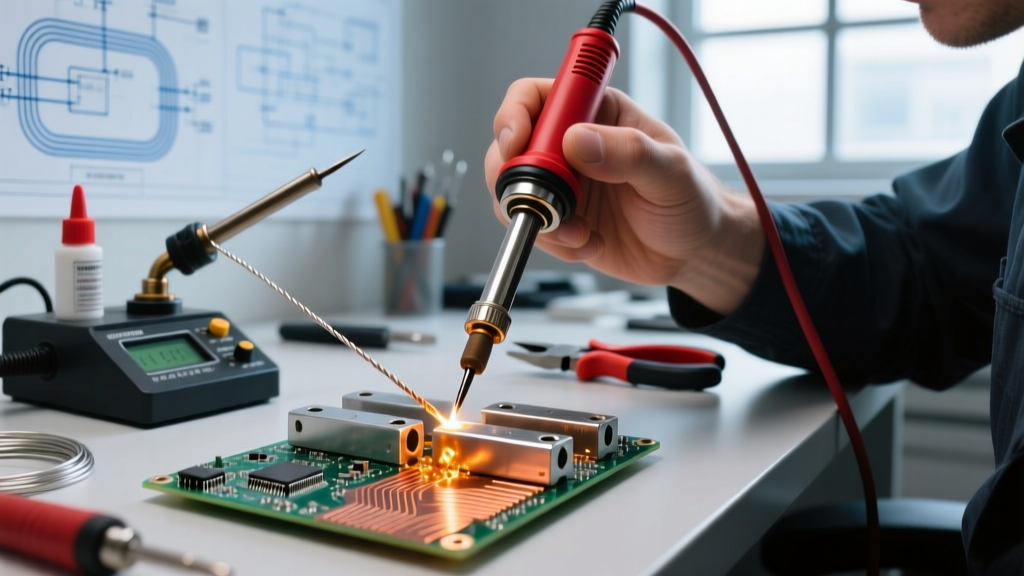
Because the oxide layer reforms in milliseconds if exposed to air, professionals use a method called 'scratch soldering' or 'mechanical abrasion under flux.' Here is the exact procedure for a 91Sn/9Zn joint using a high-thermal-mass station like the Hakko FX-951 with a T12-D24 heavy chisel tip.
- Mechanical Prep: Clean the aluminum surface using a Scotch-Brite pad or a brass wire brush. Never use steel wool or standard sandpaper, as they embed silica and iron particles into the soft aluminum, causing localized galvanic corrosion later.
- Flux Application: Apply a generous amount of liquid Zinc Chloride flux to the joint area before applying heat. The flux will act as a liquid blanket to slow down new oxide formation.
- Heat Transfer: Apply your 350°C (662°F) soldering iron tip directly to the aluminum through the flux pool. Aluminum is a massive heat sink; allow 5 to 10 seconds for the local area to reach the solder's melting point.
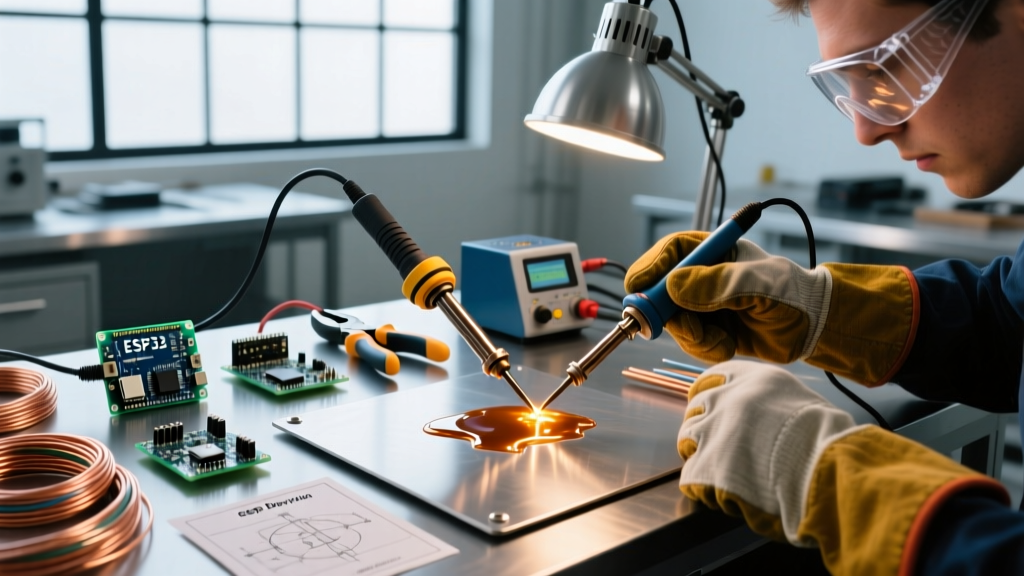
- Mechanical Abrasion (The Scratch): While keeping the iron in place, take a stainless steel pick or a stiff stainless-steel brush and physically scratch the surface of the aluminum through the liquid flux pool. This breaks the oxide layer while the flux immediately caps the fresh metal, preventing re-oxidation.
- Wetting and Feeding: Introduce the 91Sn/9Zn solder wire to the scratched area. You will see the solder suddenly 'grab' and wet the aluminum, turning from a ball into a smooth, mirrored puddle.
- Neutralization and Cleaning: Once cooled, the residual Zinc Chloride flux will eat the joint if left alone. Scrub the area with a stiff brush using a solution of warm water and baking soda (sodium bicarbonate) to neutralize the acid, followed by an isopropyl alcohol rinse.
Critical Edge Case: Soldering Aluminum to Copper
A frequent question in DIY and automotive circles is whether aluminum can be soldered directly to copper. While physically possible using Sn-Zn solder and aggressive flux, it is highly discouraged for any application exposed to moisture or mains voltage.
The Galvanic Threat
Data from the National Institute of Standards and Technology (NIST) regarding the galvanic series highlights that aluminum is highly anodic relative to copper. When these two dissimilar metals are joined and exposed to even trace atmospheric humidity, they form a galvanic cell. The aluminum will act as a sacrificial anode and corrode rapidly, leading to high-resistance joints, localized heating, and eventual open-circuit failures. Furthermore, the National Electrical Code (NEC) strictly prohibits direct soldered Al-to-Cu splices for branch circuit wiring without specialized CO/ALR rated mechanical connectors. If you must join them for low-voltage DC or RF applications, you must encapsulate the finished joint in marine-grade heat shrink lined with dielectric grease to completely block moisture ingress.
Troubleshooting Common Failure Modes
Even with the right materials, aluminum soldering presents unique edge cases. Use this matrix to diagnose joint failures:
| Symptom | Root Cause | Corrective Action |
|---|---|---|
| Solder balls up and rolls off the aluminum. | Oxide layer was not breached; flux was applied after heating or was insufficient. | Apply flux cold. Use a stainless pick to scratch the metal under the flux pool before introducing solder. |
| Joint looks dull, grey, and crumbly. | Zinc in the Sn-Zn alloy oxidized during the cooling phase due to excessive heat dwell time. | Reduce iron dwell time. Ensure the iron tip is clean and tinned to maximize rapid heat transfer. |
| White, powdery crust forms days after soldering. | Zinc Chloride flux residue was not neutralized, causing active chemical corrosion. | Scrub the joint with a baking soda/water solution immediately after the joint cools to halt the acid reaction. |
| Solder wets initially but peels off when cooled. | Thermal expansion mismatch or excessive zinc concentration at the interface. | Ensure the aluminum was pre-tinned (tinned and cooled) before attempting to sweat-solder the final joint. |
2026 Market Pricing & Sourcing
As of 2026, the supply chain for specialty soldering materials has stabilized, but the cost of raw Indium and refined Zinc keeps specialty alloys at a premium compared to standard SAC305. Expect to pay between $35.00 and $55.00 per pound for high-quality 91Sn/9Zn aluminum solder wire (typically sold in 0.031' or 0.050' diameters). Specialty liquid fluoroaluminate or Zinc Chloride fluxes generally retail for $15.00 to $25.00 per 2oz bottle. When sourcing, avoid unbranded 'miracle aluminum solder' kits sold on generalized e-commerce marketplaces; these often lack the precise zinc-tin eutectic ratios required for reliable electrical conductivity and rely entirely on mechanical friction rather than true metallurgical wetting. Stick to established metallurgical suppliers and certified electronics chemical manufacturers to ensure your joints meet IPC and AWS reliability standards.