
The Hidden Reason Your Solder Joints Fail: Material Mismatch
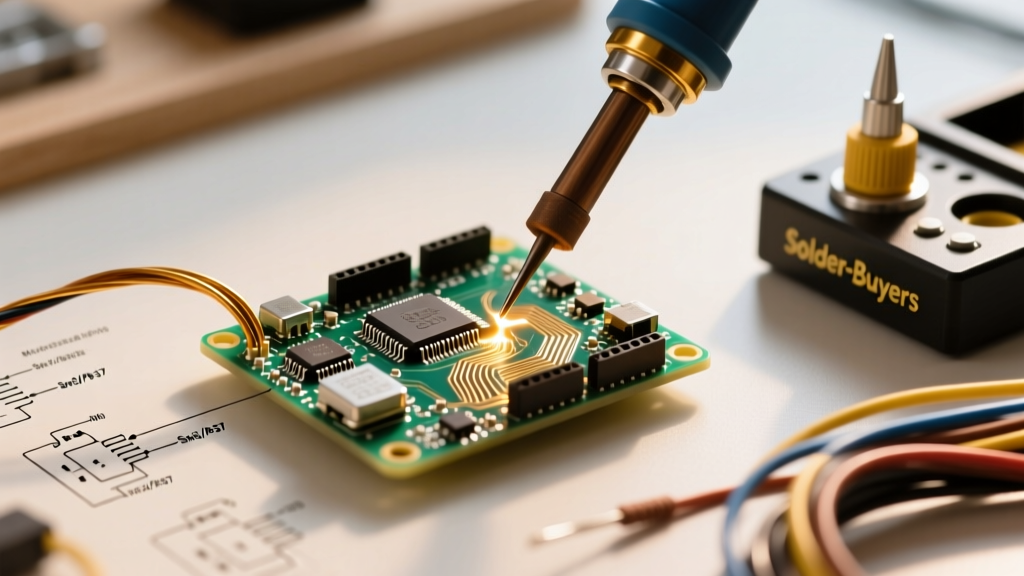
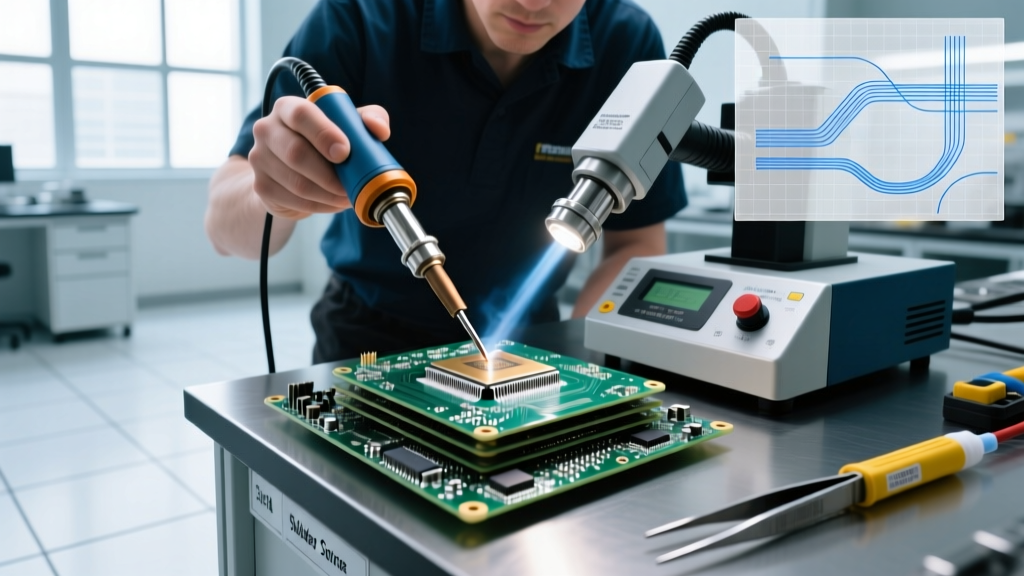
Most beginner soldering tutorials focus heavily on hand steadiness, iron temperature, and the angle of your tip. While technique matters, the number one reason beginners experience non-wetting, dewetting, and catastrophic cold joints is a fundamental misunderstanding of material compatibility. You cannot simply melt solder onto any metal and expect a reliable electrical or mechanical bond.
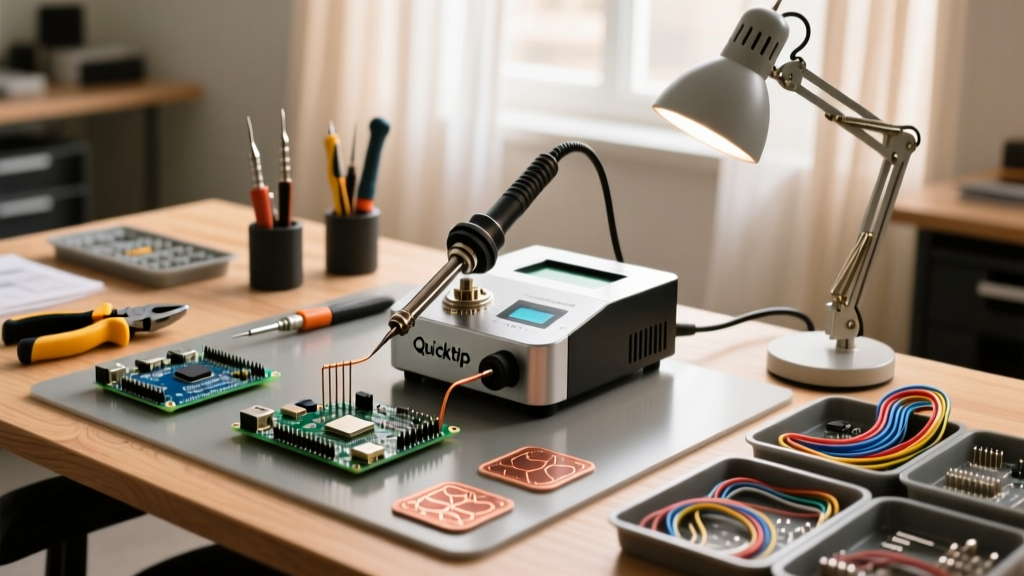
Soldering is not merely "gluing" metals together with heat; it is a metallurgical process where the molten alloy dissolves a microscopic layer of the base metal to form an intermetallic compound (IMC). If the base metal's oxide layer is too stable, or if your flux lacks the chemical activation to strip it, the solder will ball up and roll off. As of 2026, with budget smart-irons like the Pinecil V2 ($26) and mid-range stations like the Hakko FX-888D ($115) offering precise thermal control, temperature is rarely the bottleneck for beginners—chemistry is.
This guide maps out exactly which materials are compatible with standard beginner soldering setups, which require intermediate chemical intervention, and which you should avoid entirely until you master advanced metallurgy.
Material Compatibility Matrix for Standard Electronics
Before applying heat, you must identify your base metal. The table below categorizes common metals by their solderability using standard rosin-based or no-clean fluxes.
| Base Metal | Solderability | Required Flux Type (IPC Classification) | Recommended Alloy | Beginner Verdict |
|---|---|---|---|---|
| Copper (Bare/Tinned) | Excellent | Rosin (RO) / Mildly Activated (ROM1) | Sn60/Pb40 or SAC305 | Highly Recommended |
| Brass | Good | Rosin Activated (RA / ROM1) | Sn63/Pb37 | Recommended (Watch Heat) |
| Nickel / ENIG | Poor (Passivated) | Water-Soluble (OR) / No-Clean (REL1) | Sn63/Pb37 with Ag | Intermediate (Pre-tin first) |
| Stainless Steel | Very Poor | Acid/Chloride (Inorganic - IN) | Sn50/Pb50 (High Temp) | Avoid (Corrosive Flux) |
| Aluminum | Zero (Standard) | Specialty Fluoride / Mechanical | Zn-Al or Sn-Zn | Avoid (Requires Abrasion) |
| Kovar / Alloy 42 | Poor | Highly Activated Rosin (RA) | Sn96.5/SAC305 | Avoid (Thermal Shock Risk) |
The "Easy Tier": Copper, Brass, and Tin-Plated Components
If you are starting your beginner soldering journey, your workspace should consist almost entirely of the "Easy Tier." These metals readily form intermetallic bonds with standard tin-lead or lead-free alloys when paired with mild fluxes.
Copper and Tinned Copper
Copper is the gold standard for electronics. When heated, the rosin flux in your solder wire (such as the industry-standard Kester 44) melts and chemically reduces the copper oxide (CuO) layer. This exposes pure copper, allowing the tin in your solder to form a Cu6Sn5 intermetallic layer.
- Optimal Temperature: 320°C (608°F) for Sn60/Pb40; 350°C (662°F) for SAC305 (Lead-Free).
- Dwell Time: 1.5 to 3 seconds. Exceeding 5 seconds risks delaminating the copper pad from the FR4 fiberglass substrate.
Brass Connectors and Terminals
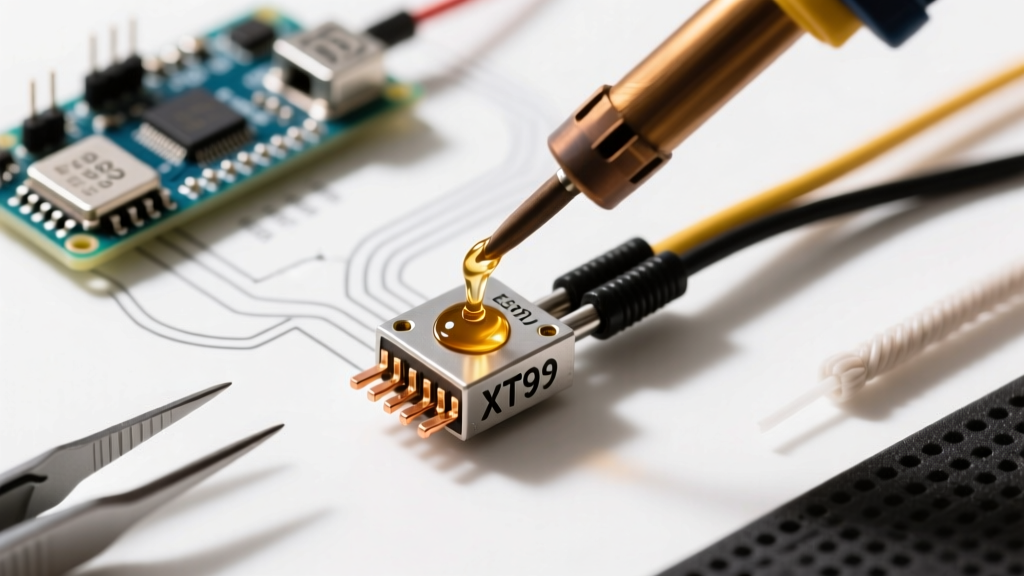
Brass (an alloy of copper and zinc) is common in RC hobbies, automotive connectors, and heavy-duty battery tabs. While it solders well, beginners often make a critical error: overheating. Zinc has a relatively low boiling point (907°C). If you use a high-wattage iron (like a 200W Weller W100PG) and hold it on a brass XT60 connector for too long, the zinc will begin to outgas, creating microscopic voids in the solder joint known as "zinc pitting."
Pro-Tip for Brass: Always use a high-thermal-mass chisel tip (e.g., Hakko T18-D24) and apply external liquid flux (like MG Chemicals 8341 No-Clean) to the brass before touching the iron. This reduces the required dwell time to under 2 seconds, preventing zinc outgassing.
The "Intermediate Tier": Nickel and Silver
As you progress, you will encounter nickel-plated components, such as ENIG (Electroless Nickel Immersion Gold) PCB pads or nickel-strip battery packs. Nickel is notoriously difficult to solder because it forms a highly stable, passivating oxide layer that standard mildly-activated rosin fluxes cannot penetrate.
Why Standard Rosin Fails on Nickel
According to the IPC J-STD-001 standard, flux activity levels are categorized by their ability to strip oxides. Standard RO (Rosin) fluxes are too weak for nickel. If you attempt to solder a nickel strip with standard wire, you will experience non-wetting—the solder will form a perfect sphere and sit on top of the metal like water on a waxed car.
The Beginner Workaround: Pre-Tinning
Rather than buying highly corrosive water-soluble (OR) fluxes that require ultrasonic cleaning, beginners should use the "pre-tinning" method:
- Apply a generous amount of high-activity No-Clean paste flux (e.g., Amtech NS-11) directly to the nickel.
- Use a tinned iron tip to "scrub" the nickel surface gently while feeding a high-silver solder alloy (like Sn62/Pb36/Ag2). The silver helps prevent the nickel from leaching into the solder joint (a phenomenon known as leaching or scavenging).
- Once a dull, grey layer of solder coats the nickel, clean it with 99% isopropyl alcohol.
- You can now use standard beginner soldering techniques to attach your wire to the pre-tinned nickel.
The "Do Not Attempt" Tier: Aluminum and Stainless Steel
Many beginners attempt to repair aluminum radiator tanks, stainless steel RC car chassis, or cast-iron brackets using their standard electronics soldering station. This will result in total failure and potentially ruined equipment.
The Thermodynamics of Aluminum Oxide
Aluminum is protected by a layer of aluminum oxide (Al2O3). While pure aluminum melts at 660°C, aluminum oxide melts at 2,072°C (3,762°F). Standard electronics solder melts between 183°C and 227°C. When you touch your iron to aluminum, the solder is separated from the base metal by an impenetrable ceramic shell.
To solder aluminum, professionals use highly corrosive fluoride-based fluxes and physically abrade the surface through the liquid flux pool using a fiberglass scratch pen to prevent the oxide from reforming. Furthermore, the NASA-STD-8739.3 Workmanship Standard explicitly warns against using standard electronics fluxes on structural or dissimilar aerospace metals due to severe galvanic corrosion risks. As a beginner, if your project involves aluminum or stainless steel, switch to mechanical fastening (screws/rivets) or use conductive epoxies like MG Chemicals 8331.
Real-World Failure Modes & Troubleshooting
When material compatibility is ignored, specific visual failure modes occur. Recognizing these will save you hours of frustration.
- Dewetting (The "Pull-Back" Effect): The solder initially wets the metal but then pulls back into islands, leaving a thin, dull film of solder behind. Cause: The base metal has a heavy oxide layer or contamination (like silicone conformal coating) that the flux couldn't fully dissolve. Fix: Abrade the metal with 600-grit sandpaper and use an RA (Rosin Activated) flux.
- Non-Wetting (The "Water on Wax" Effect): The solder refuses to spread, maintaining a high contact angle (>90 degrees). Cause: Wrong material (e.g., trying to solder stainless steel with rosin flux) or the iron temperature is too low to activate the flux chemistry. Fix: Verify base metal. If it is solderable, increase iron temp by 20°C and apply external liquid flux.
- Disturbed Joint (Frosty/Grainy Appearance): Common when soldering large brass or copper ground planes. The solder solidifies while the component is still moving, or the thermal mass of the metal pulls heat away too quickly, causing a fractured IMC layer. Fix: Upgrade to a higher wattage station (minimum 65W) to maintain thermal equilibrium.
Frequently Asked Questions (FAQ)
Can I use plumbing acid flux for electronics if I run out of rosin?
Absolutely not. Plumbing fluxes (like Oatey No. 95) contain zinc chloride and ammonium chloride. These are inorganic acids that will rapidly corrode copper traces, cause electrical shorts via dendritic growth, and destroy your PCB within weeks. Always use RO, RMA, or No-Clean fluxes designed for electronics.
Does lead-free solder (SAC305) change material compatibility?
Lead-free alloys like SAC305 (Tin/Silver/Copper) require higher temperatures (350°C+) and have poorer wetting characteristics than Sn60/Pb40. While the compatibility of the base metals remains the same, the difficulty increases. Beginners should stick to 60/40 or 63/37 leaded solder until they master thermal management, provided local regulations (like RoHS) allow it for hobbyist/prototype use.
How do I solder to a component with unknown plating?
If you inherit a batch of vintage components or surplus connectors with unknown plating, perform a "test wet" on a non-critical area using a cotton swab dipped in white vinegar. If it fizzes, it is likely zinc or a reactive base metal. For unknowns, clean with isopropyl alcohol, apply a mild No-Clean flux, and attempt to pre-tin with a low-temperature alloy like Sn42/Bi58 (melts at 138°C) to avoid burning off delicate underlying platings.