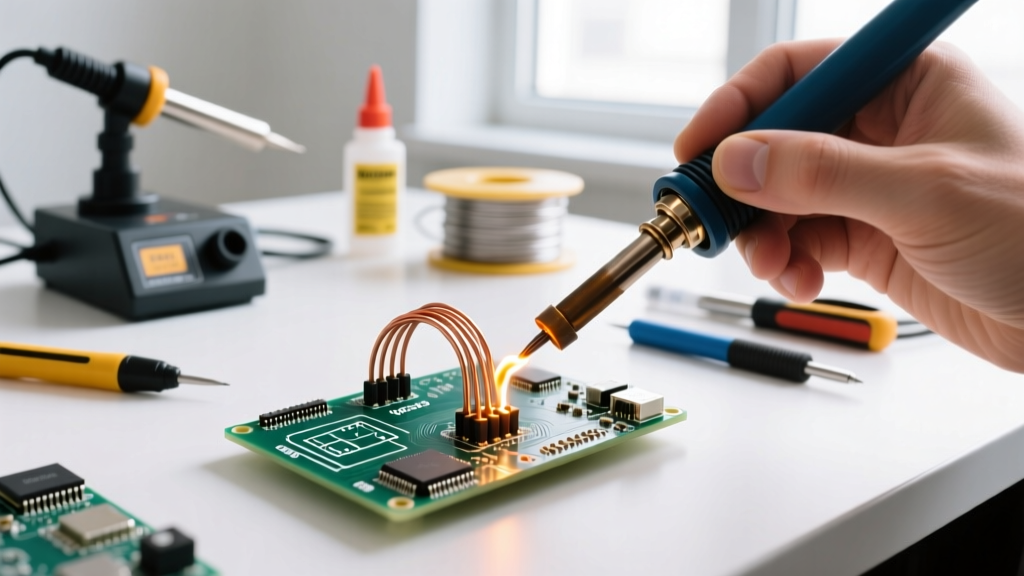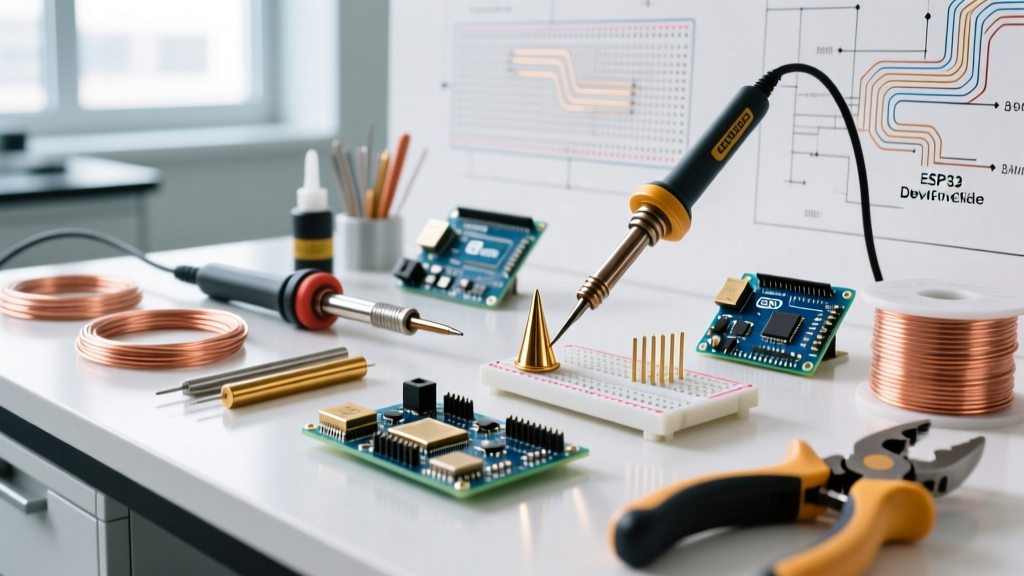

The Hidden Hurdle in Soldering Learning: Material Science
When beginners embark on their soldering learning journey, the focus is almost entirely on technique: how to hold the iron, how much solder to feed, and how long to apply heat. However, the most common cause of early failure—cold joints, lifted pads, and non-wetting surfaces—isn't poor technique; it's a fundamental mismatch between the base material, the solder alloy, and the flux chemistry. Understanding metallurgy is the fastest way to flatten your soldering learning curve.
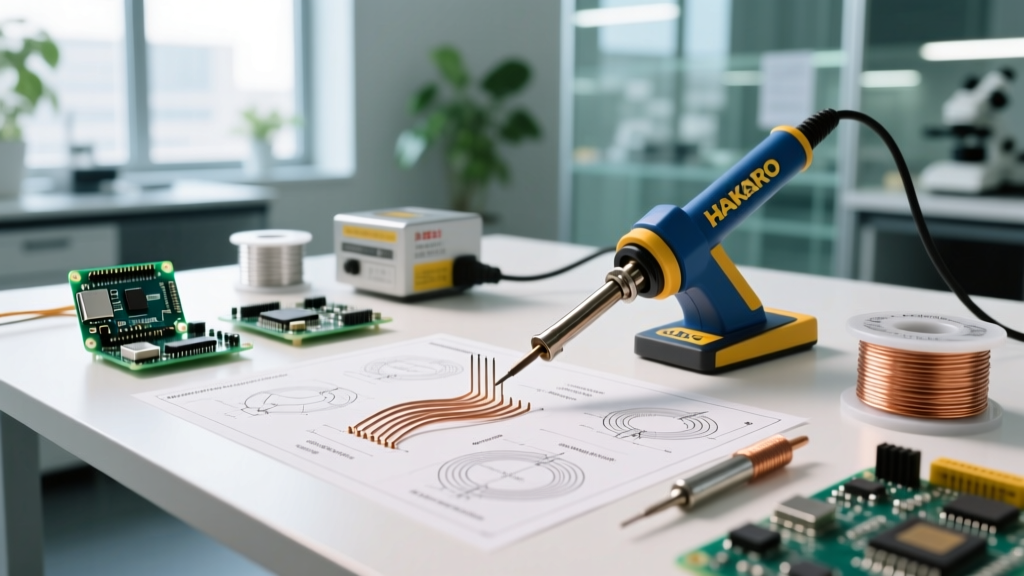
In 2026, the market offers a staggering variety of soldering stations, from the reliable Hakko FX-888D (retailing around $115) to advanced digital profiles like the Weller WE1010 ($130). Yet, even a $500 JBC station cannot force a standard rosin flux to wet bare aluminum. This guide maps out exact material compatibility profiles, providing actionable data on alloys, flux activators, and thermal thresholds to ensure your joints meet the rigorous visual and mechanical standards outlined by the NASA Workmanship Standards and IPC Standards.
Base Metal Compatibility Matrix for Beginners
Before applying heat, you must identify your base metal. Use this matrix to select the correct consumables and thermal profile for your specific project.
| Base Material | Recommended Alloy | Flux Type (IPC J-STD-004) | Optimal Tip Temp | Learning Difficulty |
|---|---|---|---|---|
| Bare Copper / PCB Pads | Sn63/Pb37 or SAC305 | RO (Rosin) - RMA | 315°C - 340°C | Low |
| Enameled Magnet Wire (UEW) | Sn60/Pb40 | None (Self-Fluxing) or RO | 360°C - 380°C | Medium |
| Brass Terminals | Sn63/Pb37 | RE (Resin) or Mild OR | 330°C - 350°C | Medium |
| Nickel-Plated Connectors | SAC305 or Sn96.5/Ag3.5 | OR (Organic) Water-Soluble | 350°C - 370°C | High |
| Aluminum / Stainless Steel | Sn95/Sb5 or Indium-based | IN (Inorganic) / Zinc Chloride | 380°C - 420°C | Expert |
Copper and Bare PCB Traces: The Baseline
Copper is the foundational metal for 90% of electronics work. Its oxide layer (Cu2O) is relatively thin and easily dissolved by mild rosin fluxes. For beginners, the eutectic alloy Sn63/Pb37 (such as Kester 44) remains the gold standard for soldering learning. Because it transitions from solid to liquid instantly at 183°C without a plastic (pasty) phase, it drastically reduces the risk of disturbing the joint during cooling—a primary cause of fractured grain structures and cold joints.
If your workspace or local regulations mandate lead-free, you will be using SAC305 (Tin 96.5%, Silver 3%, Copper 0.5%). SAC305 melts between 217°C and 220°C. Because lead-free alloys have higher surface tension, they do not 'flow' or wet as easily as leaded solders. You must increase your iron tip temperature to roughly 350°C and allow an extra 0.5 to 1 second of dwell time to ensure the flux activators have time to reduce the copper oxides before the solder wire is fed.
The Polyurethane Trap: Enameled Magnet Wire
Winding custom inductors or repairing motors introduces enameled copper wire. The most common beginner mistake is attempting to mechanically strip ultra-fine magnet wire (AWG 30+), which inevitably snaps the copper core. Instead, look for UEW (Urethane) enameled wire. UEW is 'direct solderable'—the polyurethane coating acts as a flux when exposed to temperatures above 360°C, vaporizing and allowing the molten solder to wet the copper simultaneously. Conversely, PEAI (Polyesterimide) wire will not burn off; it requires chemical stripping or careful mechanical abrasion before soldering.
Brass and Nickel: Overcoming the Wetting Barrier
Brass is an alloy of copper and zinc. When subjected to prolonged heat from a soldering iron, the zinc near the surface can volatilize or oxidize rapidly, creating a porous, non-wettable barrier known as dezincification. To solder brass terminals successfully, you must use a mildly activated flux (RMA) and work quickly. Keep your iron tip broad (like a chisel or bevel) to maximize thermal transfer, reducing the time the brass spends at elevated temperatures.
Nickel-plated connectors present a different challenge. Nickel oxidizes aggressively, and standard rosin fluxes are often too weak to breach the oxide layer. For nickel, transition to a water-soluble organic (OR) flux. These fluxes contain stronger organic acid activators that strip nickel oxides effectively. However, they leave behind highly corrosive residues that must be cleaned with distilled water or a specialized saponifier immediately after the joint cools, otherwise, dendritic growth and short circuits will occur within weeks.
Aluminum and Stainless Steel: The Advanced Tier
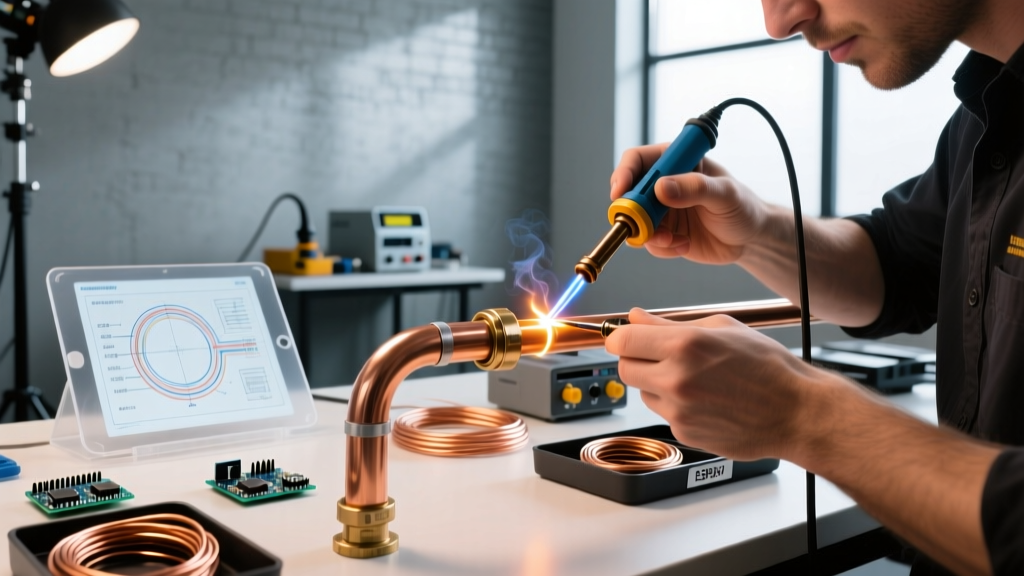
If your soldering learning path leads you to RC hobbies, automotive wiring, or custom chassis work, you will eventually encounter aluminum. Standard soldering fails on aluminum due to its oxide layer (Al2O3). While the base aluminum melts at a mere 660°C, the aluminum oxide shell melts at an astonishing 2072°C. No standard soldering iron can reach this temperature, and rosin flux cannot dissolve it.
Pro-Tip for Aluminum Soldering: To solder aluminum, you must use a specialized Zinc Chloride-based inorganic flux and a high-tin alloy like Sn95/Sb5. Apply a pool of molten solder to the aluminum surface, then use the tip of the iron or a stainless steel pick to physically scratch the base metal through the liquid solder pool. The liquid solder blocks oxygen, preventing the oxide from reforming while the flux attacks the existing layer.
Be warned: soldering aluminum to copper creates a galvanic cell. In the presence of ambient moisture, the aluminum will act as a sacrificial anode and corrode rapidly. Always seal aluminum-to-copper solder joints with heat-shrink tubing containing an adhesive inner lining to block moisture ingress.
Flux Chemistry: Matching the Activator to the Oxide
According to the IPC J-STD-004 standard, fluxes are categorized by their chemical composition and activity level. Understanding these acronyms is critical for selecting the right chemistry for your base material:
- RO (Rosin): Derived from pine sap. Excellent for bare copper and PCBs. Leaves a benign, non-conductive residue that can often be left unwashed (No-Clean).
- RE (Resin): Synthetic rosins with better thermal stability. Ideal for automated processes or prolonged hand-soldering on multi-layer boards.
- OR (Organic): Water-soluble fluxes containing organic acids (like lactic or citric acid). Highly active, perfect for nickel and heavily oxidized brass, but requires mandatory post-solder cleaning.
- IN (Inorganic): Contains strong mineral acids (like hydrochloric or zinc chloride). Used exclusively for plumbing, structural metals, and aluminum. Never use IN flux on printed circuit boards; the corrosive salts will destroy copper traces.
Iron Tip Metallurgy and Copper Leaching
A vital, often overlooked aspect of soldering learning is tip maintenance. Modern soldering tips are not solid copper; they are a copper core plated with a thin layer of iron to resist erosion, and finally coated in chromium to prevent solder from climbing up the shaft.
When using lead-free alloys like SAC305, the high tin content aggressively attacks the iron plating—a phenomenon known as copper leaching or tip erosion. A tip that lasts six months with Sn63/Pb37 may degrade in three weeks with SAC305 if left idle at 380°C. To combat this in 2026, always practice 'tip tinning': before turning off your station, melt a thick blob of solder over the working end of the tip. This sacrificial layer oxidizes instead of the iron plating, dramatically extending the lifespan of premium tips like the Weller RT series or Hakko T18 line.
Frequently Asked Questions
Why does my solder ball up and refuse to stick to the pad?
This is called 'dewetting' and occurs when the base metal is oxidized beyond the cleaning capacity of your flux, or the pad is contaminated with skin oils or conformal coating. Clean the pad with 99% isopropyl alcohol, apply a fresh drop of liquid RMA flux, and re-tin the pad with a lower-temperature leaded alloy before attempting the final joint.
Can I use plumbing solder for electronics?
Absolutely not. Plumbing solder typically uses a 50/50 Tin/Lead ratio (which has a wide plastic phase, leading to unreliable electrical joints) and is paired with highly corrosive acid flux. The acid flux will vaporize into your PCB laminate and cause immediate, catastrophic short circuits and trace corrosion.
What is the best solder diameter for learning?
For general through-hole components and PCB work, a wire diameter of 0.8mm (0.031 inches) is optimal. It provides enough volume to fill standard plated-through holes without requiring excessive feeding, allowing the beginner to focus on heat management rather than wire coordination.