
Soldering aluminium is fundamentally different from soldering copper, brass, or standard PCB traces. The tenacious aluminium oxide layer (Al2O3) melts at over 2,072°C (3,762°F), which is vastly higher than the melting point of standard tin-lead or lead-free solders. To achieve a true metallurgical bond, technicians must use highly aggressive, corrosive fluxes—often containing fluorides, chlorides, or fluoborates—paired with specialized alloys like Tin-Zinc (Sn95Zn5). While this process yields incredibly strong and conductive joints for heat sinks, RF shields, and structural electronics, it introduces severe safety hazards that standard electronics soldering protocols simply do not cover.
As of 2026, occupational health standards have become much stricter regarding inorganic acid fumes and fluoride exposure. This comprehensive guide details the exact safety best practices, PPE requirements, and chemical handling protocols necessary for safe aluminium soldering in both professional and advanced DIY environments.
The Chemistry of Danger: Understanding Aluminium Fluxes
Unlike mild rosin-based (RMA) or no-clean fluxes used in standard PCB assembly, aluminium soldering fluxes are designed to chemically etch through the oxide layer. This chemical violence releases hazardous byproducts. According to the IPC J-STD-004 standard, these formulations fall under highly active inorganic acid categories. Understanding your specific flux chemistry is the first step in hazard mitigation.
| Flux Type | Common Brands/Examples | Active Ingredients | Primary Health Hazards | Required Neutralization |
|---|---|---|---|---|
| Fluoride-Based | Superior Flux RubyFluid, Alusol | Fluoboric acid, Ammonium bifluoride | Severe respiratory irritation, skin burns, systemic fluoride toxicity | 5% Sodium Bicarbonate wash, followed by DI water rinse |
| Chloride-Based | Harris Al-Solder Flux, La-Co | Zinc chloride, Ammonium chloride | Hydrogen chloride gas release, eye damage, metal fume fever risk | Warm water flush, mild alkaline detergent |
| Organic Acid (Mild) | Specialty Sn-Zn pastes (Rare) | Adipic acid, Glutaric acid | Mild eye/skin irritation, standard rosin-asthma risks | Isopropyl Alcohol (IPA) or standard saponifier |
PPE and Ventilation: Building Your Safety Perimeter
Standard benchtop fans are entirely inadequate for aluminium soldering. The fumes generated by fluoride and chloride fluxes can cause immediate mucosal damage and long-term respiratory issues. Cornell University Environmental Health and Safety (EHS) guidelines mandate local exhaust ventilation (LEV) with specific filtration for acid gases, not just particulate matter.
1. Respiratory Protection
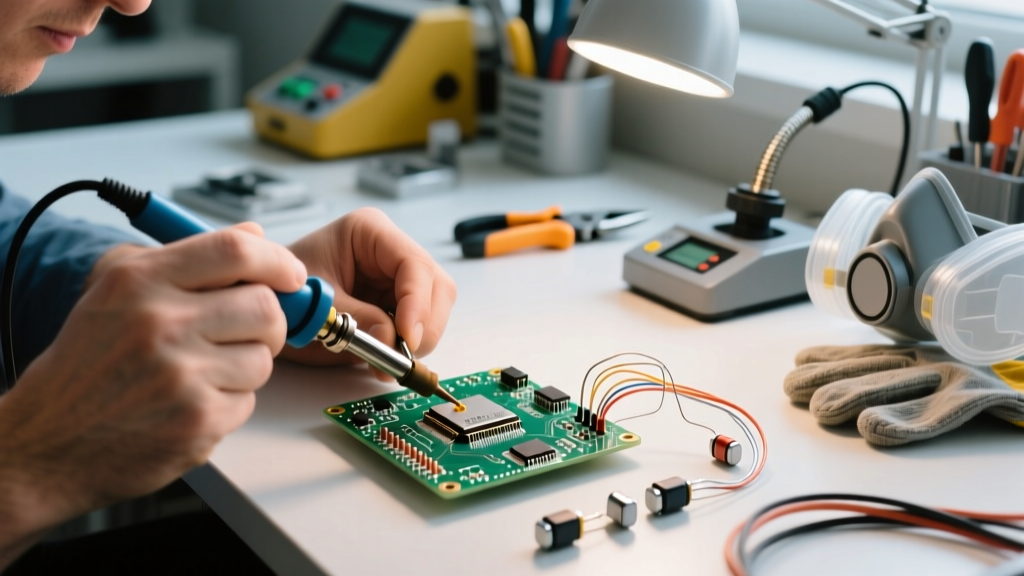
If a dedicated LEV system is unavailable, you must use a half-mask respirator. A standard N95 or P100 particulate filter will not stop acid gas vapors. You need an organic vapor/acid gas cartridge.
- Recommended Mask: 3M 6200 or 7502 Half Mask.
- Required Cartridges: 3M 6003 (Acid Gas/Organic Vapor) or 6006 (Multi-Gas). Current market pricing for a compliant 3M half-mask setup ranges from $85 to $120.
- Fit Testing: Ensure a positive and negative pressure seal check before every session.
2. Eye and Skin Protection
Fluoride fluxes can cause deep, painless tissue burns that may not be felt until hours after exposure. Latex gloves are porous to these chemicals and will degrade rapidly.
- Gloves: Minimum 5-mil Nitrile gloves. Change them immediately if flux splashes occur.
- Eye Protection: ANSI Z87.1 rated splash goggles. Standard safety glasses are insufficient due to the risk of liquid flux spitting when heated.
- Apron: A chemical-resistant neoprene or heavy PVC apron to protect clothing from corrosive drips.
3. Fume Extraction Hardware
For professional setups in 2026, the Metcal MX-A500 or Hakko FX-1000 fume extractors equipped with specialized acid-gas carbon modules are the industry standard. These units utilize a multi-stage filtration process: a pre-filter for large particulates, a HEPA filter for fine smoke, and a deep-bed activated carbon layer treated with potassium permanganate to neutralize acid gases. Expect to invest between $800 and $1,200 for a fully compliant extraction unit, with replacement filter cartridges costing roughly $150 every 600 hours of use.
Step-by-Step Safe Soldering Protocol
Safety in aluminium soldering extends beyond PPE; it requires a disciplined workflow to minimize chemical exposure and ensure joint integrity. Follow this exact sequence:
- Mechanical Pre-Cleaning: Never rely solely on flux to clean heavy oxidation. Use a stainless-steel wire brush or 400-grit silicon carbide sandpaper to remove the bulk oxide layer. Do this before applying flux to reduce the amount of aggressive chemical needed.
- Flux Application: Apply a thin, even layer of your chosen aluminium flux (e.g., Sn95Zn5 compatible paste or liquid fluoborate flux). Use a dedicated acid-resistant brush—do not use your standard rosin flux brushes to avoid cross-contamination.
- Controlled Heating: Use a high-wattage soldering station (minimum 80W, like the Weller WE1010 or JBC CD-2BQE) to heat the joint rapidly. Prolonged, low-heat application causes the flux to bake and release excessive, continuous fumes. Target a tip temperature of 350°C to 380°C for rapid thermal transfer.
- Solder Introduction: Feed the Tin-Zinc (Sn95Zn5) or Indalloy wire into the joint, not directly onto the iron tip. Allow capillary action to draw the solder under the flux layer.
- Immediate Neutralization: This is the most critical safety step. Once the joint cools below 50°C, apply a 5% sodium bicarbonate (baking soda) and distilled water solution to the joint. You will see effervescence (bubbling) as the acid is neutralized.
- Final Rinse and Dry: Scrub the neutralized area with a stiff nylon brush under warm running water, then dry thoroughly with compressed air or a lint-free wipe to prevent secondary galvanic corrosion.
Expert Warning: Never use a standard soldering iron tip cleaner (brass wool or damp sponge) to wipe your tip after aluminium soldering. The aggressive flux will rapidly destroy the iron plating on standard tips. Use dedicated, heavily iron-plated tips (like Weller's LT series 'AL' variants) and clean them with a dry, high-temp silicone tip cleaner.
Failure Modes: The Cost of Skipping Neutralization
Failing to properly neutralize and clean aluminium solder joints leads to catastrophic failure modes that compromise both the device and the user's safety.
Galvanic and Crevice Corrosion
Residual chloride or fluoride salts are highly hygroscopic—they absorb moisture from the ambient air. When combined with the dissimilar metals in the solder joint (e.g., Tin/Zinc and Aluminium), this creates a microscopic galvanic cell. Within weeks, the joint will develop a white, powdery aluminium oxide crust, leading to high electrical resistance and eventual mechanical fracture.
Substrate Etching
If flux is left on thin aluminium sheets (such as RF shielding cans or battery tabs), the continuous acid etching will eventually perforate the metal. This is a common failure mode in DIY lithium-ion battery pack assembly where aluminium busbars are soldered without rigorous post-solder cleaning.
Expert Troubleshooting & Edge Cases
What if I accidentally inhale a large amount of fluoride flux smoke?
According to NIOSH guidelines on welding and soldering fumes, acute exposure to fluoride gases can cause nasal bleeding, throat irritation, and nausea. Immediately move to fresh air. If symptoms persist for more than 15 minutes, or if you experience shortness of breath, seek medical attention and inform the physician of potential hydrogen fluoride/fluoroboric acid exposure.
Can I use aluminium soldering flux on copper PCB pads?
Technically yes, but it is a severe safety and reliability risk. The flux will aggressively etch the copper traces and the underlying FR4 fiberglass substrate. Furthermore, cleaning the flux from the tight crevices of a PCB is nearly impossible, guaranteeing long-term dendritic growth and short circuits. Always use mechanical fasteners or ultrasonic welding for aluminium-to-copper transitions when possible.
How do I safely dispose of spent aluminium flux?
Spent inorganic acid fluxes are classified as hazardous waste due to their low pH and heavy metal content (from dissolved aluminium and solder alloys). Do not pour them down the drain. Collect waste flux and neutralization runoff in a high-density polyethylene (HDPE) container, label it as 'Corrosive Waste - Mixed Acids', and dispose of it through a certified local hazardous waste facility, adhering to OSHA and local environmental regulations.
Final Thoughts on Aluminium Soldering Safety
Aluminium soldering is a highly rewarding technique that bridges the gap between traditional electronics assembly and light metalworking. However, the transition from rosin fluxes to inorganic acids requires a complete overhaul of your safety mindset. By investing in proper acid-gas filtration, utilizing heavy-duty nitrile PPE, and strictly adhering to post-solder neutralization protocols, you can achieve robust, low-resistance aluminium joints without compromising your long-term health or workspace integrity.