
The Reality of On-Device vs. Cloud STT in 2026
For years, the phrase "speech to text Arduino" meant wiring a microphone to an Arduino Uno, realizing it lacked the RAM to process audio, and ultimately offloading the heavy lifting to a Raspberry Pi or PC running Python. In 2026, the landscape has fundamentally shifted. The maker community now leverages high-performance Edge AI microcontrollers and dedicated voice co-processors to achieve true on-device speech recognition, alongside robust Wi-Fi-enabled pipelines that stream audio directly to cloud-based Large Language Models (LLMs) and Whisper APIs.
This community resource roundup cuts through the outdated tutorials. We will examine the exact hardware, open-source libraries, and wiring configurations you need to build reliable speech to text Arduino projects today, whether you need offline command recognition or full-sentence cloud dictation.
Community-Recommended Hardware for Arduino STT
Choosing the right board is the most critical decision in your STT pipeline. Standard 8-bit AVR boards (Uno/Nano) simply cannot run neural networks. Below is a comparison of the top hardware solutions vetted by the ElectricalFlux community in 2026.
| Hardware Module | Core Architecture | RAM / PSRAM | STT Capability | Avg. Price (2026) |
|---|---|---|---|---|
| Seeed Studio XIAO ESP32S3 Sense | Dual-Core 240MHz (ESP32-S3) | 512KB SRAM / 8MB PSRAM | Edge AI (MultiNet) & Cloud | $16 - $19 |
| Elechouse Speech Recognition V3.1 | Dedicated Audio DSP (ATmega168) | N/A (Handled internally) | Offline Command Words Only | $26 - $32 |
| Arduino Nano 33 BLE Sense Rev2 | ARM Cortex-M4F (nRF52840) | 256KB RAM / 1MB Flash | TinyML Keyword Spotting | $45 - $52 |
| Custom ESP32 + INMP441 I2S Mic | Dual-Core 240MHz (ESP32) | 520KB SRAM / 4MB PSRAM | Cloud API Streaming | $8 - $12 |
Deep Dive: Top Community Hardware Setups
1. The Edge AI Favorite: Seeed Studio XIAO ESP32S3 Sense
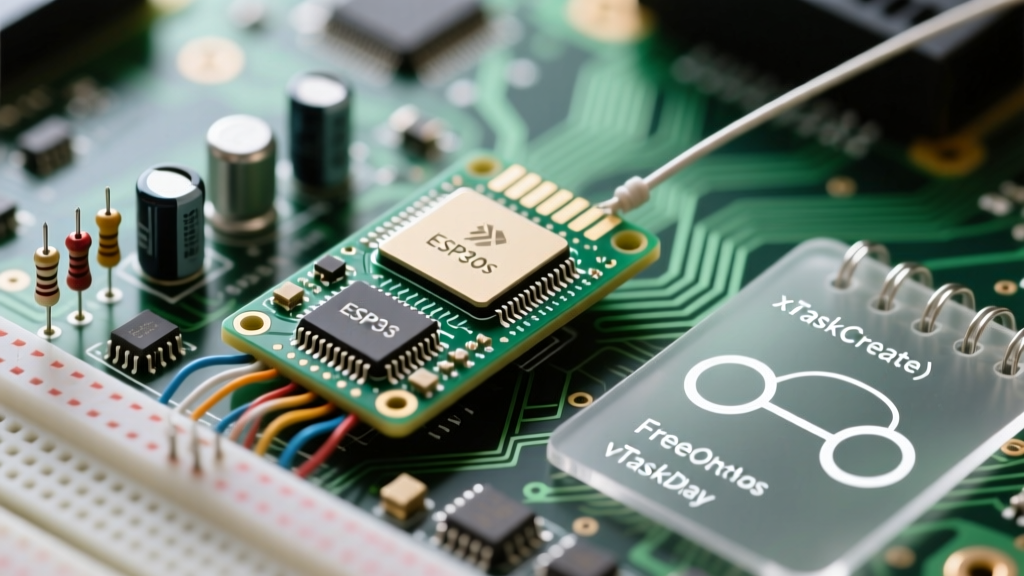
The XIAO ESP32S3 Sense has become the undisputed community favorite for offline speech to text Arduino projects. It features an integrated MSM261D3526H1CPM PDM microphone and supports Espressif’s ESP-SR framework. According to the Seeed Studio XIAO ESP32S3 Sense Wiki, the 8MB PSRAM is crucial for loading the MultiNet offline speech recognition models without crashing the system.
Pro-Tip: When using the XIAO for STT, ensure you enable SPIRAM_USE_MALLOC in your sdkconfig file. By default, the Arduino IDE may not allocate the neural network weights to PSRAM, leading to immediate "Out of Memory" (OOM) panics upon boot.
2. The AVR Workaround: Elechouse Speech Recognition Module V3.1
If your project strictly requires an Arduino Uno or Mega, the Elechouse V3.1 is your best option. It acts as a voice co-processor. You train it to recognize up to 80 specific command words (e.g., "Turn on lights", "Open garage"). It processes the audio internally and sends a simple hex byte via UART or I2C to your Arduino when a match is found.
Community Warning: The Elechouse V3.1 is a command word recognizer, not a dictation engine. It cannot transcribe arbitrary sentences into text strings. It is strictly for voice-activated control logic.
Essential Open-Source Libraries & Frameworks
The software ecosystem for MCU-based audio processing has matured significantly. Here are the libraries you should be pulling into your 2026 projects:
- Espressif ESP-SR: The gold standard for ESP32-S3 boards. It includes WakeNet (for wake-word detection like "Hi ESP") and MultiNet (for offline command recognition). You can explore the source and model quantization options on the official Espressif ESP-SR GitHub repository.
- TensorFlow Lite for Microcontrollers: Ideal for the Arduino Nano 33 BLE Sense. You will need to train a custom keyword-spotting model using Edge Impulse, export it as a C++ byte array, and run inference on the PDM audio buffer. The TensorFlow Lite Micro documentation provides the exact DSP preprocessing steps required for audio spectrograms.
- ArduinoAudio (I2S Library): For cloud-streaming projects, this library handles the DMA (Direct Memory Access) double-buffering required to read from INMP441 MEMS microphones without dropping audio frames.
Community Spotlight: Cloud-API Whisper Integration
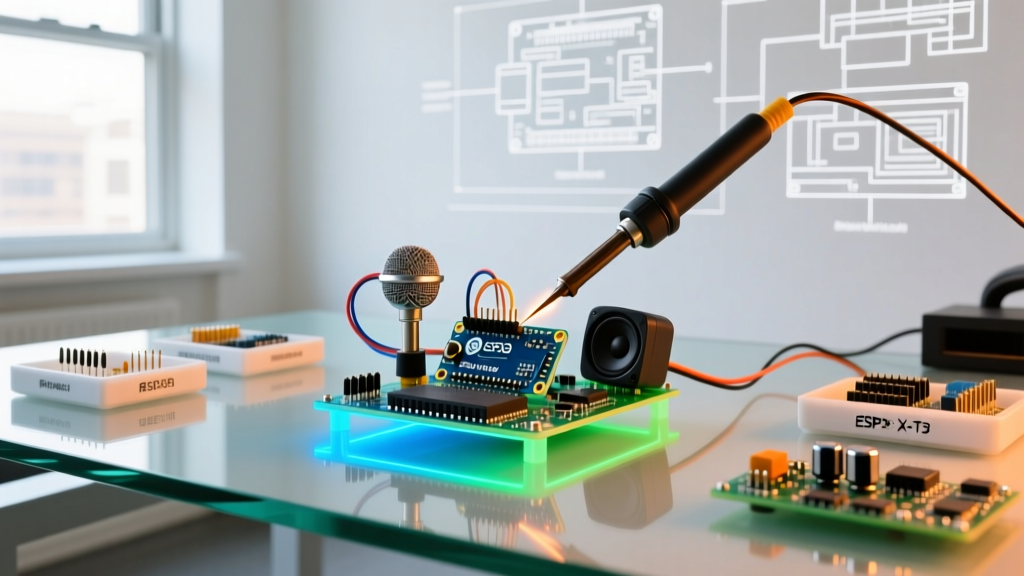
For applications requiring full sentence transcription (e.g., a voice-activated journal or smart home assistant that parses natural language), edge MCUs still fall short. The community's current standard is recording 16kHz, 16-bit mono PCM audio on an ESP32, encoding it to Base64, and POSTing it to OpenAI’s Whisper API or Google Cloud Speech-to-Text.
Wiring the INMP441 I2S Mic to ESP32:
- VDD to 3.3V (Do not use 5V, it will fry the MEMS capsule).
- GND to GND.
- L/R to GND (This configures the mic to output on the Left I2S channel; tying it to 3.3V selects the Right channel. Your code must match this).
- WS (Word Select) to GPIO 15.
- SCK (Bit Clock) to GPIO 14.
- SD (Serial Data) to GPIO 32.
Troubleshooting Common STT Failure Modes
Audio processing on microcontrollers is notoriously unforgiving. Here are the most common failure modes reported in the ElectricalFlux forums and how to fix them:
Failure Mode 1: "White Noise" or Static in Cloud Recordings
The Cause: I2S bit-clock (BCLK) and word-select (WS) phase mismatch, or reading the wrong audio channel. If your INMP441 L/R pin is tied to GND, but your I2S library is configured to read I2S_CHANNEL_FMT_RIGHT_LEFT instead of I2S_CHANNEL_FMT_ONLY_LEFT, you will capture empty buffer space, resulting in static.
The Fix: Explicitly define the channel format in your i2s_config_t struct. Additionally, ensure your sample rate is exactly 16000 Hz, as cloud APIs will reject or heavily distort 44100 Hz streams from MCUs due to bandwidth throttling.
Failure Mode 2: ESP32-S3 Rebooting During MultiNet Inference
The Cause: Stack overflow or PSRAM fragmentation. The ESP-SR MultiNet models require large contiguous memory blocks during initialization.
The Fix: Increase the FreeRTOS task stack size for your audio processing thread to at least 8192 bytes. Furthermore, initialize the ESP-SR model before initializing Wi-Fi or Bluetooth, as the radio stacks aggressively fragment the heap upon boot.
Failure Mode 3: Plosive Audio Clipping (P and B sounds)
The Cause: The PDM microphone's automatic gain control (AGC) is either disabled or reacting too slowly to sudden loud consonants, causing the 16-bit integer to overflow (clip).
The Fix: Implement a software limiter in your DMA interrupt service routine (ISR). Cap the absolute value of the audio samples at 32000 (leaving headroom below the 16-bit max of 32767) before pushing the buffer to the STT engine.
Frequently Asked Questions
Can I use a standard Arduino Uno for speech-to-text?
Not natively. The ATmega328P has only 2KB of SRAM, which is not enough to hold even a fraction of a second of audio data at a usable sample rate. You must use an Uno in conjunction with a dedicated co-processor like the Elechouse V3.1, or upgrade to an ESP32-based board.
Is offline STT accurate enough for commercial products?
Offline MCU STT (like ESP-SR MultiNet) is highly accurate for a limited vocabulary (up to 200 custom commands) in quiet environments. However, it struggles with background noise and arbitrary dictation. For commercial products requiring natural language understanding, streaming to a cloud API remains the industry standard in 2026.
How do I reduce power consumption for battery-operated voice projects?
Utilize a hardware wake-word detector (like Espressif's WakeNet) running on the ultra-low-power (ULP) co-processor. The main dual-core CPU stays in deep sleep, consuming microamps, and only wakes up when the specific acoustic signature of the wake word is detected by the ULP.