
Beyond the Basic PIR: The Modern Motion Sensor Landscape
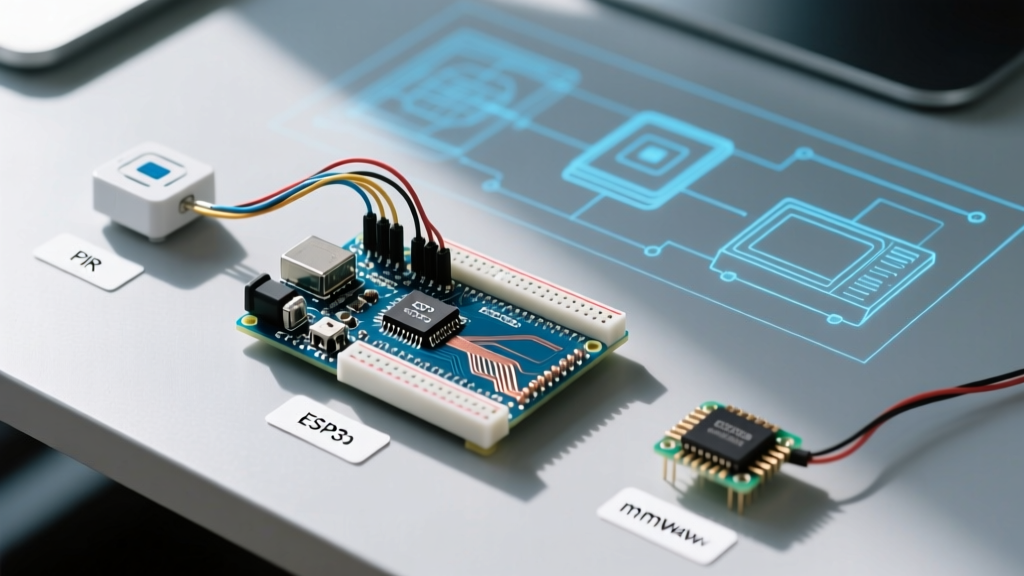
When makers search for how to create a motion detector with Arduino, the standard advice almost always points to the HC-SR501 PIR (Passive Infrared) sensor. While the HC-SR501 remains a staple, the 2026 maker ecosystem offers vastly superior alternatives for specific edge cases. Microwave Doppler sensors and 24GHz mmWave (Frequency Modulated Continuous Wave) radar modules now dominate advanced presence detection. However, integrating these modern sensors introduces complex compatibility hurdles regarding logic voltage levels, power budgets, and communication protocols.
This compatibility guide breaks down the exact hardware pairings, logic-level translation requirements, and power constraints you need to consider when pairing motion sensors with modern microcontrollers like the Arduino Uno R4, ESP32-C3, and Raspberry Pi Pico (RP2040).
Sensor Technology Matrix: PIR vs. Microwave vs. mmWave
Choosing the right sensor dictates your entire circuit design. Below is a technical comparison of the three most common motion detection modules available today.
| Feature | HC-SR501 (PIR) | RCWL-0516 (Microwave) | HLK-LD2410B (mmWave) |
|---|---|---|---|
| Detection Method | Infrared heat signature delta | 5.8GHz Doppler radar shift | 24GHz FMCW micro-movement |
| Static Presence | No (requires movement) | No (requires movement) | Yes (detects breathing) |
| Wall Penetration | No (blocked by acrylic/glass) | Yes (penetrates drywall/wood) | No (blocked by metal/thick walls) |
| Output Interface | Digital GPIO (High/Low) | Digital GPIO (High/Low) | UART Serial / GPIO |
| Typical Price | $1.50 - $2.50 | $2.00 - $3.50 | $4.50 - $7.00 |
Logic Level Compatibility: The 5V vs 3.3V Trap
The most common point of failure when building an Arduino motion detector is ignoring logic level thresholds. The classic HC-SR501 is designed for 5V systems and outputs a 5V HIGH signal on its OUT pin. If you connect this directly to a 3.3V microcontroller like the ESP32-C3 or Raspberry Pi Pico, you risk degrading the GPIO pin over time or instantly destroying the SoC.
Safe Interfacing Strategies
According to SparkFun's Logic Level Tutorial, mixing 5V and 3.3V logic requires careful translation. Here are the two best methods for stepping down a 5V PIR signal to a 3.3V MCU:
- Resistive Voltage Divider: The cheapest method. Place a 2kΩ resistor in series with the sensor's OUT pin, and a 3.3kΩ resistor pulling down to ground. This yields an output of roughly 3.11V, which is perfectly safe for a 3.3V GPIO while still registering as a logical HIGH.
- MOSFET Level Shifter: For high-speed or bi-directional needs (like UART on the mmWave sensor), use a BSS138 N-channel MOSFET or a dedicated IC like the CD4050 non-inverting buffer. This provides clean, fast edge transitions without the signal degradation seen in resistor dividers.
⚠️ Warning: Never rely on the internal clamping diodes of an ESP32 to absorb 5V over-voltage. While some datasheets mention 5V tolerance on specific pins, continuous exposure will lead to thermal runaway and chip failure. Always use external level shifting.
Power Budgeting for Battery-Operated Detectors
If your goal is to create a wireless, battery-powered motion node (e.g., using an ESP32 with an MQTT payload), your sensor's quiescent current draw is the ultimate bottleneck. Let's look at the math for a standard 2000mAh LiPo battery targeting a 1-year lifespan (8,760 hours).
Target Average Current = 2000mAh / 8760h ≈ 0.22mA (220µA)
Current Draw Comparison
- HC-SR501 (PIR): Draws approximately 50µA to 65µA in standby. Verdict: Highly compatible with battery nodes. Pair with the ESP32's deep sleep capabilities for multi-year operation.
- RCWL-0516 (Microwave): Draws roughly 2.8mA continuously to power the RF oscillator. Verdict: Incompatible with battery nodes. Will drain a 2000mAh LiPo in under a month.
- HLK-LD2410B (mmWave): Draws between 70mA and 110mA depending on target processing load. Verdict: Strictly for mains-powered (USB/wall-wart) projects.
Step-by-Step: Wiring the HLK-LD2410B mmWave to ESP32
The HLK-LD2410B has revolutionized static presence detection, but it requires UART communication rather than a simple GPIO read. The default baud rate is 256,000 bps, which overwhelms most software serial libraries. You must use hardware UART.
Hardware UART Pin Mapping (ESP32 DevKit V1)
As detailed in the Arduino Communication Tutorials, hardware serial buffers are mandatory for high-baud-rate radar data streams.
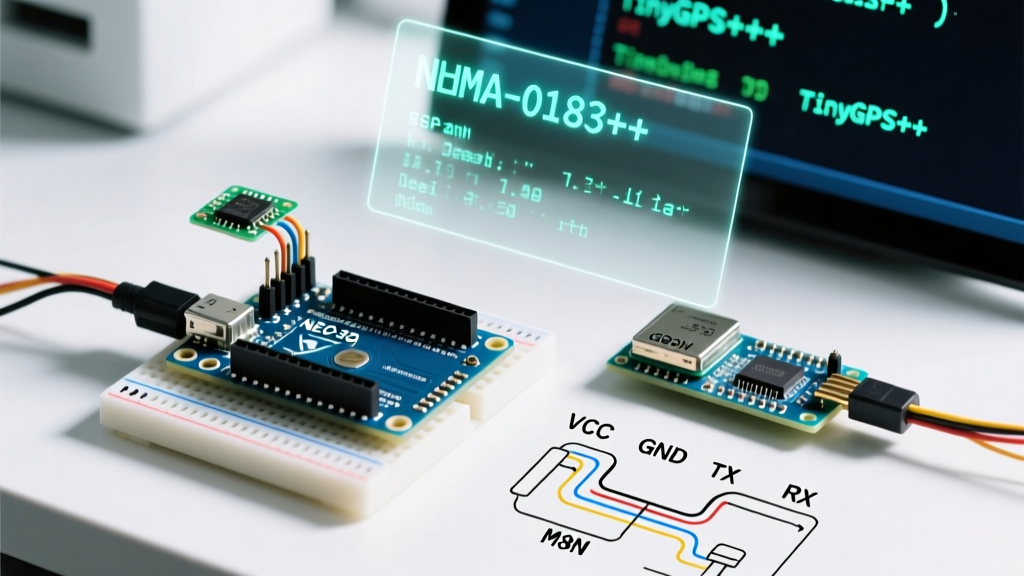
- LD2410 VCC → ESP32 5V (VIN pin)
- LD2410 GND → ESP32 GND
- LD2410 TX → ESP32 RX2 (GPIO 16)
- LD2410 RX → ESP32 TX2 (GPIO 17)
Note: The LD2410B operates on 3.3V logic for its UART lines, making it natively compatible with the ESP32 without level shifters, provided you power the VCC pin with 5V for stable internal voltage regulation.
Initialization Code Snippet
When initializing the serial port in your Arduino IDE sketch, ensure you define the correct pins and baud rate:
HardwareSerial RadarSerial(2); // Use UART2
void setup() {
  Serial.begin(115200); // Debug console
  RadarSerial.begin(256000, SERIAL_8N1, 16, 17); // LD2410 UART
}
Troubleshooting Edge Cases and Interference
Even with perfect wiring, environmental physics can cause false triggers. Here is how to diagnose the three most common failure modes in DIY motion detectors.
1. The Wi-Fi / Microwave Radar Clash
The RCWL-0516 operates at 5.8GHz, but its harmonic frequencies and local oscillator noise can interfere with 2.4GHz Wi-Fi and Bluetooth antennas. If your ESP32 keeps dropping its Wi-Fi connection when motion is detected, the radar's RF field is desensitizing the SoC's receiver. Fix: Maintain a minimum physical separation of 5cm between the RCWL module and the ESP32 antenna. Additionally, solder a 100nF (104) ceramic decoupling capacitor directly across the VCC and GND pins of the RCWL-0516 to suppress voltage sags during RF transmission bursts.
2. PIR Thermal Blindness
The HC-SR501 relies on the BISS0001 chip to detect infrared deltas. If the ambient room temperature approaches human body temperature (around 34°C to 37°C / 93°F to 98°F), the sensor becomes effectively blind because there is no thermal contrast. Fix: For environments with high ambient heat (like greenhouses or attics), abandon PIR entirely and switch to the HLK-LD2410B mmWave sensor, which relies on radio frequency phase shifts rather than thermal gradients.
3. The Retrigger Jumper Misconfiguration
The HC-SR501 features a 3-pin header with a jumper block.
- H Mode (Retrigger): The output stays HIGH as long as motion is continuously detected. The timer resets with every new movement.
- L Mode (Non-Retrigger): The output goes HIGH for the set duration, then goes LOW for a brief lockout period (~2.5 seconds), ignoring all motion during the lockout.
Frequently Asked Questions
Can I use a PIR sensor directly with an Arduino Uno R4 Minima?
Yes. The Arduino Uno R4 Minima operates on 5V logic, which perfectly matches the native output of the HC-SR501 and RCWL-0516. No voltage dividers or level shifters are required for these specific boards.
Why does my microwave sensor trigger when no one is in the room?
Microwave Doppler sensors easily penetrate standard drywall and wooden doors. Your RCWL-0516 is likely detecting movement in the adjacent room or hallway. You can reduce the detection radius by adding a 1MΩ resistor across the R2 pad on the back of the module, or by shielding the back of the PCB with copper tape grounded to the GND pin.
Is mmWave safe for continuous human exposure?
Yes. The HLK-LD2410B transmits at a maximum power of roughly 10dBm (10 milliwatts) in the 24GHz ISM band. This is a fraction of the RF energy emitted by a standard smartphone, and non-ionizing radiation at this frequency only penetrates the skin to a depth of a few millimeters. For deeper technical specifications on RF safety, refer to the Texas Instruments Logic Level Translation Guide and FCC Part 15 regulations regarding low-power transmitters.
Final Compatibility Verdict
Learning how to create a motion detector with Arduino is no longer a one-size-fits-all endeavor. If you are building a low-power, battery-operated security node, the HC-SR501 PIR paired with an ESP32 deep-sleep routine remains the undisputed champion. If you need to detect presence through a plastic enclosure or drywall without line-of-sight, the RCWL-0516 is your best bet, provided you have mains power. Finally, for premium smart-home automation where detecting a human sitting perfectly still is required, invest the extra few dollars in the HLK-LD2410B mmWave sensor and utilize hardware UART for flawless data parsing.