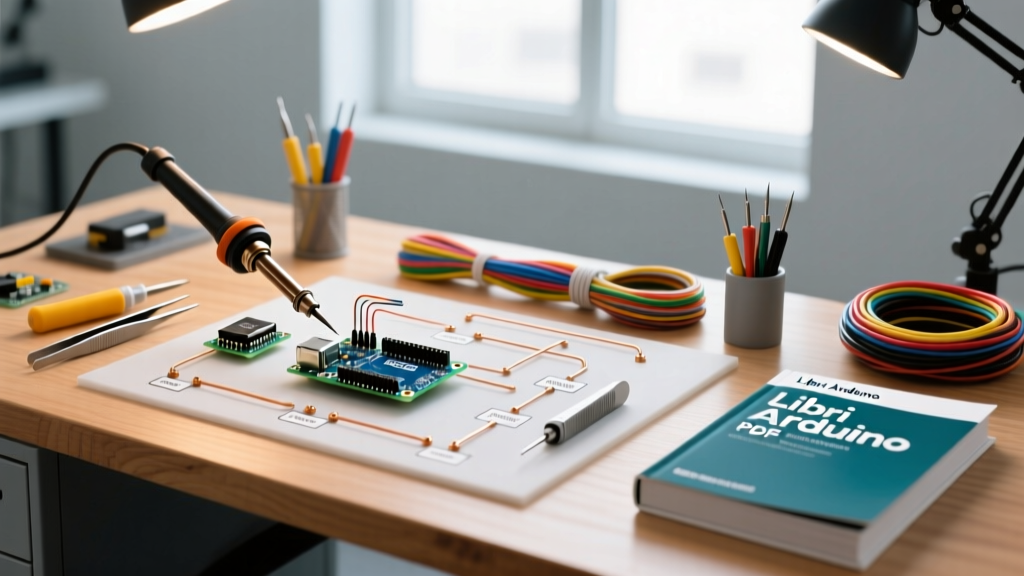

The 2026 Microcontroller Landscape: ESP32 or Arduino?
For over a decade, the 8-bit AVR-based Arduino Uno and Nano served as the undisputed kings of the maker workbench. However, as IoT requirements, edge machine learning, and high-speed sensor interfacing become standard in 2026, engineers and hobbyists face a critical crossroads: should you migrate to the 32-bit ESP32 ecosystem, or stick with modernized classic Arduino architectures like the Uno R4? When deciding between a bare-metal ESP32-S3 module or Arduino development boards, the answer depends entirely on your project's power envelope, logic-level requirements, and wireless needs. This comprehensive migration guide breaks down the exact hardware edge cases, code porting workflows, and supply chain realities you need to know before upgrading your next embedded system.
Architectural Showdown: 8-Bit AVR vs. 32-Bit Xtensa/RISC-V
Before ripping out your legacy ATmega328P, it is vital to understand the fundamental architectural shifts. The classic Arduino relies on an 8-bit AVR core running at 16 MHz, while the modern ESP32 family (including the S3 and C6 variants) utilizes 32-bit Xtensa LX7 or RISC-V cores clocking up to 240 MHz.
| Feature | Classic Arduino (Uno R3 / Nano) | Arduino Uno R4 Minima (RA4M1) | ESP32-S3 (Bare / Nano ESP32) |
|---|---|---|---|
| Core Architecture | 8-bit AVR (ATmega328P) | 32-bit ARM Cortex-M4 | 32-bit Dual-Core Xtensa LX7 |
| Clock Speed | 16 MHz | 48 MHz | 240 MHz |
| Operating Voltage | 5V Logic | 5V Logic | 3.3V Logic |
| Wireless Connectivity | None | None | Wi-Fi 4 + Bluetooth 5 (LE) |
| ADC Resolution | 10-bit | 14-bit | 12-bit (with specific non-linearities) |
When to Migrate to the ESP32 Ecosystem
Migrating to an ESP32-based board is highly recommended if your 2026 project demands any of the following:
- Native Wireless Telemetry: If you need MQTT publishing, BLE sensor broadcasting, or ESP-NOW mesh networking without adding bulky external SPI radio modules like the nRF24L01.
- Edge AI and Vector Instructions: The ESP32-S3 includes PIE (Processor Instruction Extensions) for vector processing, accelerating neural network inference via ESP-DL for tasks like wake-word detection or basic image classification.
- High-Speed Bus Interfaces: The ESP32's LCD peripheral and dedicated I2S hardware allow for driving RGB LED matrices and digital microphones (like the ICS-43434) without bit-banging, which would cripple an 8-bit AVR.
When to Stick With (or Return to) Classic Arduino
Despite the ESP32's raw power, there are distinct scenarios where migrating away from a 5V Arduino is a mistake:
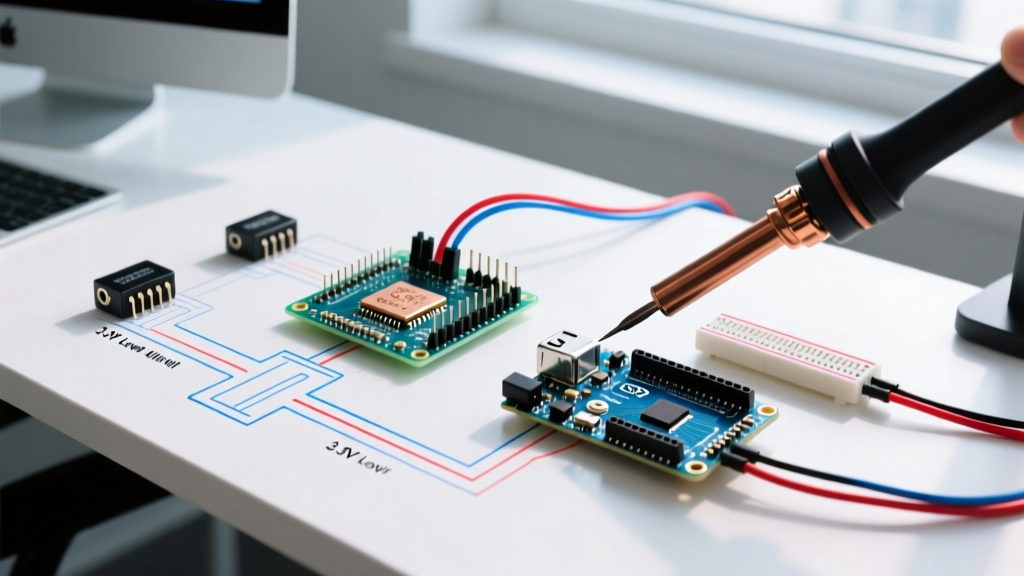
- Legacy 5V Shield Compatibility: If your system relies on decades-old 5V logic shields (e.g., older motor drivers or industrial relay boards), the 3.3V logic of the ESP32 will require cumbersome level-shifting breadboards.
- Ultra-Low Power Deep Sleep: While the ESP32 boasts deep sleep modes, its RTC domain leakage and the overhead of reconnecting to Wi-Fi upon waking often result in higher average power consumption compared to a bare ATmega328P running on a watchdog timer interrupt.
- Deterministic Bare-Metal Timing: The ESP32 runs FreeRTOS in the background. If your application requires strict, jitter-free microsecond bit-banging without RTOS task preemption, the simpler AVR or ARM Cortex-M0+ architecture is superior.
Step-by-Step Code Migration Workflow
Porting a sketch from the Arduino IDE to the ESP32 core is rarely as simple as changing the board selection in the dropdown menu. Here is the technical workflow for a successful migration.
1. Board Manager and Core Selection
As of early 2026, you must use the arduino-esp32 core v3.1.x or higher via the Espressif Board Manager URL. This version natively supports the ESP-IDF v5.1 framework, which is critical for accessing the new RMT (Remote Control Transceiver) driver APIs required for modern addressable LEDs like the WS2812B.
2. Resolving GPIO and ADC Incompatibilities
The most common failure point during migration is analog sensor reading. The classic Arduino analogRead() returns a 10-bit value (0-1023) mapped linearly from 0V to 5V. The ESP32-S3 returns a 12-bit value (0-4095) mapped from 0V to 3.3V. However, according to the Espressif ESP32-S3 Product Page, the ADC exhibits severe non-linearity near the 0V and 3.1V rails. Pro Tip: Never use the ESP32's internal ADC for precision metrology. If you are migrating a precision load-cell or thermistor circuit, bypass the internal ADC entirely and add an external I2C ADC like the ADS1115.
3. Interrupts and Hardware Timers
Legacy AVR code often relies on direct register manipulation (e.g., TCCR1A) for PWM or timer interrupts. These registers do not exist on the ESP32. You must refactor your code to use the ESP32's ledc (LED Control) API for hardware PWM, and the GPTimer API for precise hardware interrupts. Furthermore, ESP32 GPIO interrupts must be attached using attachInterrupt(), but you must ensure the ISR (Interrupt Service Routine) is placed in IRAM using the IRAM_ATTR attribute to prevent cache-miss panics during flash operations.
Expert Warning: Never callSerial.print()ordelay()inside an ESP32 ISR. Unlike the forgiving AVR architecture, doing so on the ESP32 will trigger a Watchdog Timer (WDT) panic and crash the FreeRTOS kernel, resulting in a bootloop.
Hardware Edge Cases and Critical Failure Modes
Hardware migration introduces physical layer challenges that software updates cannot fix. Pay close attention to these two notorious failure modes.
The Wi-Fi TX Brownout Trap
When the ESP32 transmits a Wi-Fi packet, the RF power amplifier draws a transient current spike of up to 500mA for a few milliseconds. If your project is powered by a standard USB port or a weak 3.3V LDO (like the AMS1117 found on cheap clone boards), the voltage will sag below 2.4V, triggering the ESP32's internal Brownout Detector (BOD) and resetting the chip.
The Fix: Always place a 470µF low-ESR polymer or tantalum capacitor directly across the 3.3V and GND pins of your custom PCB or breadboard. Alternatively, disable the BOD in software via esp_brownout_init(), though this risks unpredictable memory corruption during voltage sags.
5V to 3.3V Logic Level Translation
Connecting a 5V Arduino sensor directly to a 3.3V ESP32 GPIO will permanently damage the Xtensa silicon. As detailed in the Arduino Logic Level Shifting Guide, you must use level translation. For low-speed I2C or UART (under 1 MHz), a simple BSS138 N-channel MOSFET bidirectional shifter circuit is reliable and costs pennies. However, if you are migrating high-speed SPI peripherals (like an ILI9341 display running at 40 MHz), the parasitic capacitance of the BSS138 will destroy your signal integrity. In high-speed scenarios, use a dedicated active logic translator IC like the Texas Instruments TXS0108E or the SN74LVC8T245.
2026 BOM and Supply Chain Cost Analysis
Understanding the financial impact of your migration is crucial for scaling from prototype to production. Below is a snapshot of 2026 market pricing for development and bare-metal integration.
| Component / Board | 2026 Approx. Price (USD) | Best Use Case |
|---|---|---|
| Arduino Uno R4 Minima | $27.50 | Education, 5V legacy shield prototyping |
| Arduino Nano ESP32 | $21.00 | Compact IoT nodes, Arduino Cloud integration |
| ESP32-S3-WROOM-1 Module | $4.20 (Mouser/DigiKey) | Custom PCB production, Edge AI, high-volume |
| ESP32-C6 Mini Dev Board | $3.80 | Matter/Thread smart home devices, low-power |
For hobbyists and rapid prototyping, the Arduino Nano ESP32 Official Documentation provides an excellent bridge, offering the familiar Nano footprint with the raw power of the S3 chip, complete with an integrated RGB LED and USB-C PD negotiation. However, for production runs exceeding 500 units, migrating to a bare ESP32-S3-WROOM-1 module stamped directly onto your custom PCB saves over $16 per unit and eliminates the overhead of unused development board peripherals.
Expert Verdict
The decision between an ESP32 or Arduino architecture in 2026 is no longer about processing power alone; it is about ecosystem alignment. If your project requires wireless connectivity, high-speed data acquisition, or machine learning inference, the ESP32-S3 is the undisputed champion, provided you respect its 3.3V logic constraints and ADC non-linearities. Conversely, if you are building a deterministic, low-power, 5V industrial controller where legacy compatibility is paramount, modernizing to the ARM-based Arduino Uno R4 or sticking with the battle-tested AVR ecosystem remains the most pragmatic engineering choice. Plan your logic-level shifting, budget for low-ESR decoupling capacitors, and refactor your ISRs before you hit the upload button.