
The Case for Upgrading Your Arduino ESC Controller
For years, the standard approach to building custom drones, RC vehicles, or robotics platforms involved pairing an 8-bit Arduino Uno with a basic SimonK or BLHeli_S ESC using the standard Servo.h library. While this analog 50Hz PWM method is accessible, it introduces severe latency, limited resolution, and susceptibility to electromagnetic interference (EMI). As we move through 2026, the maker and robotics communities have overwhelmingly adopted digital protocols like DShot (Digital Shot) paired with 32-bit microcontrollers to unlock the full potential of modern brushless motors.
Migrating your Arduino ESC controller setup from legacy analog PWM to a DMA-driven DShot600 or DShot1200 architecture is not just about raw speed; it is about precision, safety, and bidirectional telemetry. This comprehensive migration guide details the hardware upgrades, wiring best practices, and code transitions required to modernize your MCU-to-ESC pipeline.
Expert Insight: Relying on timer interrupts for 1000-2000µs pulse generation on an ATmega328P limits your control loop to roughly 125Hz. Upgrading to a 32-bit MCU utilizing Direct Memory Access (DMA) for DShot offloads the CPU, allowing PID loops to run at 8kHz+ while maintaining perfect signal integrity.
Protocol Showdown: Legacy PWM vs. Digital DShot
Before rewriting your firmware, it is critical to understand the physical layer differences between the legacy Arduino Servo library approach and modern digital protocols. DShot encodes throttle values as digital bits rather than relying on pulse width timing, completely eliminating analog noise degradation.
| Feature | Analog PWM (Servo.h) | DShot600 | DShot1200 |
|---|---|---|---|
| Signal Type | Analog Pulse Width (1000-2000µs) | Digital (16-bit packets) | Digital (16-bit packets) |
| Resolution | ~1000 steps (noise-dependent) | 2048 steps (11-bit precise) | 2048 steps (11-bit precise) |
| Bit Rate / Frequency | 50Hz - 400Hz | 600 kbit/s | 1200 kbit/s |
| Noise Immunity | Poor (Ground bounce causes jitter) | Excellent (CRC checksum validation) | Excellent (CRC checksum validation) |
| Telemetry Support | None (Requires separate UART) | Bidirectional DShot (RPM, Temp) | Bidirectional DShot (RPM, Temp) |
Hardware Migration: Moving Beyond the 8-Bit ATmega
Why the Arduino Uno Bottlenecks Modern ESCs
The classic Arduino Uno (ATmega328P running at 16MHz) lacks the hardware peripherals required to generate DShot signals efficiently. Bit-banging DShot600 on an 8-bit AVR requires disabling interrupts and blocking the CPU for the entire duration of the 16-bit packet transmission (approx. 26µs). In a high-speed robotics application, blocking the main loop for 26µs per motor completely destroys your PID control loop timing.
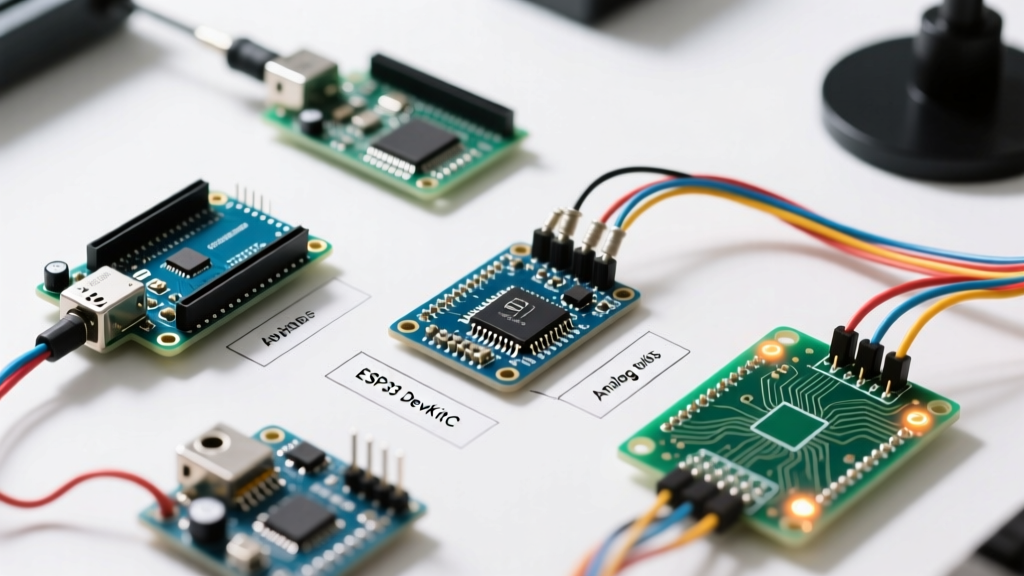
The 32-Bit Upgrade Path: ESP32-S3 vs. Teensy 4.0
To properly drive an Arduino ESC controller ecosystem using DShot, you must migrate to a 32-bit ARM Cortex or Xtensa architecture that supports hardware PWM or DMA.
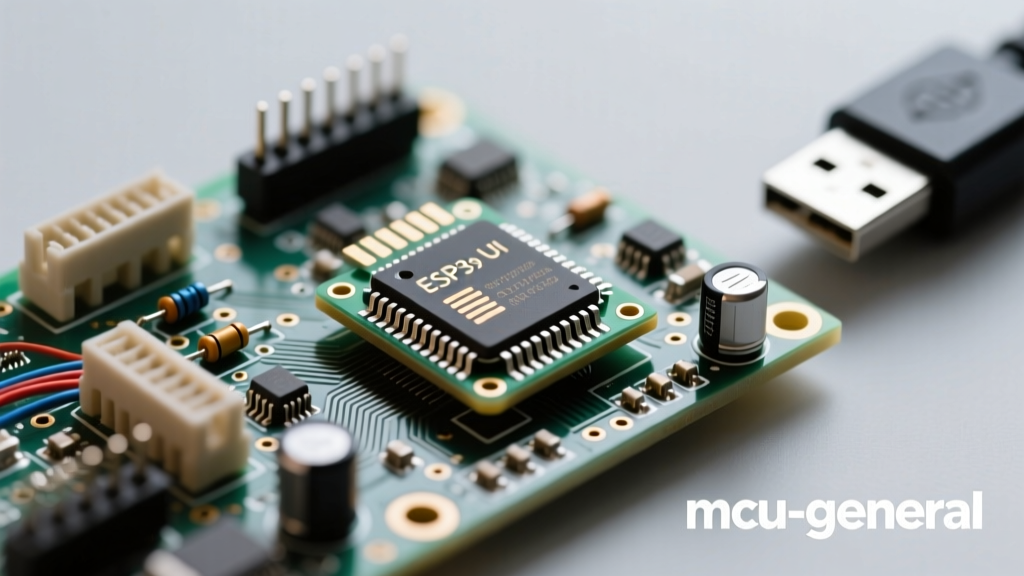
- ESP32-S3 DevKit ($12 - $15): The dual-core 240MHz ESP32-S3 features the MCPWM (Motor Control Pulse Width Modulation) peripheral. This allows you to configure DShot waveforms in hardware registers and let the DMA handle transmission in the background. It is the most cost-effective upgrade for Wi-Fi/BLE-enabled robotics.
- Teensy 4.0 / 4.1 ($29.95 - $34.95): Powered by an ARM Cortex-M7 at 600MHz, the Teensy 4.0 utilizes FlexPWM modules. It offers sub-nanosecond timing resolution, making it the gold standard for high-end custom flight controllers and precision CNC/robotic actuators where USB-native serial debugging is required.
Critical Wiring Practices for BLHeli_32 Integration
Modern BLHeli_32 ESCs (such as the Hobbywing X-Rotor 40A or T-Motor F55A) are highly sensitive to signal integrity and power sequencing. When migrating from a 5V Arduino Uno to a 3.3V logic MCU like the ESP32 or Teensy, you must address voltage translation and ground loops.
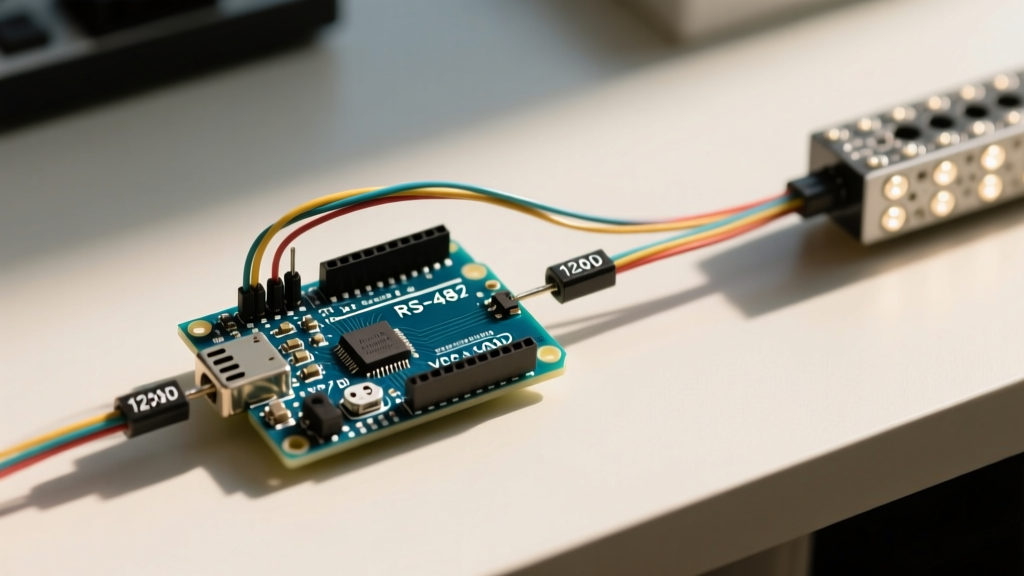
- Logic Level Shifting: While many BLHeli_32 ESCs will recognize 3.3V as a 'HIGH' signal, it is on the absolute edge of the logic threshold. For reliable DShot1200 operation, use a 74LVC1G125 or a dedicated MOSFET-based level shifter to boost the 3.3V GPIO signal to 5V.
- The 10kΩ Pull-Down Resistor (Crucial): During MCU boot-up, GPIO pins float. If an ESC detects a floating or HIGH signal on the throttle line during power-on, it will either enter a safety lockout or, worse, interpret it as a full-throttle arming command. Solder a 10kΩ resistor between the DShot signal pin and GND to hold the line LOW during boot.
- BEC Isolation: Do not connect the ESC's 5V BEC (Battery Eliminator Circuit) wire directly to the 5V pin of a Teensy 4.0 if it is simultaneously powered via USB. This creates a back-feeding ground loop that can fry the MCU's voltage regulator. Cut the 5V BEC wire on the ESC signal harness and power your MCU via a dedicated, high-quality 5V UBEC.
- Low-ESR Capacitors: Solder a 470µF, 35V low-ESR capacitor directly across the ESC's main power pads (not the XT60 connector) to absorb inductive voltage spikes and prevent MCU brownouts during rapid throttle transients.
Code Migration: Ditching Servo.h for DMA-Driven DShot
Migrating your codebase requires abandoning the Servo.writeMicroseconds() paradigm. Instead, you will interact with hardware timers and DMA buffers. For ESP32 users, the open-source ESP32-DShot library abstracts the MCPWM configuration. For STM32 and Teensy users, libraries leveraging the DShotSTM32 or custom FlexPWM DMA arrays are standard.
A standard DShot packet consists of 16 bits:
- Bits 1-11: Throttle value (0-2047). Values 1-47 are reserved for special commands (e.g., beep, 3D mode toggle, save settings).
- Bit 12: Telemetry request bit (set to 1 to request RPM/Temp data back from the ESC).
- Bits 13-16: CRC (Cyclic Redundancy Check) calculated via XOR of the first 12 bits.
According to the comprehensive protocol breakdown by Oscar Liang's DShot Guide, a '0' bit is represented by a short pulse (approx. 0.625µs for DShot1200), and a '1' bit is represented by a long pulse (approx. 1.25µs). Because these timings are in the sub-microsecond range, software delays like delayMicroseconds() are entirely useless; hardware timer capture/compare registers must be used.
Real-World Failure Modes and Telemetry Integration
When upgrading your Arduino ESC controller setup, be prepared to troubleshoot these common migration failure modes:
- Desync on Hard Punch-outs: If your motor stutters or stops when applying rapid throttle, your PID loop is likely requesting acceleration faster than the ESC's timing advance can handle. In BLHeli Suite 32, increase the 'Motor Timing' from 16° to 22° or 24°, and enable 'Rampup Power Protection'.
- Bidirectional DShot Noise: If you enable RPM telemetry via bidirectional DShot (sending data back on the same signal wire), ensure your MCU's GPIO pin is configured as open-drain or that you are using a dedicated 470Ω series resistor on the signal line to prevent bus contention when the ESC drives the line high.
- KISS Telemetry UART Alternative: If bidirectional DShot proves too complex to implement on your custom PCB, BLHeli_32 ESCs feature a dedicated telemetry pad. Wire this to a hardware UART RX pin on your MCU (configured to 115200 baud) to read KISS-format telemetry frames containing eRPM, voltage, current, and temperature.
Migration Cost & Component Breakdown
Upgrading to a modern digital architecture requires an initial investment, but the reliability gains in 2026 make it mandatory for serious projects.
| Component | Legacy Setup (Circa 2018) | Modern 2026 Upgrade | Estimated Cost Delta |
|---|---|---|---|
| MCU | Arduino Uno R3 ($25.00) | ESP32-S3 DevKit ($14.00) | -$11.00 (Savings) |
| ESC (40A) | SimonK / BLHeli_S 8-bit ($18.00) | BLHeli_32 32-bit ARM ($55.00) | +$37.00 |
| Signal Wiring | Standard Servo Wire ($2.00) | Shielded Twisted Pair + 10k Pull-down ($5.00) | +$3.00 |
| Total System Cost | ~$45.00 | ~$74.00 | +$29.00 Net |
By investing an additional $29 per motor channel, you transition from a fragile, noise-prone analog system to a robust, telemetry-rich digital architecture. Whether you are building a high-speed autonomous rover or a custom multi-rotor platform, migrating your Arduino ESC controller to a 32-bit DShot ecosystem is the definitive upgrade path for modern embedded robotics.