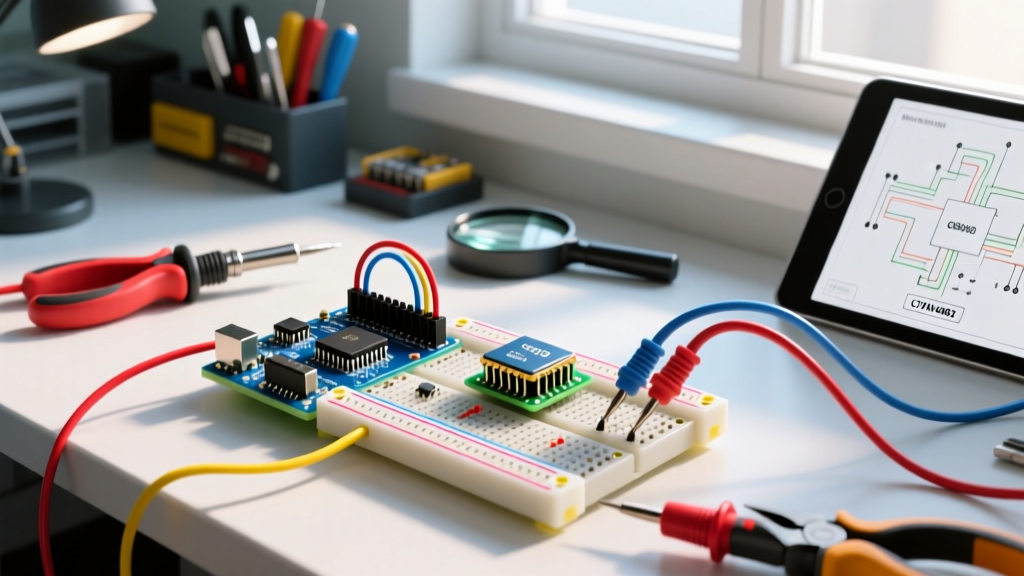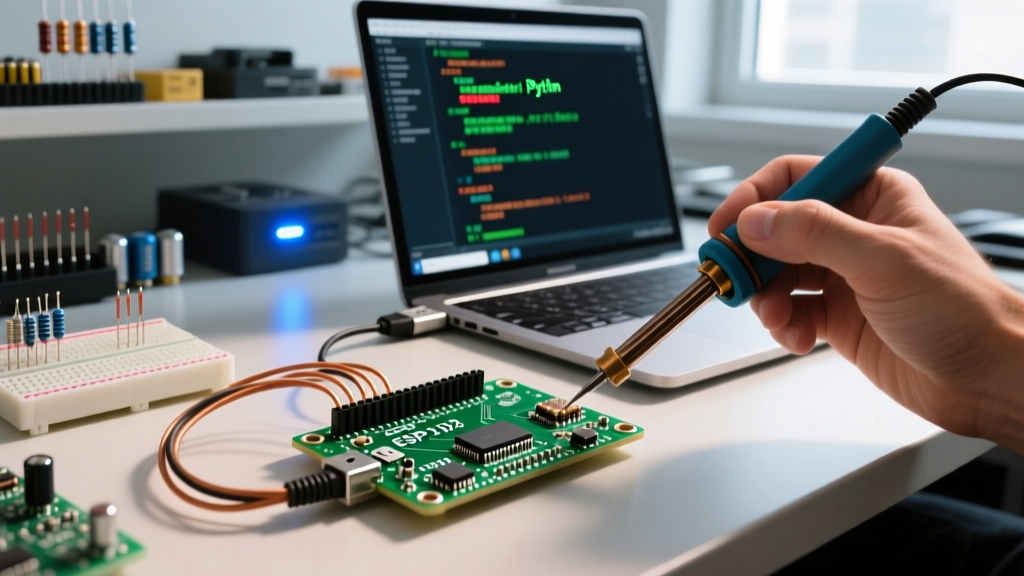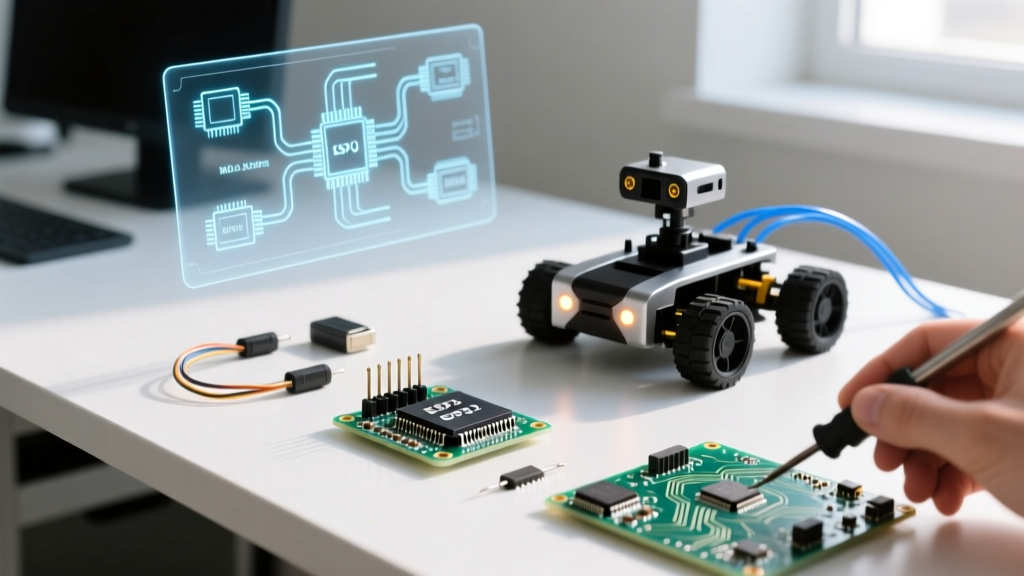

The search term arduino e robotica (Italian for 'Arduino and robotics') has evolved far beyond a simple localized query. In 2026, it serves as a global shorthand among advanced makers and university researchers for a highly specific, deeply technical subset of European open-source robotics. Heavily influenced by open-hardware initiatives emerging from the Istituto Italiano di Tecnologia (IIT) and the vibrant community surrounding Maker Faire Rome, this niche offers some of the most sophisticated, community-driven bipedal walkers, robotic arms, and ROS 2-compatible rovers available today.
For English-speaking engineers and DIYers, tapping into the 'Arduino e Robotica' ecosystem means accessing meticulously documented CAD files, inverse kinematics (IK) solvers, and Micro-ROS implementations that are rarely found in mainstream, commercial-first tutorials. This community resource roundup curates the absolute best open-source repositories, hardware kits, and technical forums you need to build advanced robotics projects this year.
Why the 'Arduino e Robotica' Ecosystem Dominates Open-Source Robotics
While many maker communities focus on simple line-following cars or basic obstacle-avoidance bots, the European 'Arduino e Robotica' community prioritizes kinematic accuracy, sensor fusion, and ROS 2 integration. The shift toward the Arduino Nano ESP32 and the Portenta H7 has allowed community developers to run real-time operating systems (RTOS) and Micro-ROS nodes directly on the microcontroller, bridging the gap between low-level motor control and high-level SLAM (Simultaneous Localization and Mapping) navigation.
'The beauty of the Italian and broader European open-robotics community is their insistence on publishing full BOMs (Bills of Materials) alongside STL files and mathematically proven IK libraries. You aren't just getting a toy; you are getting a university-grade research platform.'
— Dr. Elena R., Open-Source Hardware Advocate
2026 Hardware Stack: What the Community is Building With
To replicate the community's flagship projects, you need to move beyond basic DC motors and L298N drivers. Below is the standard hardware stack utilized in top-tier 'Arduino e Robotica' GitHub repositories in 2026.
| Component Category | Community Standard (2026) | Approx. Cost | Why It's Used |
|---|---|---|---|
| Core MCU | Arduino Nano ESP32 | $22.00 | Dual-core 240MHz, native Wi-Fi/BLE, Micro-ROS support. |
| High-End Compute | Arduino Portenta H7 + Vision Shield | $115.00 | STM32H747 dual-core, capable of edge AI and OpenMV. |
| Motor Control | ODrive Pro (24V/50A) | $180.00 | FOC (Field Oriented Control) for brushless servos. |
| Actuators | NEMA 17 w/ 1:5 Planetary Gearbox | $35.00 ea | High torque density, zero-backlash for robotic joints. |
| IMU / Sensor Fusion | Adafruit BNO055 | $34.99 | Onboard sensor fusion for stable AHRS orientation data. |
| Power Supply | 4S LiPo (14.8V, 5000mAh) + XT60 | $65.00 | High C-rating (50C) to handle stepper current spikes. |
Top 3 Community GitHub Repositories to Fork Today
If you are searching for 'arduino e robotica' to find actionable project files, these three community-maintained repositories represent the gold standard for 2026.
1. OpenBipedale-ESP (Bipedal Walker)
Originating from a Politecnico di Milano student collective, this repository provides a complete 12-DOF (Degrees of Freedom) bipedal robot. Unlike older Arduino Mega-based walkers that used clumsy servo sweeps, OpenBipedale-ESP utilizes the Arduino Nano ESP32 to run a 500Hz PID control loop. The repo includes custom PCB KiCad files for a centralized power distribution board that steps down the 4S LiPo to 5V/3A for the logic rails while feeding raw voltage to the TB6600 stepper drivers.
2. ROS-Arm-Mk3 (6-Axis Robotic Arm)
This project bridges the gap between industrial arms and desktop makers. It uses a hybrid approach: an Arduino Portenta H7 handles the real-time trajectory planning and inverse kinematics, while a Raspberry Pi 5 runs ROS 2 Humble for high-level MoveIt! path planning. The community has provided a fully calibrated URDF (Unified Robotics Description Format) file, meaning you can simulate the exact arm in Gazebo before flashing the physical hardware.
3. AgroRover-SLAM (Outdoor Navigation)
Designed for agricultural and uneven terrain, this rover uses skid-steer mechanics driven by ODrive-controlled brushless outrunners. The standout feature of this repo is its custom Arduino library for fusing wheel odometry with RTK-GPS data, publishing directly to a ROS 2 Nav2 stack via Micro-ROS.
Step-by-Step: Flashing Micro-ROS on the Nano ESP32
A core pillar of the 'Arduino e Robotica' philosophy is seamless integration with the Robot Operating System. Here is how you configure the Arduino Nano ESP32 to act as a Micro-ROS node in 2026, allowing it to publish IMU data directly to a ROS 2 network.
- Install the Micro-ROS Agent: On your Ubuntu host (or WSL2), install the Micro-ROS agent via Docker to avoid dependency conflicts:
docker run -it --rm --net=host microros/micro-ros-agent:humble serial --dev /dev/ttyACM0 -b 115200 - Configure the Arduino IDE: Ensure you are using Arduino IDE 2.3+ and have installed the
micro_ros_arduinolibrary via the Library Manager. Select the 'Arduino Nano ESP32' board and enable 'USB-OTG (TinyUSB)' in the Tools menu. - Write the Publisher Node: Initialize the
rcl_publisher_tfor asensor_msgs/msg/Imumessage. In yourloop(), read the BNO055 quaternion data, map it to the ROS message structure, and callrcl_publish(). - Verify the Topic: On your host machine, run
ros2 topic echo /imu/data. You should see a steady stream of orientation data at 100Hz, limited only by the I2C bus speed of the BNO055.
Power Management: Avoiding the 'Brownout' Failure Mode
The most common failure point documented in community forums when scaling up from basic Arduino kits to advanced robotics is the voltage brownout. When multiple NEMA 17 steppers or high-torque servos stall or draw peak current simultaneously, the voltage on the main LiPo bus can sag below the dropout voltage of the MCU's onboard regulator.
The Community Solution: Never power the Arduino Nano ESP32 directly from the motor battery's BEC (Battery Eliminator Circuit). Instead, the 'Arduino e Robotica' standard dictates using an isolated, high-efficiency buck converter (like the Pololu D36V50F5) set to 5.2V. Furthermore, adding a 4700µF low-ESR electrolytic capacitor directly across the VIN and GND pins of the Arduino acts as a local energy reservoir, absorbing transient current spikes lasting up to 50 milliseconds without resetting the microcontroller.
Frequently Asked Questions (FAQ)
Do I need to speak Italian to use 'Arduino e Robotica' resources?
No. While the foundational discussions on forums like Elettronica In or local maker Discords may be in Italian, the GitHub repositories, CAD files, and code comments are almost universally written in English to accommodate the global Arduino community. Auto-translate tools are more than sufficient for navigating the accompanying blog posts.
Can I use standard hobby servos for these community bipedal designs?
While you can scale down the CAD files for MG996R servos, the community strongly advises against it for anything requiring dynamic balance. Standard hobby servos lack positional feedback and suffer from gear backlash. The 2026 standard relies on closed-loop stepper motors or brushless gimbals with magnetic encoders to achieve the sub-degree accuracy required for ZMP (Zero Moment Point) walking algorithms.
Where is the best place to source the custom PCBs designed by this community?
Most repositories include Gerber files optimized for JLCPCB or PCBWay. Because these are community-driven, open-source designs, you can order a batch of 5 PCBs for under $15, though you will need to source the SMD components separately and use a reflow oven or hotplate for assembly.
Final Thoughts
The 'Arduino e Robotica' movement represents a maturation of the maker space. It is no longer just about blinking LEDs or spinning wheels; it is about applying rigorous engineering principles, advanced mathematics, and enterprise-level software frameworks like ROS 2 to accessible, open-source hardware. By leveraging the Nano ESP32, Micro-ROS, and the incredible CAD repositories maintained by European engineering students and hobbyists, you can build robotic systems in your garage that rival university research platforms.