
The Catalyst for Migration: Why Leave the Classic AVR?
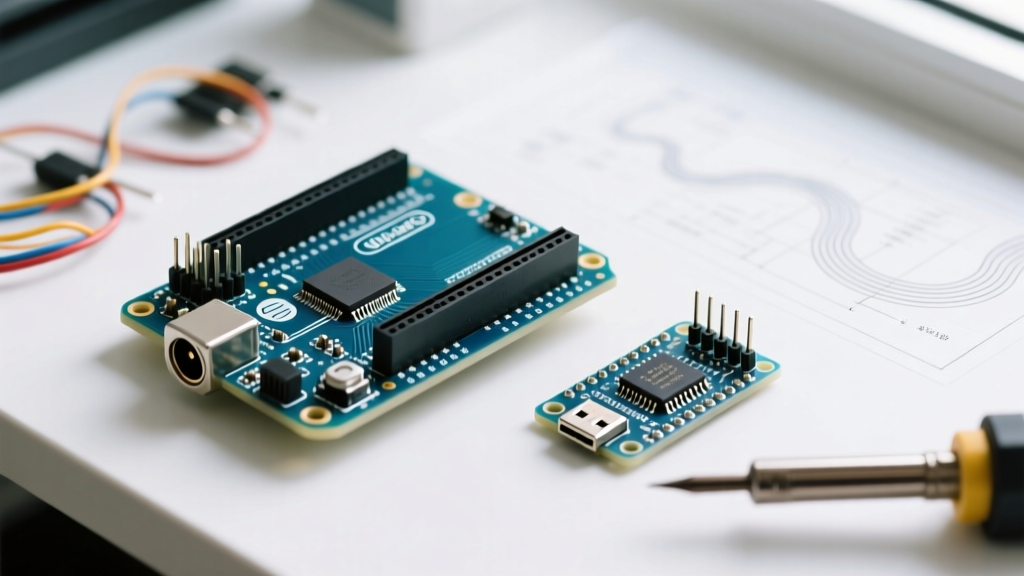
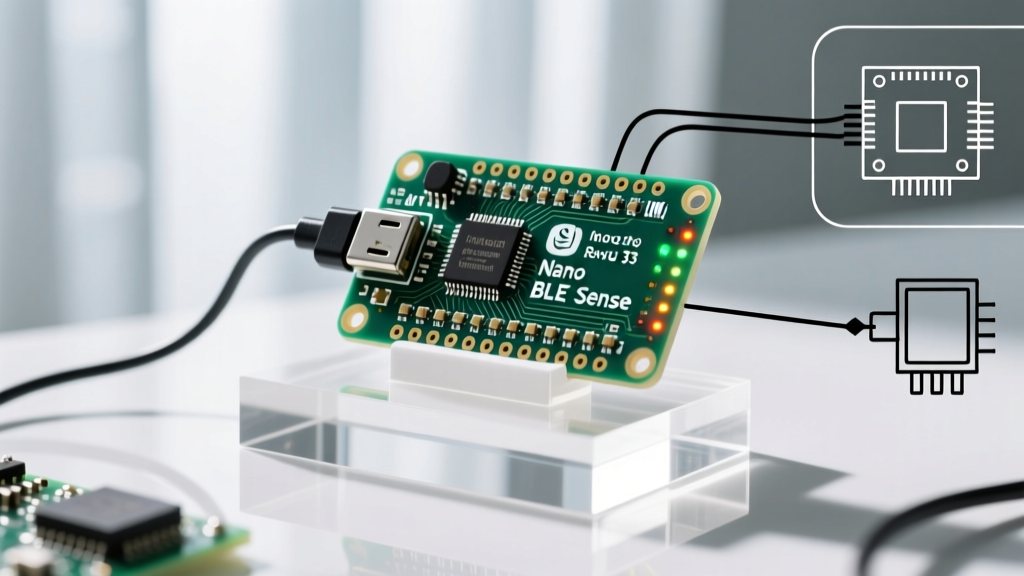
For over a decade, the 8-bit AVR-based Arduino Nano and Uno have been the default starting points for embedded prototyping. However, as 2026 brings stricter power constraints and a massive surge in localized machine learning (TinyML), the 16 MHz ATmega328P is no longer sufficient for advanced sensor fusion or neural network inference. This is where the Arduino Nano 33 BLE Sense enters the workflow. Powered by the Nordic nRF52840 Cortex-M4F processor, this board represents a fundamental architectural leap from 8-bit legacy to 32-bit edge computing.
Migrating to the Arduino Nano 33 BLE Sense is not a simple drop-in replacement. It requires a paradigm shift in how you handle memory management, sensor polling, and wireless protocols. This guide provides a comprehensive, engineer-level roadmap for transitioning your legacy AVR projects to this advanced IoT and Edge AI platform.
Hardware Architecture Shift: AVR vs. nRF52840
Before rewriting a single line of code, you must understand the silicon differences. The nRF52840 is a System-on-Chip (SoC) designed primarily for ultra-low-power Bluetooth Low Energy (BLE) applications, but its Cortex-M4F core with a Floating Point Unit (FPU) makes it exceptionally capable for digital signal processing (DSP).
| Feature | Classic Arduino Nano (AVR) | Arduino Nano 33 BLE Sense (Rev2) |
|---|---|---|
| Microcontroller | ATmega328P (8-bit AVR) | nRF52840 (32-bit ARM Cortex-M4F) |
| Clock Speed | 16 MHz | 64 MHz |
| Flash / SRAM | 32 KB / 2 KB | 1 MB / 256 KB |
| Operating Voltage | 5V (Logic) | 3.3V (Logic) |
| Wireless | None | Bluetooth 5.0 (BLE) |
| Onboard Sensors | None | IMU, Env, Gesture, Mic |
| Typical Price (2026) | $22.00 (Official) | $39.50 (Official Rev2) |
CRITICAL WARNING: The Rev1 vs. Rev2 Silicon Trap
If you are following tutorials written before late 2022, be aware that the global silicon shortage forced Arduino to redesign the board. The original Rev1 used the LSM9DS1 (IMU) and HTS221/LPS22HB (Environmental). The current Rev2 utilizes the Bosch BMI270 (IMU) and BME688 (Gas/Env). Attempting to compile Rev1 sensor libraries on a Rev2 board will result in I2C initialization failures and silent sensor drops. Always verify your board revision via the silkscreen on the PCB underside.
Software & Toolchain Migration: Adapting Your Code
The most jarring change for migrating developers is the underlying operating system. While the classic Nano runs a bare-metal super-loop via the standard Arduino AVR core, the Nano 33 BLE Sense runs on top of Arm Mbed OS (specifically via the arduino-mbed core). This introduces a Real-Time Operating System (RTOS) layer beneath your sketch.
Handling Concurrency and Delays
In the AVR world, delay(1000) halts the CPU entirely. In the Mbed OS environment of the nRF52840, delay() yields to the RTOS scheduler, allowing background tasks (like the BLE stack) to continue running. However, this also means that strict timing loops using micros() can experience jitter if high-priority RTOS interrupts fire. For precise sensor sampling (e.g., audio capture at 16 kHz for TinyML), you must bypass standard delays and utilize hardware timers or the PDM (Pulse Density Modulation) interrupt service routines.
Memory Management Constraints
Despite having 256 KB of SRAM, Mbed OS reserves a significant portion for its own stack, heap, and BLE stack buffers. When migrating memory-heavy applications, do not rely on global arrays. Instead, use malloc() and free() cautiously, or preferably, leverage C++ std::vector and smart pointers to prevent the memory fragmentation that frequently causes the nRF52840 to hard-fault and enter an infinite boot-loop.
Edge AI and TinyML Integration
The primary reason engineers migrate to the Arduino Nano 33 BLE Sense in 2026 is for Edge AI. The Cortex-M4F's FPU accelerates floating-point math required for neural network inference. According to the TinyML Foundation, deploying models directly on endpoint devices reduces latency and eliminates cloud-dependency privacy risks.
To migrate an existing predictive maintenance or audio-keyword spotting project:
- Data Capture: Use the
Arduino_BMI270_BSEClibrary to capture high-frequency IMU data, or thePDMlibrary for the onboard MP34DT05 microphone. - Model Training: Export your dataset to Edge Impulse. The platform natively supports the nRF52840 architecture and will automatically quantize your TensorFlow model to 8-bit integers to fit within the flash constraints.
- Deployment: Download the generated Arduino C++ library. Ensure you include the
TensorFlowLite Microdependencies. The Nano 33 BLE Sense can comfortably run a 40KB quantized convolutional neural network (CNN) with inference times under 15 milliseconds.
Power Consumption & Battery Profiling
The nRF52840 is engineered for coin-cell longevity, but out-of-the-box Arduino sketches will drain a battery in hours because the Mbed OS keeps the high-frequency clock (HFCLK) and BLE radio active. To achieve the microampere (µA) currents promised in the Nordic Semiconductor nRF52840 datasheet, you must actively manage power states.
- Active Mode (CPU + BLE + Sensors): ~12 mA to 25 mA (depending on BLE advertising interval and sensor polling rate).
- System ON Idle (RAM retained, CPU sleeping): ~1.5 mA. Achieved by replacing blocking delays with RTOS sleep functions.
- System OFF Mode: ~0.4 µA. All RAM is lost. The board can only be woken by a physical reset or a dedicated GPIO pin interrupt configured before sleep.
Migration Tip: If your project requires periodic wake-ups, utilize the nRF52840's internal Real-Time Counter (RTC) rather than an external 555 timer or watchdog, which draw parasitic current.
When to Migrate *Away* from the Nano 33 BLE Sense
While the Nano 33 BLE Sense is a powerhouse for local inference and BLE telemetry, it is not a universal solution. You should consider migrating your platform away from this board if your 2026 project requirements include:
| Requirement | Alternative Platform | Why Migrate? |
|---|---|---|
| Wi-Fi / IP Networking | ESP32-S3 or Arduino Nano ESP32 | The nRF52840 is strictly BLE. It cannot connect directly to local routers or MQTT brokers without a BLE-to-Wi-Fi gateway. |
| Extreme Form Factor | Arduino Nicla Sense ME | The Nicla packs similar (and newer) Bosch sensors into a 22x22mm footprint, ideal for wearables where the Nano's 45x18mm size is too bulky. |
| High-Speed Camera Vision | ESP32-S3 (with PSRAM) + OV5640 | The Nano 33 BLE Sense lacks the memory bandwidth and parallel camera interfaces required for real-time image processing. |
Real-World Troubleshooting & Edge Cases
Based on field deployments and official Arduino hardware documentation, migrating engineers frequently encounter the following edge cases:
1. I2C Bus Capacitance and Pull-Up Conflicts
The Nano 33 BLE Sense operates at 3.3V logic. The internal sensor suite is wired to a secondary I2C bus, while the external header pins use the primary I2C bus. However, the board features onboard 4.7kΩ pull-up resistors. If you connect external sensors that also have pull-up resistors, the parallel resistance drops, causing the I2C rise times to fail and resulting in corrupted sensor data. Fix: Disable external pull-ups on your breakout boards when wiring to the Nano's primary I2C headers.
2. BLE Pairing Timeouts and MTU Limits
When migrating from a serial-over-USB debugging workflow to BLE telemetry, developers often hit the default Maximum Transmission Unit (MTU) limit of 23 bytes (effectively 20 bytes of payload). Attempting to stream raw IMU data over BLE without negotiating a higher MTU (up to 247 bytes on the nRF52840) will cause severe packet loss and buffer overflows. Always implement MTU negotiation in your central device (e.g., smartphone app) before initiating high-speed data streams.
3. USB-C Enumeration Failures
The nRF52840 handles USB natively, unlike the AVR which required a secondary ATmega16U2 chip. If a sketch crashes the Mbed OS kernel (often due to a null pointer dereference in a sensor library), the USB stack dies, and the board will no longer show up as a COM port in the Arduino IDE. Fix: Double-tap the reset button quickly to force the board into the BOSSA bootloader mode, which operates independently of the user sketch, allowing you to flash a blank or corrected firmware.
Conclusion & Migration Checklist
Migrating to the Arduino Nano 33 BLE Sense unlocks professional-grade Edge AI, multi-sensor fusion, and ultra-low-power BLE capabilities that 8-bit boards simply cannot achieve. To ensure a smooth transition:
- Verify you are coding for the Rev2 silicon (BMI270/BME688).
- Refactor blocking code to accommodate the Mbed OS RTOS scheduler.
- Quantize your machine learning models to 8-bit integer math to leverage the Cortex-M4F efficiently.
- Audit your external hardware for 3.3V logic tolerance and I2C pull-up conflicts.
By respecting the architectural nuances of the nRF52840, your platform migration will result in a robust, commercial-ready IoT prototype capable of intelligent local decision-making.