
The State of the ESP8266 Arduino Library in Modern IoT
When embedded engineers and hobbyists refer to the ESP8266 Arduino library, they are almost exclusively talking about the ESP8266 Arduino Core—the open-source board support package that allows Espressif's legendary ESP8266 SoC to be programmed via the Arduino IDE. Originally released when the ESP8266 was merely a $3 WiFi serial transceiver controlled by AT commands, this core library transformed the chip into a standalone microcontroller powerhouse. However, as we navigate the hardware landscape of 2026, the question arises: does the ESP8266 Arduino ecosystem still hold up against the vastly superior ESP32 family?
In this comprehensive board review and ecosystem comparison, we will dissect the architectural constraints of the ESP8266 Arduino Core, evaluate real-world hardware implementations like the Wemos D1 Mini versus modern ESP32-C3 alternatives, and provide a definitive migration framework for IoT developers.
Core Architecture: ESP8266 vs. ESP32 Arduino Cores
Understanding the underlying hardware is critical before evaluating the software libraries. The ESP8266 Arduino Core GitHub repository has matured significantly, reaching version 3.1.x, but it remains fundamentally limited by the silicon it runs on. Conversely, the Espressif ESP32 Arduino Repository leverages a dual-core Xtensa LX6 (or RISC-V in newer C-series chips) architecture with vastly superior memory management.
Hardware & Core Library Comparison Matrix
| Feature | ESP8266 (NodeMCU v3 / D1 Mini) | ESP32 (DevKit V1 / WROOM-32) | ESP32-C3 (SuperMini) |
|---|---|---|---|
| Processor | Single-core Tensilica L106 (80/160 MHz) | Dual-core Xtensa LX6 (240 MHz) | Single-core RISC-V (160 MHz) |
| Usable SRAM | ~80 KB (Highly constrained) | ~520 KB | ~400 KB |
| Flash Memory | 4 MB (Typical) | 4 MB to 16 MB | 4 MB |
| ADC Capabilities | 1x 10-bit (0-1.0V, highly non-linear) | Multiple 12-bit (ADC2 conflicts with WiFi) | Multiple 12-bit |
| I2C Implementation | Software bit-banged (Any pins) | Hardware peripheral (Dedicated pins) | Hardware peripheral |
| Avg. Board Price (2026) | $3.50 - $5.00 | $6.00 - $8.50 | $2.50 - $3.80 |
Deep Dive: ESP8266 Arduino Library Ecosystem & Constraints
The true test of any microcontroller platform is its third-party library support. The ESP8266 Arduino library ecosystem is vast, but it is fraught with edge cases that catch beginners off guard.
The Heap Fragmentation Problem
The most notorious failure mode when using the ESP8266 Arduino library stack—specifically with ESPAsyncWebServer and PubSubClient—is heap fragmentation. With only ~80 KB of usable DRAM, dynamically allocating String objects inside asynchronous web callbacks or MQTT payload parsers will rapidly fragment the heap. Within 48 hours of continuous uptime, the device will typically suffer a Watchdog Timer (WDT) reset or a fatal exception (Exception 28 or 29).
Expert Warning: Never use the ArduinoStringclass for HTTP POST body parsing on the ESP8266. Always use fixed-sizechararrays or stream the payload directly to LittleFS to bypass RAM limitations entirely.
Critical Library Dependencies
- ESPAsyncWebServer: Essential for non-blocking HTTP servers. On ESP32, this library handles concurrent connections effortlessly. On ESP8266, you must strictly limit concurrent WebSocket clients to 2 or 3 to prevent stack overflows.
- WiFiManager: The standard for captive portal provisioning. While it works flawlessly on both platforms, the ESP8266's single-core nature means the CPU halts main loop execution while the captive portal DNS and web server are actively serving pages.
- ArduinoOTA: Over-the-air updates are supported on both, but the ESP8266's 4MB flash requires careful partition mapping. If your sketch exceeds 1.5MB, OTA updates will fail silently because the device cannot allocate a secondary partition large enough to hold the incoming binary.
Real-World Board Review: Wemos D1 Mini vs. ESP32-C3 SuperMini
To contextualize the software, we must evaluate the physical boards developers actually buy. In 2026, the classic Wemos D1 Mini (ESP8266) faces direct competition from the ESP32-C3 SuperMini, which is often cheaper and vastly more capable.
Wemos D1 Mini V4.0.4 (ESP8266)
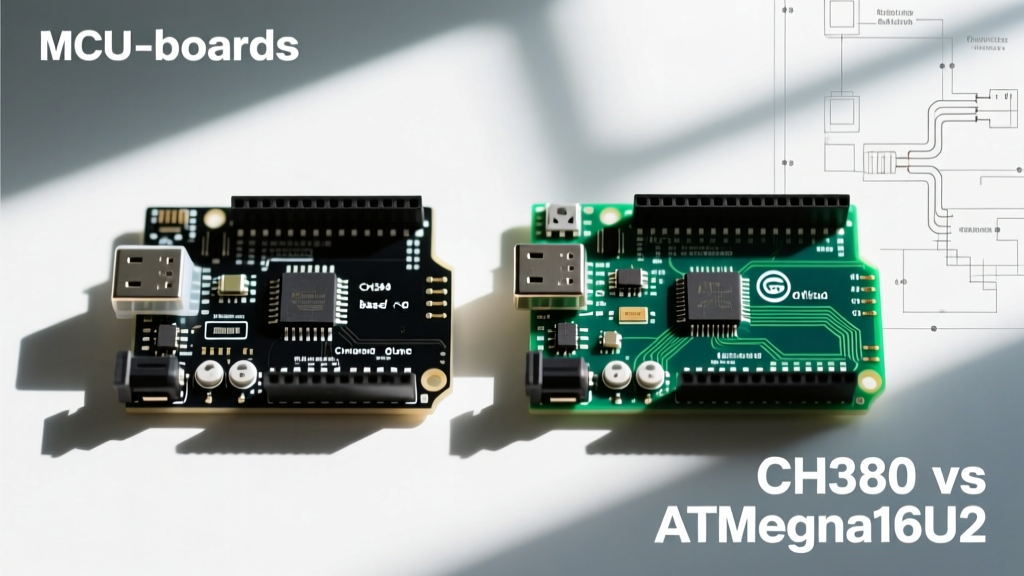
The D1 Mini remains a staple for simple, low-pin-count IoT sensors. However, it relies on the CH340G USB-to-UART bridge. This adds to the BOM cost, increases the physical footprint, and requires specific driver installations on older Windows machines. Furthermore, the 3.3V LDO on cheap clones frequently overheats when powering external I2C sensors, leading to brownout resets.
ESP32-C3 SuperMini
The C3 SuperMini utilizes native USB CDC (Communication Device Class). This means it requires no external UART bridge chip, reducing board size and cost. From a library perspective, the ESP32-C3 Arduino Core supports native USB HID and Mass Storage classes out of the box—features entirely impossible on the ESP8266.
Edge Cases & Hardware Failure Modes
When writing firmware using the ESP8266 Arduino library, developers must navigate several silicon-level quirks that the abstraction layer does not fully hide:
- Deep Sleep Wakeup: To wake the ESP8266 from deep sleep, GPIO16 (D0) must be physically wired to the RST pin. The ESP32, by contrast, uses an internal RTC controller to wake from any configured GPIO interrupt without external jumper wires.
- Boot Pin Strapping: GPIO0 must be pulled HIGH on boot. If you connect a sensor or relay to GPIO0 that pulls it LOW during power-on, the ESP8266 will enter UART download mode and fail to execute your sketch.
- I2C Clock Stretching: Because the ESP8266 Arduino
Wirelibrary uses software bit-banging, it struggles with I2C devices that require precise clock stretching (like certain Bosch BME280 or Sensirion SHT31 sensors in high-resolution modes), often resulting in NACK errors.
Migration Framework: When to Abandon the ESP8266
According to the Espressif ESP8266 Official SoC Page, the chip remains in active production for legacy smart home appliances. However, for new designs in 2026, you should migrate to the ESP32 Arduino ecosystem if your project requires:
- BLE (Bluetooth Low Energy): The ESP8266 has no Bluetooth radio whatsoever.
- Secure TLS/SSL: Handshakes for MQTT over TLS (port 8883) consume roughly 25KB of RAM. On the ESP8266, this leaves barely enough memory for your application logic, frequently causing crashes. The ESP32's hardware cryptographic accelerators handle TLS with minimal CPU overhead.
- True Dual-Core Processing: Running a high-frequency PID control loop on Core 0 while handling WiFi stack events on Core 1 is exclusive to the standard ESP32.
Frequently Asked Questions (FAQ)
Why does my ESP8266 Arduino sketch crash with Exception 28?
Exception 28 indicates a stack overflow or an unaligned memory access. In the context of the ESP8266 Arduino library, this is almost always caused by allocating large local arrays inside a function, or by deep recursive calls in web server callbacks. Move large buffers to the global scope or allocate them dynamically on the heap using malloc(), ensuring you free() them immediately after use.
Can I use the ESP32 Arduino library code on an ESP8266?
Not directly. While basic GPIO and WiFi.h syntax are similar, ESP32-specific libraries like ESP32Servo, BluetoothSerial, and hardware-accelerated ledc (LED PWM) functions will fail to compile on the ESP8266 Core. You must use ESP8266PWM and standard Servo.h equivalents.
Is the ESP8266 still viable for battery-powered IoT in 2026?
Yes, but with strict caveats. The ESP8266 deep sleep current is roughly 20µA, which is acceptable for a 18650 lithium cell sending hourly MQTT telemetry. However, it lacks the sophisticated power domains of the ESP32, meaning you cannot power down specific peripherals while keeping the CPU active. For ultra-low-power applications requiring months of battery life, the ESP32-C6 or ESP32-H2 are vastly superior choices.