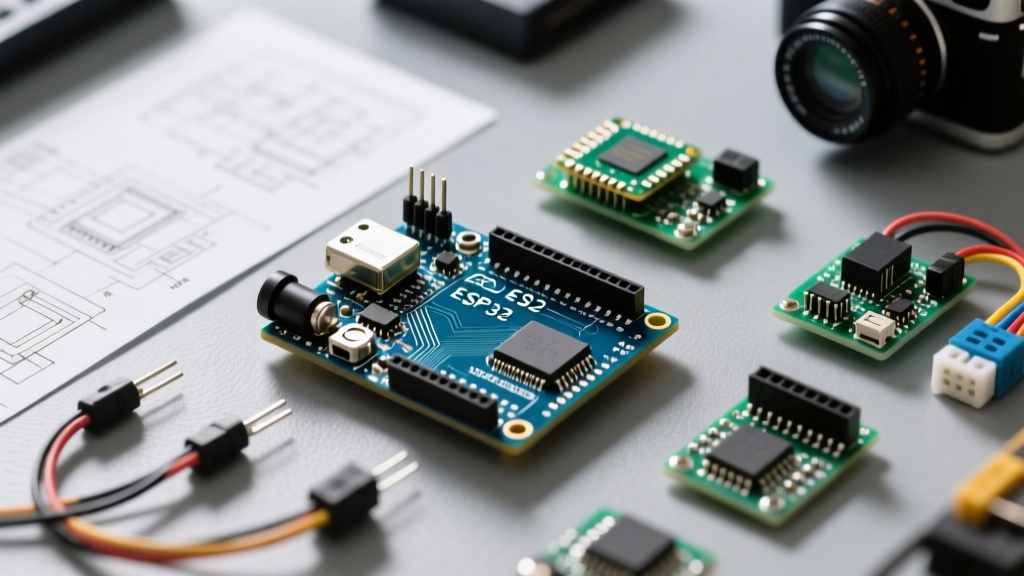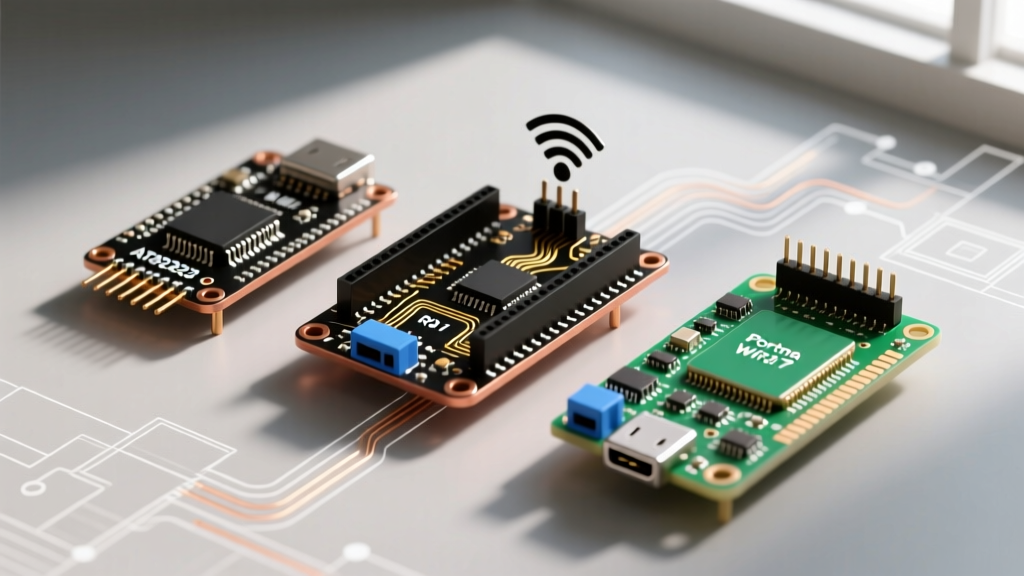

The 'Micro Processor' Misnomer: MCUs vs. MPUs in the Arduino Ecosystem
When engineers and hobbyists search for an arduino micro processor, they are typically referring to microcontrollers (MCUs) like the classic ATmega328P. However, as of 2026, the Arduino ecosystem has expanded significantly, blurring the lines between simple microcontrollers and high-performance microprocessors (MPUs) or advanced System-on-Chips (SoCs). Understanding the hardware distinction is critical before allocating your project budget.
A microcontroller integrates a CPU, memory, and I/O peripherals on a single chip, designed for deterministic, real-time control. A microprocessor relies on external memory and peripherals, focusing on raw computational throughput. While legacy Arduino boards strictly use MCUs, premium offerings like the Portenta line integrate high-end ARM Cortex-M7 architectures that rival entry-level MPUs in digital signal processing (DSP) and machine learning tasks.
In this guide, we break down the budget versus premium tiers of the Arduino micro processor landscape, analyzing real-world costs, silicon-level specifications, and hardware failure modes to help you choose the right board for your 2026 projects.
The Budget Tier: Legacy Silicon and Clone Economics
The budget category is dominated by third-party clones of the Arduino Uno R3 and Nano, utilizing the aging but reliable 8-bit ATmega328P microcontroller. In 2026, supply chain stabilization has driven the cost of these generic boards down significantly.
Real-World Costs and the CH340G Factor
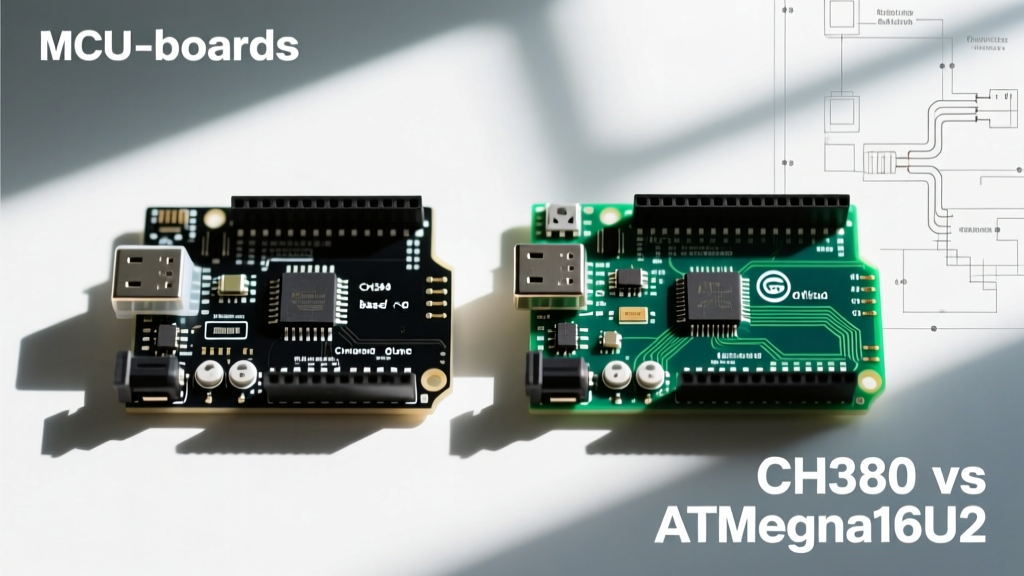
You can reliably source a 3-pack of ATmega328P clone boards (such as those from Elegoo or HiLetgo) for $14.00 to $18.00 USD. To achieve this price point, manufacturers replace the expensive FTDI or ATmega16U2 USB-to-Serial chips with the WCH CH340G.
- The Driver Edge Case: While Windows 11 includes native CH340 drivers, macOS users (especially on Sonoma and Sequoia) frequently encounter kernel extension conflicts. If your board isn't recognized in the Arduino IDE, you must manually install the latest signed CH340 VCP drivers and grant full disk access to the IDE in System Settings.
- Hardware Tolerances: Budget clones often use 5% tolerance carbon film resistors instead of 1% metal film, which can introduce slight inaccuracies in analog-to-digital converter (ADC) reference voltage readings.
The Linear Regulator Thermal Trap
The most common hardware failure mode on budget ATmega328P boards is thermal shutdown. These boards use an NCP1117-5.0 linear voltage regulator. If you power the board via the barrel jack or VIN pin at 12V, the regulator must drop 7V (12V - 5V). At a modest draw of 100mA, the regulator dissipates 0.7W of heat. Without a heatsink, the silicon junction temperature rapidly exceeds 125°C, triggering internal thermal protection and causing the board to reset endlessly under load.
The Premium Shift: Arduino R4 and Portenta H7
Stepping into the premium tier means leaving 8-bit AVR architecture behind and entering the realm of 32-bit ARM Cortex-M processors. These boards offer native floating-point units (FPUs), hardware cryptographic accelerators, and vastly superior memory architectures.
Arduino Uno R4 WiFi: The Modern Workhorse
Priced at $27.50 USD, the Uno R4 WiFi replaces the ATmega328P with a Renesas RA4M1 (ARM Cortex-M4 running at 48MHz). According to the Renesas RA4M1 architecture documentation, this chip provides 256KB of Flash and 32KB of SRAM, alongside a hardware capacitor touch sensing unit.
Crucially, the R4 WiFi integrates an ESP32-S3 co-processor. This dual-chip architecture allows the Renesas MCU to handle real-time deterministic I/O, while the ESP32-S3 manages heavy Wi-Fi/BLE networking stacks and TLS encryption, preventing network interrupts from disrupting your motor control or sensor polling loops.
Pro-Tip for R4 WiFi: The board utilizes a modern USB-C connector, but it requires a cable with active data lines. Many cheap USB-C cables in 2026 are charge-only. If your PC doesn't recognize the board, swap the cable before troubleshooting drivers.
Arduino Portenta H7: The Industrial Powerhouse
At $105.00 USD, the Arduino Portenta H7 is designed for industrial edge computing and high-speed DSP. It features an STM32H747XI dual-core processor: a Cortex-M7 at 480MHz and a Cortex-M4 at 240MHz. With 2MB of Flash and 1MB of SRAM, it can run TensorFlow Lite for Microcontrollers natively, processing audio spectrograms or low-resolution image data without external memory.
Thermal Edge Case: The STM32H747 draws significant current when both cores are active. If you deploy the Portenta H7 inside an IP65-rated NEMA enclosure without active ventilation or a thermal pad bridging the SoC to the enclosure chassis, the board will throttle its clock speed to 240MHz to prevent silicon damage.
Head-to-Head Specification Matrix
Below is a technical comparison of the silicon powering these three distinct tiers of the Arduino micro processor market.
| Feature | Generic ATmega328P (Budget) | Arduino Uno R4 WiFi (Premium) | Arduino Portenta H7 (Ultra-Premium) |
|---|---|---|---|
| Core Architecture | 8-bit AVR | 32-bit ARM Cortex-M4 + ESP32-S3 | Dual-Core ARM Cortex-M7/M4 |
| Max Clock Speed | 16 MHz | 48 MHz (RA4M1) / 240 MHz (ESP32) | 480 MHz (M7) / 240 MHz (M4) |
| Flash Memory | 32 KB | 256 KB (RA4M1) + 16 MB (ESP32) | 2 MB |
| SRAM | 2 KB | 32 KB (RA4M1) + 512 KB (ESP32) | 1 MB |
| I/O Voltage | 5V Logic | 5V Logic (RA4M1 is 5V tolerant) | 3.3V Logic (Not 5V tolerant!) |
| 2026 Avg Price | ~$5.00 per board | $27.50 | $105.00 |
Decision Framework: Which Board Fits Your 2026 Project?
Selecting the right Arduino micro processor depends entirely on your computational bottlenecks and environmental constraints.
Choose the Budget ATmega328P Clones If:
- You are building simple, low-speed automation (e.g., soil moisture sensors, basic relay timers, LED matrices).
- You need 5V native logic to interface directly with legacy industrial sensors or 5V shift registers without level shifters.
- The project is educational, and the risk of a student shorting a $5 board is preferable to destroying a $105 board.
Choose the Uno R4 WiFi If:
- You are building IoT devices that require secure MQTT or HTTPS connections without blocking your main sensor-reading loop.
- You need a 12-bit DAC (Digital-to-Analog Converter) for generating precise analog waveforms, a feature missing on the legacy Uno.
- You want the physical Uno R3 footprint for custom shields but require modern 32-bit processing speeds.
Choose the Portenta H7 If:
- Your project involves real-time Fast Fourier Transforms (FFT) for audio analysis or vibration monitoring.
- You need to interface with high-speed peripherals via MIPI camera interfaces or SDRAM.
- You are developing a commercial product and plan to transition from the Arduino IDE to STM32CubeIDE for bare-metal C++ optimization.
Frequently Asked Questions
Can I use standard 5V shields on the premium Portenta H7?
No. The Portenta H7 operates at 3.3V logic. Connecting standard 5V Arduino shields directly to the I/O pins will permanently damage the STM32H747 silicon. You must use shields specifically designed for the Portenta line or integrate bidirectional logic level shifters (like the TXS0108E) for any 5V peripherals.
Why does my budget Arduino clone get incredibly hot near the power jack?
As detailed in our thermal trap section, the NCP1117 linear regulator on budget boards wastes excess voltage as heat. If you are powering the board via the VIN pin or barrel jack, keep the input voltage between 7V and 9V. If you need 12V input, power the 5V rail directly via a high-efficiency buck converter (like an LM2596 module) connected straight to the 5V pin, bypassing the onboard linear regulator entirely.
Is the ESP32-S3 on the Uno R4 WiFi programmed separately?
Out of the box, the ESP32-S3 runs a pre-flashed AT-command firmware, and the Renesas RA4M1 communicates with it via the standard Arduino WiFi library. However, advanced users can wipe the ESP32 and program it directly using the ESP-IDF or MicroPython via the board's secondary USB-C port, effectively turning the board into a standalone Wi-Fi co-processor hub. For more on this dual-core setup, refer to the official Arduino Uno R4 WiFi documentation.
Final Thoughts on Micro Processor Selection
The term 'arduino micro processor' encompasses a vast spectrum of hardware in 2026. While budget clones remain unbeatable for simple, high-volume, 5V logic deployments, the premium tier offers computational power that was restricted to industrial PLCs and Linux-based single-board computers just a few years ago. Match your silicon to your software requirements, respect the I/O voltage limits, and design your power delivery to avoid thermal bottlenecks.