
The Enduring Legacy of the Arduino Uno R3 Board
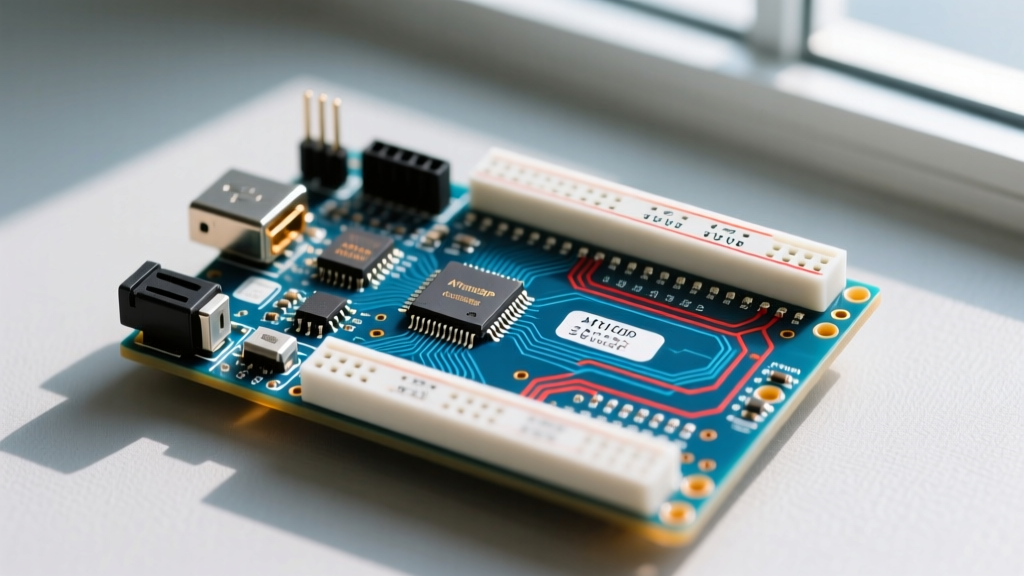
Even as we navigate the microcontroller landscape of 2026, the Arduino Uno R3 board remains the undisputed baseline for electronics prototyping. Its ATmega328P-PU architecture, 14 digital I/O pins, and 6 analog inputs have shaped a decade of DIY innovation. However, a massive price gap exists in the market. The official, Italian-manufactured board retails for approximately $27.50, while third-party budget clones can be found for as little as $9.99.
For engineers, educators, and hobbyists, this raises a critical question: Is the premium price tag of the official board justified, or are budget clones perfectly adequate for modern embedded projects? In this comprehensive teardown and analysis, we compare the premium and budget tiers of the Arduino Uno R3 ecosystem, examining component-level differences, failure modes, and real-world performance.
The Premium Tier: Official and Licensed Boards
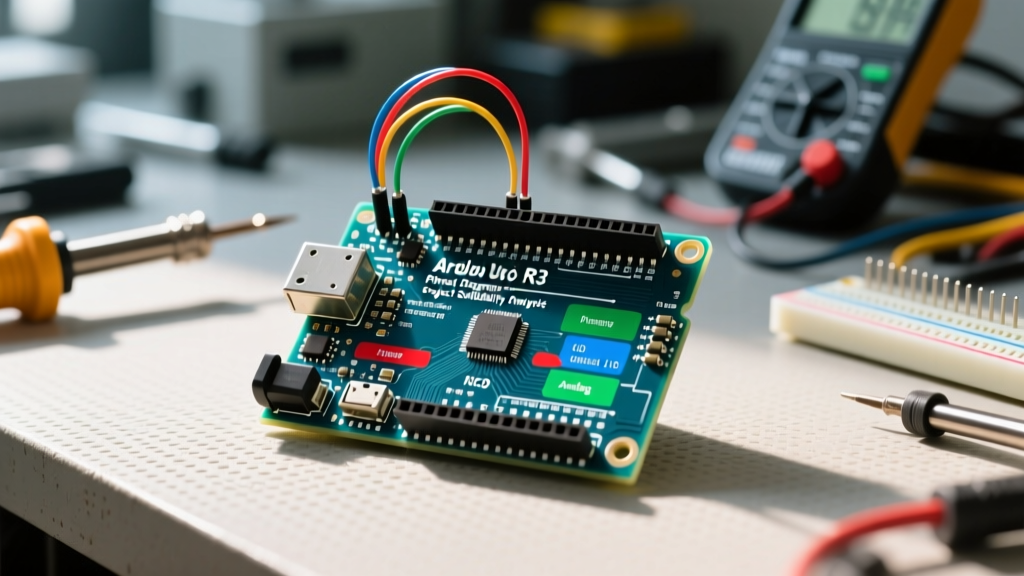
When we refer to the 'premium' tier, we are primarily talking about the official Arduino Uno R3 Rev3 and high-end licensed alternatives like the SparkFun RedBoard. These boards are manufactured under strict quality control standards, utilizing name-brand silicon and robust passive components.
Official Arduino Uno R3 Rev3
- Price: ~$27.50
- USB-to-Serial IC: Microchip ATmega16U2
- Voltage Regulator: Onsemi NCP1117ST50T3G (5V, 1A)
- Build Quality: Premium FR4 fiberglass, ENIG or high-quality HASL finish, RoHS compliant.
The official board's use of the Microchip ATmega16U2 as the USB-to-serial converter is its most defining premium feature. Unlike dedicated USB-serial chips, the 16U2 is a fully programmable microcontroller in its own right. This allows advanced users to flash custom firmware via DFU (Device Firmware Upgrade), enabling the board to act as a native USB MIDI controller, keyboard, or mouse without additional hardware.
The Budget Tier: Third-Party Clones
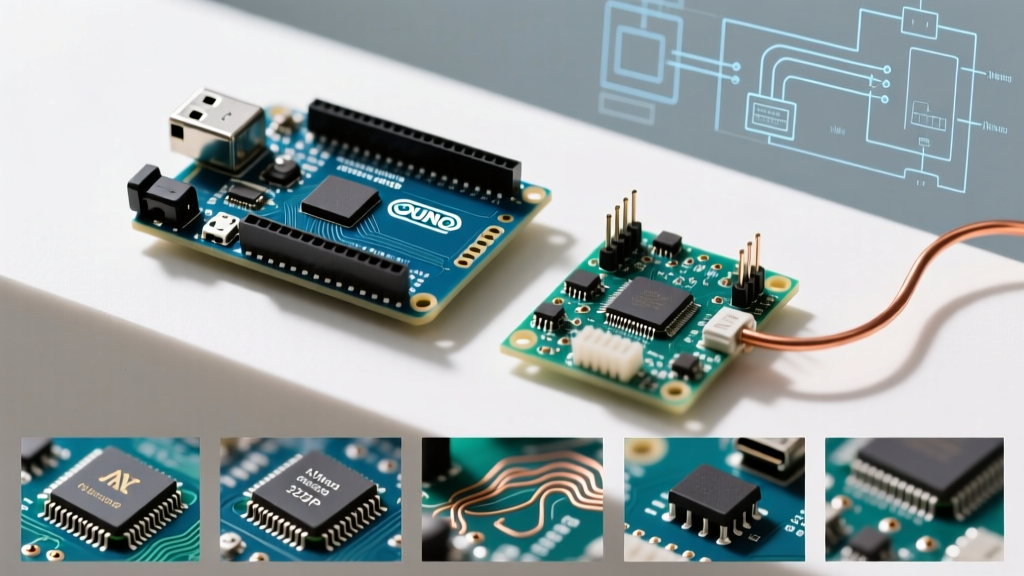
The budget tier is dominated by manufacturers like Elegoo, HiLetgo, and Smraza. These companies reverse-engineered the open-source schematics of the Uno R3 and optimized the bill of materials (BOM) for mass production.
Elegoo and HiLetgo Uno R3 Clones
- Price: $10.00 - $15.00 (often sold in multi-packs)
- USB-to-Serial IC: WCH CH340G or CH340C
- Voltage Regulator: Generic AMS1117-5.0 (5V, 800mA)
- Build Quality: Standard FR4, thinner copper traces, basic HASL finish.
Budget clones almost universally replace the ATmega16U2 with the WCH CH340 series. Historically, the CH340G required manual driver installation on Windows, but as of 2026, native kernel support in Windows 11 and macOS 14+ has entirely eliminated this friction. However, the CH340 is strictly a serial converter; it cannot be reprogrammed to act as a native HID or MIDI device.
Component-Level Comparison Matrix
| Feature | Official Arduino Uno R3 | SparkFun RedBoard Qwiic | Elegoo Uno R3 Clone | Ultra-Cheap Generic Clone |
|---|---|---|---|---|
| Retail Price | $27.50 | $24.95 | $14.99 | $8.50 - $10.00 |
| USB-Serial IC | ATmega16U2 | CH340C / FT231X | CH340G | CH340E (Micro-USB) |
| USB Port Type | USB Type-B | USB Type-C / Micro | USB Type-B | Micro-USB / Type-C |
| 5V LDO Regulator | NCP1117 (1A) | AP2112 (600mA) | AMS1117 (800mA) | Unbranded (500mA) |
| USB Polyfuse (PTC) | Yes (500mA) | Yes (500mA) | Usually Yes | Often Omitted |
| MCU Socket | DIP-28 Socket | SMD (Soldered) | DIP-28 Socket | DIP-28 Socket |
Deep Dive: Power Regulation and Failure Modes
The most critical differences between premium and budget boards emerge in the power regulation circuitry, specifically when powering external peripherals via the 5V or 3.3V pins.
The Voltage Regulator Dropout
The official board utilizes the Onsemi NCP1117ST50T3G. This low-dropout (LDO) regulator has a dropout voltage of roughly 1.1V at 1A. This means if you power the board via the barrel jack at 7V, the regulator can efficiently step it down to 5V while dissipating heat across the board's copper pour.
Budget clones typically use the AMS1117-5.0. While rated for 800mA, the AMS1117 has a higher thermal resistance and a dropout voltage closer to 1.3V. If you attempt to power a strip of 60 WS2812B addressable LEDs (drawing ~1.2A at peak white) through the clone's 5V pin while powered via a 9V barrel jack, the AMS1117 will rapidly exceed its thermal limits, triggering internal thermal shutdown or, in worst-case scenarios, catastrophic silicon failure.
The Missing Polyfuse Edge Case
Warning: The official Arduino Uno R3 features a 500mA resettable PTC polyfuse (MF-MSMF050-2) located near the USB port. This protects your computer's motherboard from short circuits on the Uno. Many ultra-cheap clones omit this $0.10 component to cut costs. If you short the 5V pin to GND on an unfused clone, you risk permanently damaging your PC's USB controller.
When deploying boards in educational environments where students frequently make wiring errors, the premium official board or high-quality clones (like Elegoo, which usually retain the polyfuse) are mandatory to protect host laptops.
The Microcontroller: Genuine vs. Recycled Silicon
According to the Arduino Uno R3 Official Documentation, the heart of the board is the ATmega328P-PU. Premium boards use genuine, factory-fresh Microchip silicon with the Optiboot bootloader pre-flashed and verified.
In the budget sector, the DIP-28 socketed ATmega328P chips are generally genuine, but they are occasionally sourced from secondary markets. We have observed edge cases where ultra-cheap clones ship with microcontrollers that fail to retain EEPROM data at temperatures above 70°C, or exhibit erratic ADC (Analog-to-Digital Converter) noise floors due to poor internal voltage reference calibration. For precision sensor projects (e.g., using load cells or thermocouples), the ADC noise on a $9 clone may require heavy software filtering, whereas the premium board provides cleaner baseline readings.
Decision Framework: Which Should You Buy?
Your purchasing decision should be dictated by the specific requirements of your project lifecycle.
When to Buy the Premium Official Board
- Commercial Prototyping: If you are building a proof-of-concept that will be shown to investors or clients, the reliability and brand recognition of the official board matter.
- USB HID/MIDI Projects: If your project requires the microcontroller to emulate a keyboard, gamepad, or MIDI instrument, the ATmega16U2 on the official board is strictly required.
- High-Temperature Environments: Genuine silicon and high-grade capacitors ensure stable operation in enclosed enclosures where ambient temperatures reach 50°C+.
When to Buy the Budget Clones
- Permanent Embedded Installations: If the board will be flashed once via USB and then powered permanently via a 5V regulated supply (bypassing the onboard LDO), a budget clone is perfectly adequate.
- High-Volume Student Kits: When outfitting a classroom of 30 students, spending $300 on clones instead of $825 on official boards frees up budget for sensors, motors, and soldering equipment.
- Destructive Testing & Robotics: In combat robotics or drone projects where the microcontroller is at high risk of physical destruction or voltage spikes, sacrificing a $12 clone is far less painful than destroying a $27.50 premium board.
Final Verdict
The Arduino Uno R3 board ecosystem in 2026 offers a clear bifurcation. The premium official board is a masterclass in robust, protective engineering, justifying its cost for advanced USB applications and mission-critical prototyping. However, for 90% of hobbyists, students, and permanent embedded projects, high-quality budget clones like the Elegoo Uno R3 provide identical core logic performance at a fraction of the cost. Understand your power requirements, respect the limitations of the AMS1117 regulator, and always verify the presence of a USB polyfuse before connecting a clone to your primary workstation.