
The Core Dilemma: Legacy Staple vs. Modern Alternatives
For over a decade, the combination of the Arduino Nano and Bluetooth modules has been the default gateway for makers entering the world of wireless telemetry, remote control vehicles, and basic IoT. However, as we navigate the hardware landscape of 2026, the dominance of highly integrated, low-cost SoCs like the ESP32-C3 and Raspberry Pi Pico W forces a critical question: Is pairing a classic Nano with an external Bluetooth module still a viable project architecture, or is it an outdated crutch?
This suitability analysis cuts through the nostalgia. We will evaluate exact hardware pairings, uncover dangerous logic-level traps that destroy modules, analyze serial bottlenecks, and define the exact project profiles where this stack still outperforms modern integrated alternatives.
Hardware Stack Matrix: Choosing Your Nano and Module
The term "Arduino Nano" currently spans three distinct microcontroller architectures. Pairing the wrong board with the wrong Bluetooth module leads to immediate voltage conflicts or code-base incompatibilities. Below is the definitive pairing matrix for current builds.
| MCU Variant | Ideal BT Module | Logic Level | Active Power Draw | Est. Cost (2026) |
|---|---|---|---|---|
| Classic Nano (ATmega328P) | HC-05 (Classic SPP) | 5V (Requires divider for RX) | ~45mA | $9.00 (Clone+Module) |
| Classic Nano (ATmega328P) | HM-10 (BLE 4.0) | 5V (Requires divider for RX) | ~28mA | $12.00 |
| Nano 33 BLE (nRF52840) | Built-in BLE 5.0 | 3.3V Native | ~12mA (TX peak) | $23.00 |
| Nano Every (ATmega4809) | HC-05 or HM-10 | 5V Tolerant I/O | ~35mA | $14.00 |
Where the Nano and Bluetooth Stack Excels
Despite the rise of Wi-Fi-enabled microcontrollers, the classic Nano paired with an HC-05 or HM-10 retains distinct advantages for specific engineering scenarios in 2026.
1. Direct 5V Servo and Actuator Driving
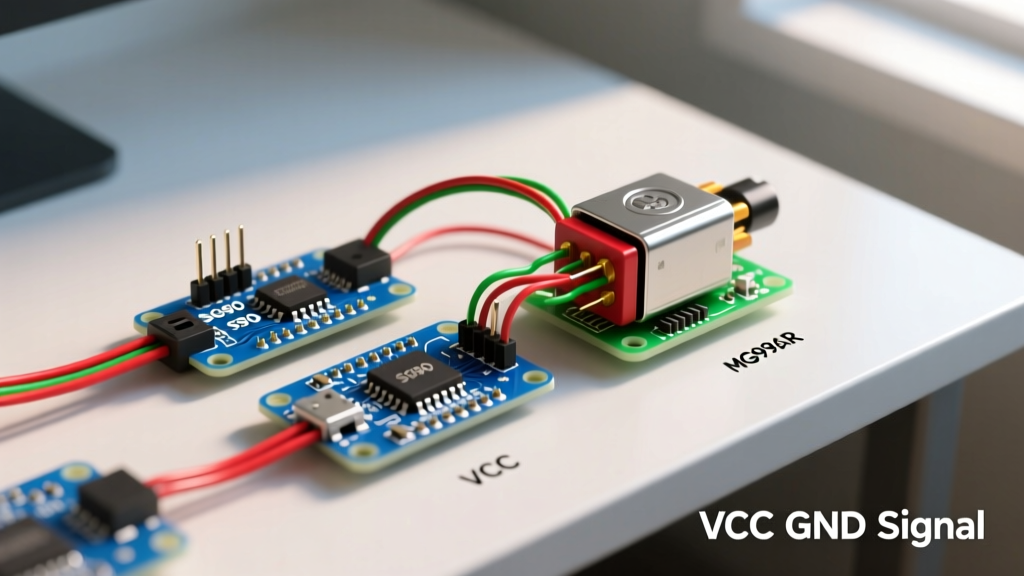
Modern BLE SoCs like the ESP32-C3 or Nano 33 BLE operate at 3.3V. While sufficient for logic, driving standard 5V analog servos (e.g., MG996R) directly from a 3.3V GPIO pin often results in jitter, signal dropout, or insufficient current sourcing. The classic ATmega328P Nano outputs a robust 5V logic high, making it vastly superior for RC car builds, robotic arms, and pan-tilt camera rigs where Bluetooth is used strictly for low-latency control commands rather than high-bandwidth data streaming.
2. The 0.7-Inch Form Factor Advantage
For makers designing custom printed circuit boards (PCBs), the Nano’s 0.7-inch width and standard 0.1-inch DIP header spacing remain unmatched. Most ESP32 DevKits are 1.1 inches wide or feature awkward USB-C port overhangs. If your project requires socketing a microcontroller onto a tight, custom-milled shield alongside an HC-05 breakout board, the Nano footprint is still the industry standard for rapid prototyping.
3. Legacy Industrial Retrofits
When reverse-engineering or adding wireless telemetry to legacy 5V industrial equipment (like older CNC routers or 1990s era PLCs), the 5V tolerance of the Nano and HC-05 stack prevents the need for complex bidirectional logic level shifters that would be mandatory if using a 3.3V native BLE SoC.
Critical Failure Mode: The 5V to 3.3V Logic Trap
The most common reason builders abandon the Arduino Nano and Bluetooth stack is module destruction due to voltage mismatches. This is especially prevalent when upgrading from the 5V-tolerant HC-05 to the 3.3V-strict HM-10 BLE module.
WARNING: The HM-10 BLE module's RX pin is strictly 3.3V tolerant. Connecting the Nano's 5V TX pin directly to the HM-10's RX pin will degrade the module's internal ESD protection diodes within hours, eventually leading to a dead module that draws 80mA+ in a short-circuit state.
The Proper Voltage Divider Solution
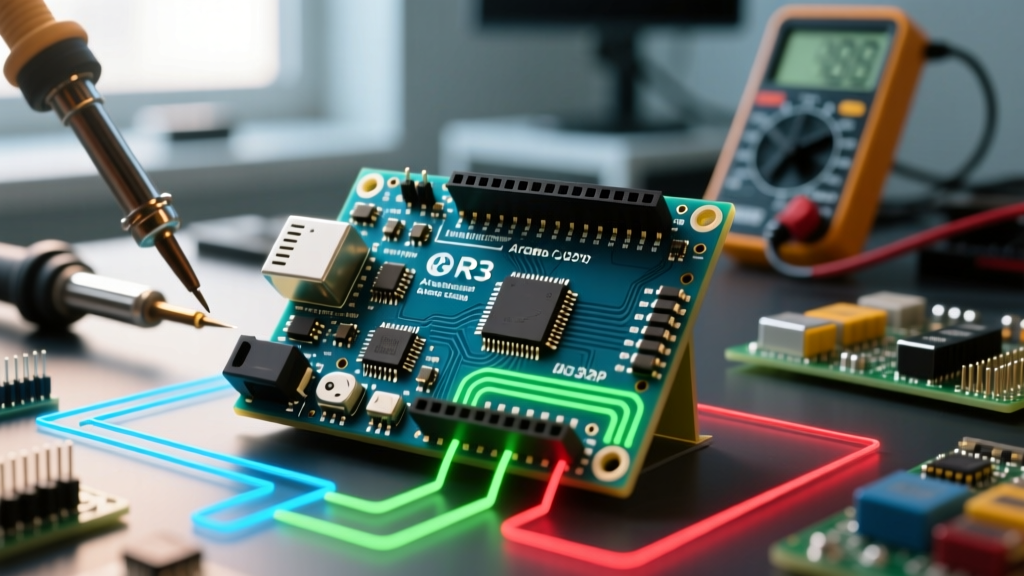
To safely interface the 5V TX pin of the Nano with the 3.3V RX pin of an HM-10 or Adafruit Bluefruit module, you must use a passive resistor voltage divider. Do not rely on internal pull-up resistors or "it worked for a while" anecdotes.
- Resistor 1 (R1): 2kΩ (Connected between Nano TX and HM-10 RX)
- Resistor 2 (R2): 3kΩ (Connected between HM-10 RX and GND)
- Math: Vout = 5V × (3k / (2k + 3k)) = 3.0V. This is perfectly within the 3.3V safe zone.
Note: The Nano's RX pin is 5V tolerant and can read the 3.3V TX output from the Bluetooth module directly without a divider, as 3.3V exceeds the ATmega328P's 2.5V threshold for a logic HIGH.
Serial Port Bottlenecks and SoftwareSerial Limits
The classic Arduino Nano possesses only one hardware UART (pins 0 and 1). This creates a severe architectural bottleneck: if you wire your Bluetooth module to the hardware serial pins, you must physically disconnect the module's RX/TX lines every time you upload new code via USB, and you lose the ability to use the Serial Monitor for debugging.
The standard workaround is the SoftwareSerial library, which emulates a UART in software on pins like D10 and D11. However, this introduces strict limitations:
Baud Rate Degradation
While the HC-05 defaults to 9600 baud (which SoftwareSerial handles flawlessly), modern BLE applications often require 115200 baud for firmware updates or high-speed sensor telemetry. According to Adafruit's BLE module guidelines, attempting to push 115200 baud through SoftwareSerial on a 16MHz ATmega328P results in severe packet loss and framing errors due to CPU interrupt latency. The maximum reliable baud rate for SoftwareSerial on the Nano is 38400. If your project demands higher throughput, you must migrate to the Nano 33 BLE or an ESP32, which feature multiple hardware UARTs.
Power Budget Analysis for Battery-Operated Builds
If your project relies on a 1S LiPo (3.7V) or a 9V battery, power efficiency is paramount. The Nano and Bluetooth stack is notoriously inefficient for deep-sleep applications compared to modern alternatives.
- Classic Nano Quiescent Draw: ~15mA (due to the onboard linear regulator and power LED).
- HC-05 Active Pairing: ~30mA to 45mA.
- Total Active Draw: ~50mA minimum. A standard 2000mAh 18650 cell will drain in roughly 35 hours of continuous use.
To achieve low power, you must physically desolder the Nano's power LED and onboard 5V linear regulator, powering the board directly via the 5V pin with a clean external buck converter. Even then, the ATmega328P lacks the sophisticated peripheral clock-gating found in the nRF52840 (Nano 33 BLE), which can drop system-wide sleep currents to under 10 microamps.
Final Verdict: Should You Use This Stack?
The Arduino Nano and Bluetooth combination is not dead, but its use case has highly specialized.
Use this stack if: You are building a 5V-tolerant robotics platform, retrofitting legacy hardware, or require the exact 0.7" DIP footprint for a custom shield, and your data throughput requirements are below 38400 baud.
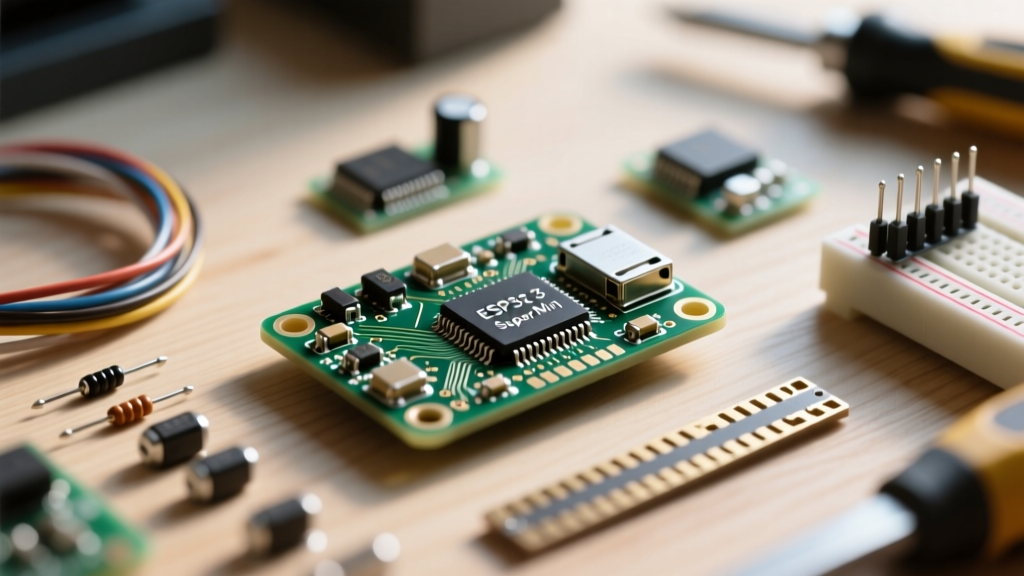
Avoid this stack if: You need BLE 5.0 mesh networking, deep-sleep battery operation lasting months, or high-speed serial data logging. In those scenarios, the $6 ESP32-C3 SuperMini or the $23 Nano 33 BLE are vastly superior architectural choices for modern engineering.