
The Legacy of the Arduino Duemilanove: A Retrospective
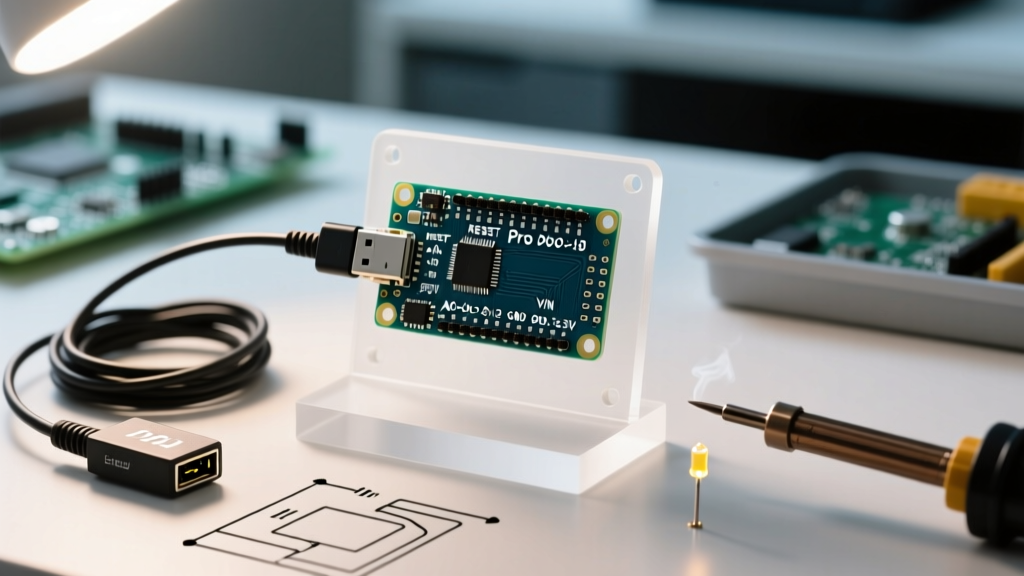
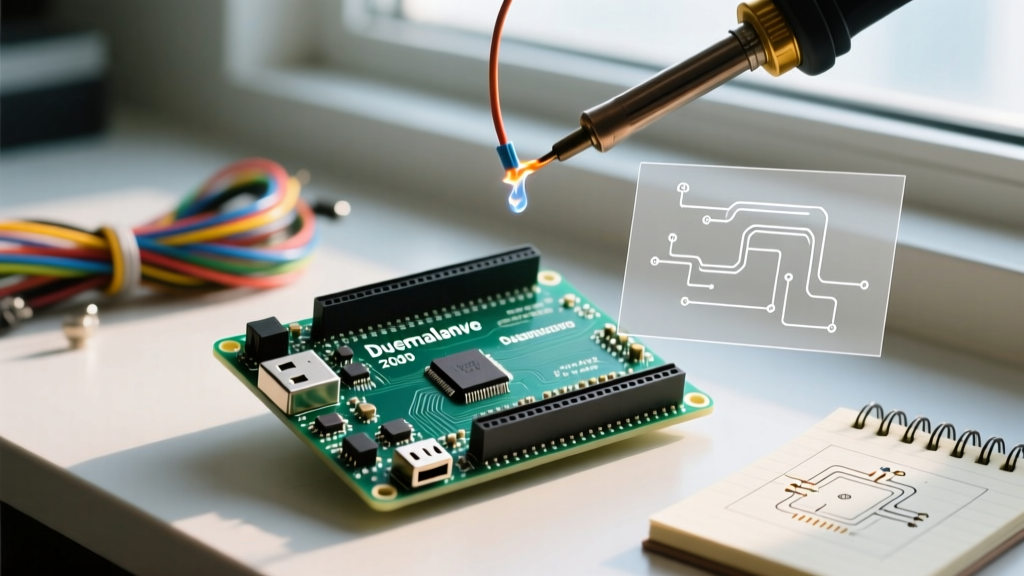
Released in early 2009, the Arduino Duemilanove (Italian for "two thousand and nine") served as the critical evolutionary bridge between the early Diecimila and the ubiquitous Arduino Uno. While modern makers default to the Uno R4 or ESP32 platforms, the Duemilanove remains a fascinating piece of microcontroller history. In 2026, vintage computing enthusiasts, retro-hardware restorers, and engineers troubleshooting legacy industrial shields still seek out this specific board. Its unique USB-to-Serial architecture and distinct power-multiplexing circuit offer hardware-level behaviors that modern boards have abstracted away.
This comprehensive review dissects the Arduino Duemilanove's hardware architecture, compares it against modern successors, and provides actionable guidance for sourcing, restoring, and deploying these legacy boards in contemporary workbenches.
Core Hardware Specifications
Before diving into the nuances of its silicon, it is essential to establish the baseline specifications. While early 2009 batches shipped with the ATmega168, the definitive Duemilanove (and the one most commonly found on the secondary market today) utilizes the ATmega328P.
| Feature | Arduino Duemilanove (Late 2009) | Arduino Uno R3 |
|---|---|---|
| Microcontroller | ATmega328P-PU (DIP-28) | ATmega328P-PU (DIP-28) |
| USB-to-Serial IC | FTDI FT232RL (SSOP-28) | ATmega16U2 (QFN-32) |
| Clock Speed | 16 MHz Crystal | 16 MHz Crystal |
| Flash Memory | 32 KB (2 KB used by bootloader) | 32 KB (0.5 KB used by Optiboot) |
| SRAM / EEPROM | 2 KB / 1 KB | 2 KB / 1 KB |
| Power Selection | Op-Amp Comparator (LMV358) | Transistor-based Auto-switch |
The FTDI FT232RL: Why the Duemilanove Still Matters
The most defining characteristic of the Arduino Duemilanove is its reliance on the FTDI FT232RL dedicated USB-to-UART bridge chip. When the Arduino team transitioned to the Uno, they replaced the FTDI chip with a secondary ATmega16U2 microcontroller programmed to act as a USB adapter. While the 16U2 allowed for custom HID (Human Interface Device) configurations like native MIDI or keyboard emulation, it sacrificed the raw, low-level serial capabilities of the FTDI chip.
CBUS Pins and Advanced Serial Protocols
The FT232RL exposes CBUS pins (CBUS0 through CBUS3) which can be configured via the chip's internal EEPROM to output specialized signals such as TXDEN (for RS485 half-duplex direction control), TXLED, RXLED, or even a 6MHz clock output. For engineers reverse-engineering legacy RS485 industrial equipment or building custom DMX512 lighting controllers, the Duemilanove provides hardware-level UART manipulation that the Uno R3 and R4 simply cannot replicate without external shift registers or transceivers.
"The transition away from FTDI to the 16U2 on the Uno was primarily a cost and supply-chain decision, but it fundamentally changed how the board interacted with non-standard serial protocols at the hardware level."
— Hardware Architecture Analysis, Arduino Official Retired Documentation
The 2014 FTDI Driver Incident: A Warning for Modern Buyers
If you are sourcing a Duemilanove today, you must be aware of the infamous 2014 FTDI driver controversy. FTDI released a Windows driver update that intentionally altered the PID/VID EEPROM data of counterfeit FT232RL chips to 0000, effectively "bricking" them on Windows machines. While FTDI later reversed this under immense industry pressure, many clone Duemilanove boards produced between 2010 and 2013 were permanently damaged. When buying on eBay or AliExpress in 2026, always verify the board's FTDI chip using the open-source ft232r_prog utility to ensure the EEPROM is intact and the chip is genuine.
Power Multiplexing: Op-Amp vs. Transistor Logic
Another area where the Duemilanove showcases superior, albeit more complex, engineering is its power selection circuit. The board must seamlessly switch between USB power (5V) and the external barrel jack (7V-12V) without back-feeding voltage into your computer's USB port.
- Duemilanove Implementation: Utilizes an LMV358 dual op-amp configured as a comparator. It monitors the VIN line after the NCP1117 5V voltage regulator. If VIN exceeds a specific threshold (around 6.6V), the op-amp drives the gate of an FDN340P P-channel MOSFET, cutting off the USB VCC line. This provides a hard, high-current physical disconnect.
- Uno R3 Implementation: Simplified the circuit by using a single NPN transistor and a comparator to drive a similar MOSFET, reducing component count but slightly altering the hysteresis and switching thresholds.
For high-draw projects utilizing motor shields, the Duemilanove's robust op-amp comparator circuit is less prone to the "chatter" or rapid switching issues that can occur on early Uno clones when operating near the 6.5V threshold.
Bootloader Evolution: ATmegaBOOT vs. Optiboot
A common frustration for developers reviving a Duemilanove is the default bootloader. Original factory boards shipped with the ATmegaBOOT bootloader. This legacy bootloader occupies 2KB of flash memory and contains a well-documented bug: if the watchdog timer (WDT) triggers a reset, the bootloader fails to disable the WDT upon reboot, causing an infinite reset loop that bricks the board until an external ISP programmer is used to wipe the chip.
Actionable Fix: If you acquire a Duemilanove today, your first step should be to use an Arduino as ISP or a USBasp programmer to burn the Optiboot bootloader onto the ATmega328P. Optiboot consumes only 512 bytes (freeing up 1.5KB for your sketch) and includes the necessary watchdog timer interrupt service routine (ISR) to prevent the infinite reset loop.
Comparison Matrix: Duemilanove vs. Modern Alternatives
How does this legacy board stack up against modern staples in a 2026 workbench environment?
| Criteria | Arduino Duemilanove | Arduino Uno R4 Minima | SparkFun RedBoard (FTDI) |
|---|---|---|---|
| Primary Use Case | Legacy shield compat., RS485, Retro-restoration | Modern DSP, floating-point math, high-speed I/O | General prototyping, robust serial debugging |
| USB-Serial Chip | FTDI FT232RL (Genuine) | Renesas RA4M1 (Native USB) | FTDI FT232RL (or CH340 on clones) |
| Auto-Reset Circuit | 100nF Capacitor on DTR | 100nF Capacitor on DTR | 100nF Capacitor on DTR |
| Market Price (2026) | $45 - $85 (Used/New Old Stock) | $27.50 (Retail) | $21.95 (Retail) |
Troubleshooting Common Duemilanove Failures
Given that these boards are now over 15 years old, component degradation is a reality. Here is a diagnostic guide for the most frequent failure modes encountered on the workbench.
- Auto-Reset Failure During Upload: The Arduino IDE relies on the DTR (Data Terminal Ready) line dropping low to pull the RESET pin low via a 100nF ceramic capacitor. On aging Duemilanove boards, this surface-mount capacitor can degrade or crack due to thermal cycling. Symptom: You must manually press the physical reset button exactly when the IDE says "Uploading." Fix: Desolder and replace the 100nF capacitor located near the FTDI chip and the ATmega reset pin.
- NCP1117 Voltage Regulator Overheating: The Duemilanove uses a linear regulator to drop barrel-jack voltage to 5V. If you supply 12V and draw 200mA from the 5V pin, the regulator must dissipate 1.4W of heat. Without a heatsink, the SOT-223 package will thermal-shutdown. Fix: Stick to 7V-9V inputs, or bypass the regulator entirely by feeding regulated 5V directly into the 5V header pin.
- FTDI EEPROM Corruption: If the board is recognized by the OS but fails to enumerate as a COM port, the internal EEPROM of the FT232RL may be corrupted. Fix: Use the official FTDI FT_Prog utility on a Windows machine to scan and re-flash the default PID (0x6001) and VID (0x0403).
Sourcing and Authenticity in the Secondary Market
Finding a genuine Arduino Duemilanove requires navigating a minefield of mislabeled clones. Many modern "Duemilanove-style" boards sold on Amazon or AliExpress for $12 actually utilize the WCH CH340G USB-Serial chip to cut costs, entirely defeating the purpose of buying a Duemilanove for its FTDI capabilities.
When evaluating listings on eBay or specialized electronics surplus stores:
- Visual Inspection: Look for the "Arduino" logo silk-screened in the classic font, and verify the presence of the FTDI chip (a large SSOP-28 IC near the USB-B port). If you see a smaller, rectangular 16-pin SOIC chip near the USB port, it is a CH340 clone.
- Price Benchmarking: Genuine, New Old Stock (NOS) Duemilanove boards command a premium, typically ranging from $50 to $85. If a listing offers a "brand new genuine" board for $18, it is almost certainly a clone.
- Alternative Sourcing: If you strictly need the FTDI FT232RL architecture but cannot source a genuine Duemilanove, consider purchasing a modern SparkFun FTDI Basic Breakout and wiring it to the RX/TX/GND headers of a standard Arduino Uno, effectively bypassing the Uno's 16U2 chip.
Final Verdict: Is the Duemilanove Worth It Today?
The Arduino Duemilanove is no longer a general-purpose prototyping board; it is a specialized tool. For students and hobbyists starting their microcontroller journey, the Uno R4 or Raspberry Pi Pico offer vastly superior processing power, native USB, and modern software ecosystems. However, for electrical engineers maintaining legacy industrial automation systems, retro-computing archivists, and makers who require the hardware-level CBUS pin manipulation of the FT232RL, the Duemilanove remains an irreplaceable piece of open-source hardware history. Treat it with respect, upgrade its bootloader to Optiboot, and it will continue to serve as a reliable serial bridge for years to come.