
Understanding the Independent Distributor of Electronic Components
When you are designing a custom printed circuit board (PCB) or repairing legacy industrial equipment, you will inevitably encounter a scenario where authorized channels are out of stock. This is where an independent distributor of electronic components becomes a critical lifeline. Unlike franchised or authorized distributors (such as Digi-Key, Mouser, or Arrow) who hold direct contracts with original component manufacturers (OCMs), independent distributors operate on the open market. They source surplus inventory, buy from other distributors, and broker parts globally to fulfill immediate demand.
For beginners in electronics and hardware engineering, the independent market can seem like the Wild West. While it offers unparalleled access to hard-to-find, obsolete, and allocated microcontrollers, analog ICs, and power management modules, it also introduces significant risks. The most prominent of these risks is the infiltration of counterfeit, remarked, or substandard components into the supply chain. In 2026, as global semiconductor supply chains continue to adjust to post-pandemic normalization and new geopolitical trade constraints, knowing how to safely navigate the independent market is an essential skill for any serious hardware developer or DIY engineer.
Authorized vs. Independent: A Structural Comparison
Before making a purchase, it is vital to understand the structural differences between the primary sourcing channels. The table below outlines the operational realities of each distributor type.
| Feature | Authorized / Franchised | Independent Distributor |
|---|---|---|
| Inventory Source | Direct from OCM (Original Component Manufacturer) | Surplus, OEM overstock, global broker networks |
| Pricing Model | Fixed MSRP or negotiated volume tiers | Dynamic spot-market pricing (supply/demand driven) |
| Lead Times | Can extend 40-52 weeks during allocations | Usually in-stock for immediate same-day shipping |
| Traceability | 100% guaranteed direct lineage | Requires manual verification of CoC (Certificate of Conformance) |
| Minimum Order Qty | Often flexible (cut-tape available) | Often requires full factory reel or tray purchases |
The Counterfeit Threat: Failure Modes and Edge Cases
The most significant danger when utilizing an independent distributor of electronic components is receiving counterfeit parts. According to data tracked by the Electronic Resellers Association International (ERAI), counterfeit incidents frequently spike during periods of global shortage. When authorized lead times for a basic microcontroller stretch beyond 30 weeks, bad actors flood the open market with fraudulent alternatives.
To combat this, the aerospace and defense industries rely heavily on SAE International's AS5553 standard, which dictates rigorous protocols for the avoidance, detection, and mitigation of counterfeit electronic parts. While a hobbyist or small startup may not need to comply with AS5553 entirely, understanding its core failure modes is crucial for protecting your PCB designs from catastrophic field failures.
Common Deception Techniques
- Blacktopping and Remarking: Fraudsters sand down the original epoxy casing of a cheaper, lower-specification IC (e.g., an STM32F103C8T6 with 64KB Flash) and apply a new layer of black epoxy. They then laser-etch the part number of a more expensive, higher-specification IC (e.g., an STM32F103RCT6 with 256KB Flash) onto the surface. Your code will fail to compile or crash during runtime when it exceeds the physical memory limits.
- Lead Re-tinning: Used or salvaged components pulled from e-waste PCBs are cleaned, and the oxidized pins are re-dipped in solder to make them appear factory-fresh. These parts often suffer from micro-fractures in the bond wires due to the thermal stress of the initial desoldering process, leading to latent open-circuit failures.
- Die Swapping (Decapsulation required to detect): In highly sophisticated fakes, the top of the IC package is carefully milled away, the original silicon die is removed, and a completely different, salvaged die is wire-bonded and re-encapsulated. This is frequently seen in high-value analog-to-digital converters (ADCs) and precision operational amplifiers.
4-Step Verification Protocol for Beginners
If you must source from the open market, implement this strict verification protocol before integrating the components into your assembly line or soldering them to your prototyping board.
- Verify Distributor Credentials: Only purchase from independent distributors that hold active memberships in recognized industry organizations such as the Independent Distributors of Electronics Association (IDEA) or ERAI. These organizations require members to adhere to strict quality management systems and anti-counterfeit policies.
- Demand the Certificate of Conformance (CoC): Before wiring the funds, request the original CoC and the manufacturer's packing list. Cross-reference the lot code, date code, and serial numbers on the paperwork against the physical labels on the moisture barrier bags (MBBs) and reels.
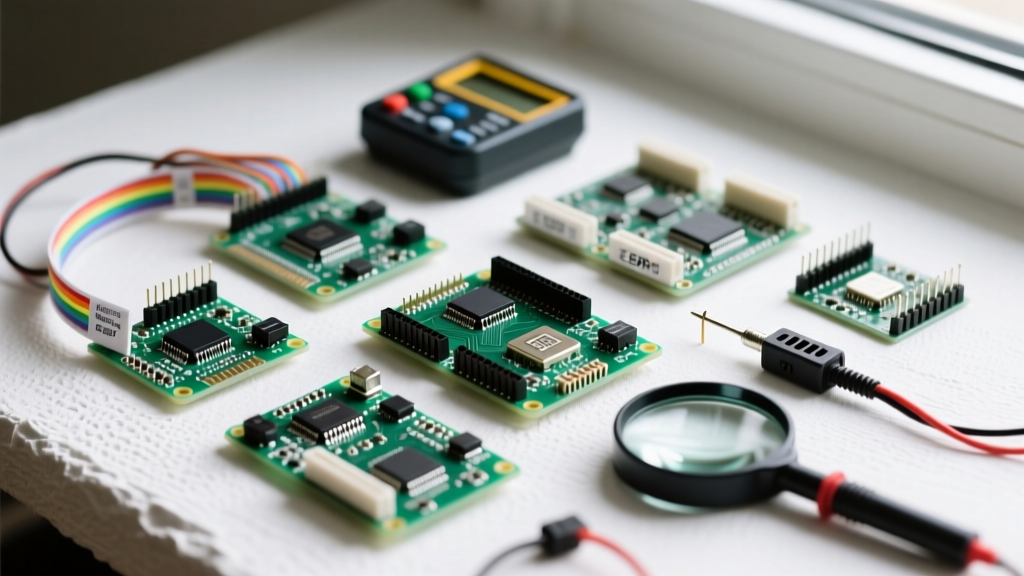
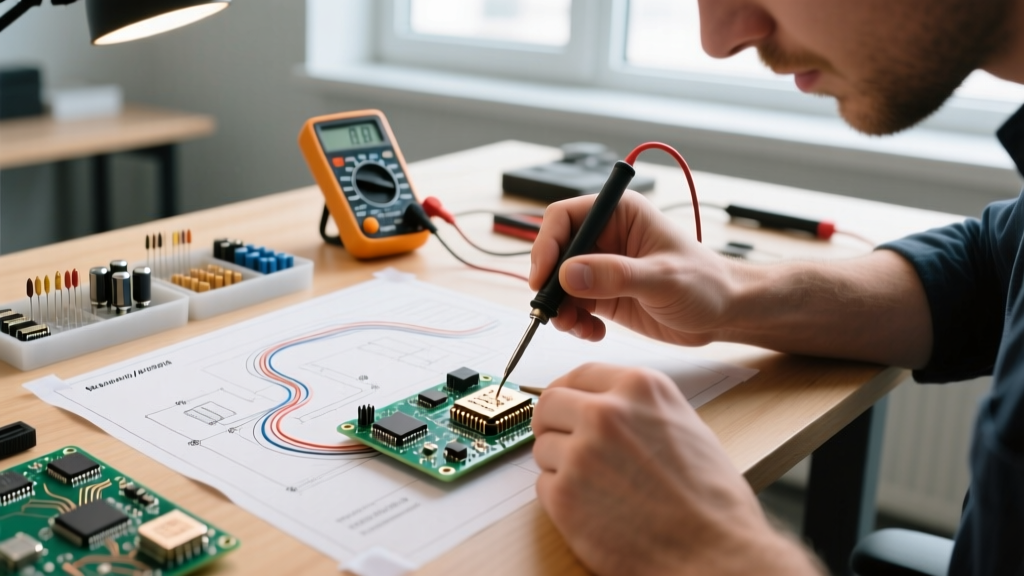
- Perform Visual and Microscopic Inspection: Upon receipt, inspect the parts under magnification. A basic 10x loupe is insufficient. Invest in a digital USB microscope, such as the Dino-Lite AM4115T (priced around $350), which offers up to 200x magnification and polarized lighting. Look for inconsistent laser etching depths, mold ejector pin marks in the wrong locations, and signs of sanding on the top surface.
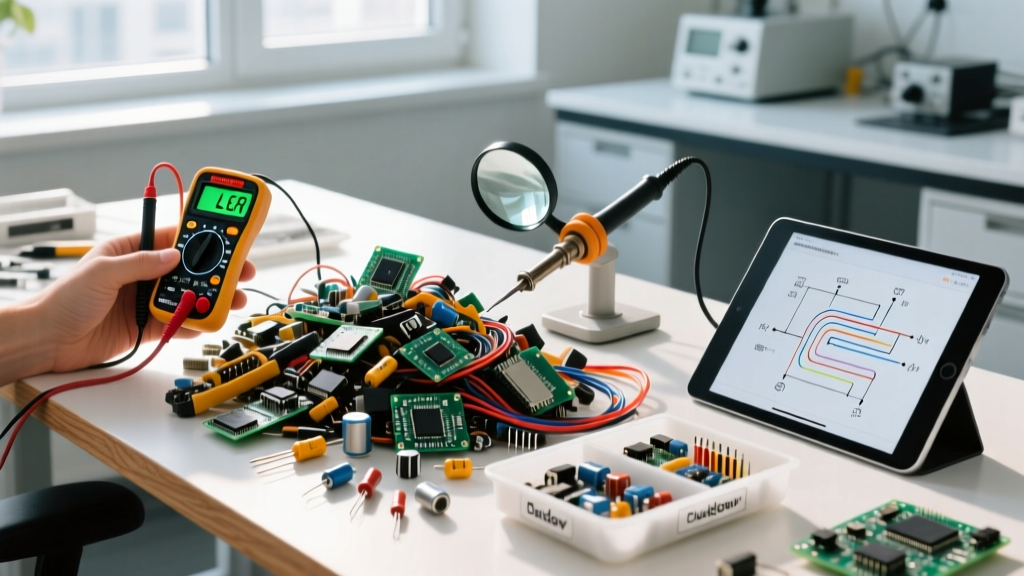
- Test Electrical Parameters: For critical ICs, do not rely solely on visual inspection. Build a simple breakout test jig to verify quiescent current draw, basic logic I/O functionality, and communication protocols (I2C/SPI) before committing the parts to a full production run.
Cost Realities: What You Will Actually Pay in 2026
Pricing on the independent market is highly volatile and dictated by real-time global inventory levels. To illustrate, let us examine the sourcing dynamics for the Texas Instruments TPS54331DR, a widely used 3A step-down DC-DC converter, and the STMicroelectronics STM32F407VGT6, a popular ARM Cortex-M4 microcontroller.
If you purchase the TPS54331DR through an authorized franchised distributor, the standard price is approximately $1.85 per unit at a 1,000-unit volume tier. However, if authorized stock is depleted and you turn to an independent distributor of electronic components, you will pay a 'spot market' premium. In a stable market, an independent broker might supply this part for $2.20 to $2.50 per unit from verified OEM surplus. During a severe allocation period, that exact same part can surge to $6.00 or more per unit.
For the STM32F407VGT6, the authorized baseline is roughly $14.50. On the independent market, verified, factory-sealed trays typically trade between $18.00 and $22.00. If a broker offers you this specific microcontroller for $9.00 when the rest of the market is trading at $20.00, you are almost certainly looking at a counterfeit or salvaged batch. In the independent component market, if a deal looks too good to be true, it is a massive red flag for compromised silicon.
Expert Tip: When placing large orders (over $5,000) with a new independent broker, always use an escrow service or negotiate net-30 payment terms contingent upon passing incoming quality control (IQC) inspection. Never wire funds upfront to an unverified overseas broker without contractual protections for returns and RMA (Return Merchandise Authorization) processes.
Navigating Obsolete and End-of-Life (EOL) Components
One of the most valuable use cases for an independent distributor is sourcing End-of-Life (EOL) or Not Recommended for New Design (NRND) components. When repairing legacy medical devices, vintage audio synthesizers, or aging industrial PLCs, you cannot simply redesign the board to accommodate a modern alternative. You need the exact original part number.
Specialized independent distributors maintain 'deep storage' warehouses specifically for obsolete parts. When sourcing EOL components, pay close attention to the date code. Electrolytic capacitors and certain optoisolators degrade over time, even if they remain sealed in their original packaging. Furthermore, older ICs may have matte-tin or tin-lead finishes that require specific soldering profiles to avoid cold joints or thermal shock when paired with modern lead-free solder pastes. Always request the date code from the independent distributor before purchasing obsolete stock, and avoid purchasing electrolytic components that are more than five years old, regardless of their storage conditions.
Final Checklist Before Hitting 'Purchase'
Sourcing from an independent distributor of electronic components requires a shift in mindset. You are trading the automated convenience and guaranteed lineage of franchised channels for the speed and availability of the open market. By rigorously vetting your suppliers, demanding traceability documentation, and implementing strict incoming inspection protocols using proper magnification tools, you can safely leverage the independent market to keep your electronics projects and production lines moving forward without compromising on reliability.