
The True Cost of an Electronic Components Recall in 2026
In the fast-paced world of PCB design and manufacturing, an electronic components recall is the ultimate bottleneck. Whether triggered by a fabrication node defect, a packaging anomaly, or a material supply chain contamination, a recall can halt production lines and destroy profit margins. In 2026, with the average cost of a mid-volume PCB rework sitting between $12 and $18 per board, and full Non-Recurring Engineering (NRE) respins costing upwards of $45,000, proactive tracking is no longer optional—it is a survival skill.
This reference guide and cheat sheet is engineered for electrical engineers, procurement specialists, and advanced DIYers. We break down how to track Product Change Notifications (PCNs), identify notorious historical failure modes, and execute a bulletproof Bill of Materials (BOM) quarantine protocol when a recall hits your supply chain.
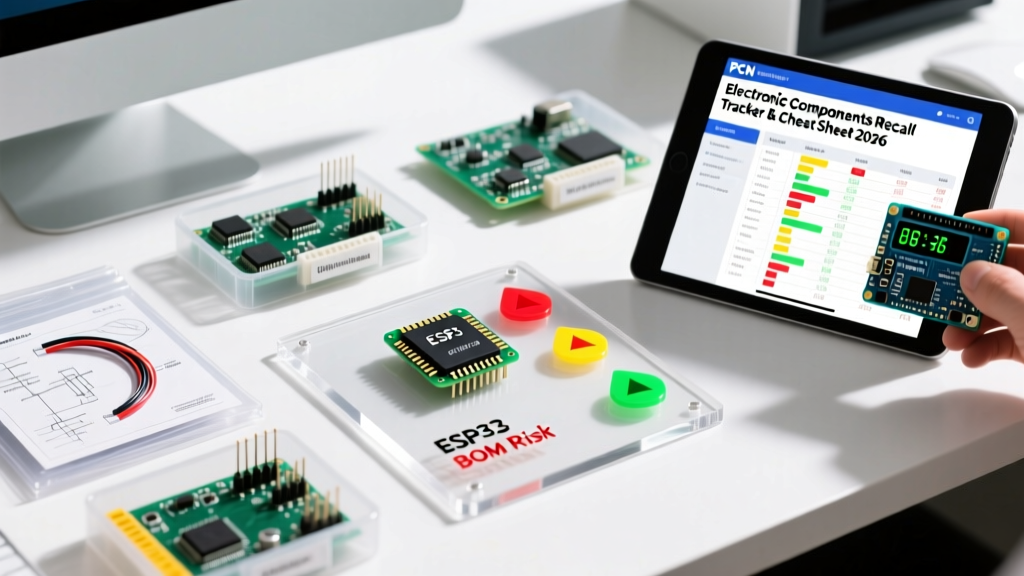
2026 Recall & PCN Tracking Matrix
Relying solely on your distributor's automated emails is a critical vulnerability. Distributors often delay PCN forwarding by 30 to 60 days to manage their own inventory liabilities. To stay ahead of an electronic components recall, you must utilize direct manufacturer portals and third-party intelligence aggregators.
| Tracking Source | Update Frequency | Best Use Case | Estimated Cost (2026) |
|---|---|---|---|
| SiliconExpert PCN/PDN Database | Daily | Enterprise BOM scrubbing and cross-referencing | $3,500 - $8,000 / year |
| ERAI Market Intelligence | Real-Time | Spotting counterfeit infiltration during shortage-driven recalls | $1,200 / year |
| Manufacturer Direct Portals (e.g., TI, ST, Murata) | Weekly | Verifying specific lot codes and date codes | Free (Requires NDA/Account) |
| JEDEC Standards (JESD46) | Static Reference | Understanding legal timelines for PCN issuance (min 90 days) | Free / Membership |
Notorious Failure Modes & Historical Recalls
To anticipate future recalls, you must understand past failures. Here is a deep dive into three specific component categories that have triggered massive industry-wide recalls and rework campaigns over the last decade, along with their 2026 mitigation strategies.
1. MLCC Flex Cracking (Murata GRM vs. GCJ Series)
The Failure Mode: Multi-Layer Ceramic Capacitors (MLCCs) are brittle. When a PCB undergoes mechanical stress (e.g., board flexure exceeding 0.2mm during depaneling or connector insertion), micro-cracks form in the barium titanate dielectric. This leads to short circuits and catastrophic thermal runaway, especially in high-capacitance X5R/X7R parts.
The Recall Context: In the late 2010s, several automotive and industrial OEMs faced silent recalls due to field failures traced back to standard Murata GRM series MLCCs placed too close to V-score lines or mounting holes.
2026 Mitigation: Never use standard GRM series parts within 3mm of a board edge or mechanical stress point. Mandate the use of soft-termination MLCCs (like the Murata GCJ series or Kemet FlexSafe) which incorporate a conductive polymer layer that absorbs mechanical strain. Expect to pay a 15-20% premium per reel for soft-termination parts, a cost easily justified by avoiding a $100k recall.
2. MCU Flash Retention Degradation (STM32F103 Edge Cases)
The Failure Mode: Early batch fabrications of certain 32-bit ARM Cortex-M3 microcontrollers exhibited anomalous charge leakage in their floating-gate flash memory cells when subjected to sustained ambient temperatures above 85°C.
The Recall Context: Industrial control boards deployed in unventilated enclosures experienced firmware corruption after 12-18 months of operation. The manufacturer issued a targeted PCN and recall for specific date codes, requiring a mask-set revision at the fab level.
2026 Mitigation: Always implement a hardware CRC (Cyclic Redundancy Check) module in your firmware to verify flash integrity on boot. For high-temperature deployments, transition to MCUs with explicit automotive-grade (AEC-Q100 Grade 1) qualifications, such as the STM32H7 series rated for 125°C, which utilize more robust oxide layers in their flash arrays.
3. BGA Package Delamination & The 'Popcorn Effect'
The Failure Mode: Moisture ingress into plastic IC packages. During reflow soldering (peak temps of 245°C+ for lead-free SAC305), the trapped moisture vaporizes, causing internal delamination between the silicon die and the substrate.
The Recall Context: Component manufacturers occasionally ship parts with compromised Moisture Barrier Bags (MBBs) or expired Humidity Indicator Cards (HICs). If assembled without proper baking, entire batches of FPGAs and high-pin-count BGAs fail in the field.
2026 Mitigation: Enforce strict IPC/JEDEC J-STD-033 handling procedures. If a recall is suspected for moisture sensitivity, send 3-5 sample components to an independent lab for CSAM (Confocal Scanning Acoustic Microscopy). CSAM testing costs roughly $150-$250 per sample and will instantly reveal internal acoustic voids indicating delamination before the parts ever hit the pick-and-place machine.
Step-by-Step BOM Quarantine & Rework Protocol
When an electronic components recall is officially announced via a PDN (Product Discontinuation Notification) or a direct safety alert, execute this 5-step protocol immediately:
- Lot Code Isolation: Cross-reference the recall notice's affected Date Codes (D/C) and Lot Codes against your ERP system. Physically quarantine all matching reels and trays in an ESD-safe, climate-controlled lockbox.
- Distributor Chargeback Initiation: Under the JEDEC JESD46 standard, manufacturers must provide at least 90 days' notice for changes. If a recall is due to a latent defect, contact your franchised distributor (e.g., Arrow, Avnet) immediately to initiate an RMA. Do not use grey-market brokers for returns.
- Pin-to-Pin Drop-in Verification: If the manufacturer offers a replacement part number, do not blindly accept it. Run a SPICE simulation and review the new datasheet's 'Absolute Maximum Ratings' and 'Thermal Impedance' tables. A 5mV shift in a voltage reference's dropout voltage can break a precision ADC circuit.
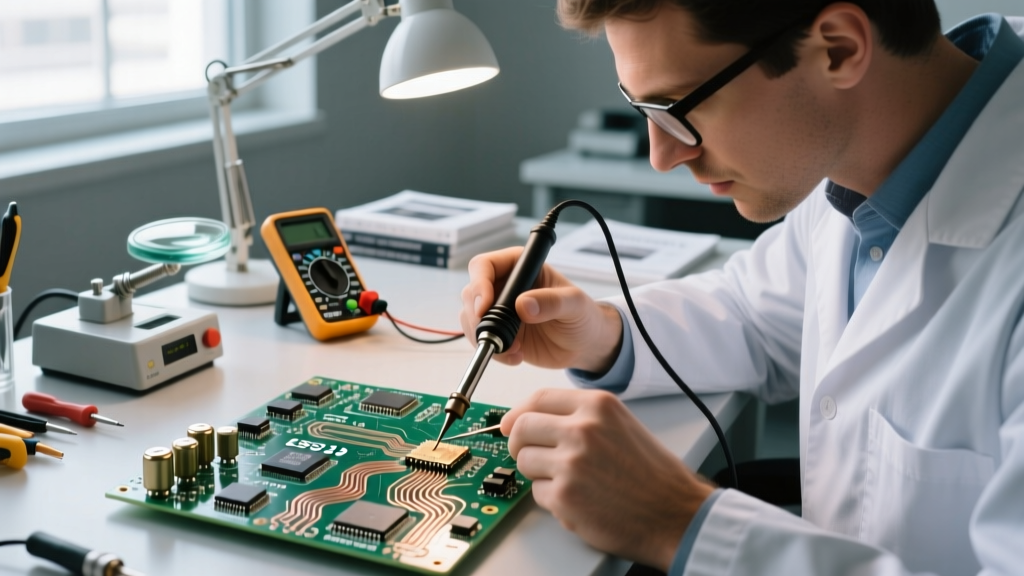
- X-Ray Inspection for Rework: If you are reworking recalled BGAs or QFNs on existing assemblies, mandate X-ray inspection post-rework. Per IPC-A-610 Class 3 standards, solder ball voiding must not exceed 25% of the total projected area. Reworked boards often suffer from excessive flux outgassing, leading to voiding that triggers secondary thermal failures.
- Firmware/Hardware Handshake Update: If the recalled component is a sensor or MCU, verify if the replacement requires a new I2C address, a different SPI clock polarity (CPOL/CPHA), or a revised initialization sequence in your firmware.
Quick-Reference Cheat Sheet: Procurement Red Flags
🚨 The 'Too Good to Be True' Price Rule: If a linear regulator (e.g., TI LM1117-3.3) is recalled or allocated, and a broker offers it at 40% below the MSRP of $1.25, assume it is counterfeit or salvaged. Counterfeit voltage regulators often lack internal thermal shutdown circuitry, leading to literal PCB fires.
🚨 The Date Code Mismatch: If a single reel contains components with two different date codes printed on the packaging, the reel has been spliced. This is a massive red flag for unauthorized re-taping, often used to hide recalled or out-of-spec batches.
🚨 The X-Ray Solderability Test: For high-reliability aerospace or medical builds, mandate an X-ray fluorescence (XRF) test on component leads to verify the exact alloy composition (e.g., verifying Sn96.5/Ag3.0/Cu0.5). Recalled batches sometimes suffer from lead-finish oxidation that prevents proper wetting with SAC305 paste.
Final Thoughts on Supply Chain Resilience
Navigating an electronic components recall requires a blend of forensic material science and aggressive supply chain management. By integrating tools like SiliconExpert into your workflow, enforcing soft-termination rules for MLCCs, and strictly adhering to IPC-A-610 rework standards, you insulate your projects from the catastrophic financial and reputational damage of field failures. Bookmark this cheat sheet, update your BOM risk matrices quarterly, and never trust a grey-market date code.