
The Scavenger’s Reality: From Tarkov to the Workbench
In the unforgiving world of Escape from Tarkov, securing high-tier loot like military cables, circuit boards, and capacitors is essential for hideout upgrades and trader quests. But for hardcore DIY electronics enthusiasts, prop makers, and ruggedized tech builders in 2026, the hunt for real-world equivalents of these Tarkov electronic components is a very real, highly technical pursuit. Sourcing surplus MIL-SPEC avionics boards, military-grade cabling, and Soviet-era passive components from e-waste and government surplus auctions requires more than just a basic soldering iron.
Military-specification (MIL-SPEC) components are designed to survive extreme vibration, thermal shock, and electromagnetic interference. Consequently, they are notoriously difficult to desolder, test, and repurpose without causing catastrophic damage to the component or the host board. This guide reviews the essential diagnostic and rework tools required to safely harvest and validate real-world Tarkov electronic components for your most demanding DIY projects.
Real-World Equivalents of Tarkov Loot
Before selecting your tools, it is critical to understand what you are actually scavenging. The game’s loot tables are heavily inspired by real-world military and industrial surplus:
- Military Cable: Maps to MIL-W-22759 (Tefzel-insulated) and MIL-C-27500 (shielded composite) wiring. These feature silver-plated copper strands and high-melting-point insulation.
- Circuit Board: Maps to MIL-PRF-31032 rigid printed wiring boards. Unlike standard FR-4, these often use polyimide substrates with heavy 2oz to 4oz copper pours and deep plated through-holes.
- Capacitors: Maps to MIL-PRF-39018 ceramic capacitors or vintage Soviet K50-35 electrolytics, known for extreme tolerance and ruggedized casing.
- Spark Plugs / Igniters: Maps to military-grade exciters and high-voltage ignition assemblies used in turbine engines and auxiliary power units (APUs).
Top Diagnostic & Rework Tools for MIL-SPEC Parts
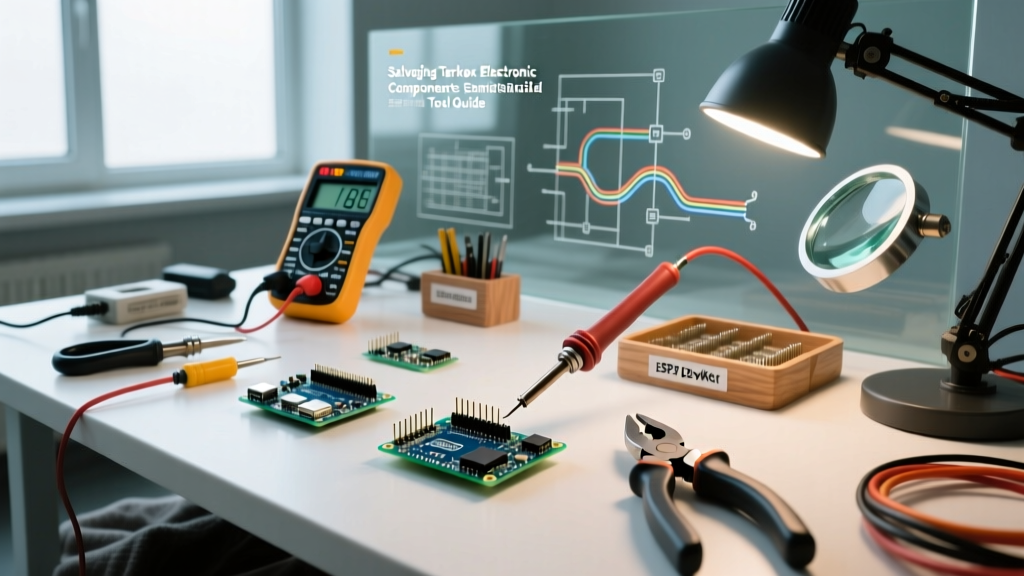
Standard hobbyist tools will fail when confronted with military-grade manufacturing. Here are the top-tier tools we recommend for your scavenging workbench in 2026.
1. Fluke 87V Industrial Multimeter (The Ultimate Validator)
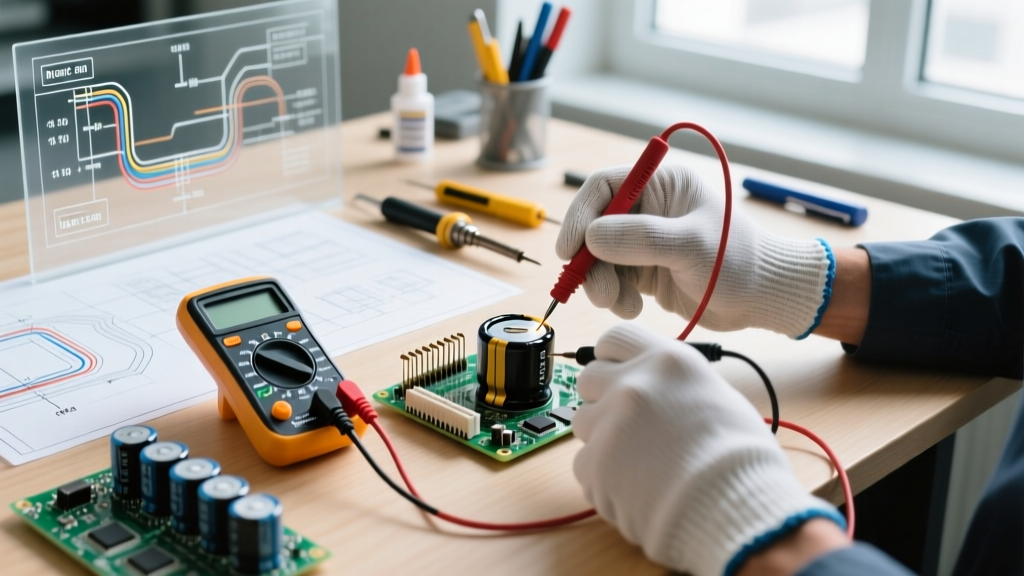
When you pull a handful of MIL-SPEC resistors or a complex avionics power board from a surplus lot, you must verify component integrity before integrating it into a new build. The Fluke 87V Industrial Multimeter remains the undisputed champion for this task. Priced around $430 to $450 in 2026, it offers a 0.05% DC accuracy and True-RMS measurements, which are non-negotiable when testing non-linear loads on scavenged power supplies.
Why it matters for Tarkov components: Military connectors (like MIL-DTL-38999) often suffer from micro-corrosion on the pins. The Fluke 87V’s high-resolution continuity mode (with a 1ms capture rate) will instantly detect intermittent contact failures that cheaper multimeters miss. Furthermore, its CAT III 1000V / CAT IV 600V safety rating ensures you won't be injured if a scavenged high-voltage capacitor retains a lethal charge.
2. Hakko FX-888D Digital Soldering Station (Thermal Mass Master)
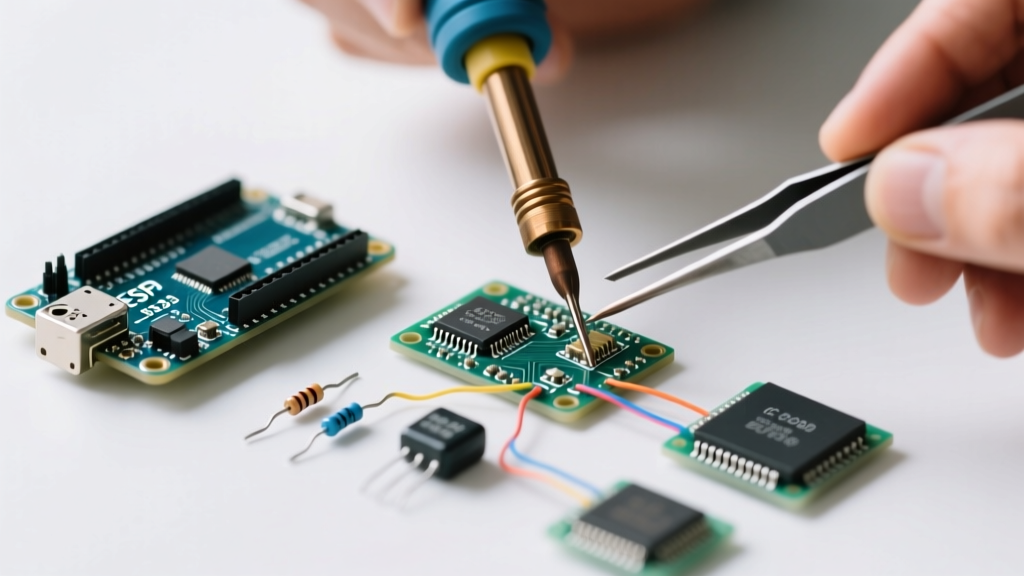
Desoldering components from a MIL-PRF-31032 circuit board is a thermal nightmare. These boards act as massive heat sinks due to their thick internal copper planes. A standard 40W hobby iron will result in cold joints, prolonged heat exposure, and catastrophic pad delamination. The Hakko FX-888D (~$115) provides 70W of power and exceptional thermal recovery.
Pro-Tip for MIL-SPEC Boards: Ditch the standard conical tip. You must use a high-thermal-mass chisel tip, such as the T18-C4 or T18-D32. When removing through-hole military capacitors, apply Chip Quik SMD291AX flux and use a desoldering braid (like Chemtronics 80-10-10) to wick away the solder from the plated through-holes before applying extraction force. For deeper insights on avoiding pad lift during heavy rework, refer to the IPC rework and modification standards, specifically IPC-7711/21 guidelines for high-reliability assemblies.
3. Knipex 12 62 180 Automatic Wire Stripper
Stripping MIL-W-22759 Tefzel wire requires extreme precision. Tefzel (ETFE) is tough, but the silver-plated copper strands underneath are soft. Standard crank-style strippers often nick the plating or cut into the copper, creating a stress-fracture point that will fail under high-frequency vibration. The Knipex 12 62 180 (~$65) uses a precision-machined blade mechanism that slices the insulation cleanly without gripping the conductor.
Component Salvage Matrix: Yield & Tool Requirements
| Tarkov Loot Item | Real-World MIL-SPEC Equivalent | Primary Failure Mode During Salvage | Recommended Tool / Technique |
|---|---|---|---|
| Military Cable | MIL-C-27500 Shielded Wire | Nicked silver plating; frayed shielding braid | Knipex 12 62 180; Thermal strippers for Tefzel |
| Circuit Board | Polyimide PCB (2oz+ Copper) | Pad delamination; lifted plated through-holes | Hakko FX-888D with T18-D32; Pre-heater at 120°C |
| Capacitors | MIL-PRF-39018 Ceramic / K50-35 | Micro-cracks in ceramic dielectric from mechanical stress | Fluke 87V (Capacitance mode); ESR Meter |
| Military COFDM Transmitter | Surplus Drone Video TX Modules | ESD damage to sensitive RF ICs during extraction | Grounding mat; Hakko FR-301 Desoldering Gun |
Overcoming Conformal Coatings & Potting Compounds
The biggest hurdle when salvaging Tarkov electronic components from military hardware is conformal coating. To meet MIL-I-46058 (or the newer IPC-CC-830) specifications, military boards are slathered in polyurethane, acrylic, or silicone coatings to prevent moisture and fungus ingress.
Expert Warning: Never apply a soldering iron directly to a conformal-coated pad. The heat will vaporize the coating, releasing highly toxic gas, and the carbonized residue will permanently pit and ruin your iron's tip while creating a high-resistance barrier that guarantees a cold solder joint.
The Removal Protocol: 1. Identify the coating type (Acrylics glow brightly under UV light; Polyurethanes require chemical solvents). 2. For acrylics, use a specialized remover like Chemtronics Electro-Wash AR and a soft hogs-hair brush. 3. For stubborn polyurethanes, mechanical abrasion using a fiberglass scratch pen is often required before chemical stripping. 4. Only after the pad is completely bare and cleaned with 99% isopropyl alcohol should you apply flux and heat. The NASA Electronic Parts and Packaging (NEPP) program provides extensive documentation on the reliability risks of improper coating removal in high-stakes environments, which translates perfectly to preserving the integrity of your scavenged parts.
Frequently Asked Questions (FAQ)
Can I use a standard hot air rework station for military surface-mount components?
Yes, but with strict temperature profiling. Military boards often use high-Tg (glass transition temperature) polyimide substrates that can withstand higher heat, but the components themselves may be sensitive. Use a station like the Quick 861DW, set to 350°C with a medium airflow (around 40L/min). Always apply a liquid tacky flux (like Amtech NC-559-V2-TF) before heating to ensure even thermal transfer and prevent the IC pins from oxidizing.
How do I test if a scavenged military capacitor is still safe to use?
Visual inspection is step one; look for bulging, weeping electrolyte, or ceramic micro-cracks. Step two is measuring capacitance and ESR (Equivalent Series Resistance). A capacitor might show the correct capacitance on a standard multimeter but have a dangerously high ESR, rendering it useless for high-frequency filtering. Invest in a dedicated ESR meter (like the Atlas ESR70) to test vintage Soviet or MIL-SPEC electrolytics before soldering them into your DIY power supplies.
Where is the best place to source real-world Tarkov electronic components?
In 2026, the best sources remain government surplus liquidators, university e-waste recycling centers, and specialized ham radio swap meets. Online, platforms like eBay (searching for specific NSN - National Stock Numbers) and specialized surplus dealers like Fairview Microwave or Digi-Key's clearance sections offer the highest yield for authentic MIL-SPEC parts.
Final Thoughts for the Electronics Scavenger
Harvesting real-world equivalents of Tarkov electronic components is a highly rewarding endeavor that bridges the gap between tactical gaming and hardcore electrical engineering. By investing in True-RMS diagnostics, high-thermal-mass soldering equipment, and precision wire prep tools, you ensure that the ruggedized parts you scavenge maintain their military-grade reliability in your custom DIY builds. Respect the MIL-SPEC manufacturing processes, follow proper rework protocols, and your hideout—or in this case, your workbench—will be fully upgraded.