
The 2026 Landscape for Sourcing Various Electronic Components
The global electronics supply chain has undergone a massive transformation since the severe shortages of the early 2020s. As we navigate 2026, lead times for most standard semiconductors and passives have stabilized, but the market has been flooded with sophisticated counterfeits and grey-market 'pulls' (components harvested from e-waste). Whether you are prototyping a custom IoT device or stocking a university lab, sourcing various electronic components requires a strategic approach that balances cost, authenticity, and availability.
This comprehensive buyer's guide will walk you through building a resilient component inventory, navigating authorized versus independent distributors, and deploying laboratory techniques to verify part authenticity before they ever touch your soldering iron.
Building Your Core Inventory: What to Stock in 2026
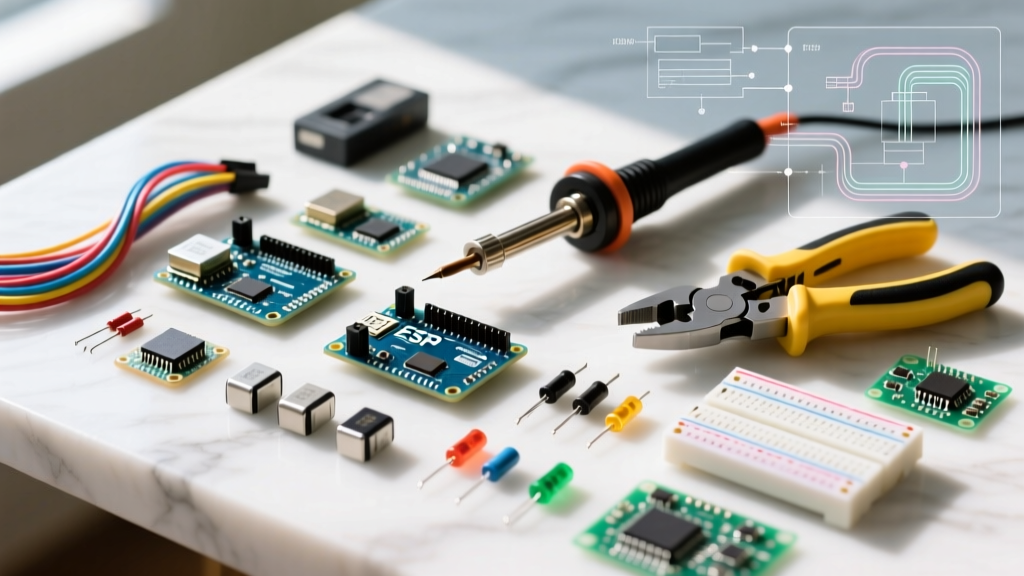
Before placing bulk orders, you must understand the hidden pitfalls of component selection. For example, when buying Multilayer Ceramic Capacitors (MLCCs), many beginners blindly order X7R dielectrics without checking the DC bias curves. A 10µF 0805 X7R capacitor rated for 10V can lose up to 80% of its capacitance when operated at its rated voltage. Always cross-reference manufacturer tools like Murata's SimSurfer before buying.
| Component Category | Essential Specs & Values to Stock | Est. Bulk Cost (2026) | Recommended Brands |
|---|---|---|---|
| Resistors (SMD) | 0402 & 0603, 1% tolerance, E24/E96 series | $12 - $18 / 10,000 pcs | Yageo, Vishay, Panasonic |
| MLCC Capacitors | X7R (100nF - 10µF), C0G/NP0 (RF/timing) | $35 - $60 / 5,000 pcs | Murata, Samsung, Taiyo Yuden |
| Microcontrollers | ESP32-S3, STM32G0, RP2350 | $2.50 - $4.50 / unit | Espressif, STMicro, Raspberry Pi |
| Power Management | Buck converters (3.3V/5V), LDOs (AMS1117) | $0.40 - $1.20 / unit | Texas Instruments, MPS, Diodes Inc. |
Distributor Tiers: Authorized vs. Grey Market
When sourcing various electronic components, where you buy is just as critical as what you buy. The market is segmented into distinct tiers, each with specific risk-to-cost ratios.
Tier 1: Authorized Global Distributors
Companies like Digi-Key, Mouser, and Farnell source directly from manufacturers. According to the Semiconductor Industry Association (SIA), authorized channels remain the only guaranteed method to avoid counterfeit silicon. While their unit prices are higher and shipping fees can be steep for small orders, the peace of mind is invaluable for mission-critical or aerospace DIY projects.
Tier 2: Asian Catalog Distributors
LCSC and JLCPCB's parts library have become indispensable in 2026. They offer incredibly low prices on passives and Asian-market ICs (like WCH and Holtek). They are generally reliable for generic components, but caution is advised when purchasing Western-branded ICs (e.g., TI or Analog Devices) through their marketplace vendors, as vendor vetting can vary.
Tier 3: The Grey Market and Brokers
Platforms like AliExpress, eBay, and independent brokers (e.g., Win Source) are high-risk environments. The ERAI (Electronic Components Supply Chain) database frequently flags these channels for distributing 'blacktopped' ICs and recycled electrolytic capacitors. Only use Tier 3 for non-critical hobbyist experimentation where a failed part won't cause safety hazards or significant financial loss.
Spotting Counterfeits: The Blacktopping Epidemic
Counterfeiters have moved beyond simple sanding and repainting. In 2026, the most common fraud technique is 'blacktopping.' Fraudsters harvest e-waste boards, desolder aging ICs, sand off the original laser etching, apply a new layer of black epoxy, and print fake date codes and logos using high-resolution silk screens.
Expert Inspection Tip: To test for blacktopping, perform the Acetone Swab Test. Soak a cotton swab in pure acetone and rub the IC surface firmly for 15 seconds. Genuine factory epoxy will remain completely unaffected. Counterfeit blacktop coatings will often smear, dissolve, or reveal the sanded original markings underneath.
Visual Red Flags on IC Leads
- Oxidation and Scratches: Genuine ICs have pristine, uniformly plated leads. Recycled 'pulls' will show microscopic scratches from desoldering tools or uneven oxidation.
- Coplanarity Issues: Place the IC on a perfectly flat piece of glass. If it rocks or if the pins do not sit perfectly flush, it has likely been subjected to thermal stress and mechanical bending during harvest.
- Missing RoHS Dimples: Many modern STMicroelectronics and TI chips feature a microscopic alignment dimple or specific RoHS compliance markings that counterfeit laser etchers fail to replicate accurately.
For high-volume or high-stakes sourcing, professional labs rely on the IPC-AS-6081 standard for counterfeit avoidance, which mandates X-ray inspection to verify internal die sizes and wire bonding patterns against known-good golden samples.
Essential Testing Gear for Incoming Inspection
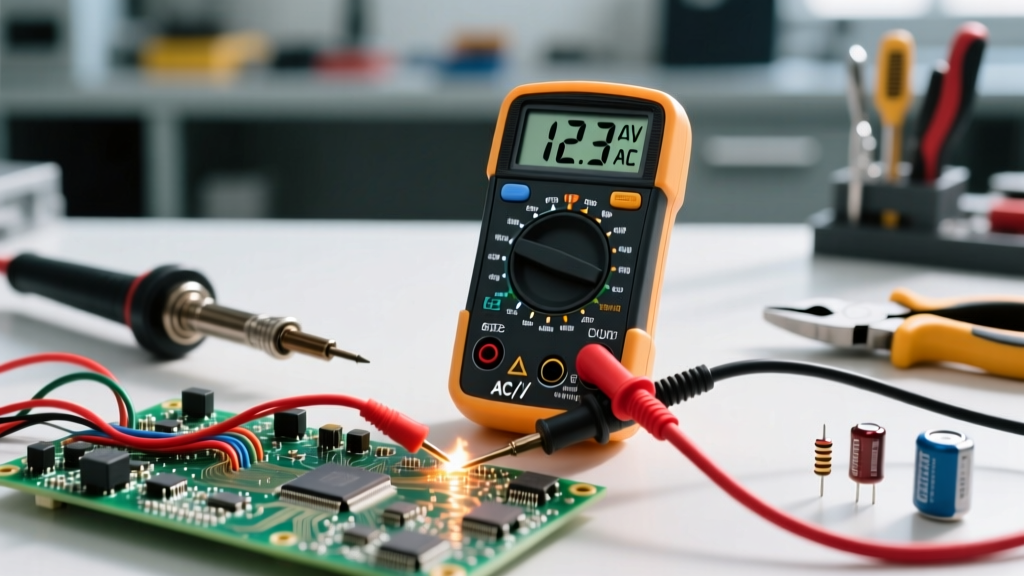
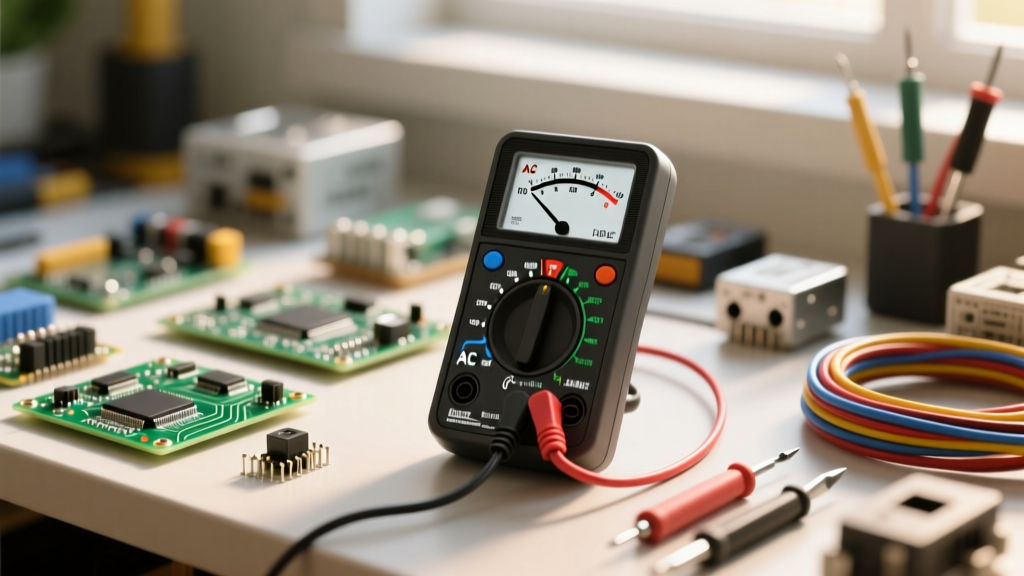
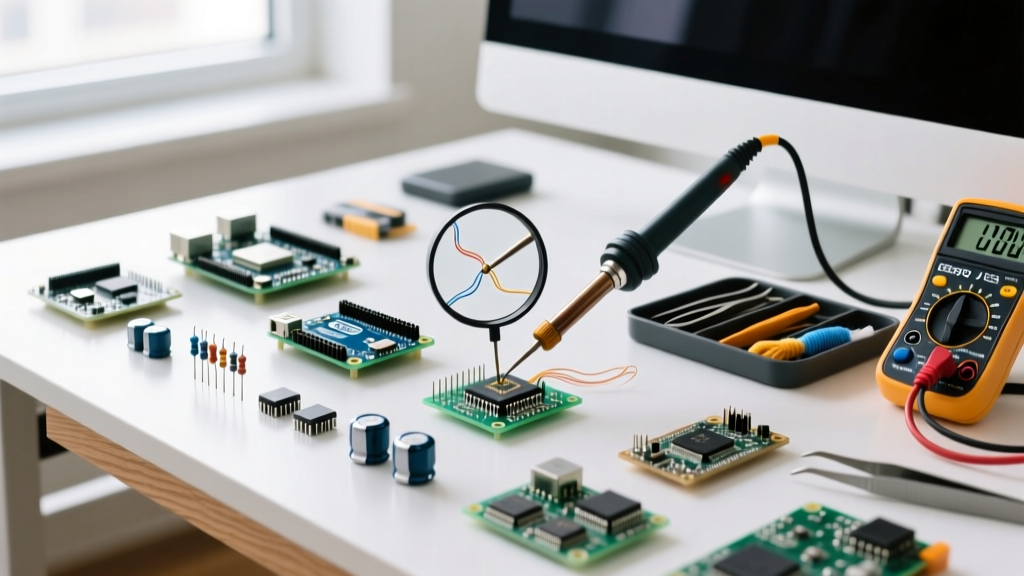
You cannot rely on visual inspection alone. To properly vet various electronic components upon arrival, your lab must be equipped with the following diagnostic tools:
- Precision LCR Meter: The DER EE DE-5000 (approx. $120) is the gold standard for DIYers. It accurately measures Equivalent Series Resistance (ESR) and capacitance. This is crucial for spotting degraded electrolytic capacitors that have dried out while sitting in a grey-market warehouse for five years.
- Digital Microscope: An AmScope SE400-Z or a high-quality digital USB microscope (like the Plugable USB 3.0 250x) is mandatory for inspecting laser etching crispness and lead oxidation.
- Thermal Camera: The InfiRay P2 Pro attaches to your smartphone and allows you to apply power to a suspect voltage regulator or MOSFET. Counterfeit silicon often exhibits massive thermal runaway or abnormal quiescent current draw compared to genuine datasheets.
Navigating Tariffs, Shipping, and BOM Management
In 2026, managing a Bill of Materials (BOM) requires software integration. Tools like Octopart and KiCad's integrated BOM plugin allow you to cross-reference stock levels across Digi-Key and Mouser in real-time. When importing components directly from Shenzhen-based suppliers, always clarify the shipping terms. DDP (Delivered Duty Paid) is highly recommended for orders under $500, as it prevents your shipment from being held up in customs over unexpected import tariffs or brokerage fees.
Frequently Asked Questions (FAQ)
Is it safe to buy analog ICs (Op-Amps) from AliExpress?
Generally, no. The market is saturated with counterfeit LM358 and NE555 chips that fail to meet slew rate and noise specifications. For analog signal chains, always stick to Tier 1 authorized distributors to ensure you are getting genuine silicon with valid SPICE model performance.
How do I store MLCCs to prevent degradation?
While MLCCs are less sensitive to moisture than ICs, their terminations can oxidize if stored in high-humidity environments, leading to poor solder wetting. Store them in sealed ESD bags with silica gel desiccants, and utilize a 'First-In, First-Out' (FIFO) inventory system to ensure no reel sits for more than 12 months.
What is the best alternative to the STM32F103 in 2026?
Due to persistent pricing fluctuations, many engineers are migrating to the GD32F103 (by GigaDevice) or the CH32V series (by WCH) for cost-sensitive projects. However, be aware that while pin-compatible, subtle differences in ADC timing and USB peripherals require firmware adjustments.
Conclusion
Sourcing various electronic components in 2026 is a balancing act between leveraging global supply chains and defending your workbench against an increasingly sophisticated counterfeit market. By building a strategic inventory of high-quality passives, restricting critical silicon purchases to authorized channels, and equipping your lab with an LCR meter and microscope, you ensure that your DIY projects and prototypes are built on a foundation of genuine, reliable hardware.