
The High-Stakes Reality of Aerospace Electronics
When you are working with aerospace electronic components, the margin for error is exactly zero. Whether you are assembling satellite payload controllers, repairing avionics flight computers, or prototyping high-altitude drone telemetry systems, the tools on your workbench dictate the reliability of the final product. Standard commercial-grade multimeters and hobbyist soldering stations simply cannot meet the rigorous demands of IPC-A-610 Class 3 (High-Performance Electronic Products) or MIL-STD-883 test methods.
In 2026, the landscape of aerospace manufacturing and rework has become even more complex. The proliferation of rad-hard FPGAs, high-density interconnect (HDI) boards, and ultra-sensitive micro-electromechanical systems (MEMS) requires specialized diagnostic, soldering, and environmental control tools. This guide reviews the essential, industry-standard tools required for testing, assembling, and verifying aerospace electronic components, providing actionable insights into failure modes and compliance standards.
Precision Measurement: Keysight 34470A Digital Multimeter
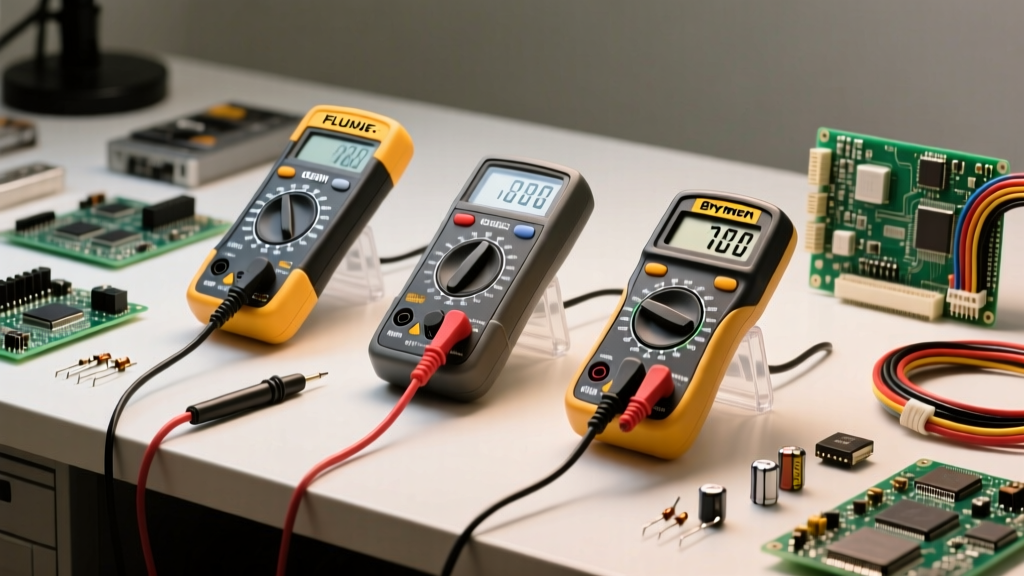
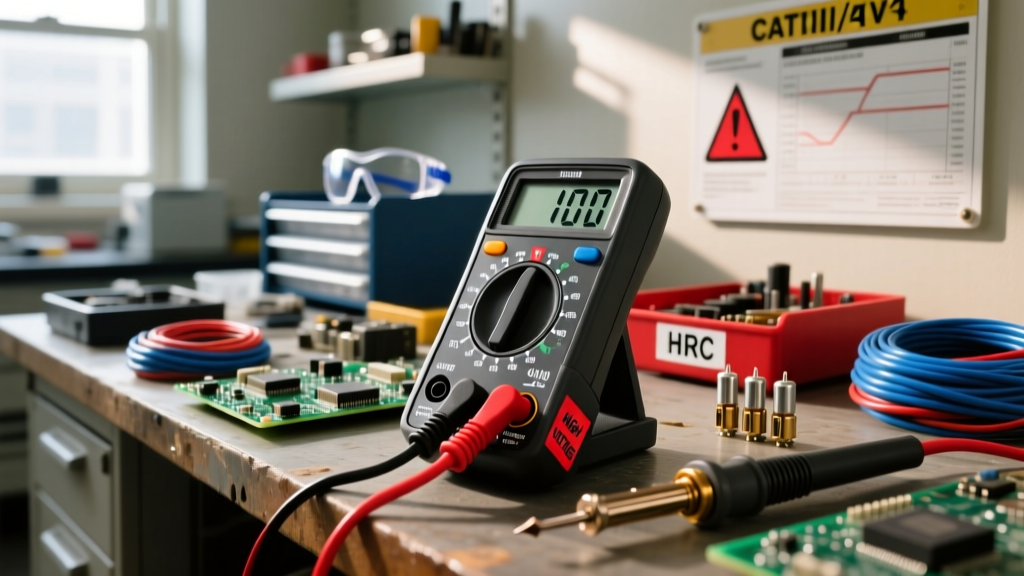
Verifying the integrity of avionics sensors, strain gauges, and RTD temperature arrays requires more than basic continuity checks. The Keysight 34470A (6.5 Digit) remains the gold standard for aerospace test benches in 2026, offering 6.5 digits of resolution and a blistering 50,000 readings per second sampling rate.
Why It Matters for Aerospace
- Low-Z Voltage Mode: Aerospace wire harnesses often run parallel to high-frequency data buses, inducing 'ghost voltages' in unconnected pins. The 34470A's Low-Z mode utilizes a dynamic impedance circuit to bleed off phantom voltages, preventing false-positive continuity readings that could lead to catastrophic harness misdiagnoses.
- Thermocouple Effect Compensation: When measuring micro-ohm resistances across MIL-SPEC connectors, thermal EMF at the probe junctions can skew data. The Keysight's built-in math functions allow for precise offset compensation, ensuring sub-milliohm accuracy.
Estimated Price: $1,650 - $1,900 (Calibration included)
Thermal Management: Pace ADS200 Production Soldering System
Soldering aerospace electronic components—particularly Multilayer Ceramic Capacitors (MLCCs) and bottom-terminated QFNs—requires absolute thermal precision. The Pace ADS200 with the SX-100 SmartCool handpiece utilizes active tip sensing to deliver instantaneous thermal recovery without overshooting.
Preventing the Silent Killer: MLCC Flex Cracking
One of the most common failure modes in aerospace PCBs is MLCC flex cracking, often caused by rapid thermal shock during manual soldering. When a standard iron with poor thermal recovery dwells too long on a pad, or when a high-wattage iron transfers heat too aggressively, the ceramic dielectric fractures. These micro-cracks may pass initial electrical testing but will fail under the acoustic and vibrational stress of a rocket launch. The Pace ADS200's Therma-Drive heater maintains a strict thermal profile, ensuring IPC Class 3 wetting requirements are met within the 2-to-4-second dwell time limit, eliminating thermal shock to sensitive polyimide substrates and ceramic bodies.
Estimated Price: $1,250 (Station + SX-100 Iron)
Optical Inspection: Vision Engineering Mantis Elite
You cannot verify what you cannot see. Inspecting the toe, heel, and side fillets of fine-pitch QFP components requires magnification that traditional stereo microscopes struggle to provide without inducing severe operator eye strain. The Vision Engineering Mantis Elite is a patented 3D stereoscopic inspection system that projects a true optical 3D image without the need for binocular eyepieces.
'In aerospace rework, operator fatigue directly correlates to escaped defects. The ability to inspect a BGA solder joint's wetting angle from multiple depths without losing stereoscopic vision is non-negotiable for AS9100-certified facilities.' — Avionics Quality Assurance Director, Tier 1 Defense Contractor
IPC-A-610 Class 3 Compliance
According to the IPC-A-610 Acceptability of Electronic Assemblies standard, Class 3 products require maximum fillet coverage and specific wetting angles to ensure survival in harsh environments. The Mantis Elite's distortion-free optics allow inspectors to verify these microscopic fillet geometries in real-time, catching cold solder joints and insufficient wetting before the board goes to conformal coating.
Estimated Price: $4,500 - $5,200 (Depending on magnification objectives)
ESD & Contamination Control: SCS 7450 Ionizing Air Gun
Rad-hard aerospace electronic components, such as Xilinx Virtex-5QV FPGAs or BAE Systems RAD750 microprocessors, can cost upwards of $30,000 per unit. These components are highly susceptible to Electrostatic Discharge (ESD). A strike as low as 30V can cause latent gate oxide rupture—a defect that will not manifest until the component is exposed to the radiation and thermal cycling of low Earth orbit.
The SCS 7450 Ionizing Air Gun is essential for neutralizing static charges on non-conductive surfaces (like Kapton tape and FR4 substrates) before handling sensitive ICs. It boasts a decay time of less than 1.5 seconds to neutralize a 1,000V charge down to 50V. Furthermore, the NASA Electronic Parts and Packaging (NEPP) Program heavily emphasizes strict ESD controls and contamination prevention, making ionized air tools mandatory for cleaning flux residues from under tight-clearance components without generating secondary static charges.
Estimated Price: $850 - $950
2026 Tool Comparison Matrix
| Tool Model | Primary Category | Target Application | Compliance Standard | Price Range (2026) |
|---|---|---|---|---|
| Keysight 34470A | Precision DMM | Sensor verification, harness testing | MIL-STD-202, AS9100 | $1,650 - $1,900 |
| Pace ADS200 | Soldering Station | MLCCs, QFNs, polyimide flex circuits | IPC-A-610 Class 3 | $1,250 |
| Vision Mantis Elite | 3D Inspection | BGA fillet inspection, micro-via analysis | IPC-A-610, IPC-6012 | $4,500 - $5,200 |
| SCS 7450 | ESD Ionizer | Rad-hard FPGA handling, flux cleaning | ANSI/ESD S20.20 | $850 - $950 |
Sourcing and Counterfeit Avoidance Framework
Possessing the right testing and assembly tools is only half the battle; verifying the authenticity of the aerospace electronic components themselves is equally critical. The secondary market is flooded with counterfeit ICs that have been sanded, re-marked, and baked to hide their true origins. To combat this, aerospace labs must adhere to the SAE AS5553 Counterfeit Parts Standard.
Recommended Verification Steps:
- Decapsulation Testing: Use chemical or laser decapsulation to expose the silicon die and verify the manufacturer's proprietary mask ROM signatures.
- X-Ray Fluorescence (XRF): Analyze the lead finish to ensure compliance with RoHS exemptions for aerospace (which still permit leaded finishes to prevent tin whisker growth).
- Continuous Monitoring: Integrate continuous wrist-strap and workstation monitors (like the Desco 19290) to log ESD events directly to your AS9100 quality management database.
Final Thoughts on Aerospace Bench Setup
Equipping a lab for aerospace electronic components is an exercise in risk mitigation. The upfront capital expenditure for tools like the Keysight 34470A and Vision Engineering Mantis Elite is substantial, but it pales in comparison to the cost of a satellite anomaly caused by a latent solder defect or an ESD-damaged memory module. By investing in precision measurement, controlled thermal delivery, and rigorous optical inspection, you ensure that every assembly leaving your bench is ready to survive the vacuum of space and the rigors of modern aviation.