
The 'Escape from Duckov' Hoarder's Dilemma: Taming the E-Waste Stash
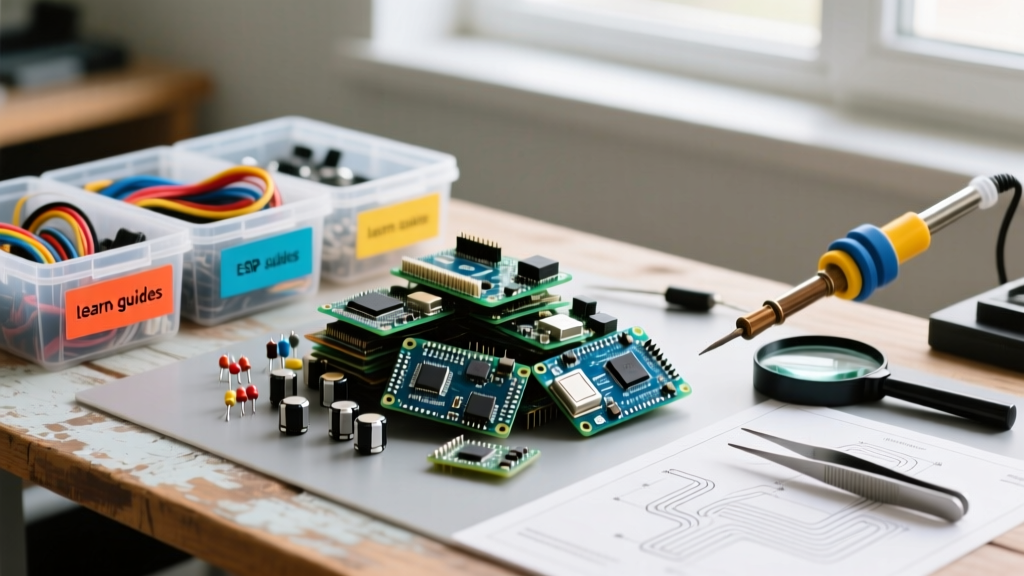
In the hardcore gaming community, 'Escape from Duckov' (a beloved meme and typo for the punishing looter-shooter Escape from Tarkov) features a highly sought-after barter item literally called a pile of electronic components. Players hoard these mystery junk boxes to trade for high-tier gear. In the real-world maker and electrical engineering space, the equivalent is terrifyingly real: the unsorted e-waste bin. It is a chaotic graveyard of pulled headers, mystery surface-mount ICs, dried-out electrolytic capacitors, and salvaged MOSFETs.
Whether you are harvesting parts from dead ATX power supplies, buying bulk mystery lots from online auctions, or simply refusing to throw away a broken 2014 motherboard, managing this 'pile' requires a systematic approach. As of 2026, the secondary market for silicon and passives remains volatile, making component salvage both an economic necessity and a sustainable practice. According to the EPA's Sustainable Management of Electronics initiative, extending the lifecycle of electronic components through salvage and reuse is a critical pillar of modern e-waste reduction.
This guide is your ultimate IRL workbench roundup. We will cover the exact testing, sorting, and extraction equipment you need to turn a chaotic pile of electronic components into a highly organized, fully tested, and usable loot stash.
Phase 1: The Hideout Workbench (Visual Triage & Sorting)
Before you can test a component, you must identify it. Factory laser etching on SMD resistors and SOIC-8 chips is notoriously difficult to read, especially after a component has endured a hot air rework cycle.
Digital Microscopy: Beyond the Magnifying Glass
Ditch the cheap USB microscopes that suffer from half-second latency. When you are dragging a PCB under a lens to read a faint Texas Instruments part number, latency causes motion sickness and wastes time.
- Hayear HY-1080P HDMI Industrial Microscope ($185): This is the 2026 workhorse for salvage benches. It outputs directly to an HDMI monitor with zero latency. Pair it with a 100mm C-mount lens and a ring light to eliminate shadows on reflective solder pads.
- AmScope SE400-Z Stereo Zoom ($280): If you prefer optical depth perception for physical probing and tweezer manipulation, a true stereo optical microscope is unmatched. The SE400-Z offers a continuous 10x-45x zoom range, perfect for inspecting hairline traces and micro-solder joints.
Modular Stash Organization
Throwing tested loot back into a shoebox defeats the purpose. The current gold standard for maker organization is the Gridfinity system (an open-source modular grid system). By 3D-printing custom bins with integrated anti-static dividers, you can create a modular 'flea market' on your desk. For moisture-sensitive devices (MSDs) like FPGAs and BGA microcontrollers, store them in vacuum-sealed Mylar bags with fresh silica gel and humidity indicator cards.
Phase 2: Identifying Mystery Loot (Testing & Probing Gear)
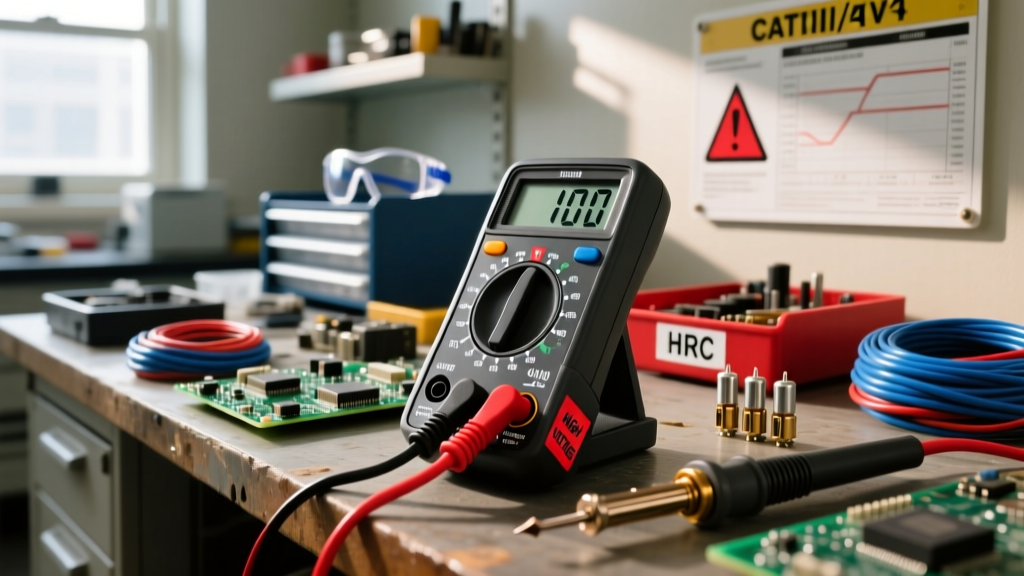
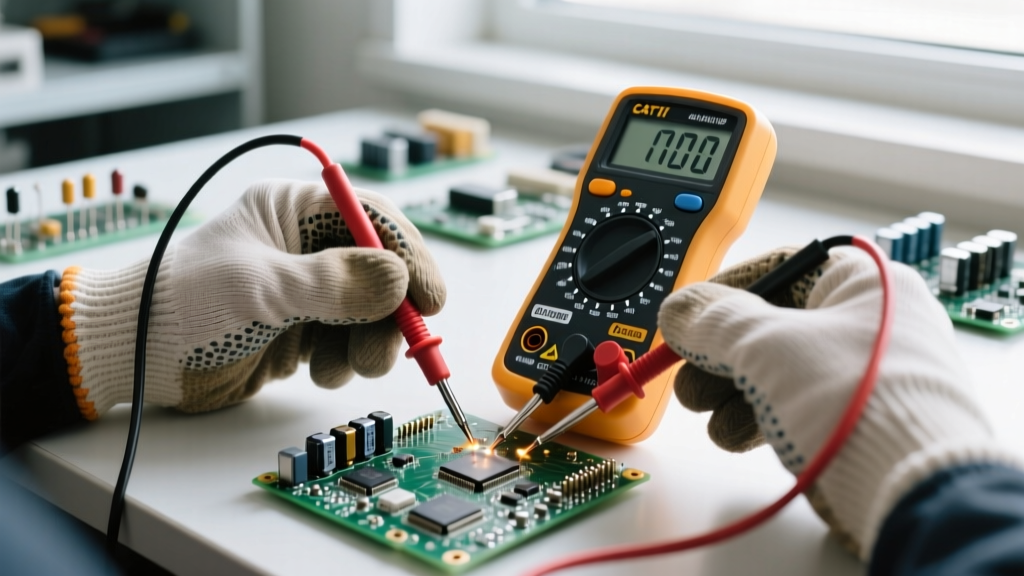
A pile of electronic components is useless if you do not know their values or health. Here is the essential testing trio for the salvage operator.
1. The Passive Sorter: Der EE DE-5000 LCR Meter
Multimeters are useless for measuring inductance or capacitor Equivalent Series Resistance (ESR). The Der EE DE-5000 ($135) is a handheld LCR meter that measures at frequencies up to 100kHz. Critical Edge Case: When salvaging electrolytic capacitors from old power supplies, a standard capacitance test might read '1000µF', but the ESR could be dangerously high due to dried electrolyte. The DE-5000 exposes these failing caps instantly, preventing them from ruining your next DIY power supply build.
2. The Active Binner: TC2 Mega328 Component Tester
For $35, the TC2 (or TC1) Mega328-based tester is the ultimate rapid-fire sorting tool. Drop in a salvaged BJT, MOSFET, or diode, and it maps the pinout and measures hFE (gain) and Vth (threshold voltage). It is not lab-grade, but for binning a pile of 50 pulled N-channel MOSFETs into 'matched pairs' for a motor controller project, it saves hours of manual datasheet cross-referencing.
3. The Silicon Decoder: XGecu T48 Universal Programmer
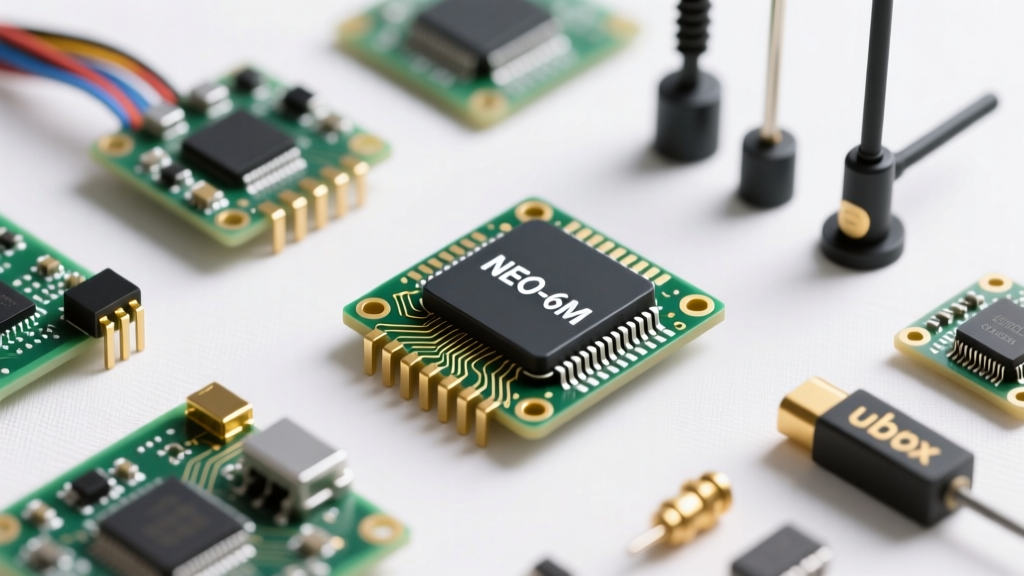
When you pull a mystery 8-pin or 16-pin chip from a router or motherboard, it is often an SPI Flash, EEPROM, or BIOS chip. The XGecu T48 ($145) supports over 100,000 ICs.
Expert Warning: Never blindly hit 'Read' without verifying the chip's VCC voltage. Applying 5V to a 1.8V SPI Flash chip will instantly brick the silicon and, in rare cases, damage the programmer's buffer. Always consult the datasheet first.
The Real-World Loot Table
| In-Game 'Duckov' Item | Real-World Equivalent | Identification Tool | Salvage Difficulty |
|---|---|---|---|
| Pile of Electronic Components | Unsorted SMD Resistors/Caps (0603) | Microscope + Tweezers | Low (but tedious) |
| Military Circuit Board | Salvaged FPGAs / ARM Cortex MCUs | XGecu T48 / JTAG Debugger | High (BGA Rework) |
| Capacitors | Radial Electrolytic Caps (Power) | Der EE DE-5000 (ESR Test) | Medium (Check for drying) |
| Power Supply Unit | ATX PSU Power MOSFETs & Magnetics | TC2 Tester + LCR Meter | Medium (Thick ground planes) |
Phase 3: Extraction & Harvesting (Desoldering Arsenal)
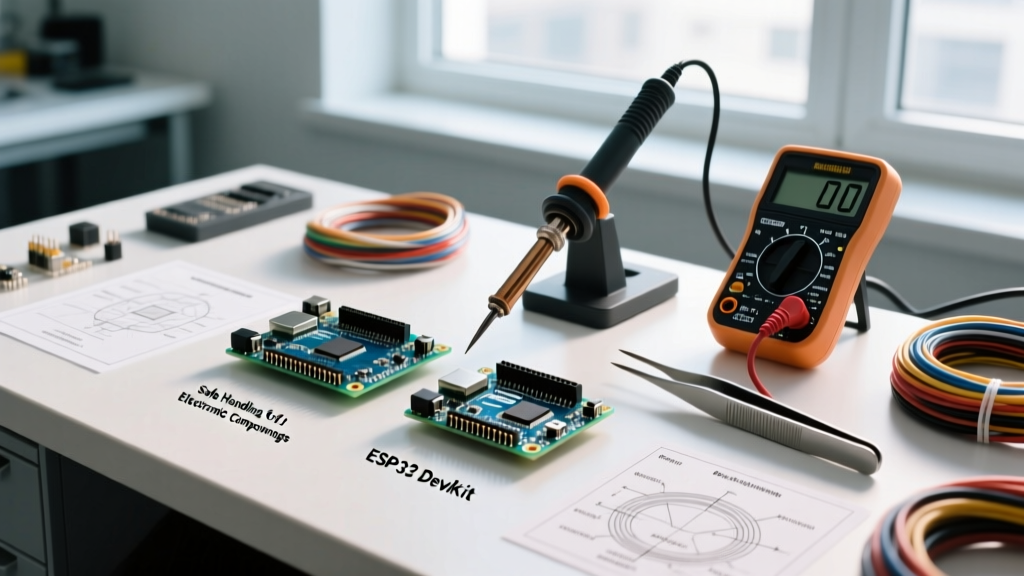
Extracting components from a donor board without destroying the pads or the silicon requires precise thermal management. Modern lead-free factory solder melts at roughly 217°C to 225°C, which is significantly higher than the 183°C of traditional 63/37 leaded solder. Ripping a pad off a PCB is the fastest way to turn valuable loot into trash.
The Thermal Loadout
- Quick 861DW Hot Air Rework Station ($350): The undisputed king of the salvage bench. Its brushless fan provides stable airflow without the vibration that knocks tiny SMD parts into oblivion. Use the 12mm square nozzle for QFP-144 microcontrollers to ensure even heat distribution across all pins simultaneously.
- Pinecil V2 Smart Soldering Iron ($26): Powered by RISC-V and capable of running off USB-C PD (up to 100W), this is your precision touch-up tool. It recovers from thermal shock in seconds when adding leaded solder to factory joints.
- Chip Quik SMD291AX10 Low-Melt Solder ($30): This is your secret weapon. By flooding a factory lead-free joint with Chip Quik's bismuth-based low-melt alloy (melts at 138°C), you dilute the original solder, lowering the overall melting point of the joint. This allows you to remove massive multi-pin ICs at much lower temperatures, saving both the chip and the PCB.
- Amtech NC-559-V2-TF Flux ($25): Never apply hot air to a dry joint. A generous application of tacky flux ensures even heat transfer and prevents oxidation during the extraction process.
Step-by-Step: Extracting a QFP Microcontroller
- Prep: Apply Amtech flux to all pins of the target IC.
- Dilute: Use the Pinecil V2 at 320°C to add a small amount of Chip Quik low-melt solder to every pin, mixing it with the factory solder.
- Shield: Wrap surrounding sensitive components (like plastic connectors or electrolytic caps) in Kapton tape or use a magnetic silicone heat shield.
- Heat: Set the Quick 861DW to 300°C with 40% airflow. Move the nozzle in slow, continuous circles over the IC body. Never focus heat on one corner.
- Lift: Once the solder is fully molten (the chip will slightly 'float' on surface tension), use vacuum tweezers or fine-point titanium tweezers to lift the IC straight up. Do not drag it.
For comprehensive guidelines on professional rework and pad preservation, refer to the IPC Standards (specifically IPC-7711/7721), which dictate the industry-accepted methods for electronic assembly rework and repair.
FAQ: Managing the IRL Stash
How do I handle the health hazards of salvaging e-waste?
Salvaging involves vaporized flux (rosin and activators) and potential lead exposure if working with older electronics. Always use a fume extractor with a HEPA and activated carbon filter (like the Hakko FA-400). Wash your hands thoroughly after handling salvaged PCBs, especially before eating, to prevent heavy metal ingestion. For deep dives into safe handling, consult resources like the EEVblog community forums, which frequently cover lab safety and ventilation setups.
Is it worth salvaging 0402 and 0603 SMD passives?
Generally, no. The time cost of desoldering, cleaning, and measuring a $0.001 resistor far exceeds its value. Reserve your salvage efforts for high-value silicon (MCUs, FPGAs, specialized sensors), power electronics (MOSFETs, GaN transistors), and expensive passives (high-voltage MLCCs, toroidal inductors).
What should I do with boards that are too damaged to salvage?
Do not throw them in the municipal trash. Strip them of any usable headers or through-hole connectors, then take the bare fiberglass and copper boards to a certified local e-waste recycler. The copper, gold, and palladium in the vias and traces can be recovered industrially.
Final Thoughts: Curating Your Inventory
Escaping the chaos of a massive, unsorted pile of electronic components requires discipline and the right tools. By investing in a digital microscope, an LCR meter, a universal programmer, and a quality hot air station, you transform from a mere hoarder of e-waste into a master salvager. Your 'hideout' will become a highly organized, fully tested library of parts, ready to fuel your next DIY microcontroller build, audio amplifier, or robotics project. Stop letting good silicon die in a plastic bin—gear up, heat up the Quick 861DW, and start sorting your loot today.