
The 2026 Surplus Electronics Market: Turning Dead Stock into Capital
As we navigate the 2026 electronics landscape, the global supply chain has largely stabilized from the severe shortages of the early 2020s. For electronics manufacturing services (EMS), university labs, and prolific DIYers, this stabilization has created a new challenge: warehouses and shelves are suddenly heavy with excess inventory. Knowing exactly how and where to sell surplus electronic components is no longer just a niche skill; it is a critical capital-recovery strategy.
However, you cannot simply dump a box of mixed STM32 microcontrollers and TI voltage regulators onto an auction site and expect maximum return. The secondary market demands rigorous testing, proper ESD packaging, and platform-specific pricing strategies. In this guide, we review the best platforms, essential testing tools, and compliance frameworks you need to liquidate surplus inventory profitably.
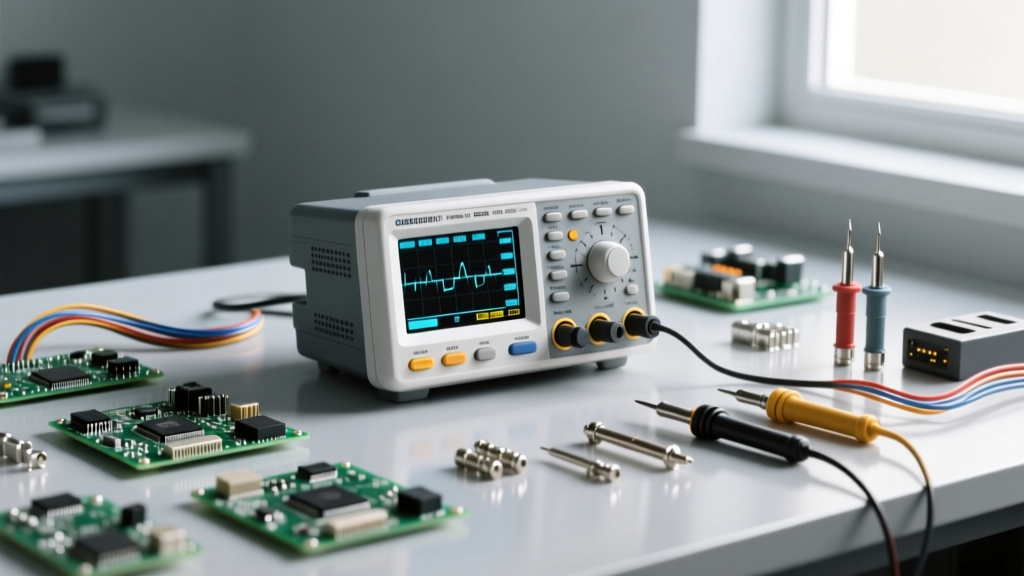
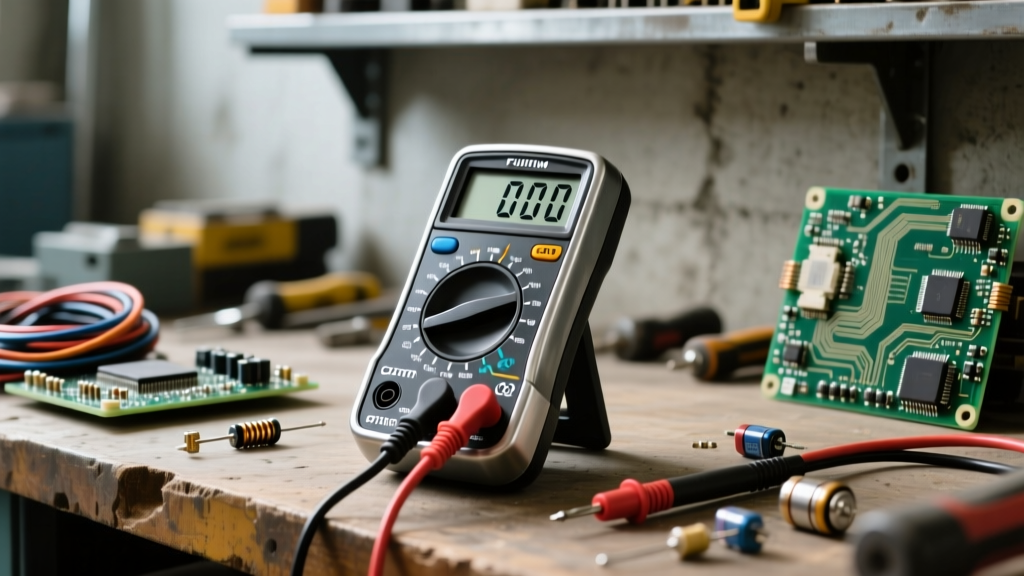
Pre-Sale Preparation: Essential Testing & Verification Tools
Before listing a single reel of capacitors, you must verify component health and authenticity. Buyers on the secondary market are hyper-vigilant about counterfeit or degraded parts. Investing in the right diagnostic tools ensures your stock commands premium pricing.
1. Atlas ESR70 Equivalent Series Resistance Meter
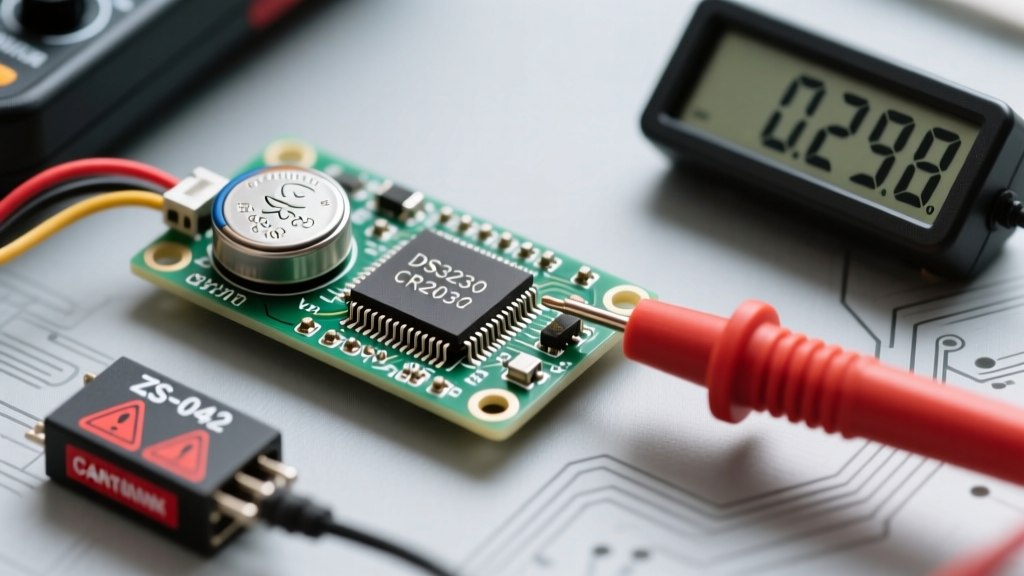
If your surplus includes electrolytic or tantalum capacitors, time and temperature may have degraded their internal chemistry. The Atlas ESR70 (retailing around $135) allows you to test capacitors in-circuit or out-of-circuit without worrying about polarity. By verifying that the ESR remains within the manufacturer's specified milliohm range, you can confidently sell bulk capacitor kits as 'Certified Fresh' rather than 'New Old Stock (NOS) - Untested'.
2. Dino-Lite AM73915MZT Edge2 Digital Microscope
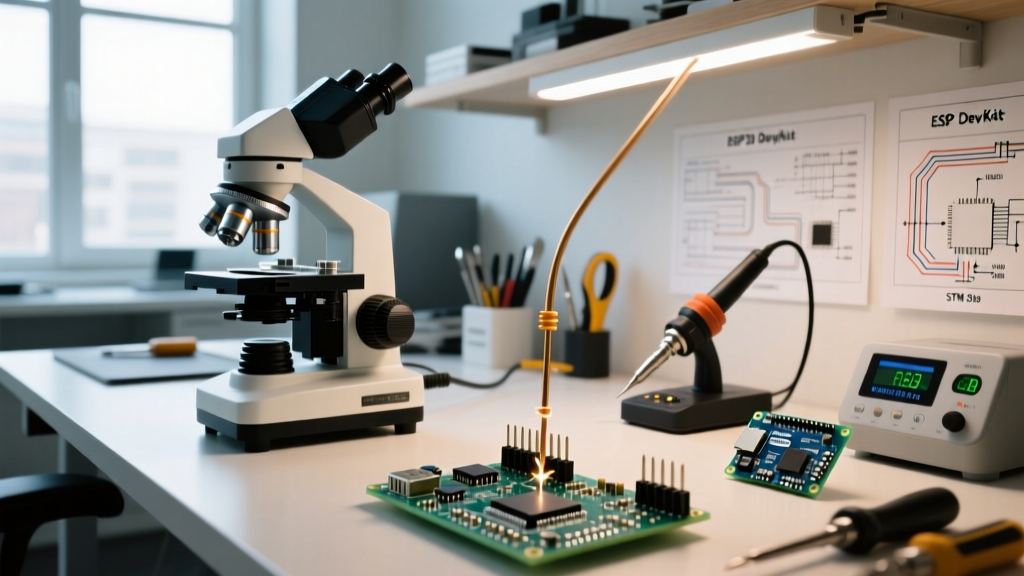
High-value surplus, such as Xilinx FPGAs or Analog Devices DSPs, requires visual authentication. The Dino-Lite AM73915MZT features a 5-megapixel sensor with built-in polarizing filters to eliminate glare from epoxy packages. You can use it to inspect laser etching depth, check for the tell-tale 'blacktopping' resurfacing marks used by counterfeiters, and capture high-res images to include in your listings. Providing microscopic proof of authenticity can increase the resale value of high-end ICs by up to 40%.
3. Proper ESD and Moisture Barrier Packaging
Never ship bare ICs in standard plastic ziplock bags. You must use MIL-PRF-81705 Type I ESD shielding bags. Furthermore, if you are selling Moisture Sensitive Devices (MSDs) like BGA microprocessors, you must adhere to IPC/JEDEC J-STD-033 standards. If a moisture barrier bag has been open for longer than the allowable floor life (e.g., 168 hours for MSL 3 parts), you must either bake the components (typically 40°C for 192 hours) or explicitly list them as 'MSL Expired - For Prototyping/Hand-Soldering Only' to prevent buyers from experiencing popcorning during automated SMT reflow.
Top Platforms to Sell Surplus Electronic Components
Choosing the right marketplace depends entirely on your inventory profile: volume, component tier, and target buyer. Below is our 2026 review of the most effective channels.
NetComponents (Best for B2B High-Volume EMS Surplus)
NetComponents remains the premier B2B search engine and broker network for franchised distributors and EMS providers. If you are liquidating full, sealed reels of SMD resistors or trays of automotive-grade microcontrollers, this is your target.
- Cost Structure: Subscription-based (typically starting around $299/month for basic inventory hosting).
- The Verdict: Not viable for hobbyists selling a few tubes of op-amps, but indispensable for businesses moving $10,000+ in excess stock.
eBay Business & Industrial (Best for Maker, Hobbyist, and Discontinued Parts)
eBay remains the undisputed king of the long-tail surplus market. It is the ideal venue for selling discontinued audio op-amps (like the legendary NE5532P), vintage vacuum tubes, and mixed prototyping kits.
- Cost Structure: Expect a Final Value Fee of roughly 13.25% plus $0.30 per order for the Business & Industrial category.
- Pro-Tip: Group low-value passives into 'Lab Starter Kits' (e.g., '500-Piece SMD 0805 Resistor/Capacitor Assortment'). Selling individual 10-cent components is a losing battle against shipping costs.
Chip 1 Exchange (Best for Instant Cash Liquidation)
If you lack the time to manage individual listings, handle customer support, or deal with returns, direct B2B buyers like Chip 1 Exchange offer an alternative. You submit your Bill of Materials (BOM) or inventory spreadsheet, and they make a bulk cash offer.
- Cost Structure: No listing fees, but expect offers at 20% to 50% below current market spot price, as they assume the holding and resale risk.
- The Verdict: Excellent for rapid warehouse clearing, provided your parts are highly sought-after (e.g., Texas Instruments power management ICs).
Platform Comparison Matrix
| Platform | Target Audience | Fee / Commission Model | Payout Speed | Best Inventory Type |
|---|---|---|---|---|
| NetComponents | B2B Brokers / EMS | Flat Monthly Subscription | Net-30 (Peer-to-Peer) | Full reels, sealed trays, VMI |
| eBay (B&I) | Makers / Repair Techs | ~13.25% + $0.30 per sale | 1-3 Days (PayPal/Stripe) | Discontinued ICs, modules, kits |
| Chip 1 Exchange | B2B Direct Buyer | Built into purchase offer | Immediate upon receipt | Bulk high-demand active components |
| IC Source | B2B Franchised / OEM | Subscription + Commission | Net-30 / Net-60 | Automotive/Aerospace grade parts |
Pricing Intelligence: Don't Leave Money on the Table
The biggest mistake sellers make when attempting to sell surplus electronic components is guessing the price based on what they paid three years ago. The spot market fluctuates wildly. Before listing, use API-driven aggregators like Octopart or SiliconExpert.
The 85% Rule for Surplus Pricing: If a component like the TI TPS5430DDAR is currently in stock at Digi-Key for $1.45, price your surplus, unsealed reels at $1.20 (approx. 85% of franchised retail). This creates an irresistible arbitrage opportunity for independent repair shops and small-batch assemblers who are locked out of franchised distributor minimum-order tiers.
For obsolete parts (marked NRND - Not Recommended for New Designs by the manufacturer), the rules invert. Scarcity dictates price. A legacy Motorola 68000-series processor can easily command 500% above its original 1990s MSRP when sold to aerospace contractors maintaining legacy flight systems.
Navigating Compliance and Counterfeit Accusations
The secondary market is heavily regulated by industry standards to prevent counterfeit parts from entering critical supply chains. Familiarize yourself with the SAE International AS5553 standard (Counterfeit Electronic Parts; Avoidance, Detection, Mitigation, and Disposition). While AS5553 is primarily aimed at buyers, sellers who proactively provide AS5553-compliant documentation—such as original Certificates of Conformance (COC), manufacturer traceability chains, and decapsulation test reports—will easily win high-value contracts over competitors selling 'blind' stock.
Additionally, aligning your business practices with the guidelines set forth by the Electronic Resellers Association International (ERAI) builds immense trust. ERAI membership signals to buyers that you adhere to strict quality management systems and ethical sourcing protocols, drastically reducing the friction of B2B surplus sales.
Frequently Asked Questions (FAQ)
Can I sell components that have been desoldered from PCBs?
Yes, but transparency is legally and ethically mandatory. You must list these as 'Pulled' or 'Harvested'. Use a hot air rework station (like the Quick 861DW) to remove them cleanly, and re-tin the pads with fresh, high-quality solder (e.g., Kester 44). Pulled components should be priced at a 70-80% discount compared to new stock and are highly popular among hobbyists and repair technicians who need a single replacement chip for a vintage amplifier or arcade board.
How do I handle RoHS vs. Non-RoHS (Leaded) surplus?
The transition to RoHS (Restriction of Hazardous Substances) in the mid-2000s created a massive divide. Many aerospace and medical manufacturers are specifically hunting for pre-RoHS, tin-lead (SnPb) finished components to avoid tin whisker growth in high-reliability environments. Always check the datasheet suffix (e.g., 'PBF' or 'G' usually denotes RoHS/Green). If you have verified SnPb surplus from the early 2000s, market it specifically to the Electronic Components Industry Association (ECIA) authorized brokers who cater to the defense sector.
What is the best way to ship static-sensitive surplus?
Always use a multi-layer approach: ICs in ESD foam or JEDEC trays, sealed inside a MIL-PRF-81705 Type I metal-in shielding bag, placed inside a rigid corrugated box with standard bubble wrap for mechanical shock absorption. Never use pink poly bags (they are only anti-static, not ESD shielding) for high-value MOSFETs or CMOS logic.
Final Thoughts
Successfully navigating the secondary market to sell surplus electronic components requires a blend of precise testing, strategic platform selection, and rigorous compliance documentation. By investing in tools like the Atlas ESR70 and digital microscopes, and by targeting the right B2B or B2C platforms for your specific stock profile, you can transform dormant warehouse shelves into active, revenue-generating assets in 2026 and beyond.