
Why Extreme DIY Projects Demand Mil-Spec Parts
Most DIY electronics enthusiasts default to commercial-grade components sourced from standard bins or consumer marketplaces. For a desktop weather station or an indoor LED matrix, this is perfectly adequate. But what happens when your DIY project operates in an automotive engine bay, endures 150G shock loads on a racing FPV drone, or sits inside an off-grid solar inverter exposed to desert heat? Standard components will rapidly degrade, crack, or fail catastrophically. This is where integrating military grade electronic components transitions from an expensive luxury to an absolute engineering necessity.
Military grade electronic components are manufactured, tested, and certified to strict Department of Defense (DoD) standards. They are designed to survive extreme thermal cycling, intense vibration, high humidity, and prolonged storage without degradation. In 2026, as the DIY aerospace and extreme-environment robotics communities continue to push hardware limits, understanding how to properly source and handle these parts is a critical skill for advanced makers.
Decoding the Standards: Commercial vs. Mil-Spec
Before dropping $8 on a single resistor, you need to understand what you are actually paying for. The primary differentiator is the testing methodology, governed by standards like MIL-STD-883 (Test Method Standard for Microcircuits) and specific performance specifications (MIL-PRF).
| Component Grade | Operating Temp Range | Vibration & Shock Tolerance | Avg. Cost Multiplier |
|---|---|---|---|
| Commercial | 0°C to 70°C | Minimal (Standard handling) | 1x (Baseline) |
| Industrial | -40°C to 85°C | Moderate (Machine vibration) | 2x - 4x |
| AEC-Q200 (Automotive) | -40°C to 125°C | High (Engine/Chassis) | 3x - 6x |
| Military (MIL-PRF) | -55°C to 125°C+ | Extreme (MIL-STD-883 compliant) | 10x - 50x+ |
Top 3 DIY Scenarios Requiring Military Grade Electronic Components
1. Automotive Engine Bay ECUs and Fuel Controllers
The ambient temperature in an engine bay can easily exceed 100°C, and radiant heat from exhaust headers can push localized PCB temperatures past 130°C. Standard aluminum electrolytic capacitors will vent their electrolyte, and standard X7R ceramic capacitors will experience severe capacitance droop. By utilizing MIL-PRF-55365 compliant solid tantalum capacitors (such as the KEMET T492 or T498 high-temperature series), your DIY engine management system maintains stable capacitance and avoids thermal runaway.
2. High-G Racing Drones and Aerospace Payloads
Racing FPV drones and DIY high-altitude balloon payloads experience brutal mechanical shocks. Standard multilayer ceramic capacitors (MLCCs) are highly susceptible to flex-cracking; when the PCB bends under G-forces, the brittle ceramic dielectric fractures, causing dead shorts. Mil-spec MLCCs utilize flexible termination materials (like conductive epoxy layers) that absorb mechanical stress, preventing micro-fractures from reaching the active electrode layers.
3. Deep-Sea ROVs and High-Humidity Off-Grid Sensors
Moisture ingress causes electrochemical migration (dendritic growth) between component leads, leading to short circuits. Military grade electronic components undergo stringent moisture resistance testing (MIL-STD-202, Method 106) and utilize specialized conformal coatings and hermetic sealing techniques that commercial parts simply lack.
Sourcing Authentic Parts and Avoiding the Counterfeit Trap
The most significant risk when buying military grade electronic components is the counterfeit market. Surplus brokers and unauthorized online marketplaces are flooded with parts that have been sanded down, re-marked, and re-tinned to look like genuine MIL-SPEC components. According to the Defense Logistics Agency (DLA), counterfeit microcircuits pose a severe threat to system reliability and safety.
Expert Warning: Never source mission-critical mil-spec parts from eBay, AliExpress, or unauthorized surplus bins. A fake MIL-STD-883 op-amp might just be a commercial-grade chip re-lasered to show a military lot code. Always purchase from authorized franchised distributors like Digi-Key, Mouser, or Arrow, and filter your search by the specific MIL-PRF number.
To verify authenticity, professionals use the Defense Standardization Program (DSP) databases to cross-reference lot codes and manufacturing dates. For DIYers lacking X-ray or decapsulation equipment, buying exclusively from franchised distributors with direct supply chain traceability is the only safe approach.
The Tin Whisker Phenomenon: Why Mil-Spec Finishes Matter
Since the early 2000s, the commercial shift to RoHS (lead-free) manufacturing resulted in the widespread use of pure matte tin finishes. While environmentally friendly, pure tin is prone to growing microscopic, conductive crystalline structures known as 'tin whiskers.' These whiskers can bridge adjacent pins on a QFP or BGA package, causing catastrophic short circuits.
As extensively documented by the NASA Electronic Parts and Packaging (NEPP) Program, tin whiskers have caused multiple satellite and aerospace failures. Genuine military grade electronic components often exempt RoHS requirements, utilizing Tin-Lead (SnPb) finishes or specialized annealed finishes specifically to mitigate whisker growth. If your DIY project is a CubeSat or a long-term unattended remote sensor, insisting on SnPb mil-spec finishes is a mandatory reliability protocol.
Step-by-Step: Soldering Mil-Spec Gold Terminations Without Embrittlement
Many military grade electronic components feature gold-plated terminations. Gold is used because it does not oxidize, ensuring perfect solderability even after years in a climate-controlled armory. However, soldering gold directly with standard SAC305 (lead-free) or Sn63/Pb37 (leaded) solder creates a severe reliability hazard known as gold embrittlement.
When molten tin meets gold, the gold dissolves into the solder joint, forming brittle intermetallic compounds (specifically AuSn4). If the gold concentration in the joint exceeds 3% by weight, the solder joint becomes glass-like and will shatter under thermal cycling or vibration.
How to properly solder gold-terminated mil-spec parts:
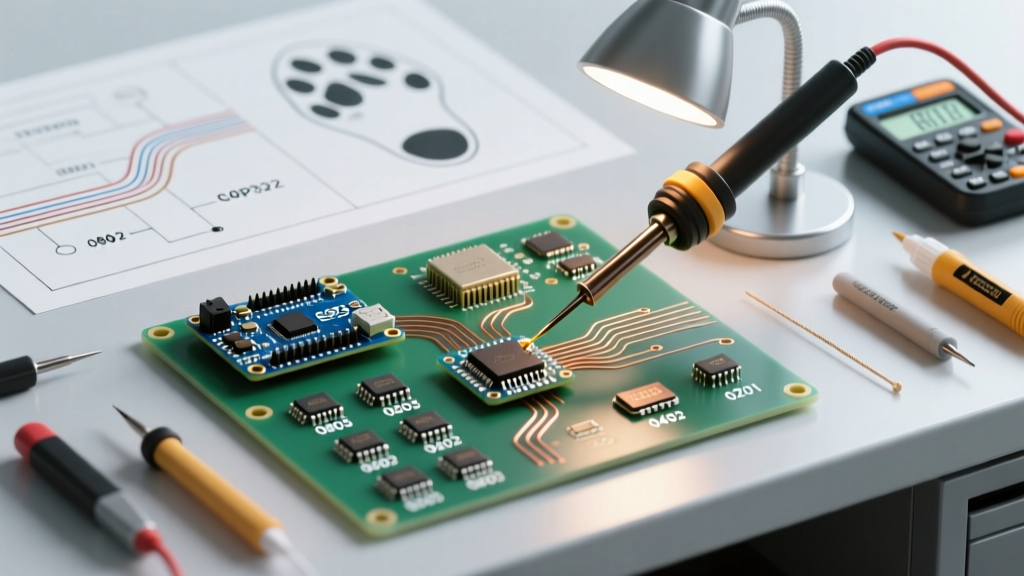
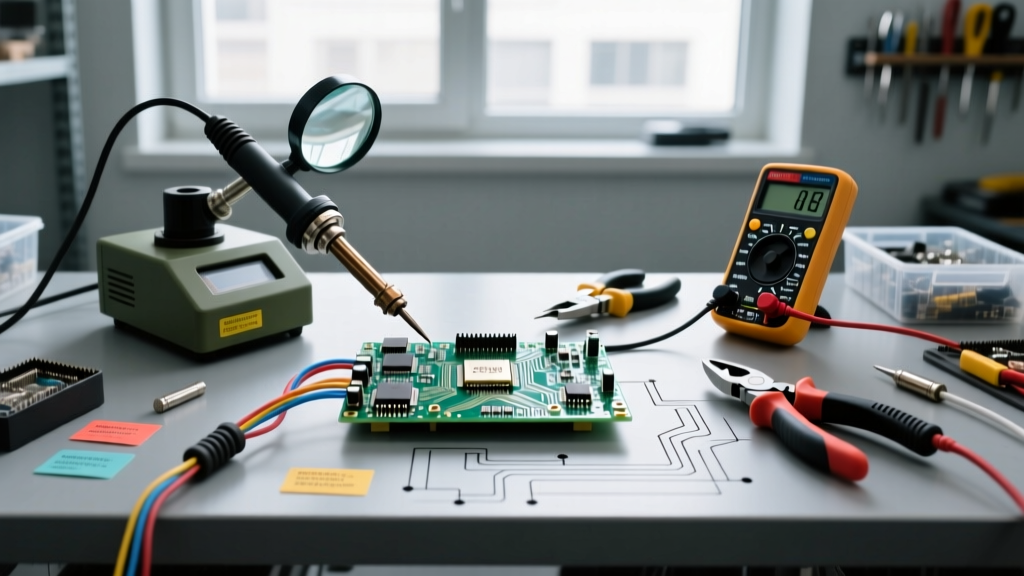
- Pre-Tinning (Gold Removal): Apply a generous amount of high-activity flux (like Amtech NC-559) to the component leads. Use your soldering iron to melt a large bead of standard solder onto the lead, then immediately use copper solder wick to suck it all away. This pulls the dissolved gold out of the joint.
- Clean and Inspect: Wipe the lead with 99% Isopropyl Alcohol (IPA). The lead should now look dull and tinned, with no shiny gold visible.
- Final Soldering: Apply a fresh, small amount of flux and solder the component to your PCB pad using standard techniques. The joint will now form a strong, ductile tin-copper or tin-silver intermetallic layer, completely avoiding the brittle gold compounds.
Cost-Benefit Matrix: When to Use Mil-Spec vs. Automotive (AEC-Q200)
In 2026, the global supply chain for raw tantalum and specialized mil-spec ceramics remains tight, keeping prices high. Smart DIYers know when to use true military parts and when to substitute with Automotive (AEC-Q200) grade parts, which offer 80% of the durability at 20% of the cost.
| Project Environment | Recommended Grade | Rationale & Cost Strategy |
|---|---|---|
| Indoor DIY Audio / IoT | Commercial | No extreme temps or shock. Save your budget. |
| Automotive / Engine Bay | AEC-Q200 (Auto) | Handles 125°C and chassis vibration. Highly cost-effective. |
| High-Altitude Balloons (-60°C) | Military (-55°C to 125°C) | Auto grade fails at -40°C. Mil-spec is mandatory for stratospheric cold. |
| Deep Space / Orbital Satellites | Military / Space Grade | Radiation hardening and pure SnPb finishes required to prevent tin whiskers. |
Final Thoughts for the Extreme DIYer
Integrating military grade electronic components into your DIY builds is not about bragging rights; it is about predictable reliability in unforgiving environments. By understanding the underlying MIL-STD testing methods, avoiding the counterfeit surplus market, and mastering specialized soldering techniques like gold embrittlement mitigation, you elevate your projects from hobbyist prototypes to professional-grade field equipment. Always design for the worst-case thermal and mechanical scenario, and let the component specifications dictate your bill of materials.