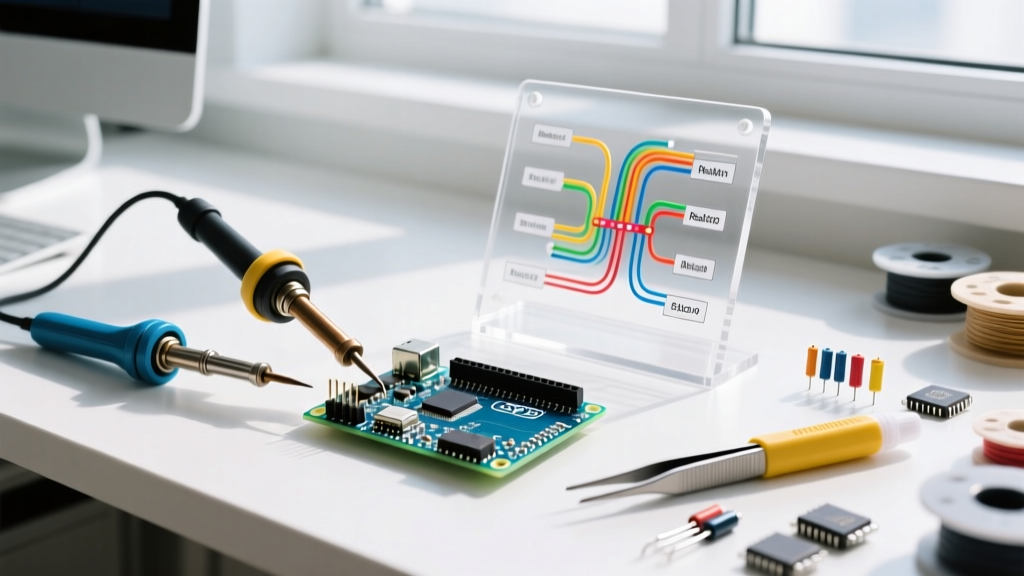

The 2026 Surplus Dilemma: Turning Dead Stock into Capital
The post-pandemic supply chain bullwhip effect left many engineering labs, makerspaces, and mid-sized Electronics Manufacturing Services (EMS) providers with warehouses full of excess electronic components. While the global chip shortage of 2021–2023 forced aggressive over-ordering, the stabilization of lead times in 2025 and 2026 has transformed yesterday's lifeline inventory into today's financial liability. Holding costs for stagnant electronic inventory—including warehouse space, insurance, and depreciation—now average 28% of the asset's value annually.
Liquidating surplus is no longer as simple as listing parts on an auction site. Modern buyers demand rigorous authenticity verification, strict moisture sensitivity compliance, and real-time BOM (Bill of Materials) matching. This roundup covers the essential digital tools, physical testing equipment, and market platforms you need to audit, protect, and sell your excess electronic components in 2026.
⚠️ The Counterfeit Risk Factor: According to ERAI (Electronic Resellers Association International), the secondary market for surplus ICs remains a high-risk environment for counterfeit parts. Proper verification tooling is not optional if you want to maintain a reputable seller profile on premium marketplaces.Phase 1: Digital Inventory & Auditing Software
Before you can sell excess electronic components, you must know exactly what you have, down to the lot code and date code. Relying on spreadsheets is a critical failure point for labs managing more than 5,000 unique SKUs.
PartKeepr (Open-Source / Self-Hosted)
For DIY hubs, university labs, and boutique EMS firms, PartKeepr remains the gold standard for self-hosted inventory management. It allows you to track stock levels, storage locations (down to the specific drawer and bin), and footprint data.
- Best Feature: Octopart API integration. You can pull real-time 2026 market pricing and datasheets directly into your local inventory dashboard, helping you price your surplus competitively.
- Cost: Free (Open-source), but requires a local server or Raspberry Pi 4 setup.
Ciiva (Cloud-Based BOM Manager)
If your excess inventory is tied to specific legacy product lines, Ciiva acts as both an inventory tracker and a component lifecycle manager. It will flag your surplus parts as 'End of Life' (EOL) or 'Not Recommended for New Design' (NRND). EOL components often command a 30% to 50% premium on the secondary market from repair depots and legacy system maintainers.
Phase 2: Verification & Testing Equipment
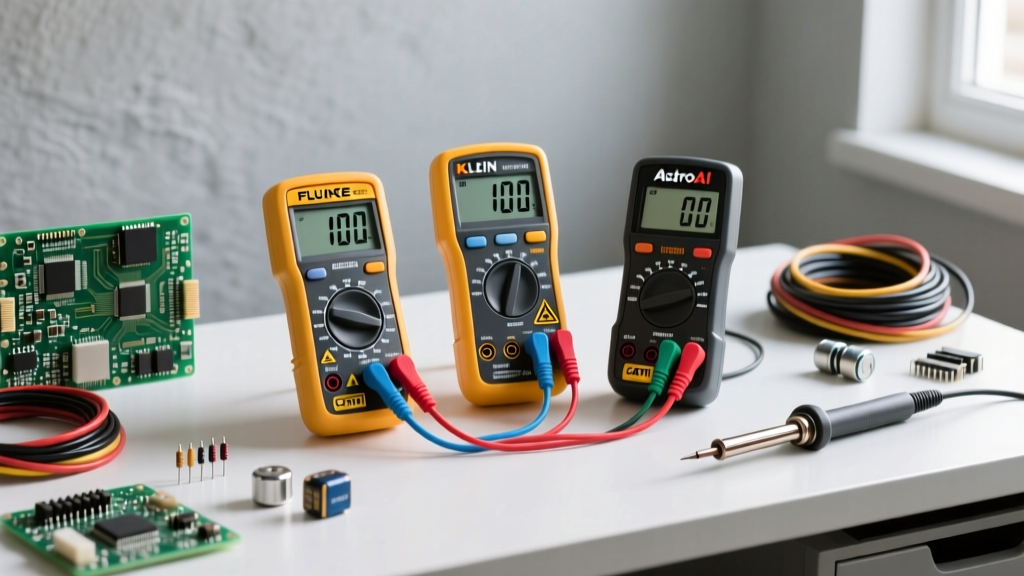
When listing high-value surplus ICs (like FPGAs, microcontrollers, or power management chips), buyers will ask for proof of authenticity. Sanded-and-remarked counterfeit chips are a persistent issue. You need the right optical and electrical tools to prove your stock is genuine.
1. Dino-Lite Edge AM73915MZT Digital Microscope
Standard USB microscopes lack the optical clarity to inspect IC laser etching. The Dino-Lite Edge features a 5-megapixel sensor, built-in polarizers, and adjustable UV/white lighting.
- What to look for: Authentic Texas Instruments or STMicroelectronics laser etching will show uniform micro-pitting on the epoxy package. Counterfeiters who sand off old date codes and re-print them leave a slightly smoother 'island' on the chip surface, which polarized light instantly reveals.
- Price Range: $900 - $950.
2. Siborg Systems LCR-Reader MPA
For excess passive components (capacitors, resistors, inductors) that have been cut from reels and lost their original packaging, verifying their values is mandatory. The LCR-Reader MPA offers 0.1% basic accuracy and can test components at frequencies up to 100kHz. It is indispensable for sorting bulk surplus SMD passives into verified kits for resale on platforms like Tindie or eBay.
Phase 3: Preservation & MSL Compliance Gear
One of the most common reasons surplus ICs are rejected by buyers is improper handling of Moisture Sensitive Devices (MSDs). If a BGA or QFN chip's dry-pack is opened and left on a shelf, it absorbs ambient humidity. When subjected to reflow soldering temperatures (260°C+), the trapped moisture expands, causing the 'popcorn effect' (micro-cracking inside the IC package).
You must adhere to the IPC/JEDEC J-STD-033 Standard for handling and baking components before sealing them for sale. For a deep dive into the chemistry and timing of this process, consult Digi-Key's comprehensive guide on MSL baking.
Step-by-Step: Baking and Resealing MSL 3 Components
- Inspect the HIC: Check the Humidity Indicator Card inside the original bag. If the 10% dot has turned pink, the parts must be baked.
- Select the Temperature: If components are on plastic tape-and-reel, you cannot bake at 125°C, as the carrier tape will melt. You must use a low-temperature bake at 40°C (with <5% RH) for up to 192 hours.
- Use the Right Oven: A standard kitchen oven fluctuates too much. Use a mechanical convection lab oven like the Yamato DKN402C (approx. $1,200) which holds +/- 2°C stability.
- Reseal Immediately: Once baked, parts must be sealed in MIL-PRF-81705 Type III ESD shielding bags with fresh desiccant clay and a new HIC within 1 hour of removal from the oven.
Phase 4: Liquidation Platforms Compared
Choosing where to sell your excess electronic components depends on your volume, the obscurity of the parts, and your willingness to handle buyer disputes. Below is a 2026 comparison matrix of the top liquidation channels.
| Platform | Best Suited For | Fee Structure (2026) | Verification / Barrier to Entry |
|---|---|---|---|
| IC Broker | High-volume EMS, obsolete ICs, B2B bulk lots | ~$1,500/year membership + tiered listing fees | Strict; requires business verification and ESD/MSL compliance proof |
| Digi-Key Marketplace | OEM overruns, factory-sealed reels, authorized surplus | Commission-based (typically 8-12% per sale) | High; requires proof of authorized sourcing or OEM lineage |
| eBay (Business/Industrial) | Consumer passives, dev kits, maker bundles, pulled parts | ~13-15% final value fee + payment processing | Low; open to all, but high risk of fraudulent buyer chargebacks |
| Findchips / Supplyframe | Lead generation for large broker networks | Pay-per-click or annual subscription models | Medium; acts as an aggregator, routing leads to your site |
Edge Cases: Handling 'Unsellable' and Pulled Surplus
Not all excess electronic components can be sold as 'new'. If you have components that were soldered and then desoldered (pulled), or parts with heavily oxidized pins, they are classified as 'used' or 'refurbished'.
Pro-Tip for Oxidized Pins: Do not sell oxidized DIP or SOP ICs without disclosure; they will fail wave soldering. Use a fiberglass scratch pen or a mild chemical flux dip to clean the leads, but explicitly list them as 'Pulled/Cleaned' on eBay or specialized maker forums.
E-Waste Routing: For damaged ICs, scrapped PCBs, or severely degraded electrolytic capacitors, liquidate them to certified e-Stewards recyclers. Companies like Sims Lifecycle Services will purchase bulk e-waste for precious metal recovery (gold, palladium, silver) based on the scrap weight and assay value.
Frequently Asked Questions (FAQ)
Can I legally sell surplus components that are marked 'NRND'?
Yes. 'Not Recommended for New Design' simply means the manufacturer is phasing the part out and won't support it for future product designs. However, these parts are highly sought after by repair technicians and companies maintaining legacy industrial equipment. You can often sell NRND surplus at a premium.
How do I handle RoHS non-compliant surplus?
Lead-based (RoHS non-compliant) components are largely banned for commercial sale in the EU and California, but they are still heavily demanded by aerospace, military, and vintage audio repair sectors. You must explicitly label these parts as 'Leaded / RoHS Non-Compliant' and restrict sales to B2B buyers with proper end-use exemptions.
What is the best way to ship moisture-sensitive BGAs to buyers?
Always ship BGAs and QFNs in sealed, heavy-duty ESD foil bags with a fresh desiccant pack and a 10% HIC card. Place the bag inside a rigid cardboard box with anti-static bubble wrap. Never ship high-pin-count BGAs in standard padded envelopes, as mechanical flexing during transit can crack the solder balls or the substrate.