
Introduction: Bridging Physics and Practical Wiring
Whether you are soldering your first microcontroller or wiring a 240V workshop outlet, every electrical project relies on a fundamental physics concept. If you have ever asked yourself, what is a conductor in science, you are probing the very foundation of modern technology. In the simplest terms, a conductor is a material that allows the free flow of electric charge. But to truly master electrical DIY and wire sizing, we must look past the textbook definition and explore the atomic mechanics, material properties, and real-world environmental factors that dictate how electricity moves through your circuits.
The Core Definition: What Is a Conductor in Science?
In physics and chemistry, a conductor is defined as a substance that permits the transfer of electrical energy or thermal energy from one point to another. Unlike insulators, which tightly hold onto their electrons, conductors possess a unique atomic structure that allows electrons to detach and move freely when an electromotive force (voltage) is applied. According to Georgia State University's HyperPhysics, this flow of free electrons is what we measure as electrical current (Amperes).
However, not all conductors are created equal. The efficiency of a conductor is measured by its electrical conductivity (or inversely, its resistivity). In practical electrical engineering, we care deeply about these metrics because a poor conductor will waste energy as heat, leading to voltage drop, melted insulation, and potentially catastrophic electrical fires.
The Atomic Mechanism: The 'Electron Sea' Model
To understand why copper wire conducts electricity while rubber insulation does not, we have to zoom in to the atomic level. Metals—the most common electrical conductors—are held together by metallic bonds. In this structure, atoms arrange themselves in a rigid crystalline lattice, but their outermost (valence) electrons are only loosely bound to their parent nuclei.
These valence electrons detach and form a shared 'electron sea' or 'electron cloud' that washes over the entire metallic lattice. When you connect a battery to a copper wire, the electric field pushes this sea of free electrons. They drift from the negative terminal toward the positive terminal. This is known as the Drude Model of electrical conduction. The sheer density of these free charge carriers (often around 10^28 electrons per cubic meter in copper) is what makes metals such exceptional conductors.
Band Theory: Why Conductors Have No 'Bandgap'
For a more advanced scientific explanation, physicists use Band Theory. In solid-state physics, electrons can only occupy specific energy levels, which group together into 'bands'. The two most critical bands are:
- The Valence Band: The highest energy band that is normally filled with electrons.
- The Conduction Band: The next higher energy band, which is normally empty in insulators.
In insulators and semiconductors, there is a 'bandgap'—an energy barrier that electrons must overcome to jump from the valence band to the conduction band. In conductors, however, Encyclopedia Britannica notes that the valence band and the conduction band actually overlap. Because there is zero bandgap, electrons require virtually no additional energy to enter the conduction band and flow freely. This overlapping band structure is the ultimate scientific reason why metals conduct electricity at room temperature.
Ranking the Metals: Conductivity and Real-World Applications
When selecting wire for a DIY project, robotics build, or home wiring, you must balance conductivity, cost, weight, and corrosion resistance. The global standard for electrical conductivity is the International Annealed Copper Standard (IACS), where pure annealed copper is set at exactly 100% conductivity. Below is a comparison of the most common conductive metals used in science and engineering.
| Material | Resistivity at 20°C (nΩ·m) | Conductivity (% IACS) | Primary DIY & Science Use Case |
|---|---|---|---|
| Silver | 15.87 | 105% | High-end audio contacts, RF shielding, precision switches |
| Copper | 16.78 | 100% (Baseline) | Standard THHN wiring, PCB traces, motor windings, breadboards |
| Gold | 22.14 | 70% | Corrosion-resistant edge connectors, IC bonding wires, audio jacks |
| Aluminum | 26.50 | 61% | High-voltage transmission lines, lightweight drone frames, heatsinks |
| Iron | 97.1 | 17% | Structural grounding rods, nichrome heating elements (as an alloy) |
As noted by the Copper Development Association, copper remains the undisputed king of general-purpose wiring. While silver is technically a better conductor, its high cost and tendency to tarnish (creating resistive surface oxides) make it impractical for bulk wiring. Gold, despite being a worse conductor than copper, is heavily used in microelectronics because it is entirely inert and will never oxidize, ensuring reliable low-voltage data connections.
Environmental Factors: Temperature and Impurities
A common misconception among beginners is that a conductor's resistance is a fixed, unchangeable number. In reality, conductivity is highly sensitive to the environment.
The Temperature Coefficient of Resistance
Metals have a Positive Temperature Coefficient (PTC). As a conductor heats up, the atoms in its crystalline lattice vibrate more violently. These thermal vibrations (called phonons) act like obstacles, scattering the drifting free electrons and increasing electrical resistance. This is why a tungsten lightbulb filament draws a massive surge of current when first turned on (cold), but the current drops as the filament heats up and its resistance increases.
Matthiessen's Rule and Impurities
Adding impurities to a pure metal drastically reduces its conductivity. Even trace amounts of phosphorus or iron in copper can cause significant electron scattering. This is why electrical-grade copper (like C11000 / ETP copper) is refined to 99.9% purity. If you are salvaging wire from scrap yards for DIY projects, be aware that alloyed metals like brass or bronze (copper mixed with zinc or tin) are significantly more resistive than pure copper and should not be used for high-current power delivery.
Practical Application: Selecting Conductors for DIY Wiring
Understanding the science of conductors directly informs how you size and route wires in real-world projects. Here are three critical takeaways for makers and electricians:
- Beware of Aluminum Oxidation: Aluminum is an excellent, lightweight conductor, but it forms a hard, insulating oxide layer within minutes of being exposed to air. If you use aluminum wire for high-current DC projects (like solar arrays or RV wiring), you must use specialized antioxidant pastes and torque-rated lugs to prevent high-resistance joints that can cause fires.
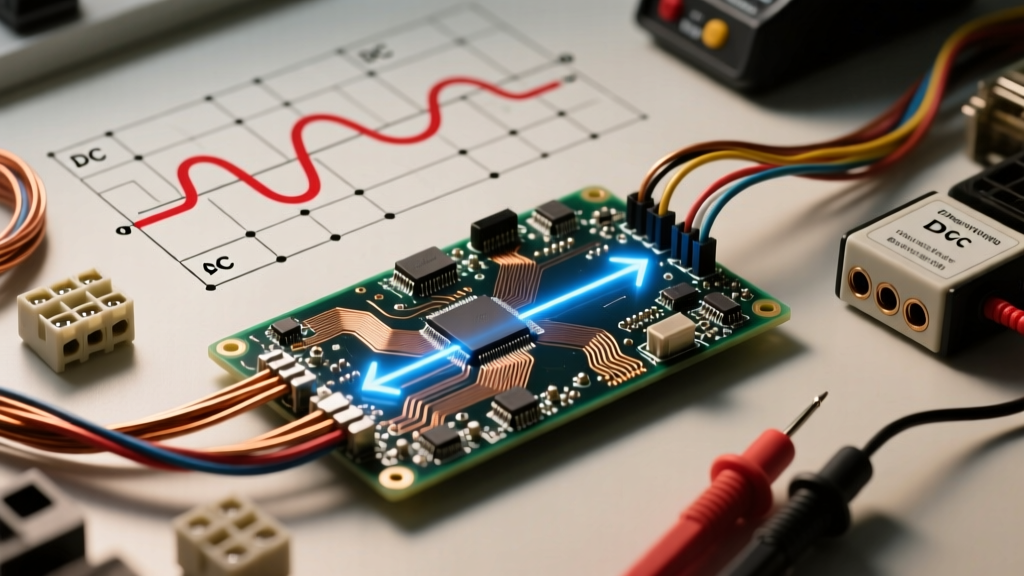
- The Skin Effect in High-Frequency AC: In high-frequency AC circuits (like RF transmitters or high-speed data lines), electrons are pushed to the outer surface of the conductor due to self-induced eddy currents. This is why high-frequency RF cables use silver-plated copper wire—the current only flows on the very outer 'skin' of the wire, so a highly conductive, tarnish-resistant surface is more important than the core material.
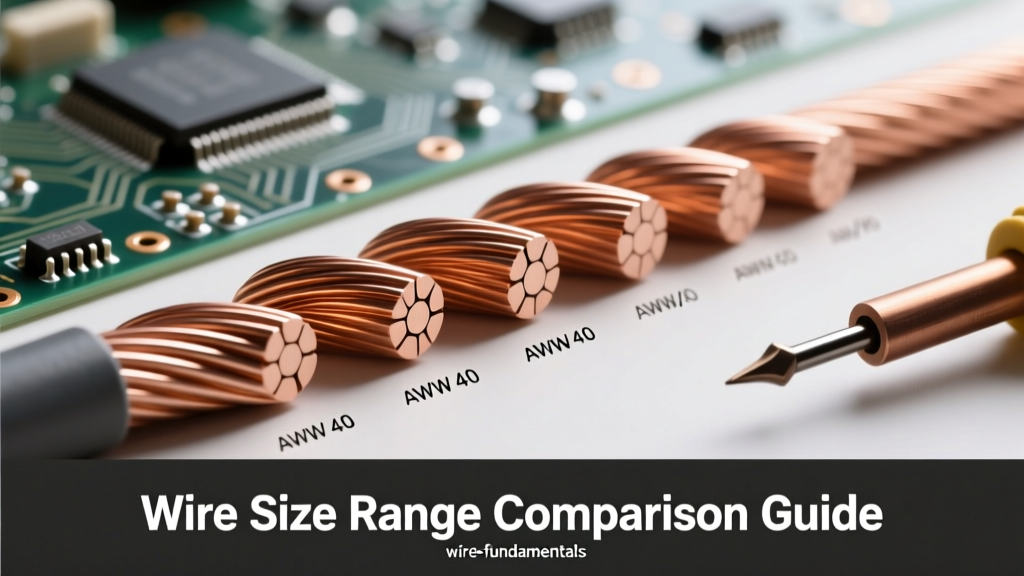
- Stranded vs. Solid Conductors: While the science of conductivity remains the same, the physical geometry matters. Solid wire is rigid and ideal for breadboards and fixed conduit runs. Stranded wire, composed of dozens of tiny conductive filaments, offers the same overall cross-sectional area but provides the mechanical flexibility required for robotics, moving cables, and automotive wiring.
Pro-Tip for Makers: When calculating voltage drop for long wire runs, always use the resistivity value for the conductor at its operating temperature, not room temperature. A wire carrying near its maximum ampacity will run hot, increasing its resistance by up to 15-20% compared to standard 20°C chart values.
Summary: From Atomic Theory to the Workbench
So, what is a conductor in science? It is a material defined by overlapping energy bands and a sea of free electrons that facilitate the effortless flow of charge. But as an electronics enthusiast or electrician, your job is to harness that scientific reality. By understanding the differences between copper, aluminum, and precious metals, and by respecting how temperature and impurities alter resistance, you can design safer, more efficient, and more reliable electrical systems.