
The Physics of PCB Soldering: Why Your Iron Matters
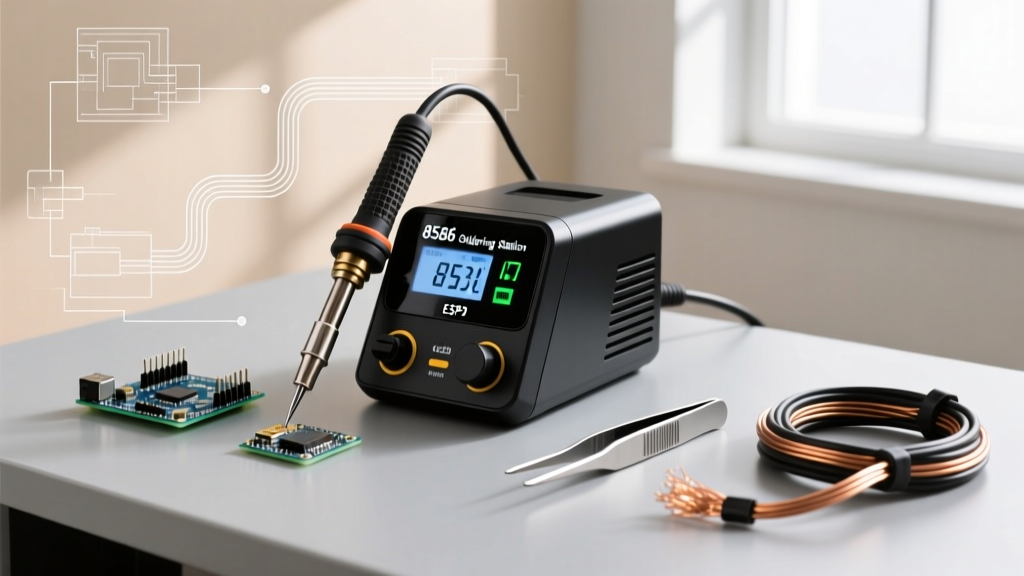
When transitioning from basic wire splicing to printed circuit board (PCB) assembly, the thermal dynamics of your workspace change drastically. A printed circuit board is essentially a massive copper heat sink. Multi-layer boards with internal ground planes will aggressively wick heat away from your solder joint. If you are using an underpowered or thermally inefficient tool, you will inevitably encounter cold joints, pad lifting, or component damage due to prolonged heat exposure.
Finding the best soldering iron for circuit boards requires understanding that raw wattage is a misleading metric. A 40-watt iron with a high-thermal-mass cartridge tip will outperform a 60-watt iron with a thin, low-mass tip when soldering to heavy copper pours. Furthermore, modern surface-mount device (SMD) components, such as 0603 or 0402 resistors, demand pinpoint temperature control to prevent 'tombstoning'—a defect where surface tension pulls the component upright during reflow.
Thermal Mass vs. Raw Wattage
According to the IPC-A-610 standards for electronic assemblies, a proper solder fillet requires rapid, even heating to activate the flux and allow capillary action to draw the alloy into the plated through-hole or pad. Cartridge-style tips (where the heating element is integrated directly into the tip) offer vastly superior thermal recovery compared to traditional sleeve-style tips. This distinction is the primary dividing line between hobbyist toys and professional PCB tools.
ESD Safety and Ground Plane Risks
Stray AC leakage and electrostatic discharge (ESD) can instantly destroy sensitive CMOS logic gates and MOSFETs. Professional stations utilize zero-voltage switching and grounded tip architectures to ensure the iron's apex remains at the same electrical potential as the PCB ground plane, preventing catastrophic component failure upon contact.
2026 Comparison Matrix: Top Irons for PCB Work
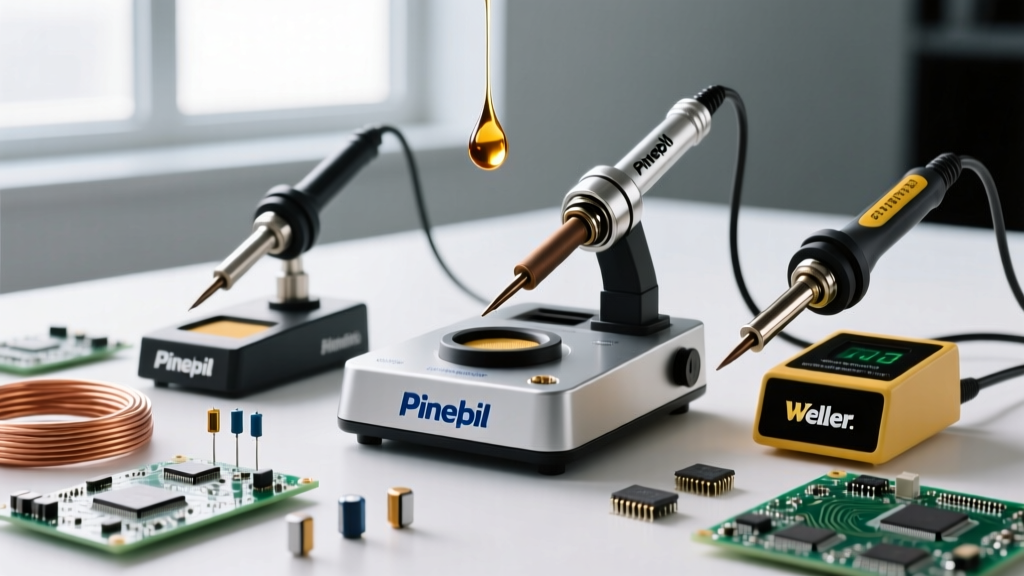
We tested the market's leading stations based on thermal recovery, tip ecosystem, and ESD safety. Below is our benchmark data for room-to-350°C heat-up times and power delivery.
| Model | Max Wattage | Tip System | Heat-Up Time | Est. Price | Ideal Application |
|---|---|---|---|---|---|
| Pinecil V2 | 65W (USB-C PD) | TS100 / Mini | ~6 seconds | $26 | SMD, Portable, Budget |
| Hakko FX-888D | 70W | T18 (Sleeve) | ~40 seconds | $115 | General Through-Hole |
| Weller WE1010NA | 70W | ET (Sleeve) | ~25 seconds | $130 | Heavy Ground Planes |
| Quicko T12 OLED | 72W | T12 (Cartridge) | ~8 seconds | $65 | Advanced SMD & Rework |
Deep-Dive Reviews: The Best Soldering Iron for Circuit Boards
1. Pinecil V2: The Open-Source Disruptor
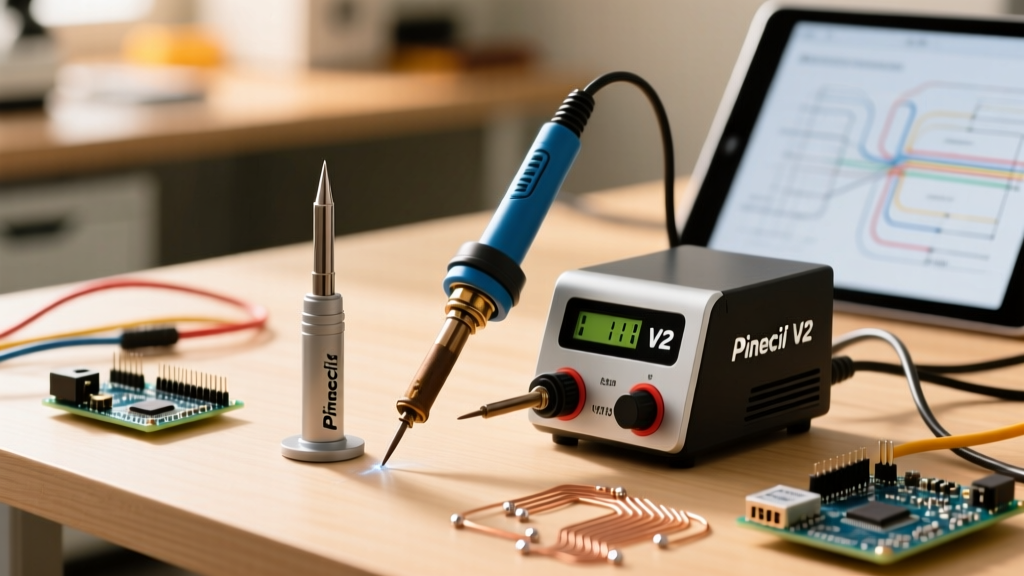
The Pinecil V2 has completely rewritten the rules for budget electronics repair. Powered by a RISC-V BL706 microcontroller, this iron supports USB-C Power Delivery (PD) up to 65W. What makes it the best soldering iron for circuit boards on a budget is its open-source IronOS firmware, which allows for precise PID temperature tuning, custom boot screens, and voltage calibration.
Information Gain & Failure Modes: The most common failure mode with the Pinecil V2 occurs when users pair it with low-quality, multi-port USB charging bricks. These chargers often introduce voltage ripple and fail to negotiate the correct PD contract, resulting in erratic temperature spikes that can scorch delicate PCB pads. Always use a dedicated, high-quality 65W GaN charger. For SMD work, pair it with a 'Mini' hoof tip to maximize surface contact area without bridging adjacent pins.
2. Hakko FX-888D: The Legacy Workhorse
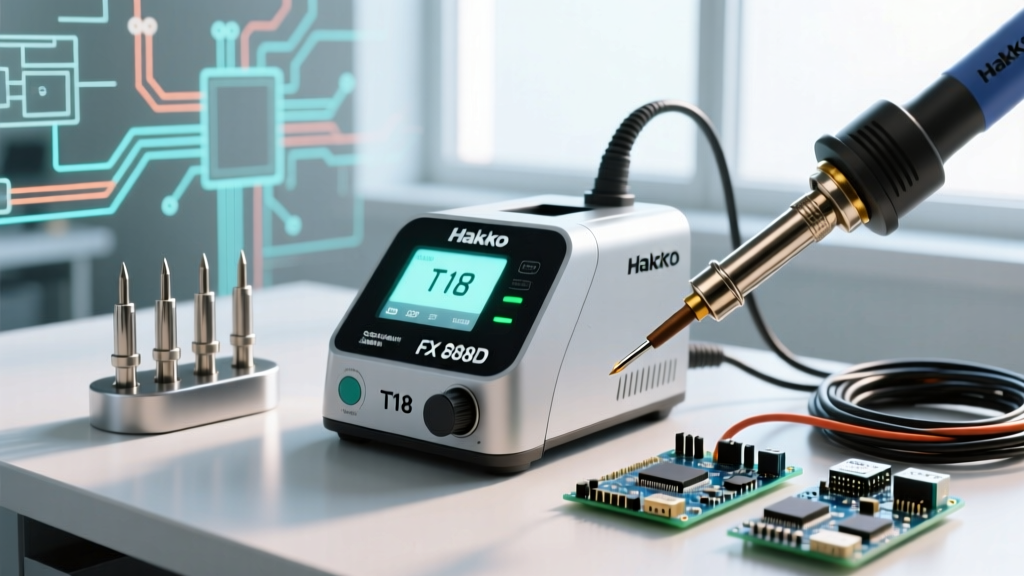
For decades, the Hakko FX-888D has been the default recommendation for makers and university labs. It is a digital, 70-watt station that uses the T18 tip series. While it lacks the blistering heat-up time of cartridge-based systems, its build quality is virtually indestructible.
Information Gain & Failure Modes: The T18 tips use a ceramic heater sleeve. Because the heater and tip are separate, there is a slight thermal lag when touching a large ground plane. The primary failure mode here is user-induced: leaving the station powered on at 400°C while not in use. This rapidly oxidizes the iron plating on the T18 tip, creating a black crust that solder will not wet. If you work primarily with 0805 SMD components and basic DIP through-hole ICs, the FX-888D remains a rock-solid, low-maintenance choice. Consult the official Hakko soldering guidelines for proper tip tinning procedures to extend lifespan.
3. Weller WE1010NA: The Professional Standard
When you step into professional rework environments, the Weller WE1010NA is a frequent fixture. It features a 70W heater and utilizes the ET tip series. Its standout feature for PCB work is the zero-voltage switching mechanism, which ensures that the heating element only draws current when the AC sine wave crosses zero, eliminating inductive spikes and stray magnetic fields that could interfere with sensitive analog circuitry.
Information Gain & Failure Modes: The WE1010 excels at soldering large connectors to multi-layer motherboards. However, the ET tips have a relatively low thermal mass compared to JBC or T12 cartridges. If you are soldering heavy-gauge wires to large PCB lugs, you must use the largest chisel tip available (like the ETLL) and increase the dwell time slightly, or you risk creating a cold, crystalline joint.
Tip Geometry: Matching the Metal to the Pad
Selecting the right station is only half the battle; tip geometry dictates the success of your PCB work. A common novice mistake is assuming that a 'needle' or 'conical' tip is best for fine SMD work. This is fundamentally incorrect.
The Conical Tip Fallacy
Conical tips have very low thermal mass at their apex. When the point of the cone touches a copper pad, the heat is instantly absorbed, and the tip's temperature plummets. The result is a cold joint or the user pressing harder, which damages the fiberglass substrate of the PCB.
Micro-Chisel and Hoof Tips for SMD
For 0603 and 0402 components, a micro-chisel (0.5mm to 1.0mm) or a small hoof/bevel tip is mandatory. The flat edge of a chisel provides maximum surface area contact, allowing rapid thermal transfer and enabling capillary action to pull the molten solder evenly across the pad. For dragging solder on fine-pitch QFP or SOIC chips, a 2.0mm bevel tip combined with generous amounts of tacky flux is the industry standard technique.
Flux Chemistry: The Unsung Hero of PCB Wetting
No soldering iron, regardless of price, can overcome poor flux chemistry on a circuit board. Flux removes oxidation from the copper pads and component leads, lowering the surface tension of the molten solder.
- Rosin Mildly Activated (RMA): The standard for general electronics. It activates around 180°C and leaves a benign residue that is generally safe to leave on the board, though it can become slightly conductive in high-humidity environments.
- No-Clean Flux: Formulated to leave a minimal, highly insulative residue. It requires precise temperature control; if your iron is too hot, the flux burns off before the solder can flow, resulting in oxidized, balling solder.
- Water-Soluble (OA) Flux: Highly aggressive and excellent for stubborn oxidized pads. However, it MUST be cleaned with distilled water and isopropyl alcohol post-soldering, or it will cause severe galvanic corrosion and short circuits on the PCB traces over time.
Verdict: Which Station Belongs on Your Bench?
The 'best' tool depends entirely on your specific PCB workload. If you are a hobbyist building custom mechanical keyboards, repairing drones, or working on tight budgets, the Pinecil V2 is an undisputed champion. Its cartridge-style thermal recovery rivals stations costing five times as much, making it the ultimate portable soldering iron for circuit boards.
For university labs, makerspaces, and users who primarily solder through-hole components and large wire harnesses, the Hakko FX-888D offers unmatched durability and ease of use. Finally, if you are doing professional rework on sensitive analog boards or multi-layer server motherboards where ESD safety and zero-voltage switching are non-negotiable, invest in the Weller WE1010NA.
Pro-Tip: Always calibrate your iron's temperature offset using a digital thermocouple meter placed on a scrap PCB pad. The temperature displayed on the station's OLED screen is measured at the heater core, not the tip apex. A 15°C variance is normal, but knowing your exact offset ensures you never accidentally exceed the 260°C thermal limit of sensitive plastic IC packages.