
The Adapter vs. Converter Trap: Diagnosing the Root Cause
When traveling or relocating to Japan, the most common electrical mistake is confusing a physical plug adapter with a voltage converter. Japan operates on a unique electrical grid: 100V AC (compared to 120V in North America and 230V in Europe) and utilizes the Type A ungrounded receptacle. If your device is malfunctioning, overheating, or completely dead, the issue almost always stems from a mismatch in voltage transformation, frequency incompatibility, or improper grounding. This guide provides a systematic diagnostic approach to troubleshooting your japan electrical outlet converter setup, ensuring your electronics operate safely and efficiently.
Expert Insight: Modern Switch-Mode Power Supplies (SMPS) found in laptop chargers, smartphone GaN adapters, and camera battery docks are typically rated for 100-240V and 50/60Hz. These require only a physical Type A plug adapter, not a heavy voltage converter. Using a step-down transformer on an SMPS device is unnecessary and introduces points of failure.
Troubleshooting Matrix: Japan Electrical Outlet Converter Failures
Use this diagnostic matrix to quickly identify the root cause of your electrical issues based on the physical symptoms your device or converter is exhibiting.
| Symptom | Probable Cause | Diagnostic Check | Corrective Action |
|---|---|---|---|
| Device powers on but runs slow, hums, or gets unusually hot. | Voltage mismatch (120V device on 100V grid) or frequency (Hz) mismatch. | Check device nameplate for voltage range and motor type (AC synchronous). | Use a step-up transformer (100V to 120V) or verify 50/60Hz compatibility. |
| Converter emits a burning smell or internal fuse blows immediately. | Wattage overload. Converter's max wattage is lower than the device's draw. | Multiply device Voltage x Amps to find Watts. Compare to converter rating. | Upgrade to a heavy-duty transformer (e.g., 1000W+ for heating appliances). |
| Sparks at the wall receptacle when plugging in; loose physical fit. | Worn Type A receptacle or using a 3-prong (Type B) adapter without ground. | Inspect wall outlet for scorch marks; test physical retention of the plug. | Replace worn receptacle or use a polarized 2-prong cheater adapter safely. |
| Device works in Tokyo but fails or runs incorrectly in Osaka. | Regional frequency mismatch (50Hz East vs. 60Hz West Japan). | Check if the device relies on AC line frequency for timing or motor speed. | Use a double-conversion online UPS or frequency-agnostic DC power supply. |
Symptom 1: Motorized Appliances Hum, Stall, or Overheat
If you have brought a North American 120V appliance with an AC motor (such as a hair dryer, stand mixer, or power tool) to Japan and plugged it directly into the wall using only a physical adapter, it will receive 100V. According to Ohm's Law, a resistive heating element will simply output about 30% less heat. However, inductive loads like AC motors behave differently.
When an AC motor designed for 120V receives only 100V, it may struggle to reach its operational RPM. This causes the motor to draw 'locked-rotor' or excessive running current, leading to rapid overheating and eventual thermal fuse failure. To diagnose this, check the device nameplate. If it reads '120V AC' (without a range like 100-240V), you must use a step-up voltage converter.
Sizing Your Step-Up Transformer Correctly
Cheap 50-watt travel converters will instantly blow their internal thermal fuses if you plug in a 1500W hair dryer. For reliable operation in 2026, you must calculate the startup surge.
- Resistive Loads (Heaters, Irons): Add a 20% buffer. A 1000W iron requires a 1200W+ converter (e.g., Krieger KR115-100 1000W Step Up/Down, typically priced around $65).
- Inductive Loads (Motors, Compressors): Add a 100% to 200% buffer for startup surge. A 500W blender requires a minimum 1500W step-up transformer (e.g., Rockstone Power 5000 Watt Heavy Duty, approx. $110).
Symptom 2: The 50Hz vs. 60Hz Regional Divide
Japan is one of the few countries in the world split between two different AC frequencies. This is a massive edge case that catches many expats and engineers off guard when moving between regions.
- Eastern Japan (Tokyo, Yokohama, Tohoku, Hokkaido): 50Hz
- Western Japan (Osaka, Kyoto, Nagoya, Hiroshima): 60Hz
According to the International Electrotechnical Commission (IEC), while most modern electronics use DC internally and are immune to frequency changes, devices that rely on the AC sine wave for timing or motor speed will malfunction. A 60Hz synchronous clock motor moved from Osaka to Tokyo will lose exactly 10 minutes every hour. A 60Hz power tool will run 17% slower in Tokyo, reducing torque and potentially stalling.
Diagnosis & Fix: If your device specifies '60Hz ONLY' on the compliance sticker, it will not operate correctly in Tokyo. Standard voltage converters do not change frequency. You must either purchase a specialized frequency converter (which costs upwards of $500) or replace the appliance with a Japanese domestic model rated for 50/60Hz.
Symptom 3: The 'Third Prong' Grounding Failure
North American Type B plugs feature three prongs (Live, Neutral, Ground). Standard Japanese wall receptacles are Type A, featuring only two slots (Live and Neutral). As noted by the Japan Electrical Safety & Environment Technology Laboratories (JET), the vast majority of residential and older commercial buildings in Japan do not have grounded outlets.
If you are using a 3-to-2 prong adapter (cheater plug) to run sensitive audio equipment, medical devices, or high-end PC power supplies, you may experience ground loops, audio hum, or dangerous chassis voltage leakage.
How to Diagnose a Missing Ground
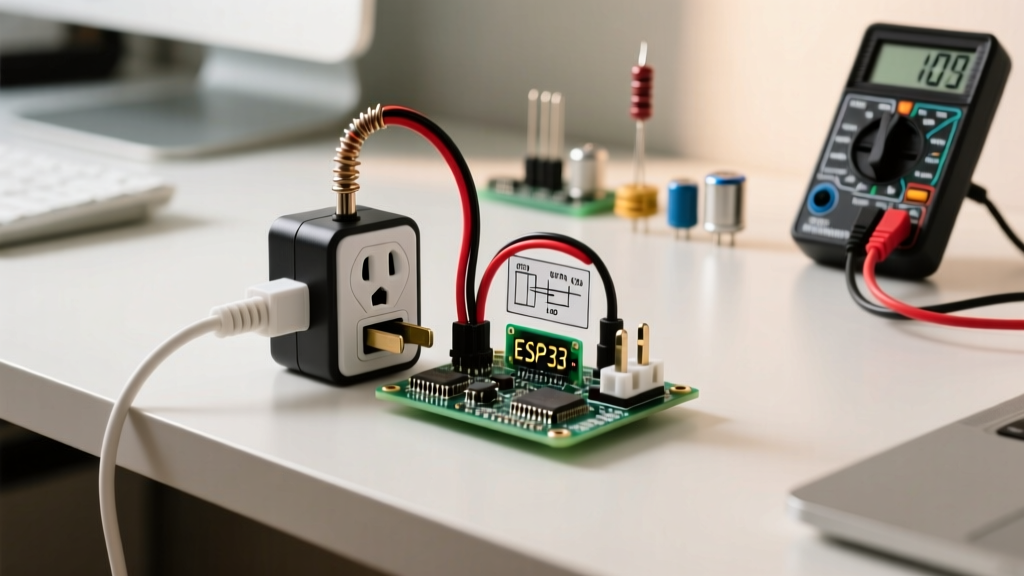
- Set your digital multimeter to AC Voltage (V~).
- Insert the black probe into the wider slot (Neutral) and the red probe into the narrower slot (Live). You should read between 95V and 105V.
- Now, touch the red probe to the metal mounting screw of the outlet's faceplate (if present) or a known grounded water pipe, while keeping the black probe in the Neutral slot.
- Result: If the reading is 0V or a stray voltage of 1-3V, the receptacle is ungrounded. Do not use surge protectors that rely on a ground path for clamping transients, as they will not protect your equipment from voltage spikes.
Advanced Edge Cases: Switch-Mode vs. Linear Power Supplies
When diagnosing a dead device, it is critical to identify the type of power supply it uses. If your device uses an external 'power brick' (like a laptop charger), look at the fine print on the brick.
Scenario A: The brick reads 'INPUT: 100-240V ~ 50/60Hz'.
This is a Switch-Mode Power Supply (SMPS). It will handle Japan's 100V grid natively. If the device is dead, the issue is a blown internal DC fuse or a faulty physical adapter pin connection, not a voltage problem. Stop using a heavy voltage converter, as it introduces unnecessary resistance and heat.
Scenario B: The brick reads 'INPUT: 120V ~ 60Hz'.
This is a linear transformer (often found in older audio equipment or specific medical devices). It will physically buzz, run extremely hot, and eventually short out if plugged into a 100V/50Hz Tokyo outlet without a proper step-up, frequency-converting isolation transformer.
Summary Checklist for Travelers and Expats
Before plugging any foreign appliance into a Japanese wall receptacle, run this 3-point diagnostic check:
- Check the Nameplate: Is it 100-240V? If yes, use a simple $5 Type A physical adapter. If it says 120V or 230V only, you need a voltage converter.
- Calculate the Wattage: Multiply Volts by Amps. Ensure your converter's continuous rating exceeds this number by at least 25% (or 100% for motors).
- Verify the Region: Are you in Tokyo (50Hz) or Osaka (60Hz)? Ensure your motorized or timing devices are compatible with the local frequency.
By understanding the distinct differences between physical adapters and true voltage converters, and by respecting Japan's unique 100V/50-60Hz grid topology, you can prevent catastrophic equipment failure and electrical hazards. For further reading on international electrical safety standards, consult the Japan National Tourism Organization's essential planning guides and always verify your transformer's UL or PSE certification marks before use.