
The Core Mandate: NEC Article 625 and Your Tesla
When homeowners purchase a new Model Y, Model 3, or the high-demand Cybertruck, the immediate priority is often installing a dedicated electrical outlet for Tesla charging in the garage. However, treating an Electric Vehicle Supply Equipment (EVSE) receptacle like a standard dryer or welder outlet is a critical error that violates the National Electrical Code (NEC) and creates severe fire hazards. EV charging falls under the strict jurisdiction of NEC Article 625, which dictates specific wiring methods, overcurrent protection, and grounding protocols tailored to the unique thermal and continuous-load demands of lithium-ion battery charging.
According to the U.S. Department of Energy's Alternative Fuels Data Center, over 80% of EV charging occurs at home. Yet, a significant percentage of these installations fail local inspections or operate unsafely due to a misunderstanding of continuous load calculations and GFCI mandates. This guide breaks down the exact code requirements, wire sizing mathematics, and hardware specifications needed to install a compliant, high-speed Tesla charging receptacle.
Receptacle Selection: NEMA 14-50 vs. NEMA 6-50 vs. Hardwired
The Tesla Mobile Connector typically ships with a standard 5-15P (120V) adapter, but to achieve Level 2 charging speeds (up to 44 miles of range per hour), you must upgrade to a 240V circuit. While the official Tesla Home Charging Installation guide heavily promotes their hardwired Wall Connector, many owners prefer the flexibility of a receptacle so they can take the Mobile Connector on road trips.
| Configuration | Voltage / Amperage | Wire Required (Copper) | NEC GFCI Breaker Required? | Max Tesla Charge Rate |
|---|---|---|---|---|
| NEMA 14-50R | 125/250V / 50A | #6 AWG (4-Wire) | Yes (NEC 625.54) | 40A (30 mi/hr) |
| NEMA 6-50R | 250V / 50A | #6 AWG (3-Wire) | Yes (NEC 625.54) | 40A (30 mi/hr) |
| Hardwired (Wall Connector) | 240V / 60A | #4 AWG (3-Wire) | No (Exempt from 625.54) | 48A (44 mi/hr) |
Why the NEMA 14-50R is the Industry Standard
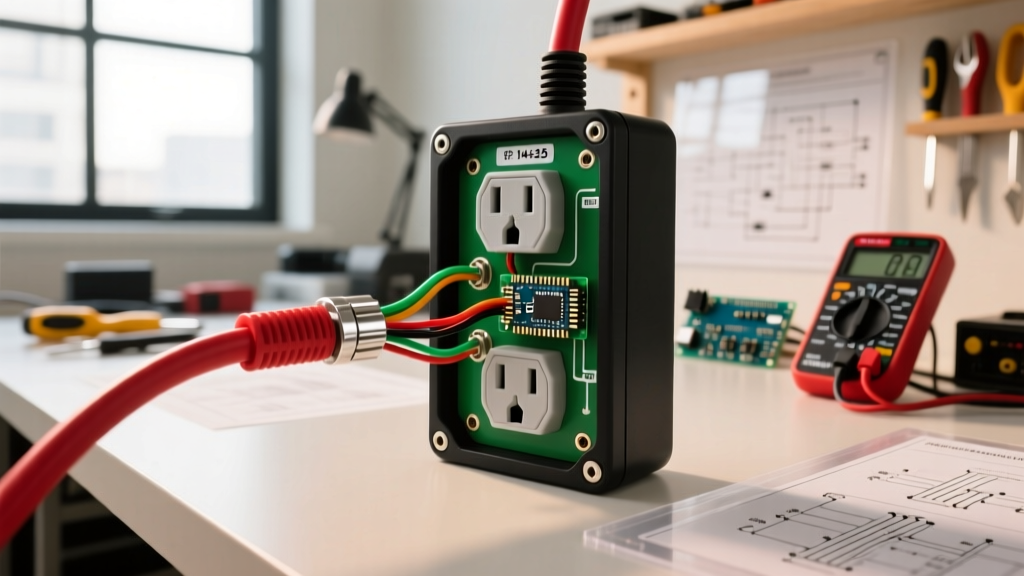
The NEMA 14-50R is a 4-wire receptacle (two hots, one neutral, one ground). It is the most versatile electrical outlet for Tesla owners because it is widely available at RV parks and campgrounds across North America. Furthermore, the neutral wire allows for future integration of smart panels or 120V/240V split-phase monitoring devices. If you choose the NEMA 6-50R (which lacks a neutral), you save slightly on wire costs, but you lose RV compatibility and limit future smart-home energy monitoring options.
The 125% Continuous Load Rule: Sizing the Breaker and Wire
The most common code violation in DIY EV charging is undersizing the circuit breaker and wire. Under NEC Article 100, a continuous load is defined as any load where the maximum current is expected to continue for three hours or more. Because charging a Tesla from 20% to 80% takes significantly longer than three hours, EVSE circuits must be treated as continuous loads.
NEC 210.20(A) & 215.3 Mandate: The branch-circuit overcurrent device (breaker) must be rated at no less than 125% of the continuous load. Conversely, the EVSE itself must be limited to 80% of the circuit breaker's total rating.
The Math: Matching Tesla Amps to Breaker Size
- 32-Amp Mobile Connector: 32A x 1.25 = 40A. Requires a 40-Amp breaker and #8 AWG Copper wire.
- 40-Amp Mobile Connector: 40A x 1.25 = 50A. Requires a 50-Amp breaker and #6 AWG Copper wire. (This is the standard NEMA 14-50 setup).
- 48-Amp Wall Connector: 48A x 1.25 = 60A. Requires a 60-Amp breaker and #4 AWG Copper wire. (Note: A 48A continuous load cannot be plugged into a 50A receptacle; it must be hardwired).
Wire Sizing Nuances: THHN vs. NM-B (Romex)
When pulling wire for your Tesla outlet, the insulation type dictates the ampacity table you must use under NEC 310.16. Many homeowners mistakenly buy #8 AWG NM-B (Romex) for a 50A circuit, assuming it is rated for 50A. This is a direct code violation.
- NM-B Cable (Romex): NEC 334.80 restricts NM-B cable to the 60°C column of Table 310.16, regardless of the wire's actual thermal rating. In the 60°C column, #8 AWG is only rated for 40A. To achieve 50A with NM-B, you must use #6 AWG Copper.
- THHN in Conduit: If you pull individual THHN wires through EMT or PVC conduit, you can use the 75°C column (assuming your breaker and receptacle terminals are rated for 75°C, which most modern 50A devices are). In the 75°C column, #8 AWG is rated for 50A. However, most master electricians still pull #6 AWG THHN to minimize voltage drop over long garage runs and to provide a buffer against thermal buildup in insulated walls.
The GFCI Conundrum: Nuisance Tripping and Code Compliance
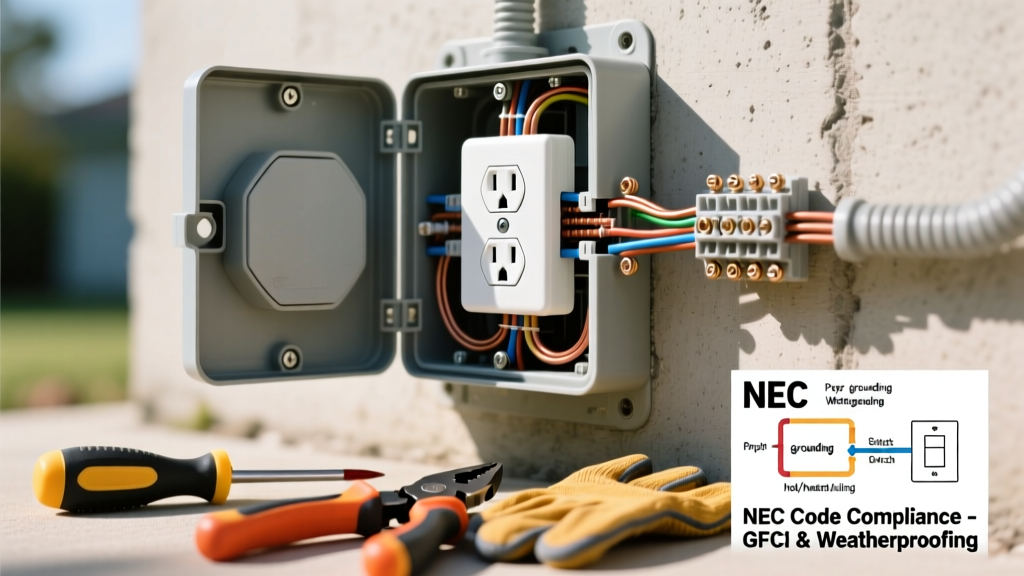
This is where the National Fire Protection Association (NFPA) code requirements frequently clash with real-world EV hardware behavior. Under NEC 625.54, GFCI (Ground Fault Circuit Interrupter) protection is strictly required for all receptacles rated 150 volts to ground or less, and 50 amperes or less, installed for EV charging.
Because a NEMA 14-50R operates at 125V line-to-ground, it falls squarely under this mandate. You must install a GFCI breaker in your main panel.
The "Double GFCI" Nuisance Tripping Problem
Tesla Mobile Connectors and Universal Wall Connectors feature highly sensitive, built-in internal GFCI monitoring. When you pair an internal EVSE GFCI with a standard panel-mounted GFCI breaker, the two systems often conflict. The high inrush current and minor capacitive leakage inherent to Tesla's onboard chargers can trick a standard GFCI breaker into "nuisance tripping" in the middle of the night, leaving you with an uncharged car in the morning.
The Code-Compliant Solutions:
- Use an EV-Specific GFCI Breaker: Manufacturers like Eaton have engineered specific breakers (such as the Eaton EVGF150) designed to recognize the unique electrical signatures of EV chargers, ignoring harmless inrush currents while still protecting against lethal ground faults. These breakers typically cost between $150 and $220, compared to $45 for a standard breaker.
- The Hardwire Exemption: NEC 625.54 applies specifically to receptacles. If you hardwire a Tesla Universal Wall Connector directly to the junction box (bypassing the plug entirely), the GFCI breaker requirement is waived. The Wall Connector's internal GFCI satisfies the safety intent of the code. This is why most professional electricians strongly advocate for hardwiring over receptacle installation.
Installation Specifications and Torque Requirements
Beyond wire sizing and GFCI rules, the physical installation of the receptacle demands strict adherence to modern termination standards.
- Torque Specifications (NEC 110.14(D)): As of recent NEC cycles, electricians are required to use a calibrated torque screwdriver or wrench when terminating connections. A standard NEMA 14-50R typically requires between 40 and 50 inch-pounds of torque on the lug screws. Under-torquing leads to arcing and melted receptacles; over-torquing strips the threads and cracks the brass bus bars.
- Receptacle Orientation: While the NEC does not explicitly mandate the orientation of the ground pin (up vs. down) for a 14-50R, the RV industry standard (and the orientation Tesla's Mobile Connector cord is designed to drape from) is ground pin up. This prevents the heavy, stiff EV cable from putting undue mechanical stress on the receptacle faceplate over time.
- Strain Relief and Box Depth: A 50A receptacle requires a deep-gang masonry or metal box (minimum 2.25 cubic inches, though 4-inch square boxes are preferred) to accommodate the thick #6 AWG wires and the rigid bending radius required by NEC 300.14.
Common Inspection Failures to Avoid
If you are pulling a permit for your Tesla electrical outlet, be prepared for the local Authority Having Jurisdiction (AHJ) to inspect the following specific items:
- Missing Grounding Electrode: While the equipment grounding conductor (EGC) in your cable is sufficient for clearing faults, some local amendments require a supplementary grounding electrode rod for detached garage EV subpanels.
- Improper Neutral Bonding: In a subpanel feeding the garage, the neutral and ground bus bars must remain isolated. Bonding them together in a subpanel creates a parallel neutral path, which will immediately trip your new EV-specific GFCI breaker.
- Lack of Disconnecting Means: NEC 625.43 requires a disconnecting means for EVSE equipment rated over 60A. While a standard 50A NEMA 14-50 receptacle acts as its own disconnect (by unplugging it), hardwired 60A circuits require a dedicated lockable disconnect switch within sight of the charger.
Final Verdict: Receptacle vs. Hardwired for 2026 and Beyond
If your primary goal is maximum charging speed and zero maintenance headaches, abandon the idea of an electrical outlet for Tesla and opt for a hardwired 60A Universal Wall Connector. You will bypass the NEC 625.54 GFCI breaker mandate, eliminate nuisance tripping, and unlock the full 48A continuous charging capability required to quickly replenish the massive battery packs in the Cybertruck and Model S Plaid.
However, if portability is non-negotiable, install a NEMA 14-50R using #6 AWG copper wire on a 50A EV-rated GFCI breaker. Ensure every termination is torqued to spec, and you will have a safe, code-compliant, and lightning-fast home charging ecosystem.