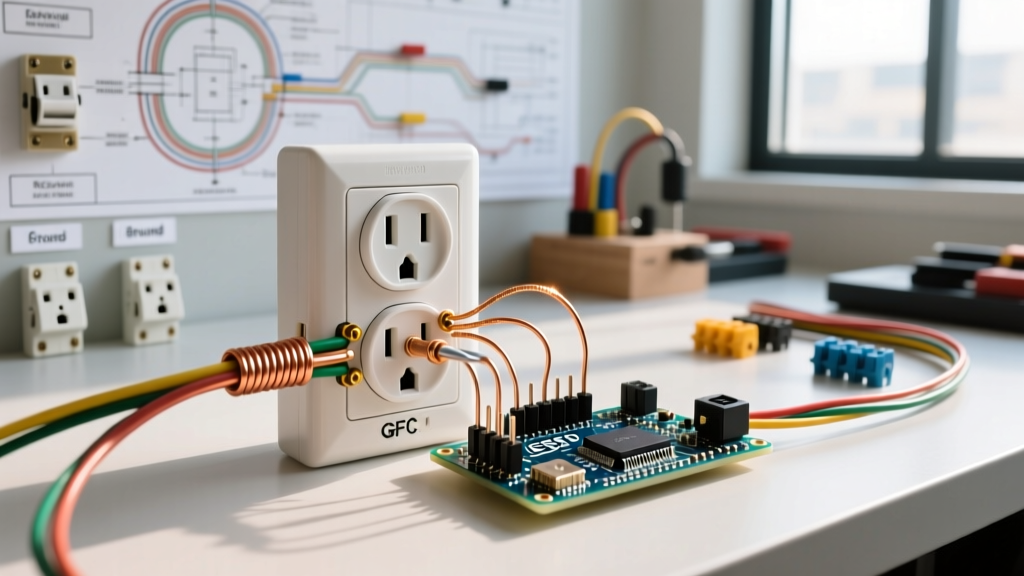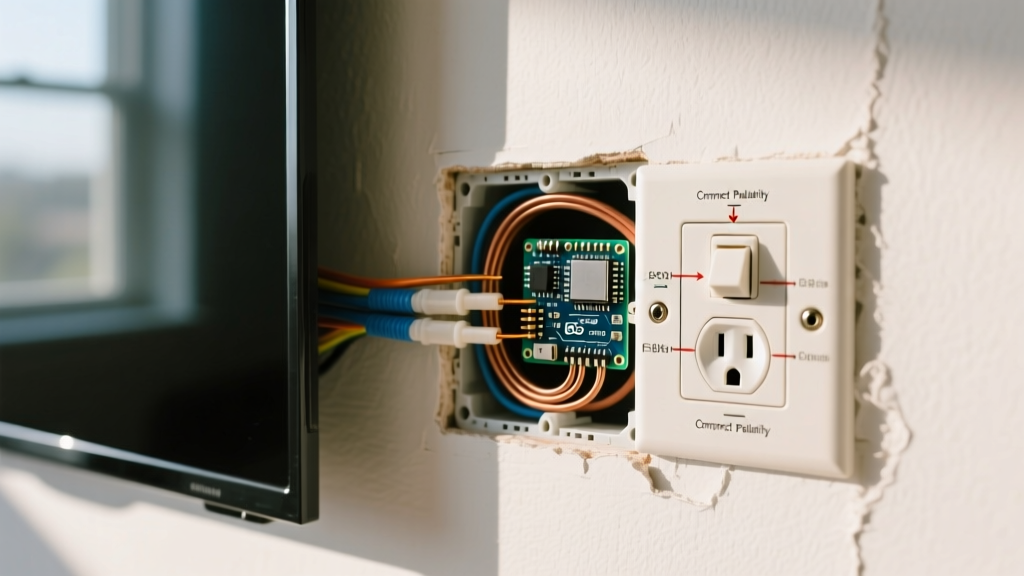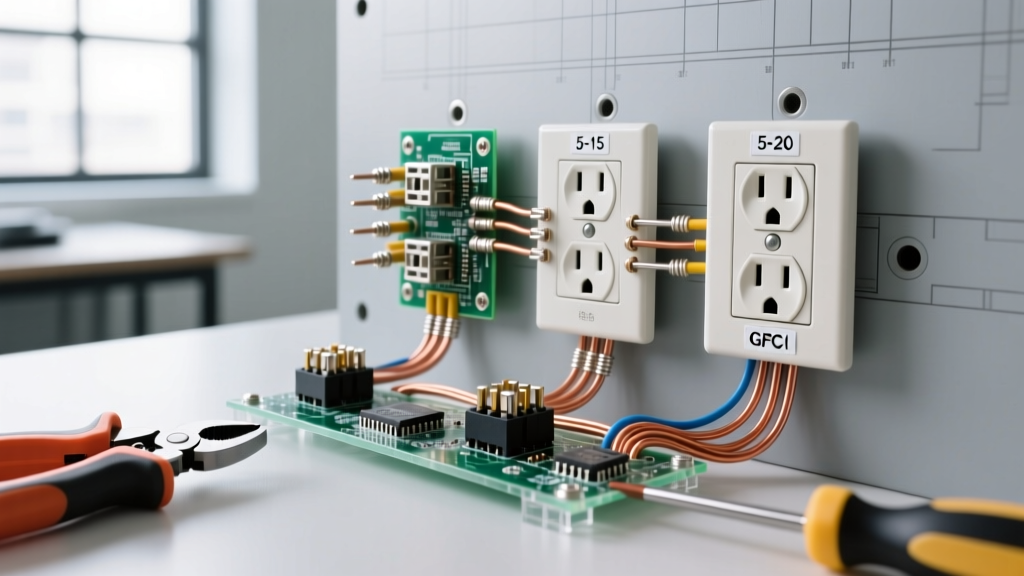

Performing an electrical outlet installation in Virginia Beach requires more than just connecting black, white, and bare copper wires. The intersection of the 2026 National Electrical Code (NEC) and the harsh, salt-heavy coastal environment of Hampton Roads creates a unique set of challenges for DIYers and licensed electricians alike. From the flood-prone elevations of Sandbridge to the older, ungrounded circuits in Great Neck, local installations demand strict adherence to both national safety standards and the Virginia Uniform Statewide Building Code (VUSBC).
This comprehensive safety and code compliance guide breaks down the exact 2026 NEC mandates, local permitting realities, and weatherproof hardware specifications required to pass inspection and ensure long-term safety in Virginia Beach.
Navigating the VUSBC and 2026 NEC Adoption
Virginia operates under the VUSBC, which adopts the NEC with a slight lag and specific state-level amendments. As of early 2026, Virginia Beach enforces the latest NEC standards regarding Ground Fault Circuit Interrupter (GFCI) and Arc Fault Circuit Interrupter (AFCI) protection. The National Fire Protection Association (NFPA) significantly expanded GFCI requirements in recent cycles, and these are now strictly enforced by local inspectors.
Inspector's Note: In Virginia Beach, replacing an existing non-grounding (2-prong) receptacle with a standard 3-prong receptacle without GFCI protection is an automatic code violation. If no equipment grounding conductor exists, you must use a GFCI receptacle marked 'No Equipment Ground'.
Coastal Corrosion and Flood Zone Mandates
Virginia Beach's geography dictates hardware selection. Neighborhoods like Chic's Beach, Sandbridge, and Pungo sit in high-humidity, salt-spray, or FEMA-designated flood zones. Standard indoor receptacles will corrode internally within 18 months when exposed to coastal air, leading to high-resistance connections and potential arc faults.
Hardware Requirements for Coastal Zones
- Weather-Resistant (WR) Receptacles: The 2026 NEC mandates that all 15A and 20A outdoor receptacles must be listed as Weather-Resistant (WR). Look for the 'WR' stamp on the yoke. The Hubbell WR15W or Leviton T5252-W feature UV-stabilized thermoplastic and nickel-plated brass contacts that resist salt-air corrosion.
- Extra-Duty In-Use Covers: NEMA 3R rated enclosures are no longer sufficient for horizontal installations exposed to driving rain. You must use an extra-duty, in-use cover like the TayMac MX1000W, which accommodates bulky adapter plugs while maintaining a watertight seal.
- Flood Zone Elevation: According to the FEMA Flood Map Service Center, outdoor outlets in AE flood zones must be installed above the Base Flood Elevation (BFE) or be part of a circuit protected by a GFCI breaker that can be safely disconnected during flood events.
2026 NEC GFCI and AFCI Protection Matrix
The 2026 NEC has virtually eliminated 'unprotected' 120V, 15A, and 20A receptacles in residential dwellings. Below is a comparison of protection requirements relevant to Virginia Beach homes.
| Location / Circuit | 2020/2023 NEC Requirement | 2026 NEC & VB Enforcement | Recommended Hardware |
|---|---|---|---|
| Outdoor Receptacles | GFCI Required | GFCI + Weather-Resistant (WR) + Extra-Duty Cover | Leviton T5252-W + TayMac MX1000 |
| Kitchen Countertops | GFCI Required | GFCI Required (AFCI now required for kitchen branch circuits) | Eaton BRCAF120 Dual-Function Breaker |
| Garages & Outbuildings | GFCI Required | GFCI Required + Freeze-proof considerations for unheated spaces | Hubbell WR20W (Heavy Duty WR) |
| Bedrooms / Living Areas | AFCI Required | AFCI Required (Combination Type) | Siemens Q115AF2 |
Permitting in Virginia Beach: Costs and Timelines
Many DIYers attempt to bypass the Virginia Beach Department of Building Inspections, but unpermitted electrical work can void home insurance policies and halt real estate transactions. If you are adding a new circuit, moving an outdoor outlet, or upgrading a panel to support new receptacles, a permit is mandatory.
2026 Permit Fee Structure (Residential)
- Base Electrical Permit: $85.00 (Covers up to 10 openings/fixtures).
- Additional Openings: $6.50 per receptacle/switch beyond the first 10.
- Re-inspection Fee: $65.00 (Charged if you fail the rough-in or final inspection).
Timeline: Expect 3 to 5 business days for permit issuance if applying online via the VB Citizen Self-Service portal. Inspections are typically scheduled within 48 hours of requesting a 'Ready for Inspection' status.
Step-by-Step: Salt-Air Resistant Outdoor Installation
When performing an outdoor electrical outlet installation in Virginia Beach, follow this exact sequence to ensure weatherproofing and code compliance.
- Power Down & Verify: Shut off the breaker and use a non-contact voltage tester (e.g., Fluke 2AC-II) to confirm zero energy.
- Prepare the Box: Use a cast aluminum or UV-rated polycarbonate outdoor box. Apply a bead of marine-grade silicone sealant (like GE Silicone II) between the box and the siding to prevent water intrusion behind the vinyl or HardiePlank.
- Strip & Connect: Strip exactly 3/4 inch of insulation. Apply a thin layer of dielectric grease (e.g., Permatex 22058) to the bare copper ground wire and the grounding screw to prevent galvanic corrosion caused by salt mist.
- Secure the WR Receptacle: Connect the wires (Black to Brass, White to Silver, Bare to Green). Push the wires neatly into the box. Ensure the rubber gasket provided with the WR receptacle sits flush against the box lip.
- Install the In-Use Cover: Mount the extra-duty cover. The 2026 NEC requires that the cover must remain closed and weatherproof even when a plug is inserted. Test the hinge mechanism to ensure it doesn't bind against the siding.
Top 3 Inspection Failures in Hampton Roads
Based on local electrical contractor data and VB inspection trends, avoid these common pitfalls:
- Failure 1: Missing 'WR' Marking. Installing a standard indoor Tamper-Resistant (TR) receptacle outdoors. Inspectors will check the yoke for the 'WR' designation. Standard TR devices will fail due to UV degradation and moisture ingress.
- Failure 2: Improper Box Fill. Cramming 12 AWG wire into a shallow 14-cubic-inch outdoor box with a GFCI receptacle. GFCI bodies are deep. You must use a deep weatherproof box (minimum 22 cubic inches for 12 AWG with a GFCI) to meet NEC Article 314.16 box fill calculations.
- Failure 3: Unprotected Splices in Wet Locations. Using standard wire nuts inside an outdoor conduit body. Any splices in damp/wet locations must be sealed with heat-shrink tubing containing adhesive lining or potted with an approved resin.
Frequently Asked Questions
Can I install an outdoor outlet on an existing indoor living room circuit?
No. The 2026 NEC requires outdoor receptacles to be on a dedicated 20-amp branch circuit that serves only outdoor loads, or at minimum, they cannot share a circuit with indoor lighting or general-use indoor receptacles. Furthermore, the breaker must provide Class A GFCI protection.
Do I need a licensed electrician for a simple outlet swap in Virginia Beach?
Under Virginia law, homeowners can perform electrical work on their own primary residence without a license, provided they pull the required permits and pass inspection. However, if the property is a rental or investment property, a licensed master electrician must perform the work.
What is the average cost to hire a pro for this in VB?
As of 2026, licensed electricians in the Hampton Roads area charge between $125 and $175 per hour. A standard outdoor outlet installation, including trenching 15 feet of PVC conduit, pulling wire, and installing a WR GFCI receptacle, typically ranges from $650 to $950, including permit fees and materials.