
Navigating the REBT: Spain's Electrical Code Explained
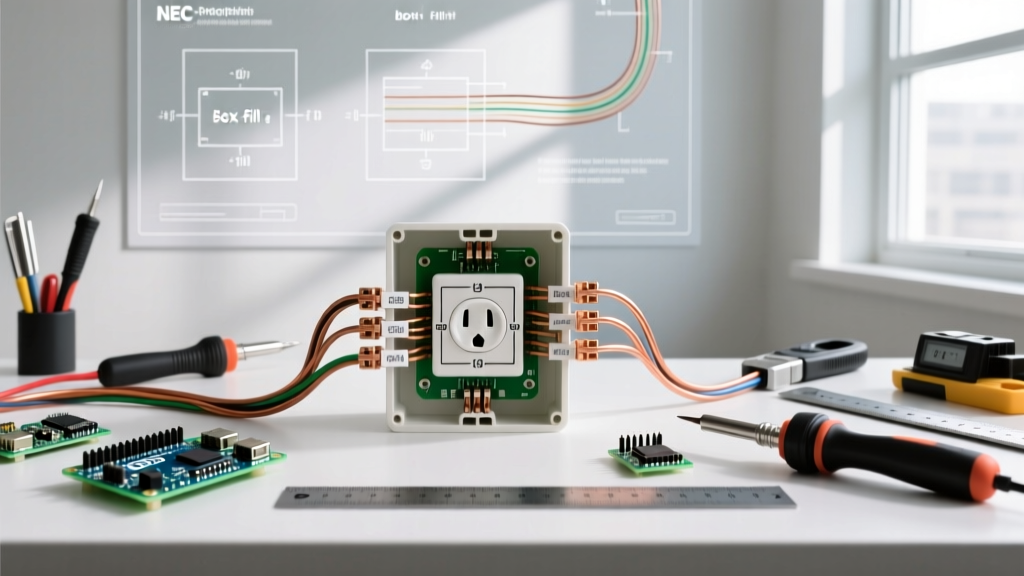
When planning a renovation, importing heavy appliances, or troubleshooting a property in the Iberian Peninsula, understanding the local electrical code is non-negotiable. In Spain, residential and commercial low-voltage installations are strictly governed by the Reglamento Electrotécnico para Baja Tensión (REBT). Unlike the North American NEC (National Electrical Code), the REBT mandates specific circuit topologies, mandatory differential protection, and strict wire gauge thresholds for every electric outlet Spain installation.
Whether you are an expat retrofitting an older Andalusian villa or an electrical engineer designing a modern Madrid apartment, ignoring REBT Instruction ITC-BT-25 (Internal Installations in Homes) will result in failed inspections, voided insurance, and severe shock hazards. This guide breaks down the exact code requirements, wire sizing matrices, and protection mandates you need to know.
The Core Standard: Type F (Schuko) and 230V/50Hz
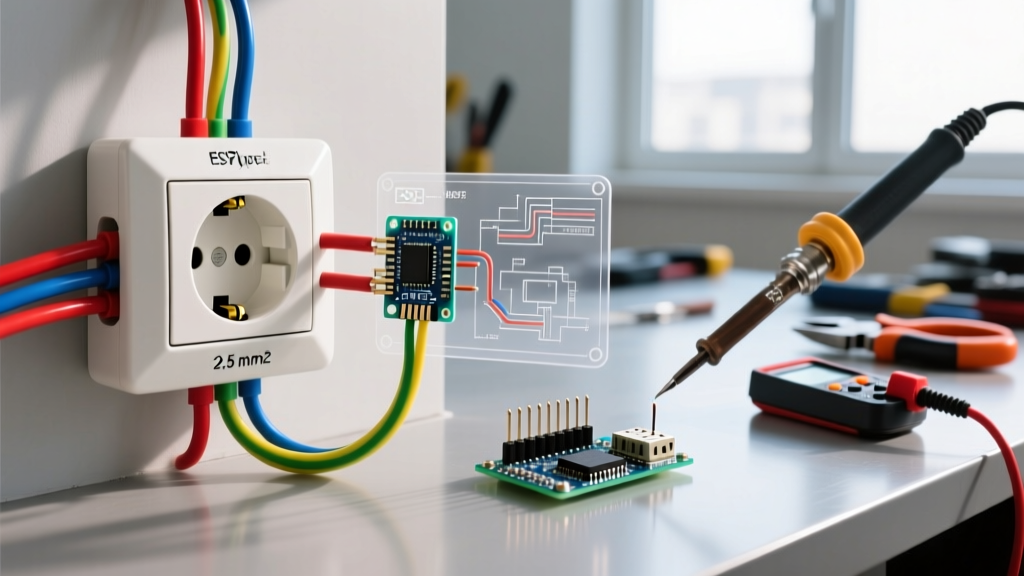
Before pulling any wire, you must understand the physical and electrical baseline of the Spanish grid. Spain operates on a nominal 230V AC at 50Hz single-phase system for residential properties. The mandated receptacle is the Type F (CEE 7/3), universally known as the 'Schuko' socket.
According to the IEC World Plugs database, the Type F standard features two 4.8mm round pins spaced 19mm apart. Crucially, unlike the French/Belgian Type E which uses a protruding grounding pin, the Schuko relies on two grounding clips on the top and bottom edges of the socket. This design allows for reversible plug insertion while maintaining a continuous earth connection.
Expert Insight: Never install Type C (Europlug) receptacles for permanent wall outlets in Spain. While Type C handles ungrounded low-draw devices, the REBT strictly mandates that all fixed wall receptacles must provide a dedicated earth ground via Type F Schuko terminals to comply with modern safety codes.
For a deeper dive into the physical tolerances and historical adoption of this standard across the continent, the World Standards Type F guide provides excellent schematic references for panel cutouts and mounting depths.
REBT Circuit Breaker & Wire Gauge Matrix (ITC-BT-25)
The most common mistake foreign electricians make in Spain is applying NEC wire gauge logic (AWG) to European metric cross-sections. Spanish code dictates minimum copper conductor cross-sections based on the specific circuit's intended load and the corresponding Pequeño Interruptor Automático (PIA) or miniature circuit breaker rating.
Below is the mandatory matrix for standard residential electrification (Electrificación Básica) under REBT ITC-BT-25:
| Circuit ID | Designation | Breaker (PIA) | Min. Wire Gauge (Cu) | Max Outlets/Points |
|---|---|---|---|---|
| C1 | Lighting | 10A | 1.5 mm² | 30 points |
| C2 | General Use Outlets | 16A | 2.5 mm² | 20 points |
| C3 | Electric Oven / Stove | 25A | 6.0 mm² | 1 dedicated point |
| C4 | Washer / Dryer / Water Heater | 20A | 2.5 mm² | 1 dedicated point per appliance |
| C5 | Bathroom & Kitchen Worktop Outlets | 16A | 2.5 mm² | 10 points per circuit |
Critical Note on Wire Sizing: The International Copper Association emphasizes that voltage drop and thermal dissipation in metric wiring must account for ambient temperatures. In southern Spain, where summer ambient temperatures in unventilated wall cavities can exceed 40°C, upgrading a C2 general outlet circuit from 2.5 mm² to 4.0 mm² is a highly recommended best practice to prevent thermal degradation of the PVC insulation over time.
Mandatory Protection: The 30mA Differential Switch
In the Spanish electrical panel (cuadro eléctrico), the main breaker and PIAs are not enough. The REBT mandates the installation of an Interruptor Diferencial (Residual Current Device or RCD) with a maximum sensitivity of 30mA for all circuits supplying outlets and lighting.
Why 30mA?
The 30mA threshold is scientifically calibrated to be just below the human heart's fibrillation threshold. If a person touches a faulty appliance and current leaks to ground through their body, the differential switch detects the imbalance between the live (brown) and neutral (blue) conductors and trips the circuit in under 30 milliseconds.
Class AC vs. Class A Differentials
- Class AC (Standard): Detects purely alternating current leaks. Sufficient for basic resistive loads like toasters and incandescent lighting.
- Class A (Modern Requirement): Detects both AC and pulsating DC leaks. You must use Class A if the circuit supplies modern inverter-driven appliances (washing machines, variable-speed HVAC, LED drivers, or EV chargers). Installing a Class AC breaker on an inverter circuit will result in 'blind spots' where the breaker fails to trip during a DC-component ground fault.
Room-by-Room Outlet Minimums and Zoning
The REBT does not just dictate how to wire an electric outlet; it dictates how many you must install to prevent homeowners from relying on dangerous daisy-chained power strips.
Living Rooms and Bedrooms
A standard living room requires a minimum of 3 general outlets (C2 circuit) plus 1 dedicated TV/audio outlet. Bedrooms require a minimum of 2 general outlets. All must be placed at least 20cm above the finished floor level.
The Kitchen Worktop
The kitchen requires a dedicated C5 circuit. You must install a minimum of 2 outlets above the worktop for small appliances. These must be placed at least 1.10m from the floor and strictly outside the zone directly above the sink or gas burners to prevent water and heat damage.
Bathroom Zones (ITC-BT-27)
Bathroom wiring is heavily restricted by volumetric zones to prevent electrocution in wet environments:
- Zone 0 (Inside tub/shower): Absolutely no outlets or switches permitted.
- Zone 1 (Directly above tub/shower up to 2.25m): No standard outlets permitted. Only specific IPX7 rated lighting or SELV (Separated Extra-Low Voltage) devices allowed.
- Zone 2 (0.6m radius outside Zone 1): Standard 230V electric outlets are prohibited unless they are protected by a 30mA RCD and possess a minimum IPX4 splash-proof rating with a spring-loaded cover. Best practice dictates placing all standard outlets entirely outside Zone 2.
Common Installation Failures & Edge Cases
When working on existing properties, you will inevitably encounter legacy installations that violate modern REBT codes. Here is how to handle the most common edge cases:
The Pre-1973 Ungrounded Edge Case
Properties built before the early 1970s often feature 2-wire systems (no earth ground) with outdated red and black wiring, or even aluminum conductors. You cannot legally install a modern Type F Schuko outlet on an ungrounded circuit. Doing so creates a lethal false sense of security; a user will plug in a grounded appliance, assume they are protected, and receive a fatal shock if the appliance chassis becomes energized. The only code-compliant solution is a complete rewire to the main panel using modern 3-core (brown/blue/green-yellow) copper cable.
False Tripping from Inverter Appliances
If a homeowner complains that their main differential switch trips randomly when the washing machine or solar inverter kicks on, the installer likely used a cheap Class AC differential instead of a Class A or Class F (immune to high-frequency noise) differential. Replacing the main 30mA breaker with a Class A Super-immunized (Superinmunizado) differential switch (such as the Schneider Electric Acti9 iID) resolves 90% of these nuisance trips without compromising safety.
Frequently Asked Questions (FAQ)
Can I use US 120V appliances in a Spanish electric outlet?
No. Spain operates at 230V/50Hz. Plugging a native 120V US appliance into a Spanish Type F outlet without a heavy-duty step-down transformer will instantly destroy the appliance and may cause a fire. Always check the appliance's power brick for an 'Input: 100-240V ~ 50/60Hz' rating; if present, you only need a physical Type F plug adapter, not a voltage converter.
What color code is used for Spanish wiring?
Modern REBT code mandates the IEC harmonized colors: Brown for Line (Live), Blue for Neutral, and Green/Yellow striped for Earth Ground. Older installations (pre-2000s) may use Black for Line and Gray for Neutral. Always verify with a multimeter before touching any conductors.
Do I need a permit to add new outlets?
Adding a single outlet to an existing, legally certified circuit generally does not require a new Boletín Eléctrico (Electrical Certificate). However, adding new dedicated circuits (like a C3 for a new oven or a C9 for HVAC), upgrading the main panel, or rewiring a home requires a licensed instalador autorizado to issue a new Boletín and register it with the local autonomous community's industry ministry.
Conclusion
Wiring an electric outlet Spain installation requires a strict adherence to the REBT, moving away from NEC habits and embracing metric wire gauges, mandatory 30mA differential protection, and strict circuit segmentation. By respecting the ITC-BT-25 matrix and understanding the physical realities of the Type F Schuko standard, you ensure a safe, code-compliant, and highly functional electrical system capable of handling modern European appliance loads.