
Understanding the Costa Rica Electrical Baseline
Whether you are an expat renovating a home in the Central Valley, a DIYer fixing a rental property in Guanacaste, or a local technician updating a commercial space, understanding the local electrical infrastructure is critical. The Costa Rica electric outlet ecosystem operates on a 120V, 60Hz alternating current (AC) grid, which is identical to the United States and Canada. The national utility, the Instituto Costarricense de Electricidad (ICE), enforces installation standards that are heavily based on the US National Electrical Code (NEC), adapted into the local Reglamento Electrotécnico para Instalaciones Eléctricas de Baja Tensión.
Despite sharing the same baseline voltage and frequency as North America, wiring scenarios in Costa Rica present unique challenges. These range from aging ungrounded infrastructure in older San José neighborhoods to severe voltage fluctuations in rural coastal towns, and extreme humidity in Caribbean and rainforest zones. In this guide, we will break down the most common wiring scenarios you will encounter when installing, upgrading, or troubleshooting a Costa Rica electric outlet in 2026.
Costa Rica Electrical Standards Matrix
Before pulling any wire or terminating a connection, verify that your materials align with local code requirements. The table below outlines the foundational specifications for residential and light commercial wiring in Costa Rica.
| Parameter | Costa Rica Standard | Technical Details & Code Notes |
|---|---|---|
| Voltage & Frequency | 120V / 60Hz | Single-phase split 240V available for heavy appliances (dryers, AC). |
| Plug & Receptacle Types | Type A & Type B | NEMA 1-15R (ungrounded 2-prong) and NEMA 5-15R (grounded 3-prong). |
| Wire Color Coding | NEC Standard | Black/Red (Hot), White (Neutral), Green/Bare (Ground). |
| Standard Branch Circuits | 15A & 20A | 14 AWG for 15A circuits; 12 AWG for 20A circuits. Copper only. |
| Average Outlet Cost (2026) | 800 - 4,500 CRC | Standard 15A duplex (~$1.50 USD); Spec-grade surge/GFCI (~$8.00 USD). |
Scenario 1: Upgrading Ungrounded Type A to Grounded Type B
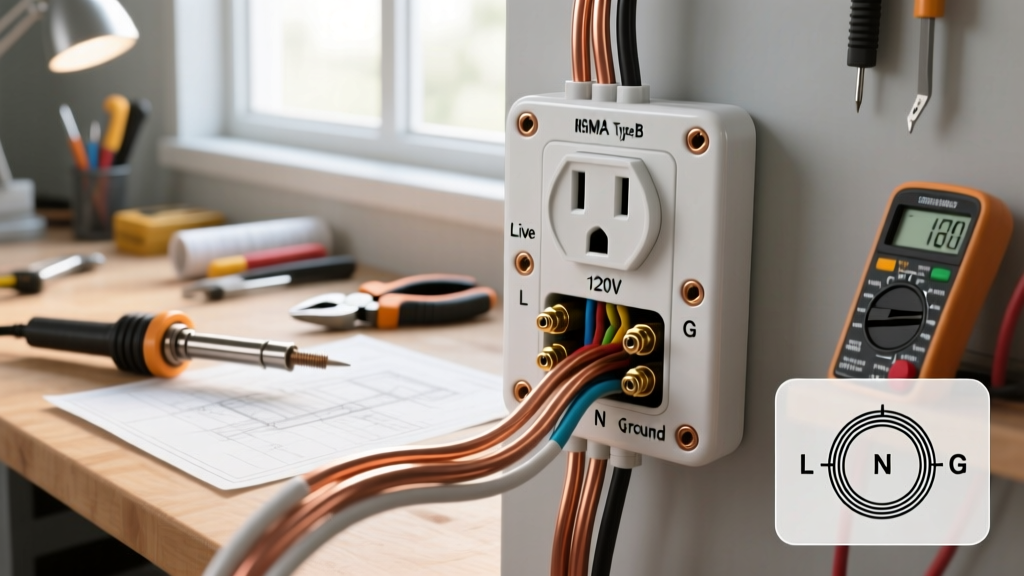
The most frequent wiring scenario in Costa Rica involves replacing legacy, ungrounded 2-prong Type A receptacles with modern, grounded 3-prong Type B (NEMA 5-15R) outlets. In older neighborhoods like Barrio Escalante, San Pedro, or Escazú, original mid-century wiring often lacks an equipment grounding conductor. Simply swapping the faceplate without addressing the ground is a severe safety violation.
Step-by-Step Upgrade Procedure
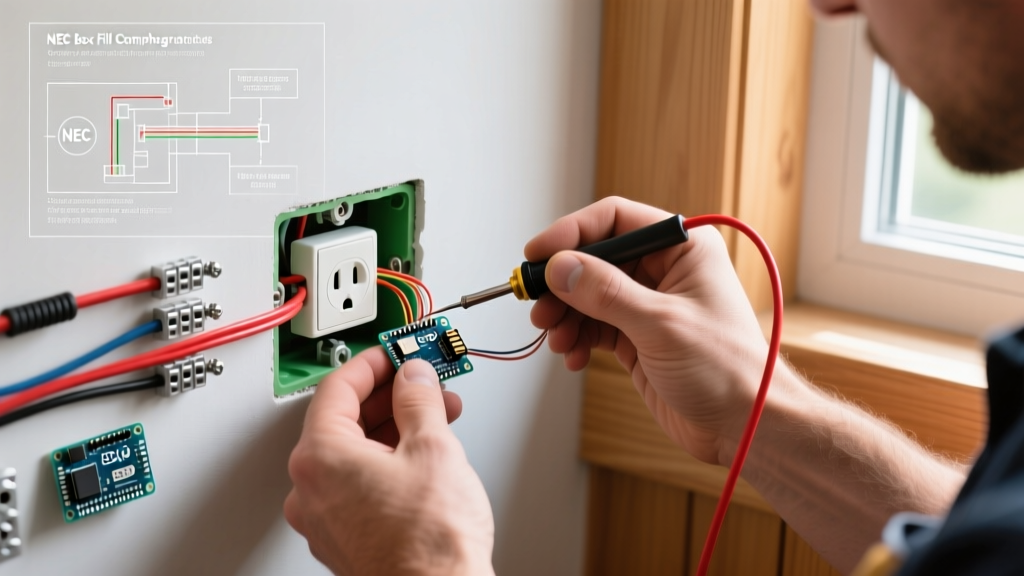
- Verify Box Grounding: Turn off the breaker at the main panel. Remove the old 2-prong outlet. Use a digital multimeter to test between the hot wire (black) and the metal junction box. If you read ~120V, the metal box is grounded via metal conduit (EMT), and you can use a grounding pigtail to attach the new outlet's green ground screw to the box.
- Retrofitting a Ground Wire: If the box is plastic or ungrounded metal, you must run a new 14 AWG or 12 AWG bare copper ground wire back to the panel's ground bar, or to a grounded metal conduit system. The National Electrical Code (NEC), which Costa Rica mirrors, permits retrofitting a separate equipment grounding conductor without replacing the entire cable.
- Termination & Torque: Connect the black wire to the brass screw, white to the silver, and bare/green to the green screw. Modern code requires torquing terminals to manufacturer specifications. For a standard Leviton 5320-WMP 15A receptacle, torque the terminal screws to 14 in-lbs using an insulated torque screwdriver to prevent loose connections and subsequent arcing.
- GFCI Alternative: If running a new ground wire is physically impossible due to masonry walls (common in Costa Rican block construction), you may install a GFCI receptacle (e.g., Leviton SmartlockPro 20912-W) and label it 'No Equipment Ground'. The GFCI will protect against lethal shock, though it will not protect sensitive electronics from surges.
Scenario 2: Mitigating Grid Fluctuations with Surge Outlets
While the Central Valley enjoys relatively stable power, rural and coastal areas—such as Puerto Viejo, Santa Teresa, and parts of Guanacaste—frequently experience voltage sags, brownouts, and lightning-induced surges. Standard NEMA 5-15R outlets offer zero protection against these anomalies, which can destroy expensive appliances and HVAC control boards.
Expert Insight: Whole-house surge protectors at the main ICE meter are excellent, but they do not stop internal surges generated by large inductive loads (like well pumps or AC compressors) cycling on and off within the home. Point-of-use protection is mandatory for sensitive electronics.
Deploying Point-of-Use Surge Receptacles
In these fluctuation-prone scenarios, replace standard duplex outlets with point-of-use surge receptacles like the Leviton 5280-SW or the Eaton SG15R. These devices feature internal Metal Oxide Varistors (MOVs) that clamp transient voltage spikes. When wiring these in a daisy-chain (feed-through) configuration, ensure the LINE and LOAD terminals are correctly identified. Connecting the incoming power to the LOAD terminals will leave the outlet unprotected and may cause the internal thermal fuse to blow prematurely under heavy load. Note that MOVs degrade over time; look for models with an LED indicator that confirms active protection status, and plan to replace them every 5 to 7 years in high-lightning zones.
Scenario 3: High-Humidity GFCI Deployments
Costa Rica's tropical climate means extreme humidity and heavy seasonal rains. Moisture intrusion is the leading cause of nuisance tripping and corrosion in exterior and wet-area outlets. The local electrical code strictly mandates Ground Fault Circuit Interrupter (GFCI) protection in kitchens, bathrooms, laundry areas, garages, and all exterior locations.
- Exterior & Pool Areas: Use only Extra-Duty, weather-resistant (WR) GFCI receptacles housed in 'in-use' bubble covers. Standard WR outlets will corrode internally within a single rainy season (May to November) if water bypasses the faceplate.
- Kitchen Countertops: Code requires GFCI protection for all receptacles serving countertop surfaces. To prevent a single fault from killing power to the entire kitchen, wire the GFCI on the LINE side only, and use standard downstream outlets for the LOAD side, or run individual home runs to the panel.
- Corrosion Prevention: When terminating wires in high-humidity zones, apply a dielectric grease or anti-oxidant compound (like Noalox) to aluminum-to-copper pigtails, though copper-only branch circuits are the standard for modern Costa Rican residential builds.
Scenario 4: Troubleshooting 'Bootleg' Grounds and Edge Cases
When inspecting or upgrading existing wiring, DIYers and electricians frequently encounter dangerous edge cases left behind by unlicensed handymen. The most notorious is the 'bootleg ground'.
Identifying and Fixing the Bootleg Ground
A bootleg ground occurs when a jumper wire is installed between the neutral (silver) terminal and the ground (green) terminal on a 3-prong receptacle. This is done to trick a standard 3-light outlet tester into showing a 'Correct' reading, even though no true ground path exists. This is incredibly dangerous: if the neutral wire breaks upstream, the metal chassis of any plugged-in appliance will become energized at 120V, posing a lethal shock hazard.
How to detect it: A standard 3-light tester will not catch a bootleg ground. You must use a specialized tester like the Amprobe INSP-3 or remove the receptacle from the box to visually inspect for a jumper wire between the neutral and ground screws. If found, remove the jumper immediately. If a true ground wire is not present in the box, you must either pull a new ground wire, replace the outlet with a 2-prong Type A, or install a GFCI receptacle marked 'No Equipment Ground' as permitted by the ANSI/NEMA WD-6 Wiring Devices Standard and local code.
Reverse Polarity in Older Switch Loops
Another common troubleshooting scenario in Costa Rican homes involves switched outlets where the hot and neutral are reversed. In older installations, electricians sometimes used white wires as 'switch legs' (carrying hot power back from a switch to an outlet) without re-identifying them with black tape or paint. If a modern DIYer assumes the white wire is neutral and connects it to the silver screw, the outlet will have reverse polarity. Always use a non-contact voltage tester and a multimeter to verify the actual function of every wire before terminating, regardless of its insulation color.
Final Considerations for Sourcing and Compliance
When sourcing materials for your Costa Rica electric outlet project, avoid cheap, uncertified imports often found in informal hardware markets (ferreterías). Always look for the UL (Underwriters Laboratories) mark or equivalent certification recognized by ICE. Brands like Leviton, Hubbell, Eaton, and Schneider Electric are widely available through authorized distributors in San José and provide the reliability required to pass local inspections and ensure long-term safety in tropical environments.