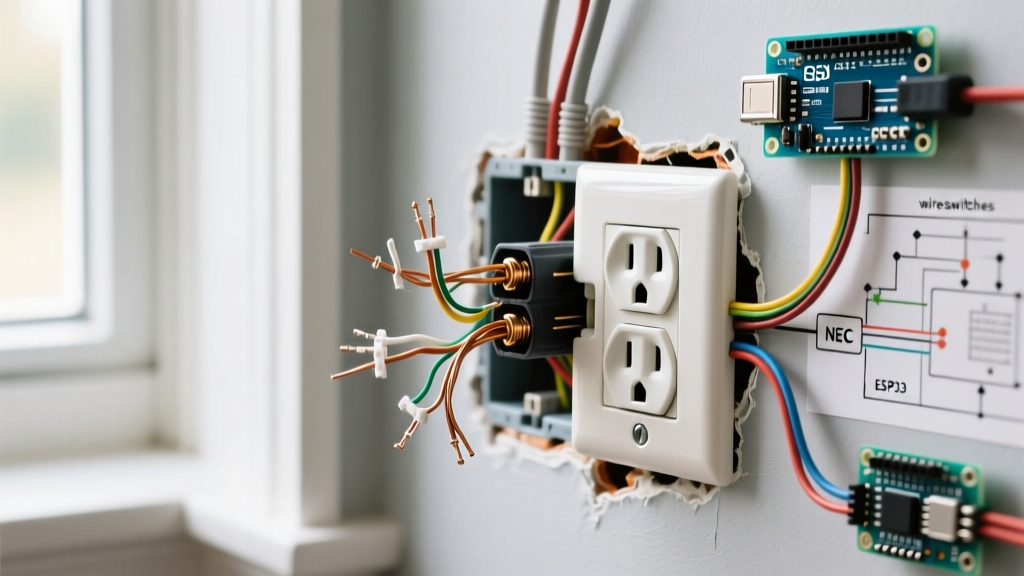

Why Upgrade Your Canada Electric Outlet?
Canada's residential electrical infrastructure in older homes often features outdated 2-prong ungrounded receptacles, non-tamper-resistant designs, or degraded internal contacts. Upgrading a Canada electric outlet is not merely an aesthetic improvement; it is a critical safety intervention governed strictly by the Canadian Electrical Code (CEC), Part I. While the US National Electrical Code (NEC) shares similarities, Canadian regulations enforce unique certification, grounding, and device-specific mandates that DIYers and professionals alike must respect.
Whether you are replacing a loose, sparking 15A receptacle in a 1980s living room or installing a GFCI in a modern kitchen, understanding the specific requirements for Canadian wiring devices ensures your home remains safe, insurable, and legally compliant.
Decoding Certification: CSA vs. cUL vs. UL
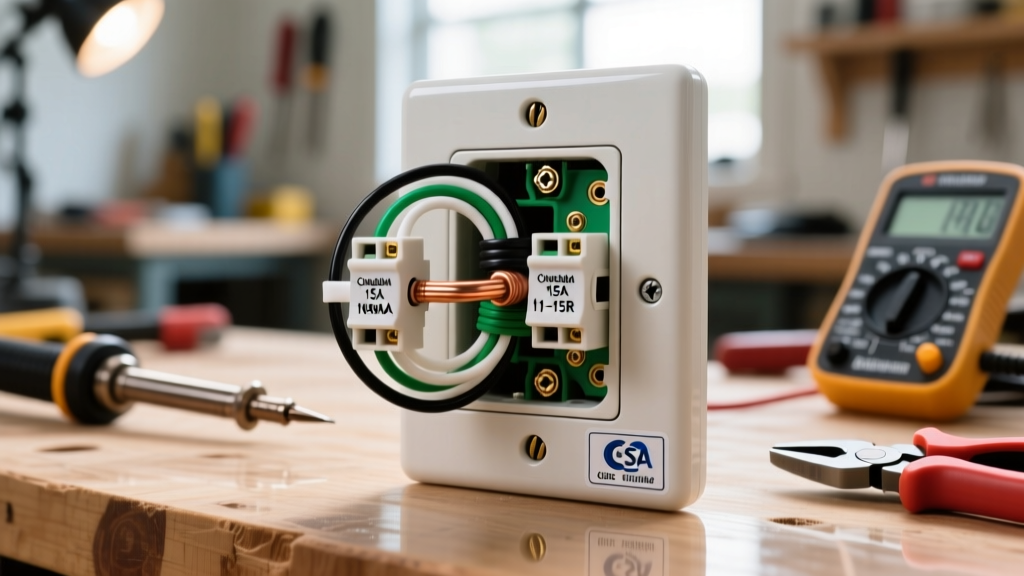
The most common and dangerous mistake when upgrading a Canada electric outlet is purchasing receptacles certified only for the United States. In Canada, electrical products must bear a recognized certification mark. A standard 'UL' (Underwriters Laboratories) mark without the 'c' prefix is illegal for use in Canadian jurisdictions and will fail an Electrical Safety Authority (ESA) inspection.
Expert Warning: Never install multi-pack receptacles sourced from overseas marketplaces that lack a recognized Canadian certification mark. According to Health Canada and federal safety guidelines, uncertified electrical products pose severe fire and shock hazards due to substandard internal alloys and lack of thermal testing.
When shopping for a Canada electric outlet, look for one of these approved marks:
- CSA: Canadian Standards Association (The gold standard in Canada).
- cUL or cULus: UL certified specifically for the Canadian market.
- cETL: Intertek certified for Canadian standards.
The Tamper-Resistant (TR) Mandate
If you are replacing an outlet in a Canadian home, you must install a Tamper-Resistant (TR) receptacle. The CEC mandates TR receptacles in all areas of residential dwelling units. These devices feature internal spring-loaded shutters that only open when equal pressure is applied to both slots simultaneously, preventing children from inserting foreign objects like hairpins or keys.
According to the Electrical Safety Authority (ESA), TR receptacles have been a mandatory requirement for new installations and replacements in Ontario and most other provinces for over a decade. Standard non-TR receptacles are now obsolete for residential branch circuits.
Step-by-Step Canada Electric Outlet Replacement
Follow this precise procedure to ensure a safe, code-compliant installation.
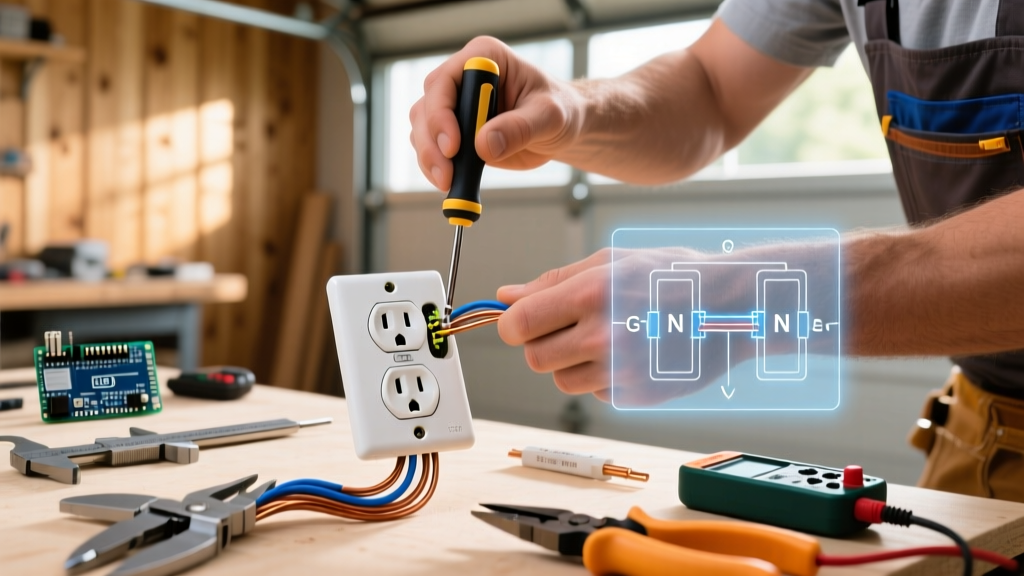
- Isolate and Verify Power: Shut off the 15A or 20A breaker at the main panel. Verify zero voltage using a non-contact voltage tester (e.g., Klein Tools NCVT-3) and a solenoid voltage tester (Wiggler) to confirm the absence of phantom voltage.
- Inspect the Box Depth: Modern TR and GFCI receptacles are significantly deeper than legacy models. Ensure your electrical box has a minimum depth of 1.5 inches (standard) or 2 inches (for GFCI/smart devices) to accommodate the device and wire fill without crimping.
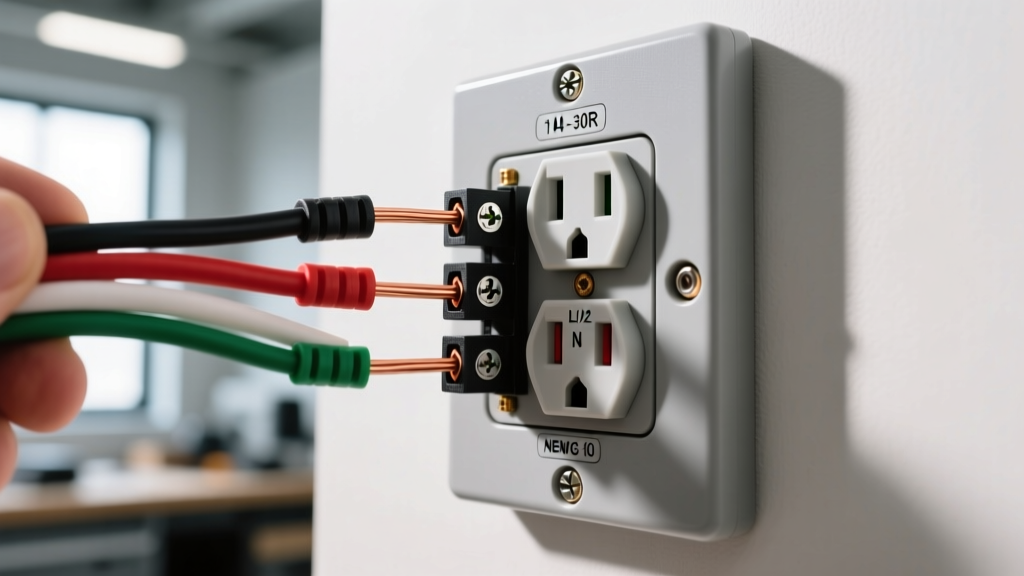
- Prepare the Conductors: Strip the black (hot) and white (neutral) wires to exactly 1/2 inch using the strip gauge on the back of the receptacle. Re-strip wires that are frayed or previously damaged by 'back-stab' push-in connections.
- Terminate and Torque: Wrap the wire clockwise around the terminal screw. Tighten the screw to 14 in-lbs using a calibrated torque screwdriver (e.g., Klein 69020). Proper torque prevents thermal expansion loosening, a leading cause of outlet fires.
- Grounding Verification: Connect the bare copper or green wire to the green grounding terminal. If upgrading from a 2-prong system in an older home with metal conduit, use a grounding pigtail to bond the receptacle to the metal box.
CEC Receptacle Requirements by Room
The Canadian Electrical Code dictates specific protection types based on the room's environmental conditions. Use this matrix to determine the correct Canada electric outlet type for your upgrade.
| Location | Required Outlet Type | CEC Code Reference / Notes |
|---|---|---|
| Kitchens (Within 1.5m of sink) | GFCI / Class A | Must be on a dedicated 20A (5-20R) or split 15A circuit. |
| Bathrooms | GFCI / Class A | Must be on a dedicated 20A bathroom circuit. |
| Bedrooms & Living Rooms | Standard TR (AFCI at breaker) | Arc-Fault Circuit Interrupter (AFCI) protection is required at the panel. |
| Garages & Unfinished Basements | GFCI / Class A | Required for all 15A and 20A, 125V receptacles. |
| Outdoors | GFCI / Weather-Resistant (WR) | Must be paired with an in-use bubble cover. |
Top CSA-Approved Receptacles for 2026 Upgrades
When sourcing a Canada electric outlet, stick to commercial-grade or high-end residential models from established manufacturers. Avoid the cheapest builder-grade options, as their internal brass contacts degrade faster under thermal cycling.
- Leviton 015-TR (Standard 15A TR): Priced around $4.50 CAD. Features heavy-gauge brass contacts and a shallow profile that fits easily into older 1.5-inch boxes. Ideal for living rooms and bedrooms.
- Leviton 8699-G0W (SmartlockPro GFCI): Priced around $38.00 CAD. Includes auto-monitoring (self-test) functionality, which is highly recommended for kitchens and bathrooms where manual monthly testing is often neglected.
- Hubbell GFR5252W (Heavy Duty GFCI): Priced around $42.00 CAD. Known for extreme durability and robust back-wiring clamps, making it the preferred choice for high-traffic garages and workshops.
Edge Case: Handling Aluminum Wiring (1970s Homes)
A significant percentage of Canadian homes built between 1968 and 1977 were wired with solid aluminum branch circuit wiring. Aluminum expands and contracts at a different rate than copper and is prone to oxidation, which increases resistance and heat at the terminal.
If you discover aluminum wiring (identified by a silver color and 'AL' stamping on the cable jacket), you cannot use standard copper-rated receptacles. You must use a device specifically rated CO/ALR (Copper/Aluminum Revised). The Leviton 16352 CO/ALR receptacle (approx. $9.00 CAD) features special indium-plated steel screws that bite through aluminum oxide and maintain a secure, low-resistance connection over time. Alternatively, you can pigtail the aluminum to copper using approved Alumiconn connectors before terminating to a standard TR receptacle.
Frequently Asked Questions
Can I use a 20A receptacle on a 15A breaker in Canada?
Yes. The CEC allows 20A receptacles (NEMA 5-20R) on a 15A branch circuit, provided the circuit supplies multiple receptacles. However, you cannot use 14 AWG wire on a 20A breaker. If your breaker is 20A, you must have 12 AWG wiring and a 20A-rated receptacle.
Why does my new GFCI outlet keep tripping?
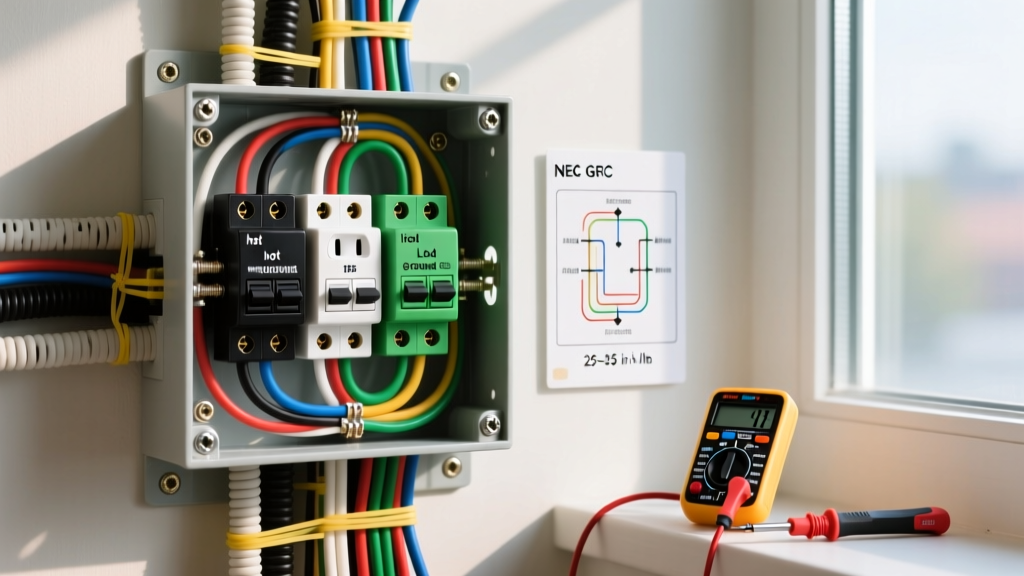
GFCIs are highly sensitive to ground faults (as low as 4-6mA). If a new GFCI trips immediately, check for shared neutrals (a common issue in older Canadian multi-wire branch circuits) or moisture ingress in downstream outdoor boxes. Ensure the LINE and LOAD terminals are not reversed; modern GFCIs will lock out and refuse to reset if wired backward.
Do I need an AFCI receptacle or an AFCI breaker?
In Canada, AFCI protection is typically handled at the panel via an AFCI circuit breaker. While AFCI receptacles exist, they are rarely used in residential Canadian upgrades because the CEC requires the entire branch circuit (from the panel to the first outlet) to be protected, which a receptacle cannot achieve unless it is the very first device on the circuit and the upstream wiring is enclosed in metallic conduit.