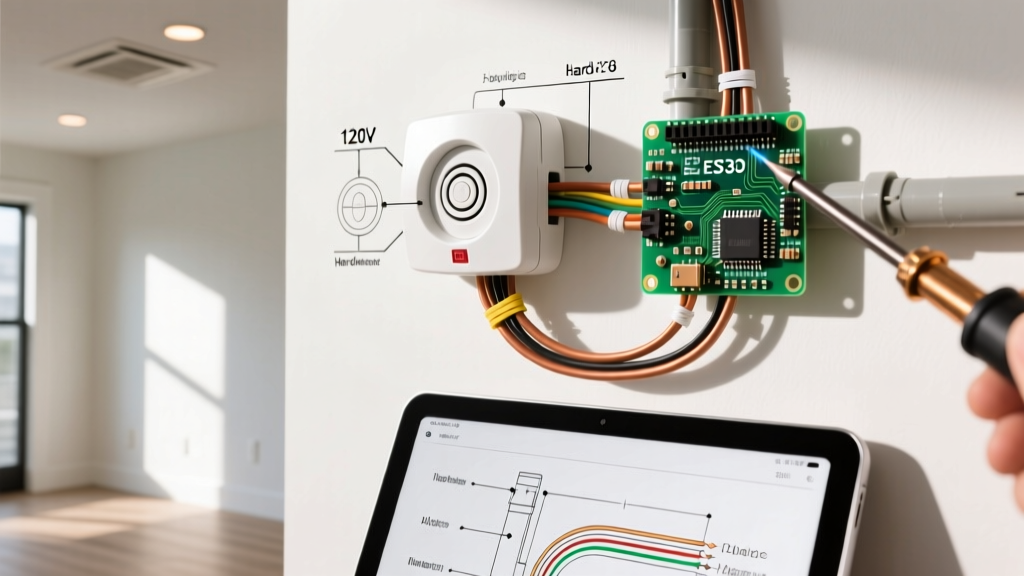

The True Cost of Smoke Alarm Electrical Wiring
Upgrading or installing a hardwired smoke detection system is one of the most critical safety investments you can make in a residential or commercial property. Unlike battery-operated units, hardwired systems draw continuous 120V power and utilize a dedicated interconnect wire, ensuring that if one alarm detects smoke, every alarm in the building sounds simultaneously. However, the smoke alarm electrical wiring process involves distinct cost variables depending on whether you are working with open studs in new construction or fishing wires through finished drywall in a retrofit.
According to the National Fire Protection Association (NFPA), hardwired smoke alarms operate 94% of the time when fires occur, compared to just 82% for battery-powered units. To achieve this level of reliability, proper installation by a licensed electrician is often required by local building codes. This comprehensive 2026 cost estimation guide breaks down material expenses, labor rates, and code-mandated requirements to help you budget your project accurately.
Cost Estimation Matrix: Materials vs. Labor
The financial scope of your project hinges heavily on the structural state of your building. Below is a comparative cost matrix detailing average expenses per alarm drop (including wire run, junction box, and device) based on current 2026 electrical contractor rates.
| Cost Component | New Construction (Open Studs) | Retrofit (Finished Walls) | Primary Cost Driver |
|---|---|---|---|
| Materials (Wire, Box, Alarm) | $35 - $55 per drop | $45 - $75 per drop | Old-work boxes, drywall repair materials, wireless relays |
| Electrician Labor | $45 - $85 per drop | $150 - $350+ per drop | Time spent fishing cables, cutting drywall, and patching |
| Permit & Inspection Fees | $50 - $150 (Flat project fee) | $50 - $150 (Flat project fee) | Local Authority Having Jurisdiction (AHJ) fee schedules |
| Total Estimated Cost (Per Alarm) | $80 - $140 | $195 - $425+ | Structural access and drywall restoration |
New Construction vs. Retrofit: Where the Money Goes
Phase 1: New Construction (Open Studs)
In new construction or full-gut remodels, smoke alarm electrical wiring is highly efficient. Electricians run 14/3 NM-B (non-metallic sheathed) cable directly from the electrical panel to the first alarm location, and then daisy-chain the red interconnect wire to subsequent alarms. Because the walls are open, labor is limited to measuring, cutting, stapling, and terminating. The rough-in phase takes roughly 20-30 minutes per drop, and the trim-out (installing the actual alarms) takes another 15 minutes per unit.
Phase 2: Retrofitting Finished Homes
Retrofitting is where costs escalate rapidly. Running a continuous 14/3 cable through finished ceilings and walls requires specialized tools like flex bits, fiberglass fish tapes, and borescopes. Electricians must cut access holes in the drywall, fish the wire through top plates and fire blocks, and subsequently patch and paint the drywall. If running the physical red interconnect wire is structurally impossible (e.g., crossing between detached structures or through solid masonry), contractors may use wireless interconnect relays (like the Kidde SM120X), though local AHJs must approve this alternative to hardwired interconnects.
Material Breakdown: Wire, Boxes, and Alarms
To ensure your estimate is grounded in reality, you must account for the specific hardware required for a code-compliant 120V interconnect system. Cheaping out on materials leads to nuisance tripping and failed inspections.
- 14/3 NM-B Cable (Romex/Southwire): The industry standard for 15-Amp smoke alarm circuits. The black wire is the 120V hot, the white is the neutral, and the red is the interconnect signal wire. Costs approximately $0.45 to $0.65 per linear foot in 2026.
- Junction Boxes: For new construction, standard 4-inch octagonal nail-on boxes ($1.50 each) are used. For retrofits, old-work remodel boxes with adjustable mounting brackets (e.g., Carlon B618R, approx. $4.00 each) are required to clamp securely to existing drywall.
- The Alarms (120V Hardwired):
- Kidde i12060: A premium ionization alarm with a hush button and front-loading battery backup. Retails for $22 - $28 per unit.
- First Alert SA9120BDCN: A highly reliable, budget-friendly hardwired photoelectric/ionization combo unit. Retails for $16 - $20 per unit.
- AFCI Breakers: Modern electrical codes frequently require Arc-Fault Circuit Interrupter (AFCI) protection for bedroom smoke alarm circuits. A standard 15A AFCI breaker (e.g., Eaton BR115AF or Square D HOM115AFI) costs between $45 and $60, adding a one-time panel upgrade cost to your project.
Navigating NEC Codes and Permit Fees
Electrical inspectors do not take fire safety lightly. Your wiring must comply with both the National Electrical Code (NEC) and NFPA 72 (National Fire Alarm and Signaling Code). The Consumer Product Safety Commission (CPSC) heavily emphasizes adherence to these interconnectivity standards to prevent fatal delays in nighttime fire response.
Code Callout: The 18-Device Limit
Under NFPA 72 guidelines, a single hardwired interconnect loop should not exceed 18 compatible smoke alarms. Furthermore, no more than 12 of those 18 devices can be smoke alarms (the remaining 6 can be heat or CO detectors). Exceeding this limit causes voltage drop on the red interconnect wire, resulting in the alarms failing to trigger simultaneously. If your property requires more than 18 devices, the electrician must split the system into multiple interconnect loops or utilize a commercial fire alarm control panel (FACP).
Permit fees vary wildly by municipality. A simple residential electrical permit might cost a flat $50 in a rural county, while a major city like Chicago or Los Angeles may charge $150+ plus per-inspection fees. Always factor a $150 contingency into your budget for permitting and the mandatory rough-in and final inspections.
Hidden Costs and Edge Cases
When budgeting for smoke alarm electrical wiring, homeowners and project managers frequently overlook secondary expenses that arise during the installation process:
- Panel Capacity Upgrades: If your main electrical panel is maxed out, adding a dedicated 15-Amp AFCI circuit for the smoke alarms may require a panel upgrade or the installation of a subpanel, adding $800 to $2,500 to the overall electrical scope.
- Drywall Restoration: Electricians are not drywall finishers. In retrofit scenarios, the cost of hiring a drywall contractor to patch, tape, mud, and paint the access holes cut for wire fishing can easily add $300 to $600 to the project.
- Smart Home Integration: If you desire smart notifications (e.g., Ring, Nest, or Apple HomeKit), standard hardwired alarms will not suffice. You must purchase smart hardwired alarms like the Nest Protect (approx. $119 each) or install smart relays (like the Ring Retrofit Adapter, approx. $100) at the panel, significantly increasing material costs.
- Asbestos Abatement: In homes built prior to 1980, drilling through ceiling joists or plaster to fish wires may disturb asbestos-containing materials. If an inspector flags this, abatement testing and remediation can halt the project and add thousands in specialized mitigation costs.
Frequently Asked Questions
Can I use 12/2 wire instead of 14/3 for smoke alarms?
No. While 12/2 wire provides the 120V hot and neutral required to power the unit, it lacks the third conductor (the red wire) necessary for the interconnect signal. Without the interconnect wire, the alarms will not communicate with one another, resulting in a failed electrical inspection and a severe safety hazard.
Do hardwired smoke alarms need a dedicated circuit?
The NEC does not strictly mandate a dedicated circuit solely for smoke alarms, allowing them to be tied into a general 15-Amp lighting circuit. However, best practices—and many local AHJs—require a dedicated circuit. This prevents a tripped bedroom lighting breaker from silently disabling your home's primary fire warning system.
How often must hardwired smoke alarms be replaced?
The U.S. Fire Administration (USFA) and all major manufacturers dictate that smoke alarms must be replaced every 10 years from the date of manufacture, regardless of whether they are hardwired or battery-operated. The internal sensors degrade over time, leading to reduced sensitivity or chronic nuisance tripping. Always check the expiration date printed on the back of the unit during your annual testing.