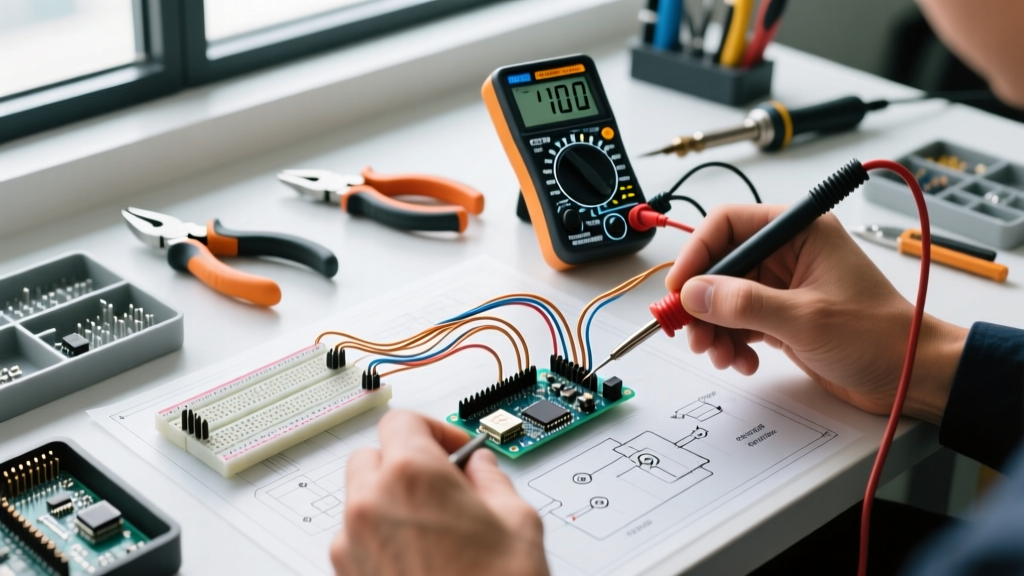

Why Fault-Finding is the Core of Singapore's Wiring Curriculum
When evaluating a comprehensive electrical wiring installation course Singapore institutions offer, prospective students quickly realize that basic wiring is only half the battle. The true mark of a Licensed Electrical Worker (LEW) in Singapore is the ability to systematically troubleshoot complex faults in high-density HDB flats, older landed properties, and commercial spaces. Singapore's unique electrical landscape—characterized by a 230V/50Hz single-phase supply, high ambient humidity averaging 84%, and strict adherence to the SS 638 (Code of Practice for Electrical Installations)—demands a specialized diagnostic approach.
In 2026, the Energy Market Authority (EMA) continues to enforce rigorous safety standards. A single missed earth fault or improperly sized neutral conductor can lead to catastrophic failures or fatal shocks. This guide distills the advanced troubleshooting methodologies taught in top-tier local academies, providing actionable frameworks for diagnosing the most persistent electrical faults found in Singaporean properties.
Essential Diagnostic Tools Taught in Local Academies
Before touching a single termination, students in a rigorous electrical wiring installation course Singapore-based programs provide are trained to rely on calibrated multifunction testers (MFTs). Guesswork is not an option when complying with EMA Regulations and Standards. Below is a comparison of the industry-standard tools utilized by Singaporean electricians in the field.
| Tool Model | Approx. Price (SGD 2026) | Primary Troubleshooting Use Case | SS 638 Compliance Feature |
|---|---|---|---|
| Fluke 1664 FC | $1,850 - $2,100 | Earth fault loop impedance (Zs) and RCD ramp testing in humid HDB environments. | Auto-test sequence for rapid certification. |
| Kyoritsu KEW 6516 | $1,150 - $1,300 | Insulation resistance testing (IR) for detecting moisture ingress in concealed PVC conduits. | Variable test voltage (250V/500V/1000V). |
| Megger MFT1845 | $2,000 - $2,350 | Advanced earth electrode testing and 3-phase loop impedance in commercial DBs. | High-resolution Zs measurement (0.001Ω). |
Troubleshooting Scenario 1: Nuisance RCBO Tripping in HDB Flats
One of the most frequent callouts for Singaporean electricians is nuisance tripping of Residual Current Breakers with Overcurrent protection (RCBOs). In HDB flats, where wiring is often concealed within concrete slabs, high humidity can cause microscopic insulation degradation, leading to cumulative earth leakage.
Step-by-Step Diagnostic Flow
- Isolate and Measure: Turn off the main switch. Disconnect the neutral and live conductors from the suspect RCBO. Perform an Insulation Resistance (IR) test at 500V DC between Live/Neutral and Earth. A reading below 2 MΩ indicates moisture ingress or insulation breakdown.
- The Ramp Test: If IR is healthy, reconnect and perform an RCD ramp test using your MFT. A standard 30mA RCBO must trip between 15mA and 30mA. If it trips at 12mA, the RCBO is overly sensitive or defective and requires replacement.
- Earth Leakage Clamping: Use a high-resolution milliamp clamp meter (e.g., Fluke 368) around the Live and Neutral simultaneously at the DB. If you read 22mA of background leakage from connected appliances (like aging refrigerators or water heaters), a 30mA RCBO will nuisance trip when a high-inrush device like an aircon compressor starts. The fix is to split the circuits and install an additional RCBO.
Expert Insight: Never simply swap a 30mA RCBO for a higher rated one (e.g., 100mA) to stop nuisance tripping. This violates SS 638 regulations for socket outlet protection and removes critical life-safety protection against electric shock.
Troubleshooting Scenario 2: Voltage Drop in Older Landed Properties
Many older landed properties in areas like Katong or Bukit Timah were originally wired with 2.5mm² copper cables for general lighting and socket circuits. With the modern proliferation of high-draw appliances (EV chargers, multi-split inverter aircons), homeowners frequently report dimming lights or appliance shutdowns.
Calculating and Rectifying Voltage Drop
According to SS 638, the maximum permissible voltage drop for lighting circuits is 3% (6.9V) and for other uses is 5% (11.5V) from the intake point. To troubleshoot, measure the voltage at the main DB, then measure at the furthest socket under full load. If the drop exceeds 11.5V, you must upgrade the cable.
- Calculation Example: A 20A load on a 40-meter run of 2.5mm² copper cable (mV/A/m = 18). Voltage drop = (18 x 20 x 40) / 1000 = 14.4V. This exceeds the 11.5V limit.
- The Fix: Upgrade the submain or circuit to 4mm² (mV/A/m = 11) or 6mm² (mV/A/m = 7.3) copper cables. In older homes, this often requires surface-mounted PVC trunking if the original concealed conduits are blocked or collapsed.
Callout Card: The 'Dead Circuit' Diagnostic Matrix
When a circuit fails to energize, use this matrix taught in advanced LEW training modules to isolate the fault rapidly:
- Symptom: MCB trips instantly upon resetting. Probable Cause: Dead short between Line and Neutral, or Line and Earth. Action: Disconnect load, test continuity.
- Symptom: MCB holds, but no voltage at socket. Probable Cause: Broken neutral at the DB neutral bar, or loose termination. Action: Check neutral continuity (Rn) back to DB.
- Symptom: Voltage reads 110V at socket instead of 230V. Probable Cause: High resistance joint or shared neutral fault causing phantom voltage. Action: Perform R1+R2 loop impedance test to find the high-resistance joint.
Troubleshooting Scenario 3: High Earth Fault Loop Impedance (Zs)
Earth fault loop impedance (Zs) is the total impedance of the path that fault current takes back to the source. If Zs is too high, the MCB will not trip fast enough during a short-to-earth fault, risking fire or shock. SS 638 Table 41.3 dictates that for a 32A Type C MCB, the maximum Zs is approximately 1.44Ω.
In Singapore, high Zs readings often occur in industrial estates (like Tuas or Jurong) where long cable runs or corroded earth electrodes are common. To troubleshoot, measure the external earth fault loop impedance (Ze) at the main intake with the main switch off and earthing conductor disconnected. If Ze is already near 1.0Ω, the issue lies with the utility's earth or the main earth electrode. If Ze is low (e.g., 0.2Ω) but Zs at the furthest socket is 1.8Ω, the fault is internal—likely undersized earth conductors or corroded connections within the conduit. Upgrading the Circuit Protective Conductor (CPC) or adding supplementary earth rods is required.
Choosing the Right Electrical Wiring Installation Course in Singapore
If you are looking to master these troubleshooting techniques, selecting the right training provider is critical. Institutions like the BCA Academy and the Institute of Technical Education (ITE) offer WSQ-accredited programs that directly prepare you for the EMA LEW examinations.
As of 2026, expect to invest between SGD 800 for basic WSQ troubleshooting modules, up to SGD 2,500 for comprehensive LEW Grade 7 preparatory courses. Ensure the curriculum explicitly covers hands-on fault-finding on live DB mockups, SS 638 compliance calculations, and the use of modern digital MFTs. For further reading on local safety mandates, always refer to the EMA Electrical Safety Guidelines to ensure your field practices remain compliant with the latest national directives.