
The High-Stakes Intersection of Plumbing and Electrical Code
Septic pumps, sewage ejectors, and effluent pumps operate in some of the most hostile, corrosive, and high-stakes environments in residential and commercial electrical systems. Unlike a standard sump pump that merely moves groundwater, a septic pump handles Category 3 blackwater. An electrical failure or nuisance trip doesn't just mean a wet floor; it results in a severe biological hazard and thousands of dollars in remediation. As we navigate the 2026 NEC adoption cycle and evolving local health codes, understanding the precise electrical requirements for these systems is non-negotiable for contractors and advanced DIYers.
This guide breaks down the National Electrical Code (NEC) standards governing septic pump electrical wiring, focusing on motor circuit sizing, the ongoing GFCI controversy, underground trenching rules, and mandatory alarm integrations. For foundational code references, we rely on the standards outlined by the National Fire Protection Association (NFPA 70) and environmental guidelines from the EPA's Septic Systems Overview.
NEC Article 430: Motor Circuit Sizing and Overcurrent Protection
Septic pumps are classified as motors under NEC Article 430. You cannot simply size the wire and breaker based on the pump's wattage or standard receptacle rules. Motor circuits require specific calculations to handle the massive inrush current (Locked Rotor Amps) that occurs when the pump starts.
Real-World Calculation: Goulds 1/2 HP Sewage Ejector
Let's use a highly common residential pump: the Goulds Water Technology GSL2012 (1/2 HP, 115V, Sewage Ejector). The manufacturer's spec sheet lists the Full Load Amps (FLA) at 9.8A.
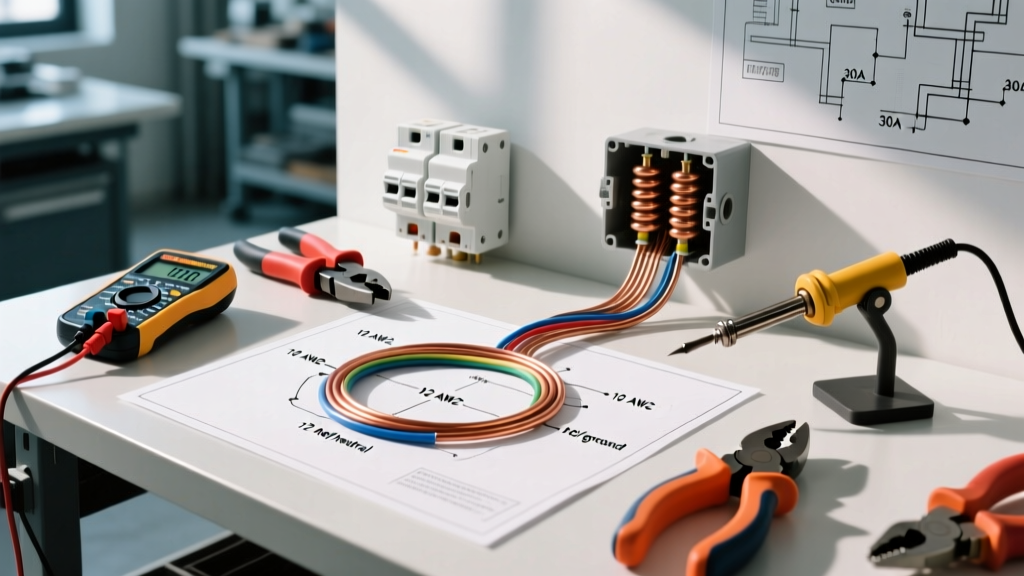
- Conductor Sizing (NEC 430.22): Branch circuit conductors must be sized at 125% of the motor's FLA. 9.8A x 1.25 = 12.25A. While 14 AWG copper is rated for 15A, most local jurisdictions and best practices mandate a minimum of 12 AWG for all pump circuits to mitigate voltage drop over long outdoor runs.
- Overload Protection: Handled internally by the pump's built-in thermal overload switch, which trips if the motor overheats due to a jammed impeller.
- Short-Circuit & Ground-Fault Protection (NEC 430.52): The branch circuit breaker is sized to allow the motor to start without tripping. For an inverse-time breaker, the maximum rating is 250% of the FLA. 9.8A x 2.5 = 24.5A. The next standard breaker size down (or up, if necessary to start) is a 20A breaker. Therefore, a 20A breaker on a 12 AWG circuit is the code-compliant sweet spot.
The GFCI Controversy: Sump Pumps vs. Sewage Ejectors
One of the most debated topics in modern electrical inspections is Ground-Fault Circuit Interrupter (GFCI) protection for pumps. NEC 210.8(D) explicitly requires GFCI protection for sump pumps in dwelling units. But does a sewage ejector count as a sump pump?
Code Interpretation Note: Many Authorities Having Jurisdiction (AHJs) interpret the term 'sump pump' broadly to include any pump located in a basement or crawlspace pit, including sewage ejectors. However, applying standard 5mA GFCI protection to a septic pump often leads to nuisance tripping due to the high moisture, humidity, and minor capacitive leakage inherent in submersible pump cables. A tripped GFCI on a septic pump guarantees a sewage backup.
The Code-Compliant Workaround
To satisfy both electrical safety and plumbing reliability, industry experts recommend the following configuration:
- Hardwire the Pump: If the pump is hardwired into a junction box or control panel rather than plugged into a 125V, 15A/20A receptacle, NEC 210.8(D) receptacle rules do not apply. Article 430 motor rules take precedence.
- Dedicated Circuit: The septic pump must be on a dedicated 20A circuit with no other loads.
- GFPE Consideration: While personnel protection (GFCI) might be bypassed via hardwiring, Ground-Fault Protection of Equipment (GFPE) at 30mA is sometimes specified by engineers for commercial septic lift stations to protect the motor windings without nuisance tripping.
Underground Feeder and Trenching Standards (NEC Table 300.5)
Running power from the main dwelling to an exterior septic tank or remote lift station requires strict adherence to burial depths. Septic environments involve heavy machinery (vacuum trucks) and shifting soil. According to Electrical Contractor Magazine's code analysis, improper burial depth is a top reason for failed outdoor inspections.
| Wiring Method | Minimum Burial Depth | Code Notes & Best Practices |
|---|---|---|
| UF-B Cable (Direct Burial) | 18 Inches | Can be reduced to 12 inches if GFCI protected and max 120V/20A. Not recommended under septic tank access lids. |
| PVC Conduit (THWN-2) | 18 Inches | Use Schedule 80 PVC where the conduit transitions above ground or under driveways to prevent crushing. |
| Rigid Metal (RMC/IMC) | 6 Inches | Overkill for most residential septic systems, but useful in commercial lift stations with extreme surface loads. |
Pricing Note: As of 2026, 12/2 UF-B cable averages $2.15 per foot, while 3/4-inch Schedule 80 PVC conduit runs about $1.80 per foot. Conduit is highly preferred because it allows you to pull new wires if the septic tank settles and damages the line.
Control Panels, Alarms, and IPC Compliance
The International Plumbing Code (IPC) and most local health departments mandate that any sewage ejector or septic pump system must feature a high-water alarm. If the primary float switch fails or the pump burns out, the alarm alerts the homeowner before raw sewage breaches the floor drain.
Recommended Equipment: SJE-Rhombus Omni R-Series
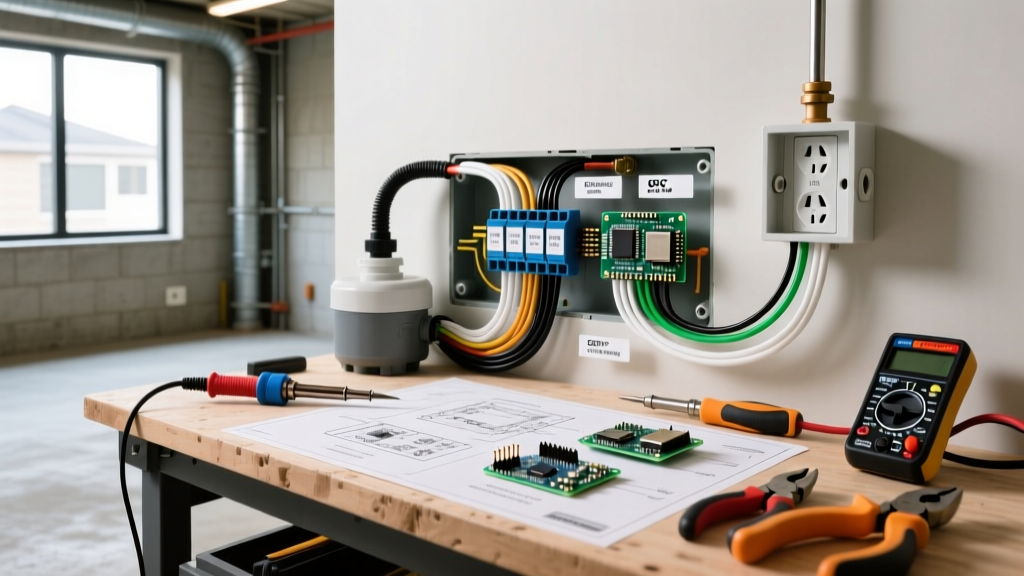
For a robust, code-compliant setup, the SJE-Rhombus Omni R-Series Simplex Control Panel (approx. $315 - $380) is the industry standard. This panel includes:
- A heavy-duty contactor to handle the motor's inrush current, prolonging the life of the float switches.
- A Hand-Off-Auto (HOA) switch, allowing manual override during maintenance or emergencies.
- Dedicated alarm relay terminals for connecting a 120V outdoor strobe/siren and a smart-home Wi-Fi water leak sensor.
Wiring the Floats: Use tethered, wide-angle float switches (like the SJE Rhombus Master) rather than vertical switches. Wide-angle floats are less likely to become tangled in debris or toilet paper, which is a common failure mode in septic tanks.
Grounding and Corrosion Mitigation in Hostile Environments
Septic tanks generate hydrogen sulfide gas, which is highly corrosive to standard electrical components and bare copper. NEC Article 250 governs grounding, but the environment demands extra precautions.
- Equipment Grounding Conductor (EGC): Per NEC 250.122, a 20A circuit requires a minimum 12 AWG copper EGC. Do not rely on the metal conduit or the pump's structural chain for grounding.
- Corrosion-Resistant Fittings: Use dielectric unions or brass/stainless steel fittings where the electrical conduit meets the pump pit. Standard zinc-plated steel straps and fittings will rust through within 24 months in a septic environment.
- Junction Box Placement: Never mount the primary electrical junction box directly above the tank access riser. Mount it at least 5 feet away on a treated post or the exterior of a nearby structure to keep it out of the immediate corrosive gas plume.
7-Point Inspection Checklist for AHJ Approval
Before calling for your final electrical and plumbing inspections, verify these specific code points to ensure a smooth sign-off:
- Dedicated Circuit: Verified the pump is on a dedicated 20A breaker with no shared loads.
- Wire Sizing: Confirmed 12 AWG copper minimum, sized at 125% of motor FLA.
- Disconnecting Means: Ensured a visible disconnect (or a lockable breaker) is within sight of the pump or control panel (NEC 430.102).
- Alarm Functionality: Tested the high-water alarm by manually lifting the backup float switch; verified both audible and visual alerts trigger.
- Trenching Depth: Measured trench depth at 18 inches minimum before backfilling, with warning tape placed 12 inches above the conduit.
- Conduit Sealing: Applied duct seal or expanding foam at the conduit ends to prevent moisture and sewer gases from migrating into the dwelling's electrical panel.
- Labeling: Applied permanent, weather-resistant labels to the breaker panel reading: 'SEPTIC PUMP - DO NOT TURN OFF'.
Proper septic pump electrical wiring is about balancing the strict mathematical requirements of motor circuits with the harsh, unforgiving reality of wastewater environments. By adhering to NEC Article 430, understanding the nuances of GFCI application, and integrating mandatory alarm systems, you ensure a system that is both legally compliant and operationally bulletproof.