
The True Cost of Replacing Electrical Wiring in 2026
Whether you are restoring a mid-century home, upgrading a property to support Level 2 EV chargers, or mitigating the fire hazards of aging aluminum branch circuits, replacing electrical wiring is one of the most invasive and capital-intensive home improvement projects you can undertake. In 2026, the national average to completely rewire a home ranges from $7,500 to $18,500, though this fluctuates wildly based on regional labor rates, wall accessibility, and the latest National Electrical Code (NEC) mandates.
According to the National Fire Protection Association (NFPA), electrical failures or malfunctions account for tens of thousands of home fires annually. Outdated wiring systems—such as knob-and-tube, ungrounded cloth-sheathed cables, or pre-1972 aluminum wiring—are not just code violations; they are severe liabilities that can cause insurance companies to drop your coverage entirely. This guide provides a granular, 2026 cost estimation framework to help you budget accurately for a full or partial home rewire.
Baseline Cost Matrix by Home Size
The most reliable way to estimate a whole-house rewire is by calculating the linear footage of wire required and the number of circuit terminations. Below is the 2026 pricing matrix for a standard single-family residential rewire, assuming standard drywall construction and a 200-amp service panel.
| Home Size (Sq. Ft.) | Estimated Cost Range (2026) | Average Labor Hours | Typical Circuit Count |
|---|---|---|---|
| 1,000 - 1,200 | $4,800 - $9,500 | 60 - 90 hours | 14 - 18 circuits |
| 1,500 - 1,800 | $7,200 - $14,000 | 90 - 130 hours | 20 - 26 circuits |
| 2,000 - 2,500 | $9,800 - $19,500 | 130 - 180 hours | 28 - 36 circuits |
| 3,000+ | $14,500 - $28,000+ | 180 - 250+ hours | 40+ circuits |
Material Costs: Wire Types and Gauges
Material costs typically represent 25% to 35% of the total rewire budget. In 2026, copper prices remain volatile, making the choice of wire type and gauge a significant budget variable. Most residential remodels utilize Non-Metallic Sheathed Cable (NM-B), commonly referred to by the brand name Romex.
Standard NM-B Cable Pricing (Per Linear Foot)
- 14/2 AWG (15-Amp Lighting Circuits): $0.45 - $0.55 / ft. Used strictly for lighting and low-draw receptacles in bedrooms and living areas.
- 12/2 AWG (20-Amp Receptacle Circuits): $0.60 - $0.75 / ft. The standard for kitchen, bathroom, and general-use outlet circuits.
- 10/3 AWG (30-Amp Dryer/HVAC): $1.85 - $2.30 / ft. Required for heavy appliances.
- 6/3 AWG (50-Amp Range/EV Charger): $3.80 - $4.50 / ft. Essential for modern electric ranges and Level 2 electric vehicle charging stations.
Pro-Tip for Open-Wall Rewires: If your walls are already open for a gut renovation, electricians can pull individual THHN/THWN copper wires through flexible metal conduit (FMC) or EMT. While the material cost for THHN wire and conduit is roughly 15% higher than NM-B, it offers superior heat dissipation and physical protection, which is highly recommended for high-load smart-home server closets and EV charging bays.
Labor Variables: Open Walls vs. Fishing Closed Walls
Labor is the most unpredictable variable when replacing electrical wiring. Licensed master and journeyman electricians in 2026 charge between $85 and $165 per hour, depending on the metropolitan area. The condition of your walls dictates the labor approach:
Scenario A: Open Walls (Gut Rehab / New Addition)
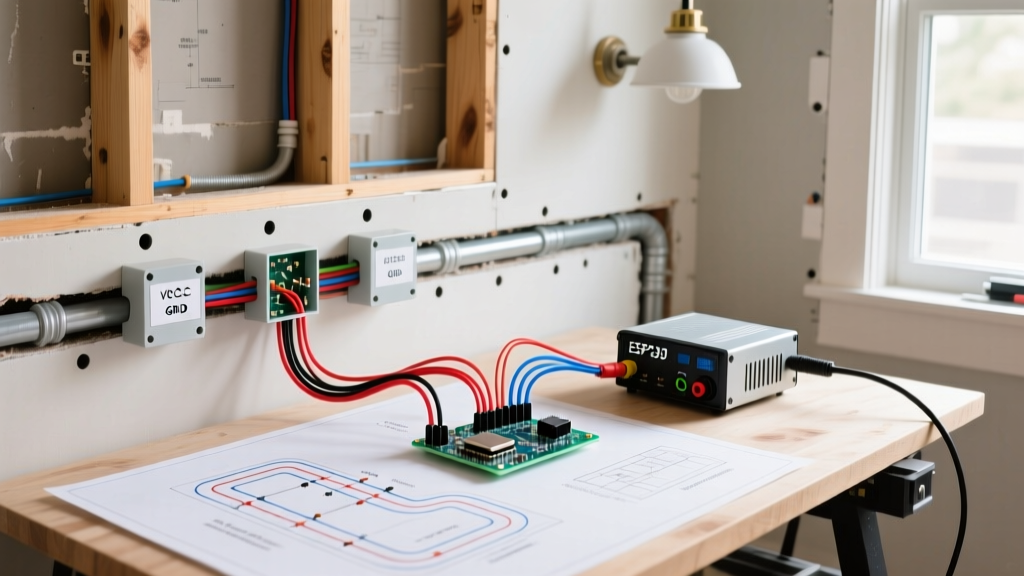
When the drywall is removed, electricians can staple NM-B cables to studs rapidly. An open-wall rewire is highly efficient, reducing labor time by up to 40%. You will only pay for the electrical rough-in, the finish trim-out, and the drywall replacement (which is handled by a separate contractor).
Scenario B: Closed Walls (Fishing and Cutting)
If you are living in the home and want to avoid a full demolition, electricians must "fish" wires through existing wall cavities. This involves:
- Strategic Cutting: Cutting 4x4 inch access holes behind baseboards, near the top plates, and behind outlet boxes.
- Fish Tape & Glow Rods: Using fiberglass glow rods and steel fish tape to navigate fire blocks, insulation, and plumbing stacks.
- Patch and Paint: You will incur secondary costs for a drywall contractor to patch the access holes. Expect to pay $2.50 to $4.50 per square foot for drywall repair, mudding, taping, and painting.
2026 NEC Code Upgrades Impacting Your Budget
You cannot simply replace old wiring with identical modern equivalents; the new installation must meet the current locally adopted code, which in most jurisdictions in 2026 is the 2023 National Electrical Code (NEC). Compliance adds specific hardware costs to your estimate:
- AFCI Protection: Arc-Fault Circuit Interrupter (AFCI) breakers are now mandatory for almost all living spaces (bedrooms, living rooms, hallways, closets). Standard breakers cost $8; AFCI breakers cost $35 to $55 each. For a 30-circuit panel, this adds $800 to $1,400 in breaker costs alone.
- GFCI Protection: Ground-Fault Circuit Interrupters are required in kitchens, bathrooms, garages, and outdoors. GFCI receptacles cost $18 to $25 each, or you can use GFCI breakers ($45 to $60 each).
- Whole-House Surge Protection: The NEC now mandates a Type 1 or Type 2 surge protective device (SPD) at the main service panel. Budget $150 to $300 for the SPD unit and installation labor.
- Exterior Emergency Disconnect: New code requires an exterior emergency disconnect for one- and two-family dwellings. If your main panel is indoors, you must install an outdoor disconnect switch, adding $250 to $450 to the project.
Hidden Costs and Edge Cases
When budgeting for replacing electrical wiring, homeowners frequently overlook secondary complications that can inflate the final invoice by 20% or more.
1. Main Panel Upgrades
Older homes with 60-amp or 100-amp fuse boxes or early breaker panels cannot support modern electrical loads. Upgrading to a 200-amp main breaker panel (such as a Square D Homeline or Siemens load center) costs between $1,800 and $3,200. If your utility drop and meter base also need upgrading to handle 400-amp service for dual EV chargers, expect to pay upwards of $5,500.
2. Asbestos and Lead Abatement
Homes built before 1980 often contain asbestos in floor tiles, pipe insulation, or old wire sheathing, and lead paint on baseboards. If an electrician disturbs these materials while fishing wires, work must stop. Environmental testing and abatement can cost $1,500 to $4,000 before electrical work can safely resume. The Consumer Product Safety Commission (CPSC) strongly advises professional assessment of older wiring insulation before any physical disturbance.
3. Permit and Inspection Fees
Do not skip permits. Unpermitted electrical work will void your homeowner's insurance and cause massive hurdles during a future real estate transaction. Municipal electrical permits typically cost $150 to $600 depending on the valuation of the project, plus potential re-inspection fees if the rough-in fails the first time.
When to Replace vs. When to Add Circuits
Not every aging home requires a full gut-rewire. Use this decision framework to determine your scope of work:
| Wiring Condition | Recommended Action | Estimated Cost Impact |
|---|---|---|
| Active Knob-and-Tube or Cloth Sheathed | Full Replace. Insulation is brittle, lacks a ground wire, and is uninsurable. | High ($10k+) |
| Pre-1972 Aluminum Branch Wiring | Full Replace or COPALUM Crimp. High risk of thermal expansion and fire at receptacle terminals. | High ($8k - $15k) |
| Ungrounded 2-Prong Copper (1950s-1960s) | Partial Replace / Upgrade. Wire is safe if insulation is intact, but lacks equipment ground. Replace with 12/2 NM-B for safety and modern appliance support. | Medium ($4k - $8k) |
| Grounded Copper (1970s-Present) but lacking capacity | Add Circuits / Panel Upgrade. Existing wire is safe. Simply run new dedicated 20-amp or 50-amp lines for new appliances. | Low ($1k - $3k) |
Final Checklist for Hiring an Electrical Contractor
To ensure your replacing electrical wiring project stays on budget and meets 2026 safety standards, require the following from your contractor before signing:
- Itemized Material List: Ensure they specify the brand (e.g., Southwire, Cerro) and exact gauge of NM-B cable to be used.
- Panel Schedule Guarantee: The contract must include the creation of a meticulously labeled panel schedule directory, a code requirement often ignored by hasty contractors.
- Drywall Repair Clause: Clearly define who is responsible for patching access holes. Most electrical contracts explicitly exclude drywall repair, meaning you must hire a separate finishing crew.
- Proof of Licensing and Insurance: Verify their state Master Electrician license and ensure they carry a minimum of $1M in general liability insurance.
Replacing electrical wiring is a foundational investment in your home's safety, efficiency, and resale value. By understanding the granular costs of materials, labor, and modern code compliance, you can approach your 2026 remodel with financial confidence and zero surprises.