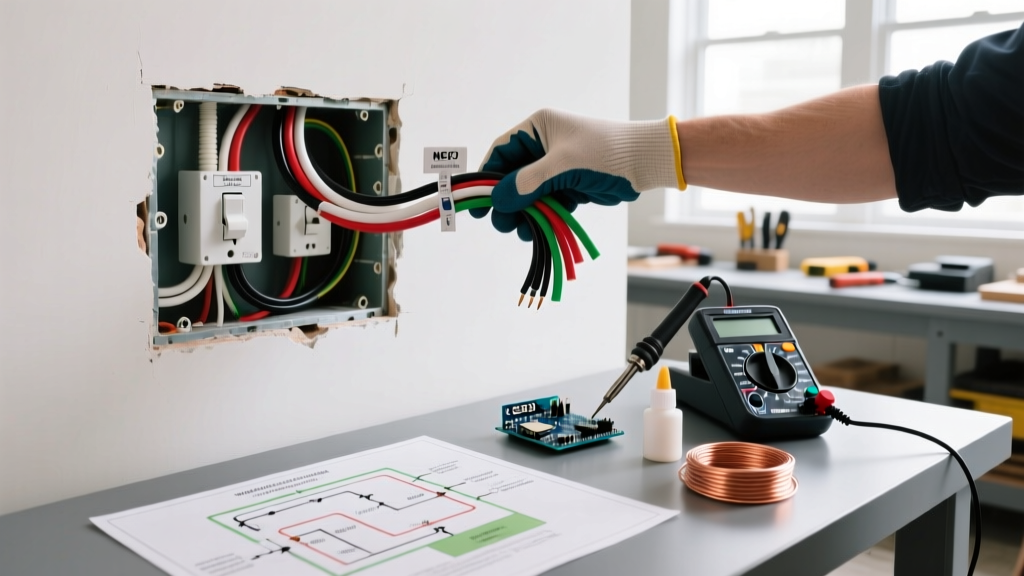

Why Your Renovation Needs a Pre-Inspection Strategy
When planning a home remodel, the electrical rough-in and final inspections are often the most stressful bottlenecks in the construction timeline. Failing a municipal inspection doesn't just mean paying a $75 to $150 re-inspection fee; it halts drywall installation, delays cabinet deliveries, and pushes back your entire project completion date. As municipalities accelerate their adoption of the latest National Electrical Code (NEC) standards throughout 2025 and 2026, inspectors are utilizing advanced thermal imaging and digital torque verification to enforce stricter safety margins.
Whether you are finishing a basement, upgrading a kitchen, or adding a new home office, understanding the exact parameters of an electrical wiring inspection is critical for renovation planning. This guide breaks down the precise measurements, code triggers, and common failure modes you must address before the inspector arrives.
The Two Phases of Renovation Inspections
Every major wiring remodel requires a two-step inspection process. Planning your contractor's schedule around these phases is vital.
- The Rough-In Inspection: Conducted after all cables are pulled and boxes are mounted, but before any insulation or drywall is installed. The inspector verifies cable routing, protection, stapling, and box fill calculations.
- The Final Inspection: Conducted after drywall is finished, painted, and all devices (receptacles, switches, hardwired appliances) are terminated. The inspector tests circuit polarity, grounding continuity, GFCI/AFCI functionality, and torque specifications.
Critical NEC Code Triggers for Remodels
Renovations often trigger 'grandfathering' clauses to expire, meaning the newly renovated space must be brought up to current code. According to the National Fire Protection Association (NFPA), the NEC is updated every three years, and local jurisdictions adopt these updates on staggered timelines. Below are the most common code articles that trip up DIYers and general contractors during renovations.
| NEC Article | Renovation Scenario | Inspector Focus & Requirement |
|---|---|---|
| 210.12 (AFCI) | Adding circuits to bedrooms, living rooms, or kitchens | Requires Combination-Type Arc-Fault Circuit Interrupters to protect the entire branch circuit. |
| 210.8 (GFCI) | Kitchen countertop replacements or bathroom vanity updates | All 125V, 15A/20A receptacles within 6 feet of a sink or serving countertops must be GFCI protected. |
| 406.12 (TR) | Replacing old receptacles in family areas | All new or replaced receptacles in dwelling units must be Tamper-Resistant (TR) to prevent child insertion injuries. |
| 300.4 (Protection) | Running NM-B cable through wooden studs | Mandates nail plates if cable is less than 1.25 inches from the face of the framing member. |
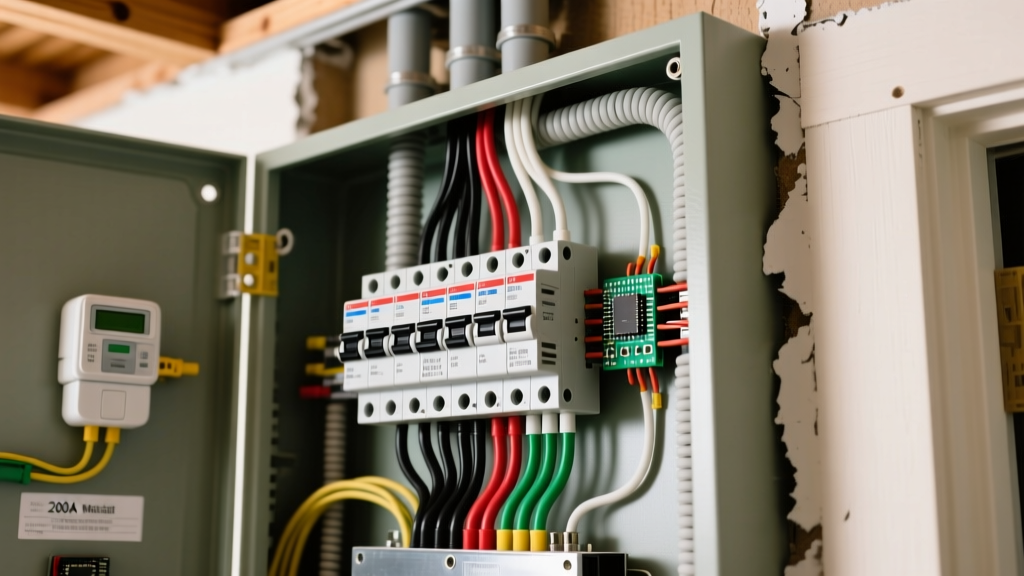
| 110.14(D) (Torque) | Terminating wires in the main service panel | Requires the use of a calibrated torque screwdriver to tighten lugs to manufacturer specifications. |
The Rough-In Inspection: What the Inspector Measures
During the rough-in phase, the inspector is looking for physical damage risks and fire hazards hidden behind the walls. Do not schedule your drywall crew until you have personally verified the following metrics:
1. Stapling and Securing (NEC 334.30)
Nonmetallic-sheathed cable (NM-B, commonly known as Romex) must be secured within 8 inches of a single-gang box without a cable clamp, or within 12 inches of a box with an internal clamp. After that, the cable must be stapled every 4.5 feet. Inspectors will physically tug on cables near boxes; if there is too much slack, you will fail.
2. Nail Plate Placement (NEC 300.4)
If you drill a hole through a 2x4 stud to run a cable, the edge of the hole must be at least 1.25 inches from the face of the stud. If this clearance cannot be maintained (common when running cables parallel to studs or near door jambs), you must install a 1/16-inch thick steel nail plate to prevent drywall screws from piercing the wire later.
3. Box Fill Calculations (NEC Article 314)
Overcrowded junction boxes cause heat buildup and short circuits. Inspectors calculate box fill based on the largest conductor entering the box. For 12 AWG wire, each conductor counts as 2.25 cubic inches. A standard 18-cubic-inch single-gang box can hold a maximum of eight 12 AWG conductors. Remember: A receptacle counts as two conductors, and all ground wires combined count as one conductor. When in doubt, upgrade to a 'deep' 22.5-cubic-inch box.
The Final Inspection: Termination and Testing
The final inspection is highly technical. In 2026, many municipal inspectors carry digital receptacle testers (like the Amprobe INSP-3) that log voltage drop and ground impedance data on the spot.
Expert Tip: Never assume a receptacle is wired correctly just because it powers a lamp. Inspectors test for 'bootleg grounds' (where a jumper wire connects the neutral to the ground screw to trick a basic tester). This is an immediate fail and a severe shock hazard.
Mandatory Torque Verification
Under NEC 110.14(D), electrical connections must be tightened to the manufacturer's specified torque. Loose neutrals in a multi-wire branch circuit (MWBC) can cause catastrophic overvoltage on 120V appliances. Inspectors will frequently ask to see the torque screwdriver (e.g., Klein Tools 32308 or Wiha insulated torque driver) used on the panel, and may use a dial torque gauge to spot-check breaker lugs.
AFCI and GFCI Verification
Inspectors will press the 'TEST' button on every AFCI breaker and GFCI receptacle. Furthermore, they will verify that downstream receptacles protected by a GFCI device are properly labeled with the included 'GFCI Protected / No Equipment Ground' stickers if a true ground wire was not available in older renovations.
Navigating Older Homes: Hidden Inspection Traps
Renovating a home built before 1980 introduces legacy wiring that inspectors scrutinize heavily. The Electrical Safety Foundation International (ESFI) warns that mixing old and new systems without proper transition hardware is a leading cause of residential fires.
- Knob and Tube (K&T) Wiring: You cannot simply splice modern NM-B cable into active K&T wiring inside a wall cavity. Inspectors will require a documented transition in an accessible junction box, or a complete circuit replacement.
- Aluminum Branch Wiring: Common in homes built between 1965 and 1973. Standard copper-to-aluminum wire nuts (even the purple Ideal 65 connectors) are no longer accepted by many strict jurisdictions for branch circuit splices. Inspectors now look for CPSC-recommended solutions like AlumiConn lug connectors or COPALUM crimps.
- Ungrounded 3-Prong Receptacles: If your renovation involves replacing two-prong ungrounded receptacles with three-prong versions, you must either run a new ground wire to the panel, install a GFCI receptacle (and label it 'No Equipment Ground'), or use a GFCI breaker.
Budgeting and Scheduling for Inspections
Proper renovation planning requires budgeting for inspection logistics. Here is what you should expect in the current market:
Municipal vs. Third-Party Inspectors
Most cities include the first rough-in and final inspection in your initial permit fee (typically $150 to $400 depending on project valuation). However, if you fail, re-inspection fees apply. In high-growth areas where municipal backlogs exceed two weeks, general contractors often hire licensed third-party electrical inspectors (authorized by the local building department) for $125 to $200 per visit to keep the project moving.
The 'Pre-Inspection' Walkthrough
For large renovations (whole-house rewires or major additions), hire a master electrician for a 2-hour pre-inspection walkthrough ($250 to $400). They will use a thermal camera to check for hot spots in temporary panels and verify box fill math, saving you thousands in drywall tear-down costs if a municipal inspector finds a hidden violation.
Final Planning Takeaways
A successful electrical wiring inspection is not about luck; it is about meticulous adherence to physical measurements and code intent. By planning your material purchases (deep boxes, nail plates, torque screwdrivers) and scheduling your subcontractors around the distinct rough-in and final phases, you will ensure your renovation passes on the first try, keeping your budget intact and your timeline on track.