
The True Cost of Push In Connectors for Electrical Wiring in 2026
For decades, the twist-on wire nut was the undisputed king of residential and commercial electrical splices. However, the mass adoption of lever-nut technology has fundamentally shifted how electricians and DIYers approach junction boxes. When budgeting a remodel or new construction project, understanding the cost of push in connectors for electrical wiring requires looking beyond the sticker price of the components. You must evaluate material costs, labor time savings, box-fill physics, and long-term reliability.
This 2026 cost estimation guide breaks down the exact financial impact of transitioning from traditional twist-on connectors to modern push-in and lever-nut terminals, featuring real-world pricing, labor math, and critical edge cases that can make or fail your electrical inspection.
Material Cost Matrix: Lever Push-Ins vs. Inline Push-Ins vs. Wire Nuts
Not all push-in connectors are created equal. The market is currently dominated by lever-actuated connectors (which accept stranded and solid wire) and inline push-in connectors (which typically accept solid wire only). Below is the 2026 retail and bulk pricing breakdown for the most common models used in North American wiring.
| Connector Type | Brand / Model | Wire Compatibility | Avg. Cost (Per Unit) | Bulk Cost (Per 100-Pack) |
|---|---|---|---|---|
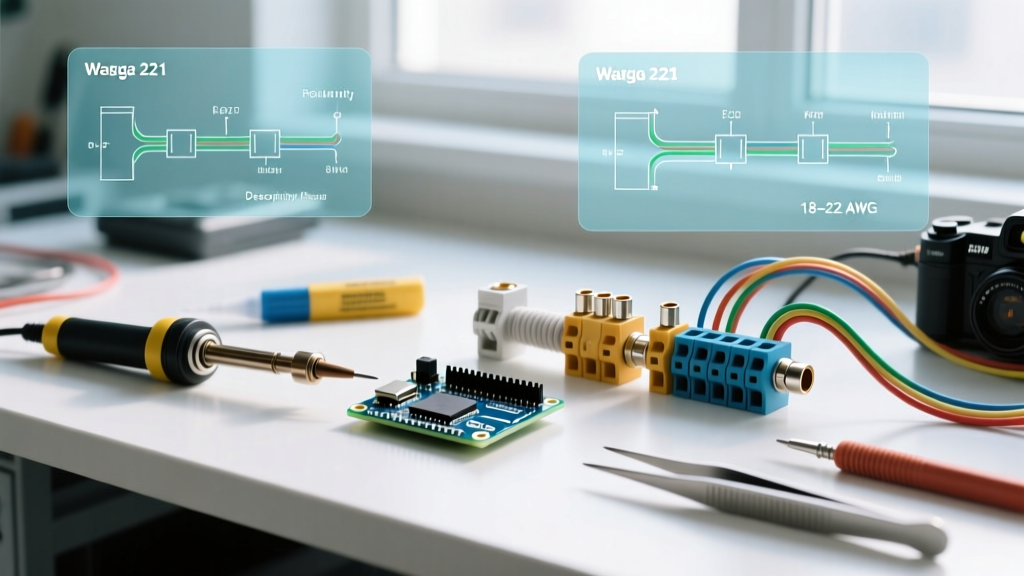
| Lever Push-In (3-Port) | Wago 221-413 | Solid, Stranded, Fine-Stranded | $0.34 | $29.50 |
| Lever Push-In (5-Port) | Wago 221-415 | Solid, Stranded, Fine-Stranded | $0.48 | $42.00 |
| Inline Push-In (3-Port) | Ideal In-Sure (Purple) | Solid Wire ONLY | $0.19 | $15.00 |
| Twist-On Wire Nut | Gardner Bender / Ideal (Red) | Solid, Stranded | $0.04 | $3.80 |
Critical Failure Mode Warning: Never use inline push-in connectors (like the standard Ideal In-Sure) on stranded wire. The internal brass grab-clip is designed exclusively for solid copper. Inserting stranded wire can result in a loose connection, high resistance, and eventual thermal arcing. Always use lever-nuts (like the Wago 221 series) when splicing stranded or fine-stranded wires, such as those found in modern LED drivers or smart home pigtails.
The Hidden ROI: Labor Time and Installation Savings
If you only look at material costs, wire nuts win by a landslide. A standard red wire nut costs roughly $0.04, while a Wago 221-413 costs $0.34. However, professional electricians in 2026 are billing between $95 and $135 per hour. The true ROI of push in connectors for electrical wiring is realized in labor reduction.
Time Study: Splicing 3 Wires in a Standard Outlet Box
- Traditional Wire Nuts: Strip wires (3s), align and twist wires with linemans pliers (8s), thread wire nut and tug-test (6s), wrap with electrical tape if required by local spec (5s). Total: ~22 seconds.
- Lever Push-In Connectors: Strip wires to the gauge mark (3s), flip lever, insert wire, close lever (4s per wire x 3 = 12s). Total: ~15 seconds.
While a 7-second savings per splice seems trivial, consider a 2,500 sq. ft. new construction home requiring approximately 600 individual splices. Saving 7 seconds per splice yields 4,200 seconds (70 minutes) of pure labor savings. At $110/hour, you save $128 in labor per house, entirely offsetting the $140 premium spent on lever connectors over wire nuts.
Project-Based Cost Estimates (2026 Pricing)
To help you budget your specific project, here are two common scenarios comparing the total splice costs (materials + estimated labor time value).
Scenario A: Single Room Remodel (15 Receptacles, 3 Switches, 1 Light)
Assuming an average of 4 splices per device box and 6 splices in the ceiling junction box:
- Total Splices: ~78
- Wire Nut Material Cost: $3.12 (assuming 10% waste)
- Wago 221 Material Cost: $26.52
- Labor Savings: ~9 minutes ($16.50 value)
- Verdict: For small DIY remodels, wire nuts remain cheaper out-of-pocket. However, for DIYers lacking the wrist strength or technique to twist 12 AWG solid copper tightly, the $23 premium for Wagos is a worthwhile insurance policy against loose neutrals.
Scenario B: Whole House Rewire (2,500 Sq Ft, ~600 Splices)
- Total Splices: ~600
- Wire Nut Material Cost: $24.00
- Wago 221 Material Cost: $204.00 (buying in bulk 50-packs)
- Labor Savings: ~70 minutes ($128.00 value at standard journeyman rates)
- Verdict: The net cost difference narrows to roughly $50. When factoring in the reduced callback rate for loose connections and the ease of future troubleshooting, lever push-ins are the superior financial choice for whole-home projects.
Technical Edge Cases: Box Fill and Aluminum Wiring
When estimating costs, you must account for secondary materials and code compliance. Two major edge cases frequently trip up estimators and DIYers.
1. The NEC Box Fill Myth vs. Physical Reality
Under NFPA 70 (NEC) Article 314.16, wire connectors (both twist-on and push-in) do not count toward the calculated box fill allowance. Only the wires, clamps, devices (yokes), and grounding wires consume your calculated cubic inch allowance.
However, Wago 221 connectors are physically bulkier than wire nuts. A standard 14-cubic-inch shallow remodel box can easily pass NEC calculated fill with four 12 AWG cables and a receptacle, but physically stuffing four Wago 221-415 connectors into that same box will result in a cramped, difficult installation that risks damaging drywall or popping the device out of the yoke. Cost implication: When using lever nuts, upgrade to 18-cu-in or 22-cu-in deep boxes, adding roughly $0.40 to $0.80 per box to your material estimate.
2. Aluminum to Copper Pigtailing
If you are estimating a repair for a home with 1970s-era aluminum branch wiring, standard push-in connectors are a severe fire hazard unless specifically rated or treated. You must budget for:
- Wago Alu-Plus Contact Paste: ~$12 per tube (fills the connector to prevent galvanic corrosion).
- Ideal Purple Wire Nuts or Alumiconn Lugs: Required if not using the Alu-Plus paste with Wagos. Alumiconn lugs cost roughly $4.50 each, drastically increasing the per-box estimate but providing the safest, most code-compliant permanent repair recognized by the Electrical Safety Foundation International (ESFI).
Pros and Cons Summary for Estimators
| Factor | Lever Push-In Connectors (e.g., Wago 221) | Traditional Twist-On Wire Nuts |
|---|---|---|
| Material Cost | High ($0.30 - $0.50 / unit) | Low ($0.03 - $0.08 / unit) |
| Labor Speed | Fast (No twisting, easy on wrists) | Slow (Requires pliers, taping, tug-testing) |
| Stranded Wire Support | Excellent (Lever clamps securely) | Poor to Fair (Strands can splay and break) |
| Physical Box Space | High (Requires deeper junction boxes) | Low (Conforms to wire shape) |
| Troubleshooting | Easy (Built-in test ports for multimeter) | Difficult (Must unwrap tape and unscrew) |
Final Estimation Advice for 2026
If you are a contractor bidding a commercial tenant improvement or a full residential rewire, the cost of push in connectors for electrical wiring should be classified as a labor-offset material. The upfront material cost will increase your bid by roughly 8% to 12% in the rough-in phase, but the reduction in man-hours and the near-elimination of callback repairs for 'dead outlets' will increase your net profit margin on the job. For DIYers tackling a single room, stick to wire nuts to save cash, but invest in a box of Wago 221s for complex light fixture splices where stranded and solid wires must meet.