
What Is Pigtail in Electrical Wiring? The Core Concept
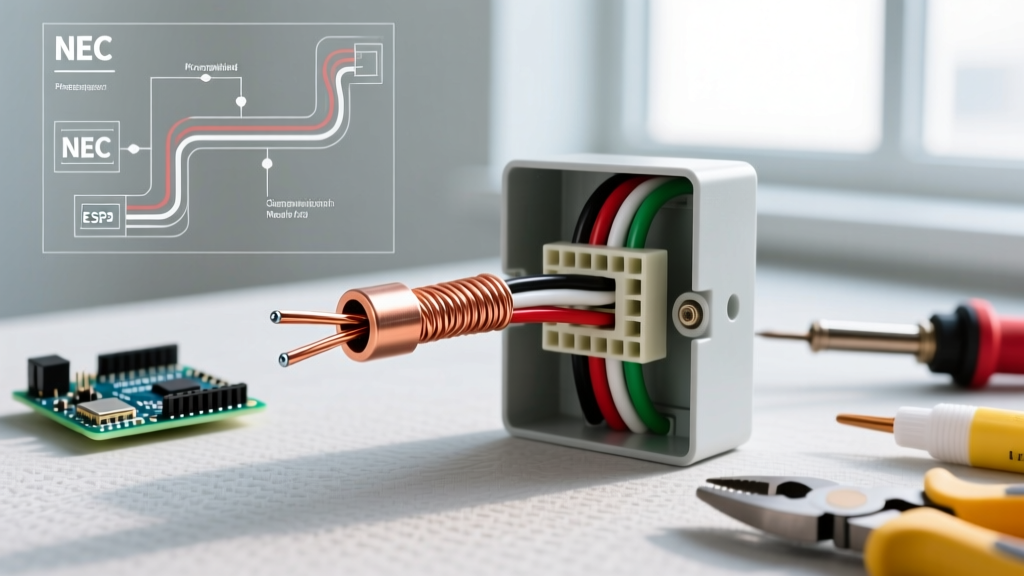
When upgrading or troubleshooting home circuits, you will frequently encounter the term 'pigtailing.' But what is pigtail in electrical wiring exactly? A pigtail is a short length of wire (typically 6 inches) used to bridge the main circuit conductors to a terminal on an electrical device, such as a receptacle or switch. Instead of connecting the incoming 'line' wire and the outgoing 'load' wire directly to the two terminal screws on the side of a receptacle—a method known as daisy chaining or pass-through wiring—the line and load wires are joined together with the pigtail using a wire connector. The single pigtail wire is then terminated at the device's terminal screw.
From a safety and reliability standpoint, pigtailing is the gold standard in residential and commercial electrical work. It ensures that the downstream circuit does not rely on the internal brass or steel contact plates of the receptacle to carry current. If a daisy-chained receptacle fails, melts, or is removed for replacement, all downstream devices lose power. Worse, it can create severe shock hazards and arcing faults.
NEC Mandates: Why Pigtailing is a Code Requirement
The National Electrical Code (NEC) does not explicitly ban daisy chaining hot wires on standard single-phase receptacles, but it strictly mandates pigtailing for neutral (grounded) conductors in specific scenarios. Understanding these rules is critical for passing inspections and preventing catastrophic electrical fires.
NEC Article 300.13(B): Neutral Continuity
According to NEC Article 300.13(B), the continuity of a grounded (neutral) conductor cannot depend on device connections. This means you must pigtail the neutral wire in any multi-wire branch circuit (MWBC) or any circuit where the neutral serves downstream loads. If you remove a receptacle to replace it, the neutral path to the rest of the circuit must remain unbroken.
The MWBC Danger: A Multi-Wire Branch Circuit shares a single neutral wire between two 120V hot legs on opposite phases. If you daisy-chain the neutral through a receptacle and that receptacle is removed, the neutral is broken. The two 120V legs will then series through connected appliances, creating a 240V overvoltage event that will instantly destroy 120V electronics and ignite fires.
NEC 110.14(D): Torque Specifications
When terminating your pigtail to the receptacle, NEC 110.14(D) requires that connections be torqued to the manufacturer's specified values. For most standard 15A and 20A commercial-grade receptacles (like the Leviton T5262 or Hubbell 5262), the required torque is between 12 and 14 inch-pounds. Relying on hand-tightening is no longer code-compliant; professionals use calibrated tools like the Klein Tools 695 torque screwdriver to ensure the pigtail is clamped securely without stripping the terminal threads.
Step-by-Step: How to Safely Pigtail a Receptacle
Executing a proper pigtail requires the right materials and precise preparation. Here is the professional workflow for a 20-ampere, 12 AWG circuit.
1. Gather Code-Compliant Materials
- Wire: 12 AWG THHN/THWN-2 solid copper (approx. $0.18 per foot in 2026 retail pricing). Cut two 6-inch pigtails (one black for hot, one white for neutral).
- Strippers: Klein Tools 11063W (set to strip exactly 3/4 inch of insulation, matching the receptacle's wire gauge guide).
- Connectors: Wago 221-413 lever nuts (approx. $0.50 each) or Ideal Twister 341 blue wire nuts (approx. $0.12 each). Lever nuts are highly recommended for their visual connection verification and resistance to vibration loosening.
- Tester: Fluke 117 True-RMS multimeter or Klein NCVT-4 non-contact voltage tester.
2. Verify De-energization
Shut off the 20A breaker at the panel. Test the existing receptacle with your NCVT-4, then verify zero voltage on the Fluke 117 between hot and neutral, and hot and ground. Live-dead-live testing is a mandatory safety protocol.
3. Prepare the Conductors
Strip 3/4 inch of insulation from the incoming line wire, the outgoing load wire, and both ends of your 6-inch pigtails. Do not nick the copper conductor; a nicked wire creates a high-resistance hotspot that can melt the connector over time.
4. Make the Splice
Insert the line wire, load wire, and the corresponding pigtail into a Wago 221-413 lever nut. Flip the levers down. The Wago 221 series is rated for 32A and 600V, providing a gas-tight, maintenance-free connection that easily fits inside a standard 18-cubic-inch electrical box.
5. Terminate and Torque
Loop the pigtail clockwise around the brass (hot) or silver (neutral) terminal screw. This ensures the screw pulls the loop tighter as it is turned clockwise. Use your torque screwdriver set to 14 in-lbs to secure the screw. Fold the wires neatly into the back of the box, keeping the ground wire separated from the current-carrying conductors to prevent inductive interference.
Comparison: Pigtailing vs. Daisy Chaining
To understand why pigtailing is the superior safety practice, compare it directly to the traditional pass-through (daisy chain) method.
| Feature | Daisy Chaining (Pass-Through) | Pigtailing |
|---|---|---|
| Downstream Reliability | Poor. Device failure breaks the circuit. | Excellent. Downstream circuit remains active. |
| Neutral Continuity (MWBC) | Code Violation. High risk of 240V overvoltage. | Code Compliant. Neutral path is unbroken. |
| Box Fill Volume | Lower. Fewer connectors needed. | Higher. Requires space for wire nuts/levers. |
| Troubleshooting | Difficult. Must test multiple devices to find fault. | Easy. Fault is isolated to the specific splice. |
| Heat Dissipation | Poor. Current passes through device yoke. | Excellent. Current bypasses device internals. |
Common Failure Modes and Edge Cases
Even when pigtailing, electricians can introduce safety hazards if they ignore specific edge cases. Avoid these critical errors:
Backstabbing (Push-In Terminals)
Never insert your pigtail into the rear push-in (backstab) holes of a receptacle. These spring-loaded contacts are notorious for loosening under thermal cycling. According to data analyzed by the U.S. Consumer Product Safety Commission (CPSC), high-resistance connections at push-in terminals are a leading cause of residential electrical receptacle fires. Always use the side terminal screws and torque them properly.
Undersized Wire Nuts
Using a yellow wire nut for three 12 AWG wires is a severe fire hazard. The spring inside will not exert enough pressure, leading to arcing. If using traditional twist-on connectors, use a blue Ideal Twister 341 or a gray 340 for three 12 AWG solid conductors. If in doubt, switch to Wago lever nuts, which have clearly marked strip lengths and clamp independently on each wire.
Mixing Aluminum and Copper
If you are pigtailing in an older home (built between 1965 and 1973) with aluminum branch wiring, you cannot simply twist copper pigtails to aluminum wires. The galvanic reaction and differing thermal expansion rates will cause the connection to fail and catch fire. You must use a COPALUM crimp (performed by a licensed specialist) or an AlumiConn lug connector, which uses independent ports and antioxidant paste to safely bridge the two metals. Standard purple 'CO/ALR' wire nuts are no longer considered a permanent repair by most insurance underwriters.
Frequently Asked Questions (FAQ)
Can I pigtail a ground wire?
Yes, and you should. All ground wires in a metal or plastic box must be tied together with a pigtail that connects to the green grounding screw on the receptacle. If using a metal box, the ground must also be bonded to the box itself using a green grounding clip or a 10-32 ground screw.
How long should an electrical pigtail be?
NEC 300.14 requires that at least 3 inches of free conductor be left at each junction box for splices and terminations. However, a 6-inch pigtail is the industry standard because it provides enough slack to easily fold into the back of the box without putting strain on the wire connector, while not being so long that it causes box-fill violations.
Do I need to pigtail GFCI receptacles?
GFCI receptacles have dedicated 'LINE' and 'LOAD' terminals. You must pigtail the incoming power to the LINE terminals. However, if you are protecting downstream standard receptacles, the downstream wires go to the LOAD terminals. Do not pigtail the line and load wires together on a GFCI, as this will bypass the ground-fault protection circuitry and render the GFCI useless.
Final Thoughts on Electrical Safety
Understanding what a pigtail is in electrical wiring is foundational to safe, code-compliant installations. By abandoning the daisy-chain method in favor of pigtailing, you isolate device failures, maintain critical neutral continuity, and drastically reduce the risk of arc faults. Always consult the latest NEC guidelines and expert analyses before opening an electrical panel, and use a calibrated torque screwdriver to ensure every connection is mechanically sound.