
The Hidden Dangers of Legacy Electrical Color Codes
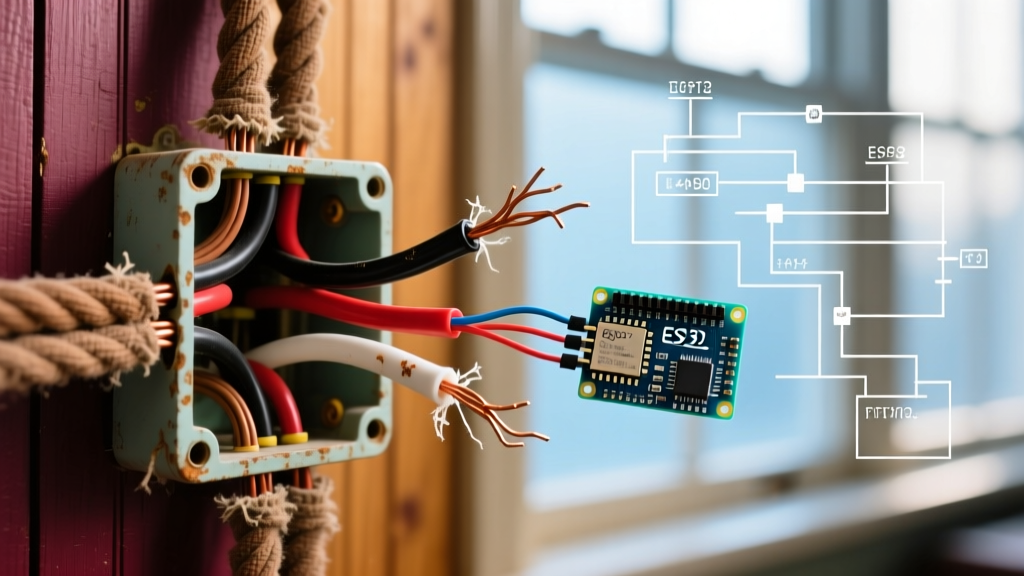
Opening a junction box or removing a receptacle cover in a pre-1970s home often reveals a confusing, brittle mess of wires. For homeowners, remodelers, and DIY enthusiasts, understanding old electric wiring colours is not merely an exercise in historical curiosity—it is a critical safety requirement. Unlike modern NM-B (Romex) cables, which strictly adhere to current National Electrical Code (NEC) color standards, legacy wiring was manufactured during an era of shifting regulations, regional variations, and inconsistent manufacturing practices.
As we navigate the 2023 and upcoming 2026 NEC cycles, the emphasis on retrofitting older homes with AFCI (Arc-Fault Circuit Interrupter) and GFCI (Ground-Fault Circuit Interrupter) protection has made identifying and properly handling legacy wiring more important than ever. Misinterpreting a faded white wire as a neutral when it is actually carrying 120V of hot current can result in severe shock hazards or catastrophic electrical fires. According to the Electrical Safety Foundation International (ESFI), homes built before 1980 account for a disproportionate number of residential electrical fires, largely due to degrading insulation and outdated wiring topologies.
The Evolution of US Wiring Colors: A Historical Timeline
To safely troubleshoot legacy systems, you must understand the era in which the wire was pulled. The following table outlines the major shifts in North American wire color standards and insulation materials.
| Era | Insulation Type | Standard Color Configuration | Key Code / Safety Notes |
|---|---|---|---|
| 1890s–1930s | Knob & Tube (Rubber/Cotton) | Black or White (often faded to gray/brown) | No standardized color code. Polarity was rarely observed. No grounding. |
| 1930s–1950s | Cloth-Covered Rubber / Early NM | Black (Hot), White (Neutral) | White insulation often yellowed heavily. No equipment ground. |
| 1950s–1969 | Early PVC / Cloth Hybrid NM | Black (Hot), White (Neutral) | Introduction of 3-wire cables for 240V dryers/ranges (Black, Red, White, Bare). |
| 1969–Present | Modern PVC NM-B | Black/Red (Hot), White (Neutral), Bare/Green (Ground) | NEC mandates dedicated equipment grounding conductors in branch circuits. |
Pre-1960s: The Cloth-Covered and Rubber-Insulated Era
In homes built before the 1960s, you will frequently encounter cloth-covered wiring. The original color scheme was generally simple: black for the ungrounded (hot) conductor and white for the grounded (neutral) conductor. However, time, heat, and environmental factors severely distort these old electric wiring colours.
- The 'White' Wire Illusion: Decades of exposure to cigarette smoke, kitchen grease, and attic heat cause white cotton braid and early rubber insulation to turn dark yellow, brown, or even black. Never assume a dark, dirty wire is the neutral.
- Rubber Degradation: Early rubber insulation becomes brittle and crumbles into a black, soot-like dust when touched. If the insulation cracks and falls off when you gently bend the wire, the entire circuit is compromised and must be rewired. Tape is not a code-compliant fix for crumbling insulation.
The 1969 NEC Grounding Revolution
One of the most significant milestones in the NFPA 70 (National Electrical Code) was the 1969 mandate requiring an equipment grounding conductor (EGC) in all branch circuit cables. Prior to 1969, standard 2-wire NM cable (one black, one white) was the norm, meaning millions of older homes have receptacles with no true ground path.
When upgrading these older systems, the NEC (specifically Article 406.3) allows you to replace ungrounded 2-prong receptacles with 3-prong receptacles only if they are protected by a GFCI device. In these GFCI-protected retrofit scenarios, the equipment ground terminal on the new receptacle must remain empty, and the faceplate must be labeled 'No Equipment Ground.' You cannot simply bootleg a ground by connecting the neutral and ground terminals together—a highly dangerous and illegal practice that energizes appliance chassis if the neutral fails.
Common Old Wiring Anomalies & Code Violations
When mapping out old electric wiring colours, you will inevitably encounter installers who ignored the standards of their day. Here are the most common anomalies you must look out for.
Expert Warning: Never rely solely on a non-contact voltage tester (NCVT) to identify the neutral wire in an old switch box. NCVTs detect capacitive coupling and can give false positives on de-energized wires running parallel to hot wires in the same conduit or cable jacket. Always verify with a solenoid tester or a True-RMS digital multimeter.
The 'White Hot' Switch Loop Dilemma
In older homes, lighting circuits were often wired using 'switch loops.' Power was fed directly to the ceiling fixture first, and a 2-wire cable (black and white) was dropped down to the wall switch. Because only two wires were needed, the white wire was used to carry the continuous 120V hot feed down to the switch, and the black wire carried the switched hot back up to the light.
Under NEC Article 200.7(C)(2), when a white or gray wire is used as an ungrounded (hot) conductor, it must be permanently re-identified with black tape, paint, or another effective means at every point where the conductor is visible and accessible. In reality, many original electricians skipped this step, or the black tape has dried up, lost its adhesive, and fallen off over the last 50 years. If you open a switch box and see a white wire and a black wire, test both before touching them; the white wire is likely live.
High-Leg Delta (Orange Wire) in Older Commercial Panels
If you are working on older commercial properties, multi-family dwellings, or mixed-use buildings, you may encounter a 3-phase High-Leg Delta service. This system provides 120V single-phase, 240V 3-phase, and a 'wild leg' or 'high leg' that measures 208V to ground. By NEC standard (Article 110.15 and 215.8), this high-leg phase conductor must be colored orange. In older installations from the 1970s and 80s, electricians sometimes used black, red, and blue for all three phases, failing to mark the high leg. Connecting a standard 120V load to the high leg will instantly destroy the equipment and start a fire. Always measure phase-to-ground voltage on all three phases in older 3-phase panels before terminating new loads.
Aluminum Wiring: The 1970s Material & Color Shift
During the copper shortage of the late 1960s and early 1970s, builders widely adopted solid aluminum branch circuit wiring. While the outer jacket of aluminum NM cable was often colored gray (to differentiate it from copper's white or yellow jackets), the internal conductors followed standard black/white color codes. However, the metal itself presents unique challenges.
Aluminum oxidizes rapidly when exposed to air, forming a highly resistive layer that generates intense heat at termination points. According to the U.S. Consumer Product Safety Commission (CPSC), homes wired with pre-1972 solid aluminum wire are 55 times more likely to have one or more connections reach fire hazard conditions than homes wired with copper.
Actionable Remediation:
- Do Not Use Standard Receptacles: Never terminate aluminum wire on standard copper-rated (CU) devices. You must use devices explicitly stamped CO/ALR (Copper/Aluminum Revised), such as the Leviton 081-05262-ACR receptacle.
- Pigtail with Approved Connectors: The most reliable, code-compliant method for integrating old aluminum wiring with modern copper pigtails is using the AlumiConn 3-Port lug connector (King Innovation part #95125). These use independent setscrews and antioxidant paste to prevent galvanic corrosion and thermal expansion issues.
- Avoid Purple Wire Nuts: The older Ideal 65 (purple) wire nuts are no longer recommended by the CPSC or modern insurance underwriters for permanent Al-to-Cu pigtailing due to long-term failure rates under thermal cycling.
How to Safely Test and Re-Identify Legacy Wires
When you must work with old electric wiring colours, follow this strict, methodical procedure to ensure safety and code compliance.
Step 1: De-Energize and Verify
Turn off the circuit breaker at the main panel. Use a high-quality True-RMS multimeter (such as the Fluke 117) to test between the suspected hot wire, the neutral, and a known ground. Confirm the voltage reads 0.0V. Non-contact testers are for initial screening only; they are not sufficient for verifying a dead circuit before physical contact.
Step 2: Inspect Insulation Integrity
Gently flex the wire about two inches back from the termination. If the insulation cracks, flakes, or reveals bare copper, the wire is compromised. You must cut back the damaged section to healthy insulation. If the damage extends deep into the wall cavity, the cable must be abandoned and replaced.
Step 3: Proper Re-Identification (NEC 200.7 & 250.119)
If you discover a white wire being used as a hot conductor (like in a switch loop) or a bare wire being used as a neutral (a severe code violation found in some amateur DIY jobs from the 1980s), you must re-identify them.
- For Hot Conductors: Wrap the wire with 3M Super 33+ Vinyl Electrical Tape. Do not use cheap, off-brand tape, which dries out and unravels within a few years inside a warm junction box. Wrap the tape tightly, overlapping by half the tape's width, extending at least 2 inches down the wire jacket.
- For Grounding Conductors: If you are pulling a new ground wire through an old conduit, it must be bare copper or wrapped entirely in green tape or green heat-shrink tubing to meet NEC 250.119 standards.
Frequently Asked Questions (FAQ)
Can I just paint the old wire colors to re-identify them?
While the NEC technically allows 'paint' for re-identification, it is highly discouraged in practice. Paint can chip, flake off inside the panel, and obscure wire markings. High-quality vinyl electrical tape (like 3M Super 33+) or colored heat-shrink tubing provides a much more durable and professional finish that will satisfy any electrical inspector.
What does a red wire mean in old wiring?
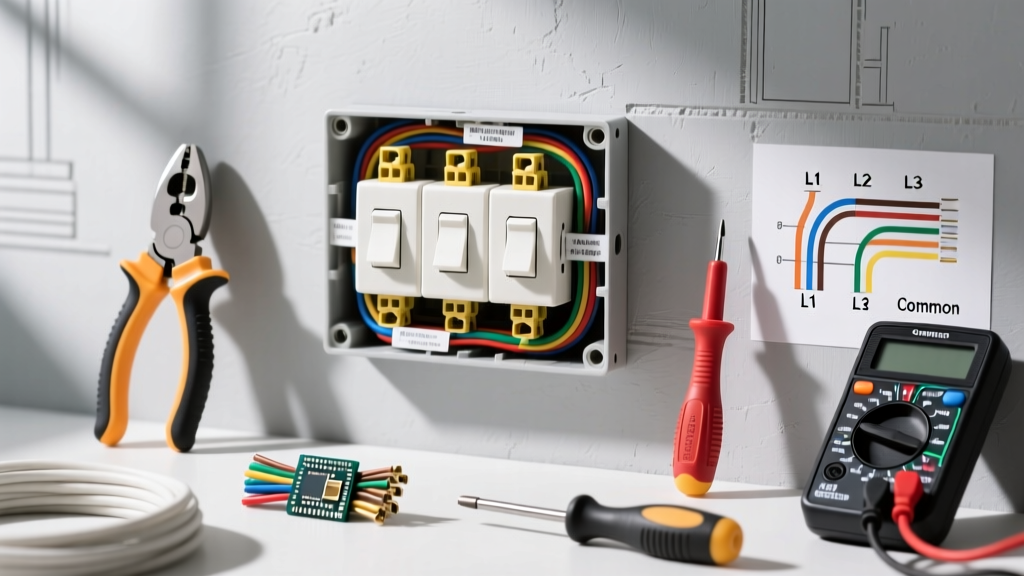
In older 3-wire cables (often used for 240V baseboard heaters, electric water heaters, or multi-way traveler switches), red is traditionally the second ungrounded (hot) conductor. In a 3-way switch setup, the red and black wires often serve as the 'traveler' wires connecting the two switches. Always treat red as a live, 120V or 240V hot wire until proven otherwise with a multimeter.
Is it legal to add a new ground wire to an old ungrounded cable?
Yes. The 2014 NEC (and maintained in the 2023/2026 cycles) updated Article 250.130(C) to allow retrofitting an equipment grounding conductor to an existing ungrounded branch circuit. You can run a separate bare or green insulated copper ground wire back to the main panel's grounding bus, or to any other circuit that has a valid ground originating from the same panel. You cannot, however, just ground it to a nearby copper water pipe or a metal gas line.
Final Thoughts on Legacy Wiring
Deciphering old electric wiring colours requires a blend of historical knowledge, strict adherence to modern safety protocols, and a healthy dose of skepticism. Never trust the color of a wire in a home built before 1980 until you have personally verified its status with a calibrated meter. When in doubt, or when confronted with crumbling rubber insulation or undocumented aluminum wiring, consult a licensed master electrician. Upgrading legacy wiring is an investment in the structural safety and insurability of your property.