
The Hidden Liability of Faulty Electrical Wiring in Commercial Facilities
When managing large-scale commercial infrastructure, faulty electrical wiring represents one of the most severe operational and safety liabilities a facility manager can face. Unlike residential systems, commercial environments operate on complex 3-phase power, heavy inductive loads, and continuous duty cycles that accelerate wire degradation. According to the National Fire Protection Association (NFPA), electrical distribution and lighting equipment remains a leading cause of non-residential structural fires, often originating from undetected wiring faults behind walls or inside congested conduit runs.
Identifying and remediating faulty electrical wiring before it causes catastrophic downtime or fire requires moving beyond basic voltage checks. Modern commercial diagnostics rely on power quality analysis, thermography, and strict adherence to testing standards outlined by OSHA and the InterNational Electrical Testing Association (NETA). This guide details the exact failure modes, diagnostic tools, and remediation protocols required to secure commercial electrical systems in 2026.
Top 4 Failure Modes in Commercial 3-Phase Systems
Commercial wiring rarely fails without a specific environmental or electrical stressor. Understanding these failure modes is the first step in targeted troubleshooting.
1. Harmonic Overheating on Shared Neutrals
The proliferation of non-linear loads—such as Variable Frequency Drives (VFDs) for HVAC systems, LED lighting drivers, and server rack power supplies—generates triplen harmonics (3rd, 9th, 15th). These harmonics do not cancel out on the neutral conductor; instead, they add together. A standard 120/208V 3-phase circuit with a 100A phase current can see neutral currents exceeding 150A. If the original installation used standard-sized neutral conductors rather than oversized or K-rated transformer configurations, the neutral wire will overheat, melting the THHN/THWN-2 insulation from the inside out.
2. Insulation Degradation in High-Ambient Zones
Wire insulation ratings are based on specific ambient temperatures. In commercial boiler rooms, manufacturing floors, or rooftop conduit runs exposed to direct sunlight, ambient temperatures frequently exceed the 30°C (86°F) baseline used in NEC ampacity tables. Standard THHN wire (rated for 90°C in dry locations) becomes highly susceptible to brittleness and cracking when subjected to continuous 50°C+ ambient heat combined with resistive heating from the load. In these zones, faulty electrical wiring is often the result of specifiers failing to mandate XHHW-2 (Cross-Linked Polyethylene) insulation, which offers superior thermal and moisture resistance.
3. Loose Terminations and Micro-Arcing
Thermal cycling causes metal expansion and contraction. Over a 5-to-10-year period, this mechanical stress loosens lug terminations at panelboards and disconnect switches. A loose connection increases contact resistance, generating localized heat and micro-arcing. This is a primary cause of arc flash incidents and phase-to-ground faults in commercial switchgear.
4. Undersized Conductors for Motor Inrush Currents
Commercial facilities rely heavily on large induction motors for elevators, chillers, and air handlers. If conductors were sized strictly for Full Load Amps (FLA) without accounting for the 600% inrush current during startup (as governed by NEC Article 430), the repeated thermal shock degrades the conductor insulation over time, leading to premature short circuits.
Diagnostic Toolkit: Beyond the Standard Multimeter
Standard digital multimeters (DMMs) are insufficient for diagnosing complex commercial wiring faults. A comprehensive audit requires specialized instrumentation to measure power quality, insulation integrity, and thermal anomalies.
| Diagnostic Tool | Industry Standard Model | Avg. Cost (2026) | Primary Diagnostic Use Case |
|---|---|---|---|
| Power Quality Analyzer | Fluke 435 Series II | $5,500 - $6,200 | Logging harmonic distortion (THD), voltage sags/swells, and unbalanced 3-phase loads over a 7-day cycle. |
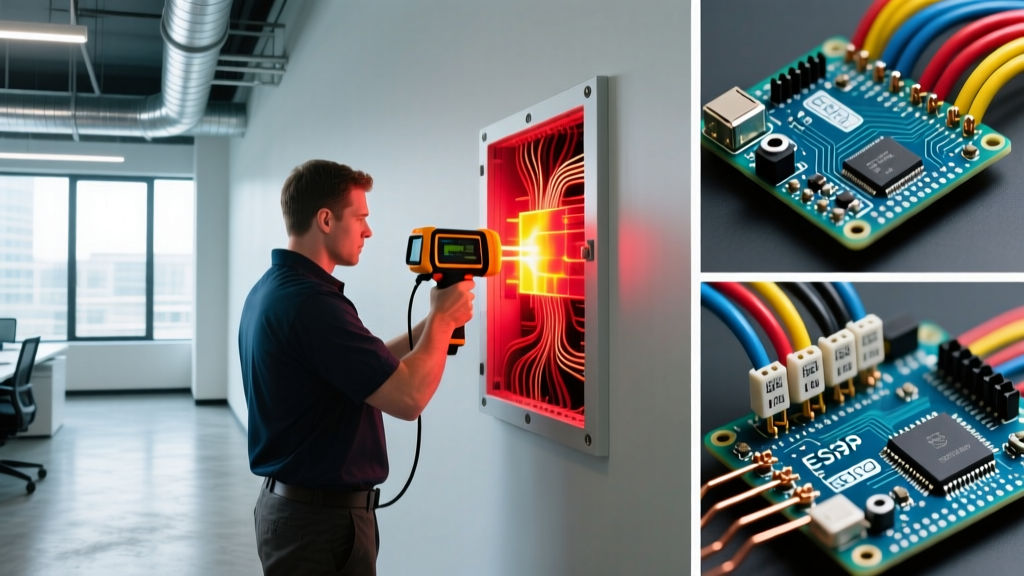
| Infrared (IR) Thermometer/Camera | Fluke Ti480 PRO | $11,000 - $13,500 | Identifying localized hot spots at busbars, breaker lugs, and conduit junctions under full load. |
| Insulation Resistance Tester | Megger MIT485/2 | $1,200 - $1,500 | Applying 500V/1000V DC to de-energized circuits to measure insulation breakdown (Megohm testing). |
| Calibrated Torque Screwdriver | CDI Torque 401SM | $350 - $450 | Verifying termination torque specs to prevent micro-arcing and thermal runaway at panel lugs. |
Step-by-Step Commercial Wiring Audit Protocol
When investigating suspected faulty electrical wiring in a commercial space, follow this systematic protocol aligned with ANSI/NETA MTS (Maintenance Testing Specifications).
- Baseline Thermal Scan (Under Full Load): Perform an infrared scan of all main distribution panels and sub-panels during peak operational hours. According to NETA standards, a temperature differential (delta) of 1°C–3°C between similar components under equal loading indicates a possible deficiency. A delta of 4°C–15°C indicates necessary repair, and a delta greater than 15°C requires immediate de-energization and remediation.
- 7-Day Power Quality Logging: Connect a Fluke 435-II at the main service entrance and at suspect sub-panels. Look specifically for Total Harmonic Distortion (THD). If voltage THD exceeds 5% or neutral currents exceed 100% of phase currents, you have identified the root cause of neutral wire overheating.
- De-Energized Insulation Resistance (Megger) Testing: After locking out and tagging out (LOTO) the circuit, disconnect the conductors from the busbars and apply 1000V DC for 1 minute. Readings below 1 Megohm indicate compromised insulation (faulty wiring) that must be pulled and replaced. Calculate the Polarization Index (10-minute reading divided by 1-minute reading) to assess the moisture content and brittleness of the wire insulation.
- Termination Torque Verification: Use a calibrated torque screwdriver to verify that all breaker and busbar lug terminations meet the manufacturer's specified inch-pound requirements. Re-torquing is a mandatory preventative measure during any commercial panel retrofit.
NEC 2026 Compliance and Remediation Strategies
When faulty electrical wiring is confirmed, remediation must comply with the latest National Electrical Code (NEC) standards. For commercial spaces, this often involves more than just pulling new wire.
- Upgrading to XHHW-2: When replacing degraded THHN in wet locations, underground conduit, or high-heat environments, mandate XHHW-2. Its cross-linked polyethylene jacket resists moisture absorption and thermal deformation far better than standard PVC jackets.
- K-Rated Transformers and 200% Neutrals: If harmonic analysis reveals severe triplen harmonic distortion, remediate by installing K-13 or K-20 rated transformers and upgrading the shared neutral conductors to 200% of the phase conductor ampacity to handle the additive harmonic currents safely.
- Arc Fault and Ground Fault Integration: While AFCI protection is heavily emphasized in residential codes, commercial environments require robust Ground Fault Protection of Equipment (GFPE) for feeders rated 1000A or more (NEC Article 240.13), and increasingly, arc-flash reduction technologies (Article 240.87) on main switchgear to clear faults in milliseconds.
Insurance & Liability Warning: Many commercial property insurers now require documented thermographic and power quality audits every 3 to 5 years. Failing to identify and remediate faulty electrical wiring can result in denied claims in the event of an electrical fire, citing 'deferred maintenance' as the primary cause of loss.
Preventative Maintenance: The 3-Year Cycle
To prevent wiring faults from escalating into catastrophic failures, facility managers should implement a strict 3-year electrical maintenance cycle:
- Annual: Visual inspections of all exposed conduit runs for physical damage, corrosion, or UV degradation (if using PVC outdoors). Verify LOTO procedures and panel labeling.
- Bi-Annual: Infrared thermography scans of all switchgear, motor control centers (MCCs), and distribution boards under minimum 40% operational load.
- Tri-Annual: Comprehensive NETA-aligned testing, including Megger testing of critical feeder cables, contact resistance testing on main breakers, and power quality logging to track the gradual increase in harmonic distortion as new electronic equipment is added to the facility.
By treating electrical infrastructure as a dynamic, degrading system rather than a static installation, commercial operators can eliminate the risks associated with faulty electrical wiring, ensuring uninterrupted operations and absolute code compliance.