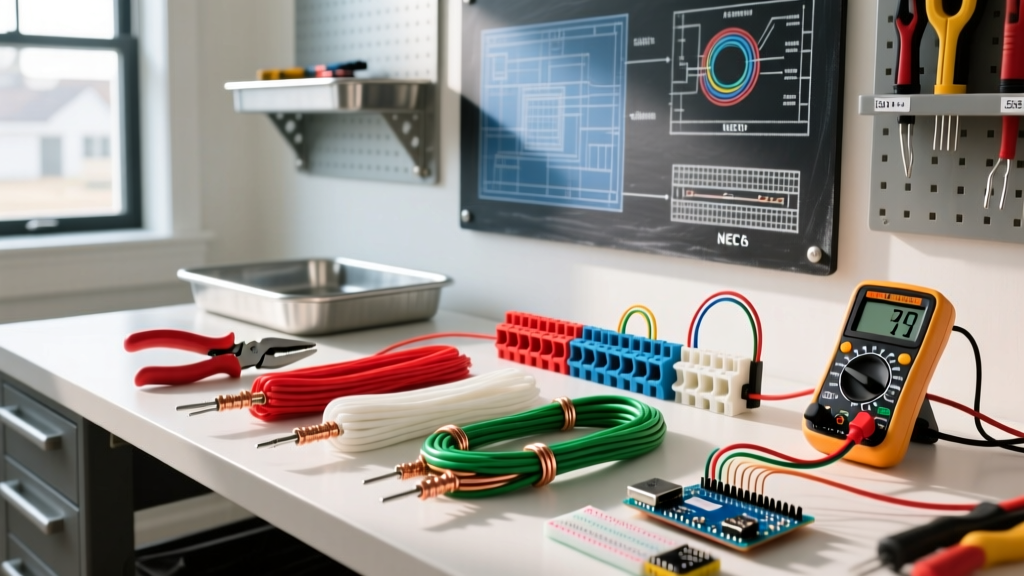

The Critical Role of Electrical Wiring Colors in Home Renovations
Whether you are upgrading a kitchen circuit for a high-wattage induction cooktop, installing a smart thermostat, or simply replacing a worn-out duplex receptacle, understanding electrical wiring colors is your first line of defense against shock hazards and fire risks. In the United States, the National Electrical Code (NEC), published by the National Fire Protection Association (NFPA), strictly dictates how conductors must be identified. However, as any seasoned electrician will tell you, what you see inside a junction box doesn't always match the textbook—especially in homes built before the 1980s.
This guide breaks down the NEC color standards for both the inner conductors and the outer NM-B (Romex) jackets, highlights dangerous edge cases, and provides a professional-grade verification protocol for your 2026 home projects.
Inner Conductor Colors: The NEC Standard
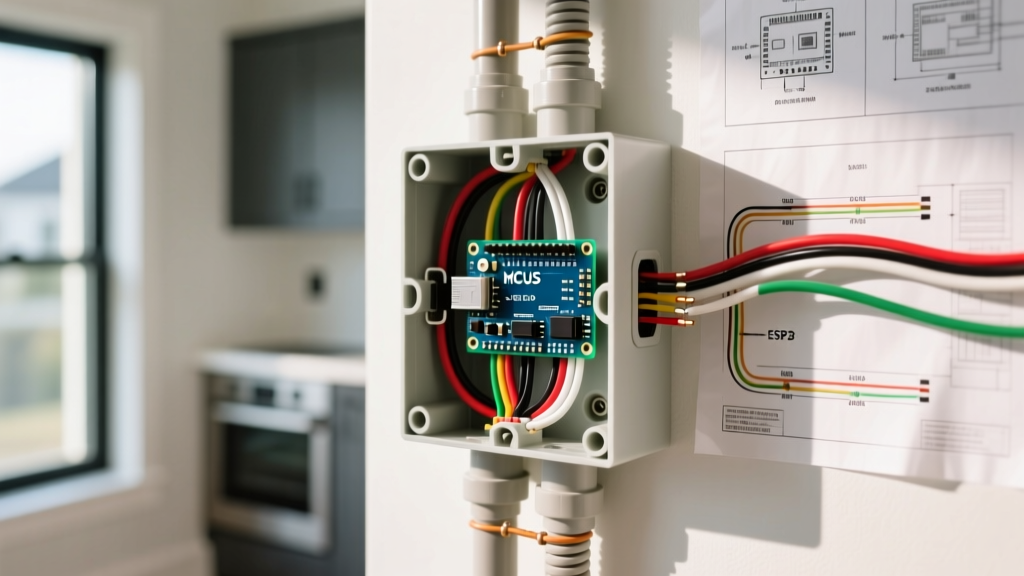
When you strip back the outer sheathing of a standard non-metallic (NM) cable, you will expose individual insulated conductors and a bare ground wire. According to NEC Article 200 and Article 250, these colors serve specific, non-interchangeable functions.
| Wire Color | Function | NEC Designation | DIY Safety Note |
|---|---|---|---|
| Black | Hot / Line | Ungrounded Conductor | Always assume it is live. Carries 120V from the panel to the device. |
| Red | Hot / Traveler | Ungrounded Conductor | Used in 3-way switches, 240V circuits, or as a second hot leg. |
| White | Neutral | Grounded Conductor | Carries current back to the panel. Can still shock you if the circuit is under load and disconnected upstream. |
| Gray | Neutral | Grounded Conductor | Typically reserved for 277V commercial, but occasionally found in residential 3-phase setups. |
| Bare Copper | Equipment Ground | Grounding Conductor | Safety path for fault currents. Never use as a neutral or hot. |
| Green | Equipment Ground | Grounding Conductor | Insulated ground, often found in conduit runs or specific appliance cords. |
Decoding NM-B (Romex) Outer Jacket Colors
For modern home projects, you will primarily be working with NM-B (Non-Metallic Sheathed) cable, commonly referred to by the brand name Romex. Since the early 2000s, manufacturers like Southwire have color-coded the outer PVC jacket to indicate the wire gauge (AWG) and the maximum ampacity of the circuit. This visual shorthand prevents the catastrophic mistake of putting a 12 AWG wire on a 30-amp breaker.
| Jacket Color | Wire Gauge (AWG) | Max Breaker Size | Common 2026 Home Applications | Approx. Cost (250ft Coil) |
|---|---|---|---|---|
| White | 14 AWG | 15 Amps | General lighting, bedroom receptacles, low-draw fans. | $75 - $85 |
| Yellow | 12 AWG | 20 Amps | Kitchen/bathroom receptacles, garage outlets, outdoor lighting. | $105 - $125 |
| Orange | 10 AWG | 30 Amps | Electric water heaters, standard window AC units, dryer (if 3-prong legacy). | $160 - $190 |
| Black | 8 AWG or 6 AWG | 40 to 60 Amps | Level 2 EV chargers (48A continuous), electric ranges, subpanels. | $250 - $450+ |
The Danger Zone: When White Isn't Neutral
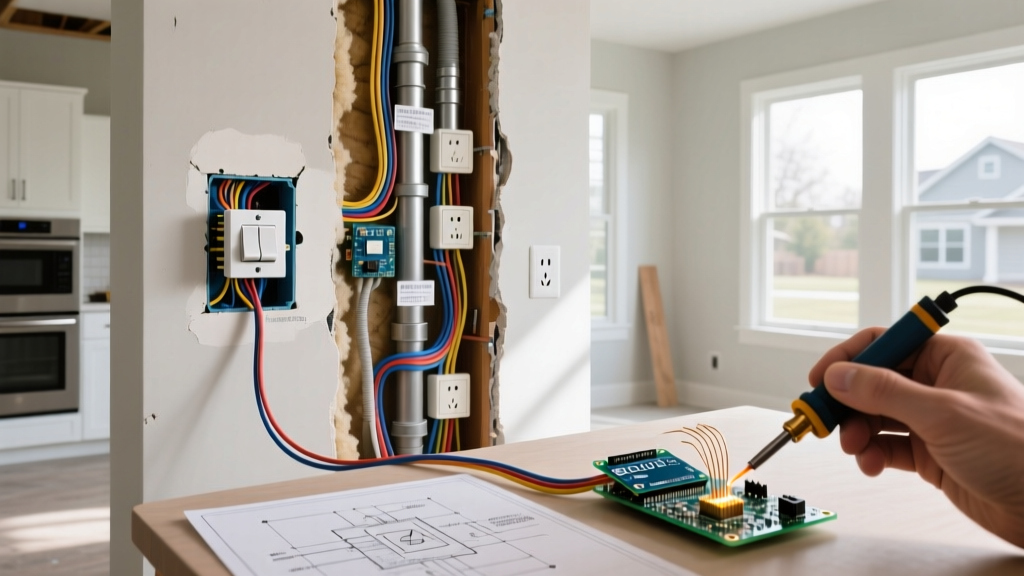
The most common cause of DIY electrical shocks occurs when a homeowner assumes a white wire is a safe neutral, only to discover it is carrying 120V. The NEC allows white wires to be used as "hot" conductors under specific conditions, provided they are properly re-identified. If you are opening up walls in an older home, watch out for these scenarios:
1. The Classic Switch Loop
In homes wired before the 2011 NEC update, electricians often ran a 2-wire (Black/White) cable from the ceiling fixture down to the wall switch. The black wire carried power down to the switch, and the white wire carried the switched hot power back up to the light.
NEC 200.7(C)(2) Requirement: When a white wire is used as an ungrounded (hot) conductor, it must be permanently re-identified with black tape, black paint, or a black marker at every location where the wire is visible. In older homes, lazy contractors often skipped this tape, leaving a lethal trap for future DIYers.
2. 240V Baseboard Heaters and Water Heaters
Many 240V appliances do not require a neutral wire; they only need two hot legs and a ground. Electricians will frequently use standard 10/2 or 12/2 NM cable (which contains one black and one white wire) to run these circuits. In this setup, the white wire is wrapped in black tape at the panel and the appliance to serve as the second 120V hot leg. Together, they deliver 240V.
3. Smart Switch Upgrades in 2026
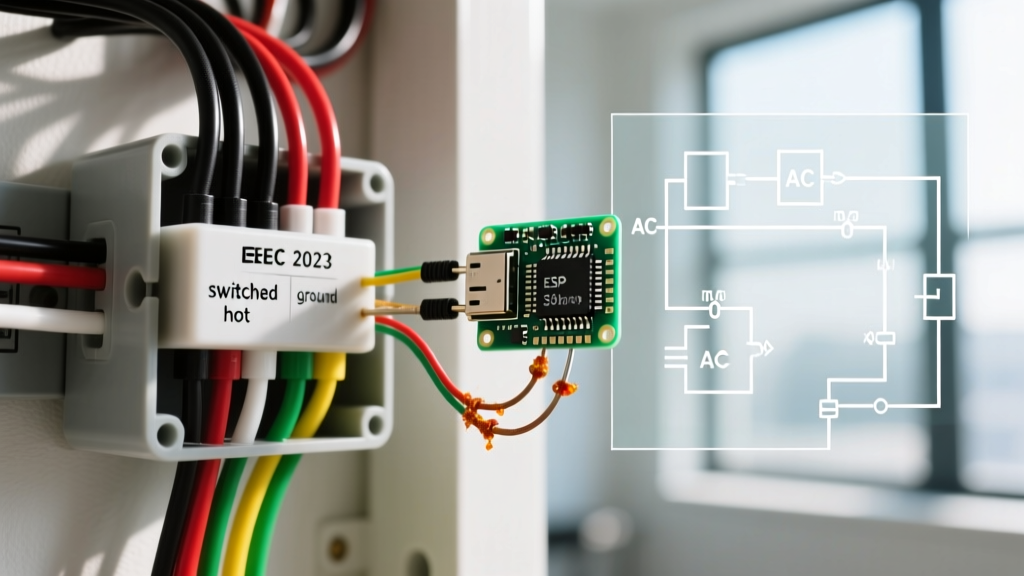
If you are upgrading to smart switches (like the Lutron Caseta or Leviton Decora Smart), most require a neutral wire to power their internal Wi-Fi/Zigbee radios. If you open your switch box and only see a black, white, and bare wire, and the white wire is connected to the brass screw on the old switch (rather than bundled with other white wires in the back of the box), you have a switch loop. You do not have a neutral, and you must either buy a "no-neutral required" smart switch or pull new 3-wire cable.
Essential Diagnostic Tools for Home Projects
Never trust electrical wiring colors with your life. Faded insulation, previous homeowner mistakes, and manufacturing anomalies mean you must verify every single wire before touching it. According to the Electrical Safety Foundation International (ESFI), using proper testing equipment drastically reduces the risk of residential electrocution.
- Non-Contact Voltage Tester (NCVT): The Klein Tools NCVT-2 (approx. $28) is a dual-range tester that detects both standard 120V and low-voltage doorbell/thermostat wires. Always test it on a known live circuit before and after use.
- Digital Multimeter (DMM): For verifying exact voltages and checking for continuity. The Fluke 117 True RMS (approx. $220) is the professional standard, but the AstroAI Digital Multimeter (approx. $35) is adequate for basic DIY voltage checks.
- Receptacle Tester: The Gardner Bender GRT-501 (approx. $12) plugs into standard outlets to instantly reveal miswired neutrals, open grounds, or reversed hot/neutral connections.
The "Live-Dead-Live" Verification Protocol
Before cutting, stripping, or capping any wire, follow this OSHA-recommended testing sequence to ensure your breaker actually controls the circuit you are working on:
- Test a Known Live Source (Live): Turn on your NCVT or Multimeter and test an outlet you know is currently powered. This confirms your tester's battery and sensors are functioning.
- Turn Off the Breaker: Flip the target breaker to the OFF position at the main service panel. Lock it out or place tape over it if others are in the home.
- Test the Target Circuit (Dead): Test the wires or receptacle you intend to work on. The tester should indicate zero voltage.
- Re-Test the Known Live Source (Live): Test the original known live outlet again. This confirms your tester didn't silently fail or lose battery power between Step 2 and Step 3.
Edge Cases: Aluminum Wiring and Older Homes
If your home was built between 1965 and 1973, you may encounter aluminum branch circuit wiring. Aluminum wire is easily identified by its silver color (when stripped) and "AL" or "ALUM" stamps on the jacket. Due to thermal expansion and oxidation issues, aluminum wiring is a known fire hazard if connected directly to standard copper-rated receptacles. If you discover aluminum wiring during your project, you must use CO/ALR rated devices or have a licensed electrician perform COPALUM pigtailing. For more on workplace and residential electrical hazards, refer to the OSHA electrical safety guidelines.
Summary for the DIY Electrician
Understanding electrical wiring colors is foundational to safe home improvement. Black and red are hot, white and gray are neutral, and bare or green are ground. However, always verify the circuit status with a trusted multimeter or NCVT, and be highly suspicious of white wires in switch boxes or 240V appliance runs. When in doubt, or when dealing with complex subpanel bonding and EV charger installations, hire a licensed master electrician to ensure your 2026 renovation is both functional and code-compliant.