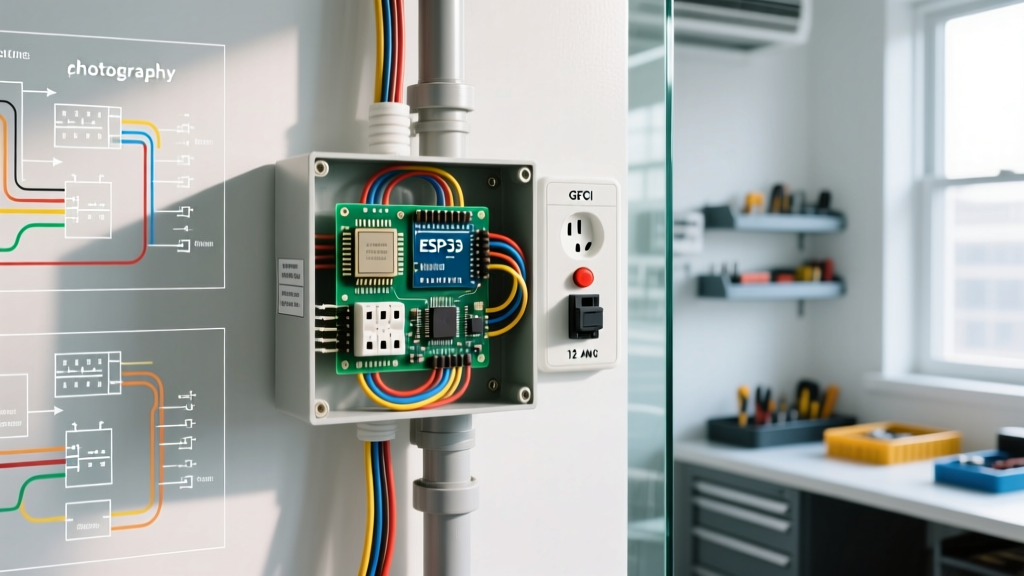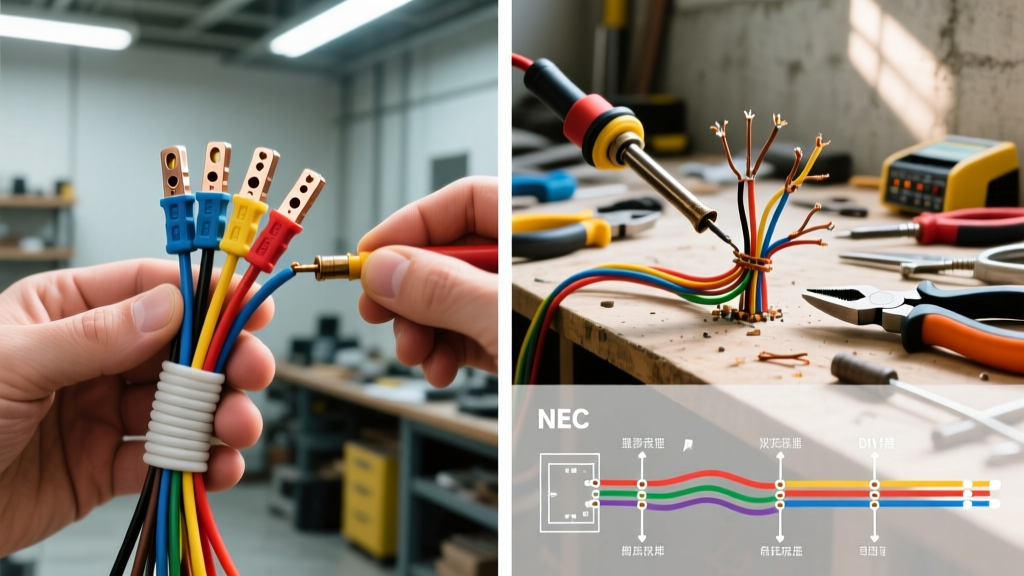

The Core Framework: Understanding Electrical Wiring Classes
When designing or installing low-voltage and control systems, electricians and engineers must navigate the strict boundaries defined by the National Electrical Code (NEC). Under NEC Article 725, remote-control, signaling, and power-limited circuits are categorized into distinct electrical wiring classes. These classifications dictate everything from permissible voltage limits and wire gauges to physical separation requirements from line-voltage power.
As smart building technology and Power over Ethernet (PoE) deployments accelerate in 2026, misunderstanding these classes can lead to failed inspections, fire hazards, or catastrophic equipment damage. This guide breaks down the technical specifications, code requirements, and real-world applications for Class 1, Class 2, and Class 3 wiring.
Class 1 Circuits: Remote-Control and Signaling
Class 1 circuits are the heavy lifters of the control world. Unlike their low-voltage counterparts, Class 1 circuits are not power-limited. They are typically used for motor controllers, HVAC contactors, and industrial remote-control systems where higher voltage and current are required to actuate heavy-duty relays.
Technical Specifications and Limits
- Maximum Voltage: Up to 600V (though 120V or 240V is most common in commercial applications).
- Power Limits: No specific VA (Volt-Amp) limit; dictated by the overcurrent protection device (OCPD).
- Wire Sizing: Generally, conductors must be at least 14 AWG. However, NEC Table 725.51 permits 18 AWG and 16 AWG for specific fixture wires and flexible cords if the circuit is protected at 7A and 10A, respectively.
- Cable Types: Standard line-voltage cables (e.g., THHN in conduit, NM-B, or MC cable) are required. You cannot use standard low-voltage CL2/CL3 jacketed cables for Class 1.
Code Callout: Class 1 circuits must be installed using standard Chapter 3 wiring methods. If a Class 1 circuit extends beyond the enclosure of the equipment it controls, it must be protected by an OCPD rated at no more than 20A for 12 AWG, or 15A for 14 AWG wire.
Class 2 Circuits: The Inherently Limited Low-Voltage Standard
Class 2 circuits are the backbone of modern smart homes, commercial HVAC controls, and IT infrastructure. These circuits are power-limited and inherently safe from both fire initiation and electric shock. The power source for a Class 2 circuit must be inherently limited (like a standard 24VAC doorbell transformer) or protected by a listed Class 2 power supply.
Technical Specifications and Limits
- Maximum Voltage: 30V (AC or DC).
- Maximum Power: 100 VA (Volt-Amps).
- Wire Sizing: Typically ranges from 24 AWG to 18 AWG, depending on the application and length.
- Cable Types: Must use listed Class 2 cables (CL2, CL2R for risers, or CL2P for plenums).
The 2026 PoE Challenge: Pushing Class 2 Boundaries
With the widespread adoption of IEEE 802.3bt (Type 4) Power over Ethernet, network switches are now delivering up to 100W of power to devices like PTZ cameras and high-lumen LED lighting. This pushes the absolute limits of the traditional 100VA Class 2 threshold. Under modern safety standards like OSHA electrical guidelines and UL 62368-1 (which has largely replaced UL 1310 for IT equipment), PoE circuits must be carefully evaluated. If the power sourcing equipment (PSE) exceeds the Class 2 VA limits, the cabling may be reclassified, requiring different fire-rating jackets and separation rules.
Class 3 Circuits: Bridging the Voltage Gap
Class 3 circuits are power-limited but operate at higher voltages and power levels than Class 2. They are primarily utilized in commercial audio distribution (e.g., 70V distributed speaker systems), advanced security systems, and fire alarm notification appliance circuits (NACs).
Technical Specifications and Limits
- Maximum Voltage: Up to 150V.
- Power Limits: Higher than Class 2, but still restricted by the specific VA curves defined in NEC Chapter 9, Table 11(A) and 11(B).
- Cable Types: Must use listed Class 3 cables (CL3, CL3R, or CL3P).
Note: You can use CL3 cable for a Class 2 application, but you cannot use CL2 cable for a Class 3 application.
Comparison Matrix: Class 1 vs. Class 2 vs. Class 3
To quickly reference the distinctions on the job site, use the following comparison matrix based on current NEC standards:
| Feature | Class 1 | Class 2 | Class 3 |
|---|---|---|---|
| Primary Function | Remote-control & signaling | Low-voltage control, data, PoE | Audio, fire alarm, security |
| Max Voltage | 600V | 30V | 150V |
| Max Power (VA) | Not Limited (OCPD dependent) | 100 VA | Varies (See NEC Table 11) |
| Standard Wire Gauge | 14 AWG to 10 AWG | 24 AWG to 18 AWG | 18 AWG to 12 AWG |
| Cable Jacket Rating | THHN, NM-B, MC | CL2, CL2R, CL2P | CL3, CL3R, CL3P |
| Shock Hazard | High (Line Voltage) | None (Inherently Safe) | Moderate (Can shock) |
Installation Rules: Separation and Physical Barriers
One of the most common reasons for failed electrical inspections in commercial remodels is the improper routing of Class 2/Class 3 cables alongside line-voltage conductors. The NEC strictly mandates physical separation to prevent inductive interference and to ensure that a line-voltage fault cannot energize a low-voltage system.
The 2-Inch Rule and Barrier Requirements
Unless the low-voltage cables are separated by a continuous, firmly fixed non-conductive barrier (like a metal divider in a raceway), Class 2 and Class 3 conductors must maintain a minimum clearance of 2 inches from all Class 1, line-voltage, or non-power-limited fire alarm circuit conductors.
Plenum vs. Riser: Material Cost Realities
When routing these cables through environmental air spaces (plenums) or vertical shafts (risers), the jacket material must meet strict flame and smoke toxicity standards. According to BICSI cabling standards and NEC Article 300.22, using the wrong jacket in a return-air plenum is a severe fire code violation.
- Standard CL2 (PVC): ~$0.12 per foot. Only permitted in general concealed spaces or exposed surface runs.
- CL2R (Riser): ~$0.18 per foot. Required for vertical runs between floors to prevent chimney-effect fire spread.
- CL2P (Plenum): ~$0.45 per foot. Mandatory for installation in drop ceilings and raised floors used for HVAC return air. A 1,000ft spool of 18/2 CL2P will cost roughly $350-$450, compared to $120 for standard CL2.
Real-World Troubleshooting and Edge Cases
Even when installed to code, Class 2 and Class 3 circuits present unique troubleshooting challenges that standard line-voltage electricians may not anticipate.
Induced Voltage on Class 2 Lines
If a 24VAC thermostat wire is pulled parallel to a 277V lighting circuit without the required 2-inch separation, electromagnetic induction can introduce 'ghost voltages' onto the control line. This often manifests as HVAC control boards throwing false short-circuit codes or smart thermostats rebooting randomly. Solution: Always use a True-RMS multimeter to measure induced AC voltage on de-energized control lines, and re-route or use shielded twisted-pair (STP) cable if interference persists.
Grounding Requirements (NEC 250.112)
While Class 2 circuits are inherently safe from shock, the equipment connected to them, and the cable shields, often require grounding. NEC 250.112 specifies that exposed, non-current-carrying metal parts of equipment associated with signaling circuits must be grounded if they are likely to become energized. Furthermore, when transitioning from outdoor to indoor Class 2 wiring (such as a security camera run), the primary protector must be grounded to the building's grounding electrode system to bleed off lightning-induced surges.
Frequently Asked Questions
Can I run Class 2 and Ethernet cables in the same conduit?
Yes. Because standard Ethernet (PoE) and Class 2 control circuits are both considered power-limited and operate at similar low voltages, the NEC permits them to share the same raceway, provided the power limits of the PoE source do not exceed the Class 2 VA thresholds.
What happens if I use a non-Class 2 power supply for a Class 2 circuit?
If the power supply is not listed as inherently limited or Class 2, the entire circuit loses its Class 2 status. It must then be reclassified and installed using Chapter 3 line-voltage wiring methods, including THHN wire in conduit and standard junction boxes. This is a frequent error in DIY LED lighting installations.
Are fire alarm circuits considered Class 1, 2, or 3?
Fire alarm circuits are governed by NEC Article 760, not Article 725. However, they are divided into Non-Power-Limited Fire Alarm (NPLFA) circuits, which behave similarly to Class 1, and Power-Limited Fire Alarm (PLFA) circuits, which share the physical characteristics and safety profiles of Class 2 and Class 3 circuits.