
The "Series" Misconception: Code Realities in 2026
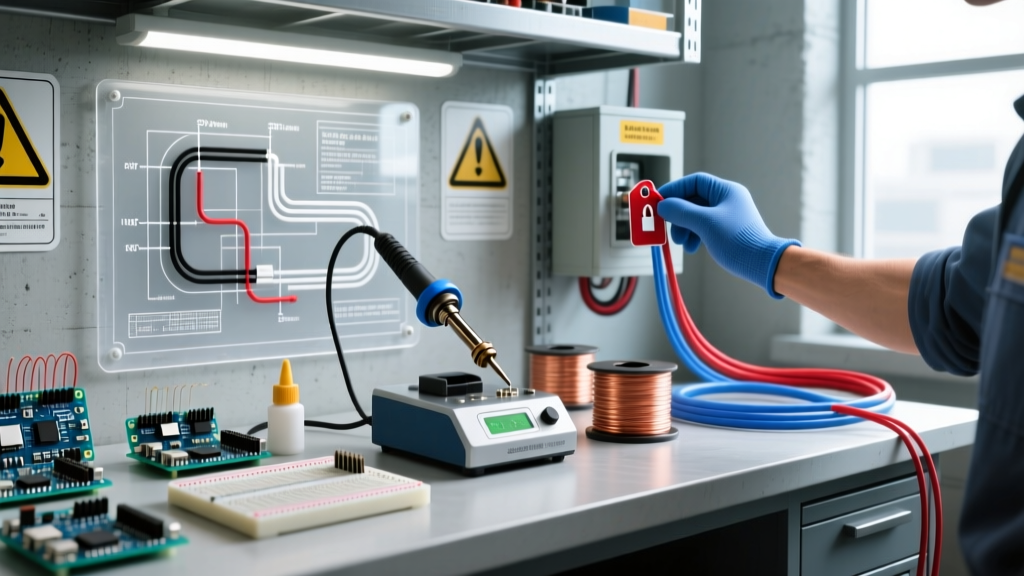
When homeowners and novice DIYers search for a wiring electrical outlets in series diagram, they are almost always looking for a daisy-chain layout. In electrical engineering and residential wiring, true series wiring means the current flows through the first device to reach the second. If one outlet fails or is unplugged, the entire downstream circuit dies—much like old-school Christmas tree lights. Furthermore, in a true 120V series circuit, the voltage would divide across the receptacles, resulting in severe under-voltage and potential fire hazards.
Under the National Electrical Code (NEC), standard residential receptacles must be wired in parallel. The physical routing of the cable from the panel to Outlet A, and then from Outlet A to Outlet B, is technically a parallel circuit topology utilizing a daisy-chain physical layout. Understanding this distinction is critical for both safety and passing municipal inspections. This guide breaks down the exact costs, materials, and code-compliant diagram topologies for wiring multiple outlets on a single branch circuit in 2026.
2026 Cost Breakdown: Daisy-Chaining a 20A Circuit
Estimating the cost of wiring multiple outlets requires separating the branch circuit initiation (panel work) from the node additions (the outlets themselves). Below is a realistic 2026 cost matrix for installing a new 20-amp circuit feeding six daisy-chained 20A receptacles in an unfinished basement or open-stud remodel.
| Component | Specific Model / Type | Qty | Unit Cost (2026) | Total Cost |
|---|---|---|---|---|
| Circuit Breaker | Square D Homeline 20A (HOM120) | 1 | $6.50 | $6.50 |
| Wiring | Southwire 12/2 NM-B (Romex) - 250ft roll | 150 ft | $0.85 / ft | $127.50 |
| Receptacles | Leviton 5362-W (20A, 125V, Tamper-Resistant) | 6 | $3.85 | $23.10 |
| Connectors | WAGO 221-412 Lever-Nuts (2-conductor) | 12 | $0.45 | $5.40 |
| Boxes & Plates | Carlon 1-Gang Old Work Boxes + Nylon Plates | 6 | $2.50 | $15.00 |
| Total Material Cost (Excluding Tools & Drywall Repair) | $177.50 | |||
Material Specifics and Pricing Nuances
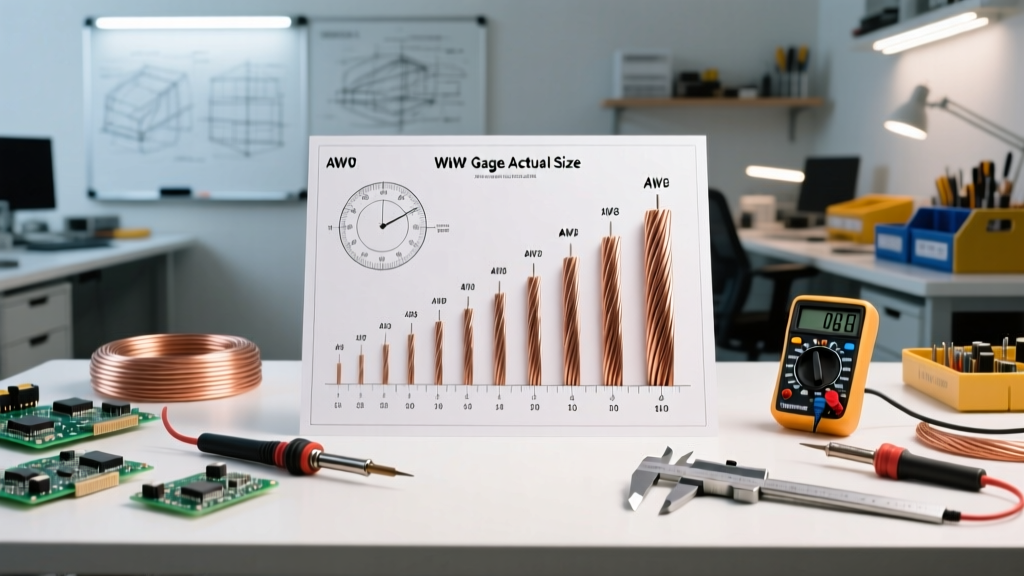
Notice the use of 12/2 NM-B wire and 20A-rated receptacles (Leviton 5362). While 15A circuits (14 AWG wire) are permitted in bedrooms and living rooms, upgrading to a 20A circuit using 12 AWG wire is the 2026 industry standard for general-purpose and kitchen-adjacent daisy-chains. It prevents breaker nuisance tripping when multiple high-draw devices (like vacuums or space heaters) are used simultaneously on downstream outlets. Furthermore, NEC Article 406.4(D) mandates Tamper-Resistant (TR) receptacles in nearly all residential living spaces, which adds roughly $0.80 to $1.20 per outlet compared to standard commercial-grade non-TR models.
Interpreting the Diagram: Pass-Through vs. Pigtailing
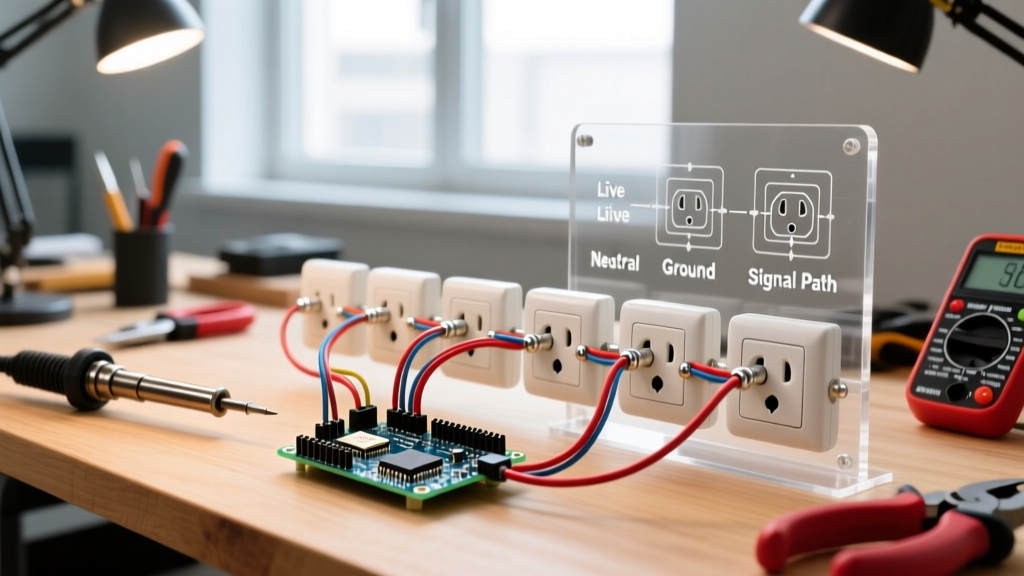
When reviewing a wiring electrical outlets in series diagram (daisy-chain parallel), you will encounter two distinct termination methods. Choosing the right one impacts both your material costs and long-term circuit reliability.
Method 1: Pass-Through (Terminal Feed-Through)
In this layout, the incoming hot, neutral, and ground wires are landed on one set of brass/silver/green screws on the receptacle, while the outgoing wires to the next outlet are landed on the second set of screws.
- Pros: Cheaper and faster. No extra wire nuts or lever connectors required. Fits easily into shallow 14-cubic-inch boxes.
- Cons: If the receptacle fails or is removed, the downstream outlets lose power. More critically, NEC Article 300.13(B) prohibits relying on a device's terminal screws to maintain the continuity of the neutral conductor on multiwire branch circuits (MWBCs).
Method 2: Pigtailing with WAGO Lever-Nuts
Pigtailing involves connecting the incoming and outgoing wires together with a short "pigtail" jumper that runs to the single screw terminal on the receptacle. In 2026, professional electricians heavily favor OSHA-compliant push-in lever connectors like the WAGO 221 series over traditional twist-on wire nuts for pigtailing.
- Pros: Uninterrupted downstream power if a receptacle is replaced. Compliant with all MWBC neutral continuity codes. WAGO connectors allow for instant visual verification of wire seating and easy voltage testing via the built-in test ports.
- Cons: Increases material cost by roughly $0.90 per box. Requires deeper junction boxes (minimum 18 to 22 cubic inches) to accommodate the physical bulk of the lever-nuts and extra wire loops.
Expert Tip: Never use the "backstab" push-in terminals on the back of 15A/20A receptacles for daisy-chaining. The internal spring-loaded contacts degrade under thermal cycling, leading to high-resistance arcing. Always use the side-binding screw terminals or wrap the wire clockwise around the screw so tightening pulls the loop closed.
Labor Estimates and Installation Timeframes
If you are hiring a licensed electrician rather than pulling a homeowner permit for DIY work, labor will constitute 60% to 75% of your total project cost. In 2026, the national average hourly rate for a licensed journeyman electrician ranges from $95 to $145 per hour, depending on regional cost-of-living indices.
| Project Phase | Time Estimate (Open Stud) | Time Estimate (Retrofit / Drywall) |
|---|---|---|
| Panel Termination & Breaker Install | 30 Minutes | 45 Minutes |
| Running 12/2 NM-B (per 50 ft) | 45 Minutes | 2.5 - 4 Hours (fishing walls) |
| Box Mounting & Wire Pulling | 10 Minutes / box | 25 Minutes / box (cutting drywall) |
| Termination & Pigtailing | 8 Minutes / outlet | 10 Minutes / outlet |
| Testing & Cleanup | 20 Minutes | 30 Minutes |
For a 6-outlet open-stud run spanning 80 feet, expect to pay for roughly 4 to 5 hours of labor ($475 - $725). If this is a retrofit requiring drywall cutting, fishing wires through fire-blocks, and subsequent drywall patching/painting, the labor time can easily double, and you will need to budget an additional $300 to $500 for a drywall finishing contractor.
Edge Cases: Voltage Drop and Failure Modes
When designing your daisy-chain layout, the physical distance from the panel to the final outlet is a critical variable often ignored in basic online diagrams. According to NEC informational notes (and strict code in jurisdictions adopting the 2023/2026 NEC energy amendments), voltage drop on a 120V branch circuit should not exceed 3% (3.6 volts) at maximum load.
To calculate this for your specific diagram layout, use the standard single-phase voltage drop formula:
VD = (2 × K × I × L) / CM
- K = 12.9 (Ohms-cmil/ft for Copper at 75°C)
- I = 16 Amps (80% continuous load on a 20A breaker)
- L = One-way length in feet (e.g., 120 ft)
- CM = 6530 (Circular mils for 12 AWG copper)
If your final outlet in the daisy-chain is 120 feet from the panel, the voltage drop is 5.68 volts (4.7%). This exceeds the 3% recommendation. To fix this edge case, you must either upgrade the feed wire to 10 AWG copper (CM = 10380) for the main trunk line, or split the circuit into two separate home runs back to the panel.
Common Failure Modes in Daisy-Chains
- Stripped Terminal Screws: Over-torquing the brass terminal screws on Leviton or Legrand receptacles can strip the threads, especially when using stiff 12 AWG solid copper wire. Use a torque screwdriver set to the manufacturer's specification (typically 12 to 14 in-lbs).
- Ground Loop Hum: In home theater setups or rooms with sensitive audio equipment, daisy-chaining grounds through multiple receptacle straps can create ground loops. In these specific scenarios, isolate the grounds using a grounding pigtail directly to the metal box or use isolated-ground (IG) receptacles.
- Box Fill Violations: Every wire entering and leaving the box counts toward the NEC box fill calculation. A standard daisy-chain outlet box contains 4 current-carrying conductors (2 hot, 2 neutral), 1 equipment grounding conductor (counted as 1), and 1 device yoke (counted as 2). For 12 AWG wire, each count equals 2.25 cubic inches. Total required volume: 8 × 2.25 = 18 cubic inches. Using a standard 14-cubic-inch shallow box is a direct code violation and a major fire hazard.
By understanding the true parallel nature of your wiring electrical outlets in series diagram, selecting 20A-rated TR components, and adhering to strict box-fill and voltage-drop calculations, you ensure a safe, high-performance circuit that will easily pass 2026 municipal inspections and serve your home reliably for decades.