
The Real Cost of Mini Split Electrical Wiring in 2026
Ductless mini split heat pumps have become the gold standard for efficient home heating and cooling, but the HVAC estimate rarely tells the whole story. While the indoor air handler and outdoor condenser get all the attention, the mini split electrical wiring is the backbone of the system. In 2026, fluctuating copper prices, updated National Electrical Code (NEC) requirements, and regional labor shortages have significantly shifted the cost landscape for electrical rough-ins and final connections.
Whether you are wiring a 9,000 BTU bedroom unit or a multi-zone 36,000 BTU system for a new ADU (Accessory Dwelling Unit), accurate cost estimation is critical. This comprehensive guide breaks down the exact material costs, labor rates, hidden permit fees, and code-compliance expenses you need to budget for your mini split electrical wiring project in 2026.
Material Costs: Wire, Breakers, and Disconnects
The materials required for mini split electrical wiring depend heavily on the BTU capacity and voltage requirements of your specific unit. Most residential single-zone systems (9k to 12k BTU) require a 208/230V dedicated circuit protected by a 15A or 20A breaker, utilizing 12/2 NM-B (Romex) cable. Larger units (18k to 24k+ BTU) typically demand a 30A circuit and 10/2 NM-B cable.
Below is the 2026 average retail pricing for high-quality electrical materials required for a standard 24,000 BTU single-zone mini split installation with a 50-foot wire run.
| Material Component | Specification / Model | Estimated 2026 Cost |
|---|---|---|
| Power Cable (NM-B) | 10/2 AWG with Ground (250 ft roll) | $165.00 - $185.00 |
| Communication Wire | 14 AWG 4-Conductor Stranded Shielded (250 ft) | $130.00 - $155.00 |
| Circuit Breaker | 30A 240V 2-Pole HACR Rated (e.g., Siemens Q23030) | $42.00 - $58.00 |
| Outdoor Disconnect | 60A 240V Non-Fused NEMA 3R Pull-Out | $32.00 - $45.00 |
| Conduit & Fittings | 1/2 in. Liquid-Tight Flexible Metallic (LFMC) + Connectors | $45.00 - $60.00 |
| Mounting Hardware | Disconnect box mounting brackets, screws, cable clamps | $15.00 - $25.00 |
| Total Materials | Complete Single-Zone 24k BTU Rough-In | $429.00 - $528.00 |
Labor and Professional Installation Rates
If you are hiring a licensed electrician to handle the mini split electrical wiring, labor will be your largest expense. In 2026, the national average hourly rate for a licensed journeyman electrician ranges from $95 to $165 per hour, depending on your local cost of living and union prevalence.
- Standard Retrofit (Same Wall): If the electrical panel is on the opposite side of the wall from the indoor air handler, the job typically takes 2 to 4 hours. Expect to pay $250 to $600 in labor.
- Complex Retrofit (Attic/Crawlspace Routing): Fishing wire through finished walls, attics, or sealed crawlspaces adds significant time. Labor for these runs usually spans 5 to 8 hours, costing $500 to $1,200.
- New Construction Rough-In: When walls are open, electricians can run the dedicated circuit and communication lines in under 2 hours, often billed at a lower flat-rate new-construction fee of $150 to $300.
Hidden Costs: Permits, Upgrades, and Code Compliance
Budgeting solely for wire and labor will leave you vulnerable to hidden expenses. Local building departments and the NEC dictate strict rules for HVAC installations.
Permitting and Inspection Fees
Almost all municipalities require an electrical permit for installing a new 240V dedicated circuit. Permit fees in 2026 average between $75 and $150. Skipping the permit might save money upfront, but it will void your mini split manufacturer's warranty and can cause severe issues during a future home appraisal or insurance claim.
Electrical Panel Capacity Upgrades
A 24,000 BTU mini split draws roughly 15 to 20 amps continuously. If your home has an older 100-amp panel that is already near capacity, adding a 30A double-pole breaker will exceed the safe 80% load threshold. Upgrading from a 100A to a 200A panel costs between $1,800 and $2,800 in 2026. Always have an electrician perform a load calculation (NEC Article 220) before finalizing your wiring budget.
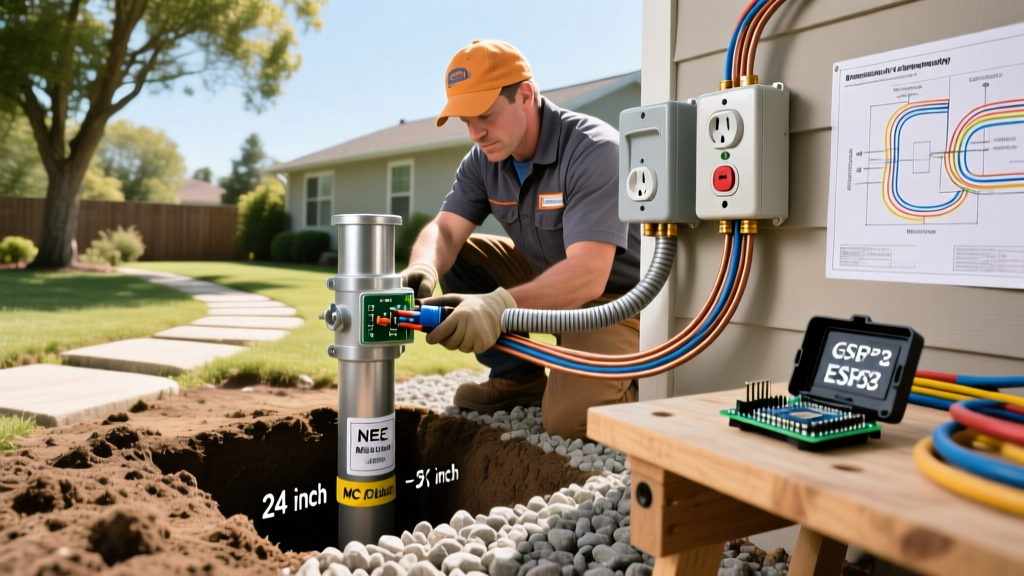
Code Watch (NEC 110.26): The National Electrical Code mandates a minimum 30-inch wide, 36-inch deep working clearance in front of your outdoor disconnect box and electrical panel. If your mini split condenser is placed too close to the home's main service panel, inspectors will fail the installation, forcing you to pay an HVAC tech to relocate the heavy condenser pad and refrigerant lines.
Communication Wire vs. Power Wire: Don't Mix Them Up
A frequent and costly mistake in mini split electrical wiring is confusing the high-voltage power supply with the low-voltage communication line. The outdoor condenser and indoor air handler must 'talk' to each other to modulate the inverter compressor speed.
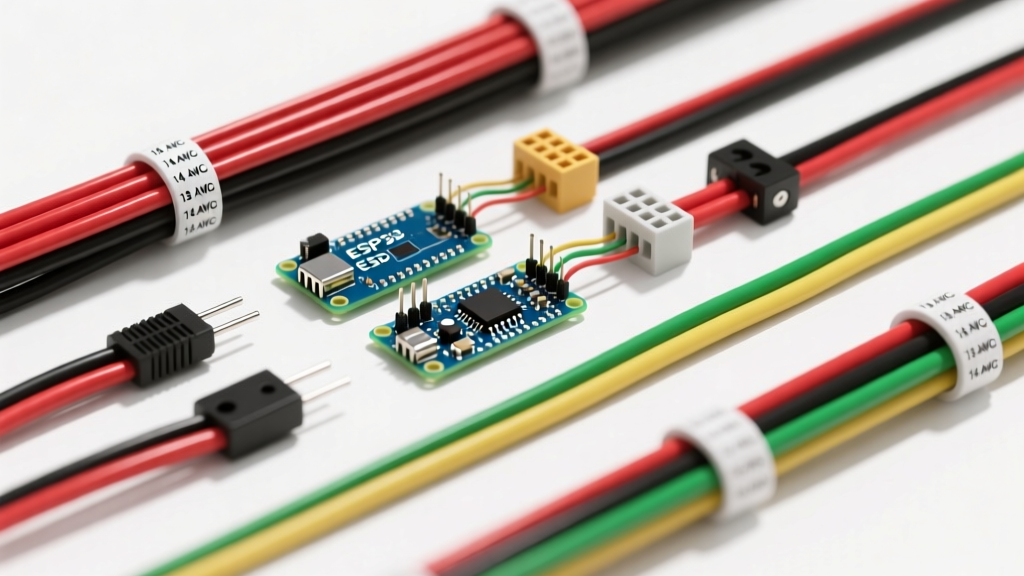
According to the U.S. Department of Energy, inverter-driven ductless systems rely on precise digital signaling. You must use 14 AWG or 18 AWG 4-conductor stranded, shielded wire for the communication line.
- Why Stranded? Solid core wire (like standard Romex) is prone to micro-fractures when bent around tight corners near the air handler bracket, leading to intermittent signal loss and 'E1' or 'Communication Error' codes on the display.
- Why Shielded? The shield protects the low-voltage digital signal from electromagnetic interference (EMI) generated by the 240V power line running parallel to it.
Voltage Drop Considerations for Long Runs
Are you wiring a mini split in a detached garage, a backyard workshop, or an ADU? When the wire run from the main panel to the outdoor disconnect exceeds 100 feet, voltage drop becomes a critical factor. The NEC recommends keeping voltage drop below 3% for branch circuits.
If you are running a 120-foot circuit to a detached garage for a 24k BTU unit, standard 10/2 NM-B wire will experience a voltage drop of nearly 4.5%, which can cause the mini split's inverter board to trip on low-voltage protection during peak compressor startup. To mitigate this, you must upsize your wire to 8/2 AWG. In 2026, a 250-foot roll of 8/2 NM-B costs approximately $285 to $320, adding roughly $130 to your material budget but ensuring reliable, code-compliant operation.
DIY vs. Professional Wiring: A Cost-Benefit Matrix
While pre-charged DIY mini split kits (like MRCOOL) allow homeowners to set the equipment themselves, the electrical wiring remains highly regulated. Here is how the DIY approach compares to hiring a professional in 2026.
| Factor | DIY Electrical Wiring | Professional Electrician |
|---|---|---|
| Upfront Cost | $450 - $550 (Materials Only) | $900 - $1,800 (Materials + Labor) |
| Permit & Inspection | Homeowner pulls permit (often restricted) | Contractor pulls permit seamlessly |
| Code Compliance | High risk of missing AFCI/GFCI nuances | Guaranteed NEC 2023/2026 compliance |
| Warranty Impact | May void equipment warranty if unlicensed | Protects and validates manufacturer warranty |
| Time Investment | 6 - 12 hours for novice | 2 - 5 hours for licensed pro |
Common Failure Modes and Expensive Mistakes
When estimating costs, factor in the potential expense of correcting these common wiring failures:
- Missing HACR Rating on Breakers: Mini split compressors draw massive inrush currents. Standard breakers may nuisance-trip. You must use a breaker specifically marked 'HACR' (Heating, Air Conditioning, and Refrigeration). Replacing a tripped standard breaker with the correct HACR type later costs an extra $85 in service call fees.
- Undersized Disconnect Switches: While a 20A circuit only requires a 20A fused disconnect, most electricians standardize on 60A non-fused pull-out disconnects for all mini splits. It costs $10 more but prevents future upgrade bottlenecks.
- Sharing a Neutral or Circuit: Mini splits require a strictly dedicated circuit. Tapping into an existing laundry or kitchen circuit will immediately fail inspection and risks overloading the wire, creating a fire hazard.
Frequently Asked Questions (FAQ)
Does a hardwired mini split require GFCI protection?
Under standard NEC rules, hardwired HVAC equipment does not require GFCI protection unless specifically mandated by the manufacturer's installation manual or local municipal amendments. However, if your mini split is plugged into an outdoor receptacle rather than hardwired, NEC Article 210.8(F) strictly requires GFCI protection.
Can I run the communication wire inside the same conduit as the 240V power wire?
No. The NEC prohibits running low-voltage communication cables in the same raceway or conduit as high-voltage power conductors unless the low-voltage wire is rated for the higher voltage (which standard 14/4 comm wire is not). Keep them separated by at least 2 inches when running parallel through wall cavities.
Where can I find the exact electrical specifications for my unit?
Always refer to the manufacturer's submittal sheet or the data plate located on the side of the outdoor condenser. As noted by ENERGY STAR, certified ductless systems will clearly list the Minimum Circuit Ampacity (MCA) and Maximum Overcurrent Protection (MOP) required for safe wiring.
Final Thoughts on Budgeting
Accurately estimating the cost of mini split electrical wiring requires looking beyond the price of copper. By budgeting for proper 14/4 shielded communication wire, HACR-rated breakers, NEC-compliant disconnects, and professional labor, you ensure your ductless system operates efficiently for its entire 15-to-20-year lifespan. For the most current safety standards governing these installations, always consult the latest NFPA 70 National Electrical Code before beginning your project.