
The Hidden Hurdle in Historic Home Remodels
When planning a renovation for a home built between 1880 and 1940, discovering knob and tube electrical wiring can instantly derail your budget and timeline. Originally designed for a era when homes consumed minimal electricity—powering only a few incandescent lights and a radio—this obsolete wiring method is fundamentally incompatible with the demands of a modern 2026 household. Today's homes require dedicated 20-amp circuits for kitchens, 240-volt lines for EV chargers, and robust grounding for sensitive electronics. As a renovation planner or general contractor, understanding how to identify, manage, and replace this legacy system is critical for passing inspections, securing homeowner's insurance, and ensuring long-term safety.
Identifying Knob and Tube Electrical Wiring in the Field
Before you can budget for a rewire, you must confirm the presence and extent of the legacy system. Knob and tube (K&T) wiring gets its name from the porcelain insulators used to route the conductors. Here are the definitive visual markers to look for during your initial site walk-through:
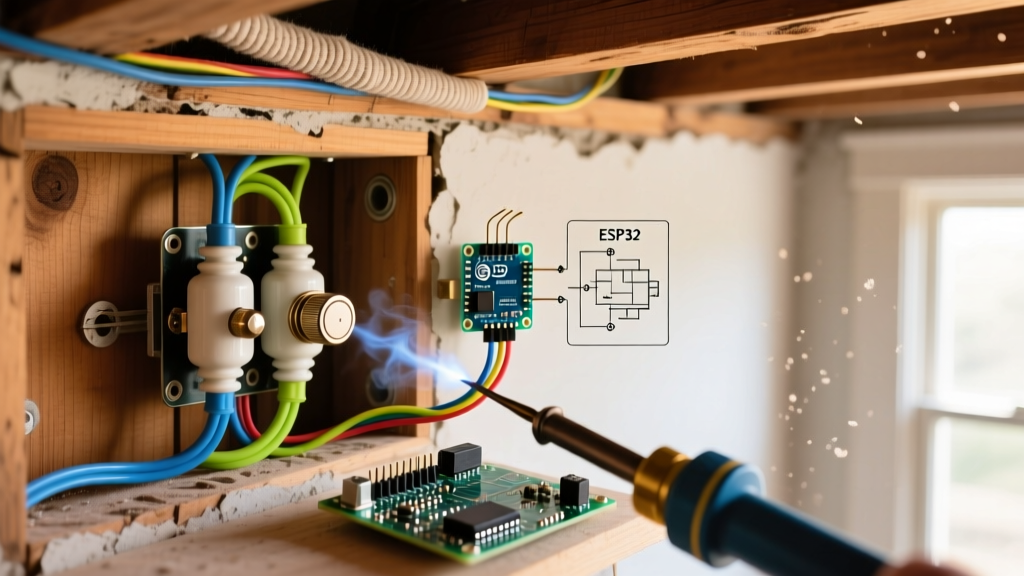
- Porcelain Knobs: Nailing plates with a groove to hold the wire, used to run conductors parallel to and slightly offset from framing members.
- Porcelain Tubes: Cylindrical insulators inserted through bored holes in wooden joists and studs to prevent the wire from touching the wood.
- Separated Conductors: Unlike modern Romex (NM-B) cable, the hot (black) and neutral (white) wires are run as individual, separated conductors, typically spaced at least 3 inches apart to allow for air-cooling.
- Cambric or Rubber Insulation: The copper wire is wrapped in an asphalt-saturated cotton cloth (cambric) or early vulcanized rubber. Warning: In 2026, this insulation is often brittle, cracked, or completely missing where it enters junction boxes or light fixtures.
- Absence of a Ground Wire: K&T systems are strictly two-wire (hot and neutral). There is no equipment grounding conductor, making them inherently unsafe for modern three-prong appliances.
The NEC Code and Insulation Conflict
The most significant renovation roadblock with K&T wiring arises during energy efficiency upgrades. According to the National Electrical Code (NEC) Article 394.12, concealed knob-and-tube wiring is strictly prohibited in the hollow spaces of walls, ceilings, and floors where such spaces are insulated by loose, rolled, or foamed-in-place insulating material.
Renovation Impact: If your renovation scope includes blowing cellulose insulation into exterior walls or adding deep fiberglass batts to an uninsulated attic, you must remove or abandon the K&T wiring in those zones first. Covering K&T with insulation traps the heat generated by the wires, leading to accelerated insulation degradation and a severe fire hazard.
Furthermore, the Electrical Safety Foundation International (ESFI) warns that the original 60°C temperature rating of K&T insulation is vastly inferior to the 90°C rating of modern THHN/THWN conductors, making it highly susceptible to thermal breakdown when subjected to continuous modern loads.
2026 Renovation Impact Matrix by Room
Not all rooms present the same level of risk or remediation complexity. Use this matrix to prioritize your electrical scope of work during the planning phase.
| Room / Zone | K&T Risk Level | Primary Failure Mode | 2026 Remediation Strategy |
|---|---|---|---|
| Kitchen | Critical | Overloaded 15A circuits by modern appliances; lack of GFCI grounding. | Complete gut and rewire. Install minimum two 20A small-appliance branch circuits with NM-B or MC cable. |
| Bathroom | Critical | Moisture degradation of cloth insulation; no equipment ground for hair dryers. | Full rewire. Install dedicated 20A GFCI-protected circuit. |
| Attic | High | Physical damage from storage/foot traffic; insulation burial violating NEC 394.12. | Abandon in place if undisturbed, or remove entirely if upgrading to spray foam or blown cellulose. |
| Living Areas | Moderate | Nail punctures from drywall hangers; degraded splices behind plaster. | Rewire if opening walls for drywall repair; otherwise, abandon dead legs and fish new MC cable to outlets. |
| Basement | Low/Moderate | Exposed wiring subject to physical damage and moisture. | Replace all exposed runs with EMT conduit or MC cable; K&T is not rated for damp locations. |
Real-World Replacement Costs and Timelines
Budgeting for a whole-house rewire in 2026 requires accounting for elevated copper prices and skilled labor shortages. Homeowners are often shocked by the cost, so transparency during the planning phase is vital. According to industry data tracked by the U.S. Consumer Product Safety Commission, aging electrical systems are a leading cause of residential fires, justifying the investment.
Estimated 2026 Pricing Breakdown
- Whole-House Rewire (2,000 sq. ft.): $14,000 to $26,000. This includes pulling new 12 AWG and 14 AWG NM-B cable, installing new cut-in boxes, and patching access holes.
- Electrical Panel Upgrade (100A to 200A): $2,800 to $4,500. Most K&T homes still have original 60-amp or 100-amp fuse panels that must be upgraded to a modern 200-amp circuit breaker panel with AFCI/GFCI tandem breakers.
- Plaster/Drywall Repair: $3,000 to $8,000. Electricians must cut channels into lathe-and-plaster walls to fish new wires. Budget for a specialized plaster repair contractor, as standard drywall mud does not adhere properly to historic lime plaster.
- Timeline: Expect 7 to 14 days of active electrical work for a full rewire, followed by 3 to 5 days of wall restoration.
Step-by-Step Remediation Strategy for Contractors
If you are managing the renovation, follow this sequence to minimize change orders and inspection failures:
- Commission a Thermal and Visual Audit: Hire a licensed electrical inspector to map every active K&T circuit using a tone generator and thermal imaging to find hidden, overheated splices inside walls.
- Upgrade the Service Entrance First: Install the new 200-amp panel and ground rod system before touching the branch circuits. This provides a safe, grounded termination point for the new wiring.
- Run New Home Runs: Pull new NM-B (Romex) or Metal-Clad (MC) cable directly from the new panel to new junction boxes. Do not attempt to daisy-chain off existing K&T feeds.
- Abandon the K&T in Place: The NEC does not require you to physically rip the old porcelain knobs and tubes out of the walls, which would cause catastrophic damage to historic plaster. Simply disconnect the K&T wires at the panel, cut them back, and cap them with wire nuts inside an accessible junction box, or pull them out of the wall cavities where accessible.
- Install AFCI Protection: Modern code requires Arc-Fault Circuit Interrupter (AFCI) protection for almost all living space branch circuits. Ensure your new panel is equipped with combination-type AFCI breakers.
Edge Cases: Splicing and Insurance Realities
A common, dangerous shortcut taken by amateur handymen is splicing modern NM-B cable directly to old K&T wiring inside a wall cavity using electrical tape or standard wire nuts. This is a severe code violation. Any transition between K&T and modern wiring must occur inside a permanently accessible, code-compliant junction box. Furthermore, the splice must account for the differing temperature ratings of the wire insulations.
From an insurance perspective, the landscape in 2026 is unforgiving. Major carriers will frequently issue a 30-day notice of cancellation or outright deny coverage for homes with active knob and tube wiring. If the homeowner plans to sell the property post-renovation, the buyer's home inspector will flag the ungrounded, two-prong outlets and the lack of a modern panel, effectively killing the real estate transaction until a full rewire is completed.
Common Contractor Mistakes to Avoid
- Overfusing Legacy Circuits: If temporarily keeping a K&T circuit active during phase one of a remodel, ensure it is protected by a maximum 15-amp breaker. The original 12 AWG or 14 AWG K&T wire cannot safely handle 20 amps, especially given the degraded state of the rubber insulation.
- Ignoring the Neutral Bond: K&T systems often have shared neutrals or switched neutrals (where the wall switch breaks the neutral wire instead of the hot wire). When rewiring, ensure all switches break the ungrounded (hot) conductor to prevent shock hazards when changing lightbulbs.
- Forgetting Low-Voltage Separation: When fishing new Cat6 or coaxial cables through walls that still contain abandoned K&T, maintain the code-required 2-inch separation to prevent electromagnetic interference, even if the K&T is dead.
Properly planning for knob and tube electrical wiring transforms a potential renovation nightmare into a structured, profitable upgrade. By prioritizing safety, adhering strictly to NEC Article 394, and setting accurate budget expectations with the homeowner, you ensure the historic home is safely brought into the modern electrical era.